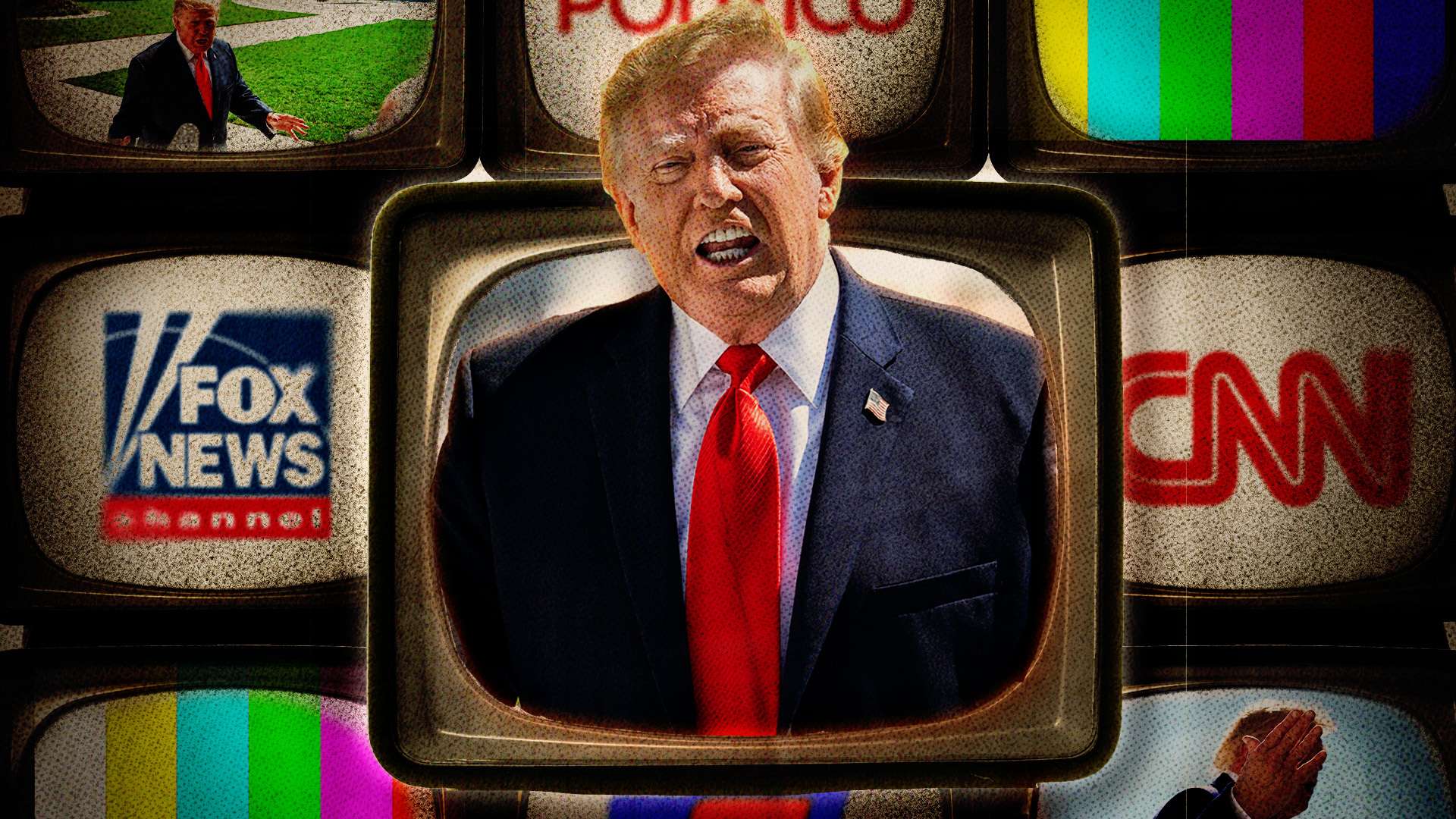
Photo via Reason

A Russia Sanctions Bill Would Give Trump Vast New Tariff Powers

Read the original at Reason ↗
Cite

Lancaster, J. (2026, September 17). A Russia Sanctions Bill Would Give Trump Vast New Tariff Powers. Reason. https://reason.com/2026/09/17/a-russia-sanctions-bill-would-give-trump-vast-new-tariff-powers/

Dated when The Aporia collected the article, usually within hours of publication. Check the original for its exact date and byline.

Reason · collected 2026-09-17 · by Joe Lancaster

Quick Summary

The House passed the Lindsey O. Graham Sanctioning Russia and Iran Act of 2026, which now awaits President Trump's signature. The bill allows the president to impose tariffs up to 100 percent on goods from countries heavily importing Russian crude oil or natural gas. Countries like China, India, and Turkey could face these tariffs due to their significant imports of Russian fossil fuels. Critics argue that such measures may unfairly tax American consumers without effectively addressing Russia's role in Ukraine.
Written by AI on 2026-09-20, from this article's own text only (the story summary below draws on all the coverage).

AI analysis

Story summary

On Wednesday, the US House of Representatives passed a bipartisan sanctions bill targeting Russia, voting 262-159 to send it to President Donald Trump for signature. The legislation, championed by late Republican Senator Lindsey Graham and previously approved by the Senate, aims to restrict funds flowing to Moscow by imposing tariffs up to 100% on countries like China and India that import energy supplies from Russia. It also imposes sanctions on Russian officials, banks, and a shadow fleet of tankers facilitating Russian energy trade. Despite support from Ukrainian President Volodymyr Zelenskyy, the bill faced opposition from some Democrats who were concerned about expanding Trump's tariff authority, leading to significant division within the party.

Written for “US Russia Sanctions Bill” on 2026-10-31, grounded in this article and the 37 other(s) covering the same event.

Story

📰 US Russia Sanctions Bill
Politics · 38 article(s) covering the same event. Compare every outlet's account →

Compared with similar articles

This article reads leans left and hedges 20% of its claims. Each row says how that neighbour differs.
South China Morning Post
Hedges 0 of 1 claims Outlet record 64/100
Al Jazeera
Hedges 1 of 19 claims Outlet record 60/100
The Guardian
⚖️ Leans left Hedges 1 of 24 claims Outlet record 66/100
Washington Examiner
Hedges 0 of 12 claims Outlet record 70/100
South China Morning Post
⚖️ Leans right further right than this Hedges 0 of 6 claims Outlet record 64/100
Fox News
Hedges 1 of 34 claims Outlet record 69/100
CBS News
Hedges 0 of 2 claims Outlet record 66/100
Euronews
⚖️ Leans right further right than this Hedges 1 of 21 claims Outlet record 60/100
Semafor
⚖️ Leans right further right than this Hedges 2 of 8 claims Outlet record 60/100
Al Jazeera
⚖️ Leans left Hedges 7 of 43 claims Outlet record 60/100
How this article was measured signals, leaning charts, publisher record, byline, topics and claims

Signals How these are calculated →

Claims extracted
35
sentences that state something as happening or true
Uncertain
20%
7 of 35 hedged ("reportedly", "may", "according to")
Leaning
Leans left
of the writing, not the subject · beta estimate
Publisher signals
67/100
Reason's corrections and hedging, across everything collected from it. Not a measure of accuracy.
Outlets on this story
38
Politics
Same framing elsewhere
1
articles that frame the event the way this one does
Analyzed 2026-09-20 · how these are computed

How this is being covered How these are calculated →

Article leaning vs. publisher reliability
Source leaning vs. consistency

Publisher

Reason · 1039 article(s) · 4 correction(s) detected
Running correction rate · 4 correction(s)

Who wrote this

Joe Lancaster
11 article(s) here · 1 carrying a prediction
🔮 "If the Republicans win the House of Representatives and the United States Senate, both of them," Trump pledged in September, "I will issue a dividend to every adult citizen in the United States of America for $5,000."
🔮 Then earlier this year, Rogers again got the feeling that he could be doing something beneficial with his talents.
🔮 Even if the complaint were valid, it would be difficult to enforce without violating the First Amendment.
🔮 "This is why MAGA, and REAL Patriots, will never like Fox!
🔮 Many major American cities struggle with homelessness, and with no single clear or obvious solution, it's unlikely the problem will be solved anytime soon.
2026-09-30 · assertive framing · Why Is Seattle Keeping Her From Cleaning Up Trash?
🔮 (The Institute for Justice, a public-interest law firm, drafted model legislation that would require the officer to get a warrant to access any images older than 24 hours.)
🔮 Earlier this year, the FCC announced it would review the broadcast licenses of eight ABC affiliates—in particular, those owned by ABC's parent company, Disney.
🔮 In a fitting tribute to Graham, the bill would expand the powers of the presidency at the expense of the legislature.
🔮 But Trump often speaks of the police as if they're too constrained to do their jobs properly and says he wishes they could simply act with impunity.
🔮 But the TV audience would not see the segment because of fears that by airing it, ABC's affiliates could run afoul of the equal opportunities requirement, better known as the equal time rule.
Also by Joe Lancaster
Nothing else under this byline is closely related to this article, so these are simply their most recent.
All 11 articles by Joe Lancaster →

Topics

Americans Congress Russia Russian Senate

Subjects

Congress ORG · 6× Trump PERSON · 6× Russian NORP · 5× Americans NORP · 3× Graham PERSON · 2× India GPE · 2× Russia GPE · 2× Senate ORG · 2× the Russian Federation GPE · 2× House ORG · 1×

Narrative

It also directs the president to impose tariffs "of up to 100 percent" on all goods from any countries that, in the previous year, were "among the 5 largest importers, by total volume, of crude oil or natural gas that originated in the Russian Federation" or "among the top 5 countries facilitating Russian oil sanctions evasion.
framing: assertive · carried by 1 article(s) · first seen 2026-09-20
🔮 In a fitting tribute to Graham, the bill would expand the powers of the presidency at the expense of the legislature.
2026-09-20 · Reason
A Russia Sanctions Bill Would Give Trump Vast New Tariff Powers · assertive framing

Claims (35 extracted, 7 hedged)

This week, the House passed the Lindsey O. Graham Sanctioning Russia and Iran Act of 2026, named for the late senator. asserted
House → pass → senator
The Senate passed its own version of the bill in August, and it now heads to President Donald Trump's desk to be signed into law. asserted
it → pass → law
In a fitting tribute to Graham, the bill would expand the powers of the presidency at the expense of the legislature. asserted
bill → expand → legislature
The bill imposes sanctions on Russia and Iran, a longtime priority of Graham's. asserted
bill → impose → Graham
It also directs the president to impose tariffs "of up to 100 percent" on all goods from any countries that, in the previous year, were "among the 5 largest importers, by total volume, of crude oil or natural gas that originated in the Russian Federation" or "among the top 5 countries facilitating Russian oil sanctions evasion. asserted
that → direct → evasion
Through the end of August, China, India, and Turkey were the largest recipients of Russian crude oil, while the European Union received the most pipeline gas and liquefied natural gas. asserted
Union → receive → gas
(The bill exempts any country that imported "less than 15 percent" of Russia's total natural gas exports and "has taken significant steps to reduce its imports of natural gas that originated in the Russian Federation." asserted
that → exempt → Federation
"This makes little sense," Reason's Eric Boehm wrote after the bill passed the Senate. asserted
bill → make → Senate
"Tariffs are tax increases paid by Americans. asserted
Tariffs → pay → Americans
The goal is to punish Russian President Vladimir Putin for his war of aggression in Ukraine, but this tariff policy would allow the president to tax Americans who buy goods made in India or Belgium. asserted
who → punish → India
Yes, the intention is to steer those countries away from using Russian fossil fuels, but surely there are ways to do that without hiking taxes on Americans in the process." asserted
intention → steer → process
The proposal is worded broadly enough that Trump could use it in a number of other ways. uncertain
Trump → word → ways
Catherine Rampell of The Bulwark called it "potentially the nuclear bomb of tariff power." asserted
Rampell → call → power
At the beginning of his second term, he imposed tariffs on dozens of countries. asserted
he → impose → countries
The Constitution places this power with Congress, not the president. asserted
Constitution → place → Congress
To justify his effort, Trump cited the International Emergency Economic Powers Act (IEEPA), a decadesold statute that gives the president certain authorities during national emergencies but never once uses the word tariff. asserted
that → justify → tariff
The Supreme Court overruled those tariffs in February, saying IEEPA did not afford him that authority, and even if it did, Congress could not sign that power away so broadly. uncertain
Congress → overrule → power
"When Congress has delegated its tariff powers, it has done so in explicit terms, and subject to strict limits," Chief Justice John Roberts wrote for the majority. asserted
Roberts → delegate → majority
"Where Congress has reason to be worried about its powers 'slipping through its fingers,' we in turn have every reason to expect Congress to use clear language to effectuate unbounded delegations—particularly of its 'one great power,'" the power to tax. asserted
Congress → have → power
(Trump has since imposed tariffs citing other laws, but those are likely also illegal.) asserted
those → impose → laws
This new law is an attempt to give more of Congress' authorities to the president. asserted
law → give → president
While it may pass constitutional scrutiny better than Trump's other tariff attempts, it's just as bad an idea. uncertain
it → pass → attempts
"The bill does not specify where the data identifying the 'top five' purchasers come from," wrote Cato Institute research fellow Clark Packard. asserted
Packard → specify → purchasers
"Russian energy flows are deliberately murky—intermediaries, transshipment, blended cargoes—and different datasets yield different lists. asserted
datasets → blend → lists
A statute that turns on a factual finding but declines to specify who makes it or what data are used is not a statute with guardrails. asserted
data → turn → guardrails
This is an invitation to pick the answer the president wants and dare someone to sue." asserted
president → pick → someone
By that same logic, determining which five countries were the worst offenders "facilitating…sanctions evasion" could be subject to an even greater degree of individual interpretation. uncertain
countries → determine → interpretation
It seems that the bill could apply to as many as five importers and five evaders, letting Trump impose 100 percent tariffs on 10 different countries. uncertain
Trump → seem → countries
"Count me deeply opposed to the tariff provisions of the new Russia sanctions bill," added Peter Harrell of Georgetown University's Institute of International Economic Law. asserted
Harrell → count → Law
"The reality is that Trump would use the tariff tool not to target Russia, but as a legal basis for his ongoing trade wars over economic, geopolitical, and personal tiffs." asserted
Trump → use → tiffs
There are vastly better ways to help Ukraine resist Russia than these kinds of indirect sanctions," George Mason University law professor Ilya Somin tells Reason. asserted
Somin → be → Reason
"And there is little if any reason to think Trump would use the discretionary authority in the proposed law to actually help Ukraine, as opposed [to] as a pretext for protectionism." asserted
Trump → be → protectionism
"These provisions give the Administration significant leeway to determine which countries might be subject to tariffs along with the rate they would face. uncertain
they → give → rate
It's possible the act could even be used to threaten new tariffs on countries in Europe or elsewhere that are working to deter Russian aggression," adds Bryan Riley of the National Taxpayers Union. uncertain
Riley → use → Union
"Congress needs to reclaim its constitutional authority over tariffs, not give even more of its authority away." asserted
Congress → need → authority

💬Give feedback
🕘History 🎫Support