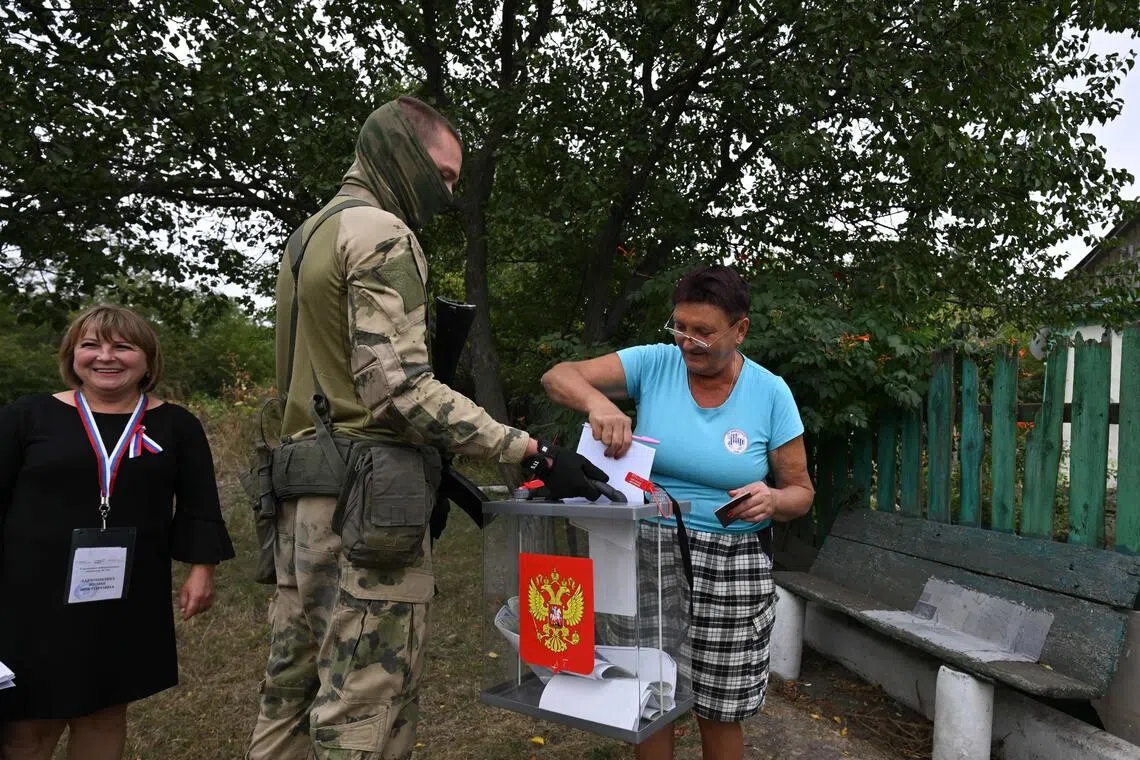
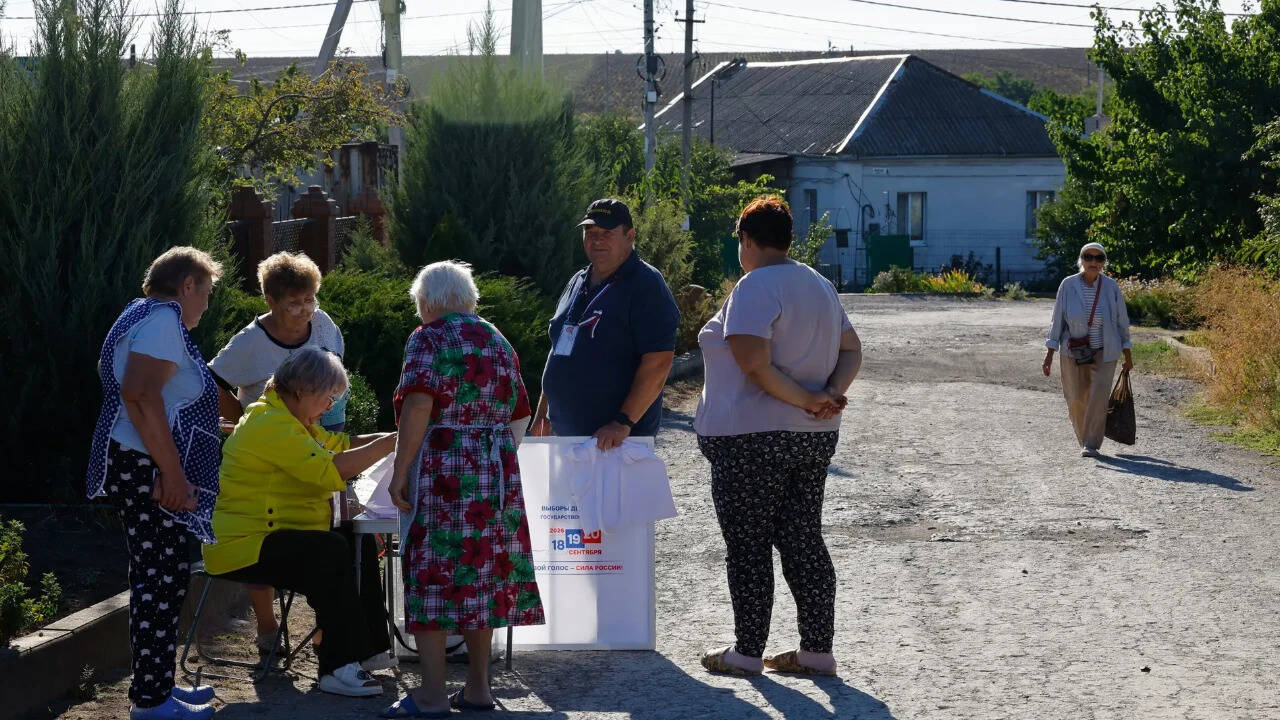
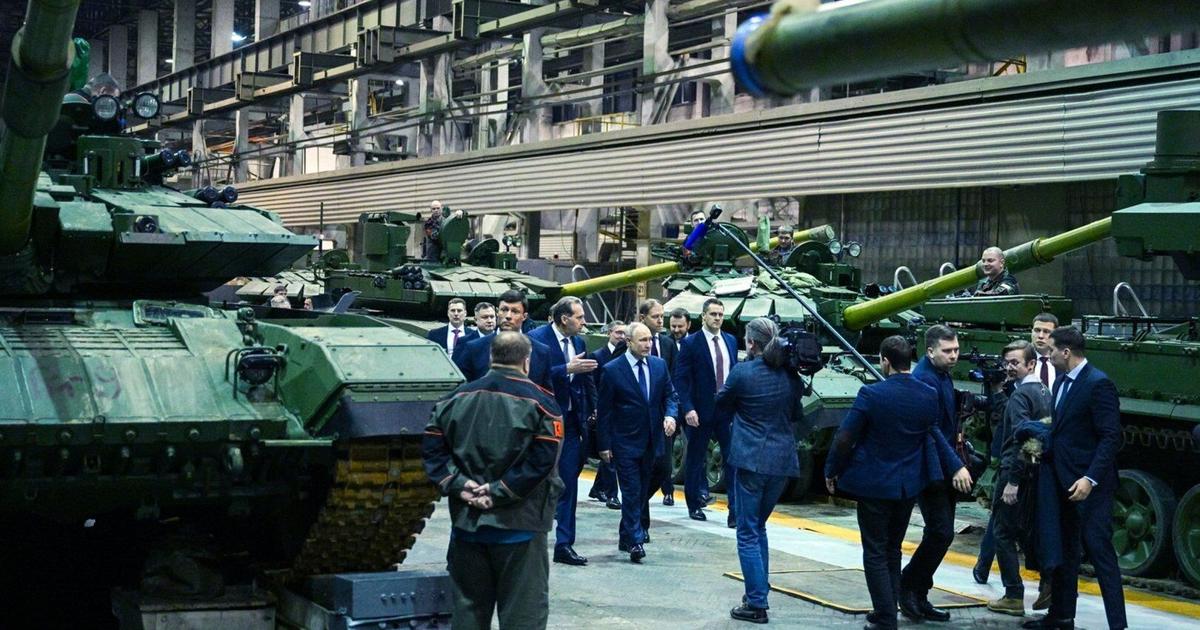
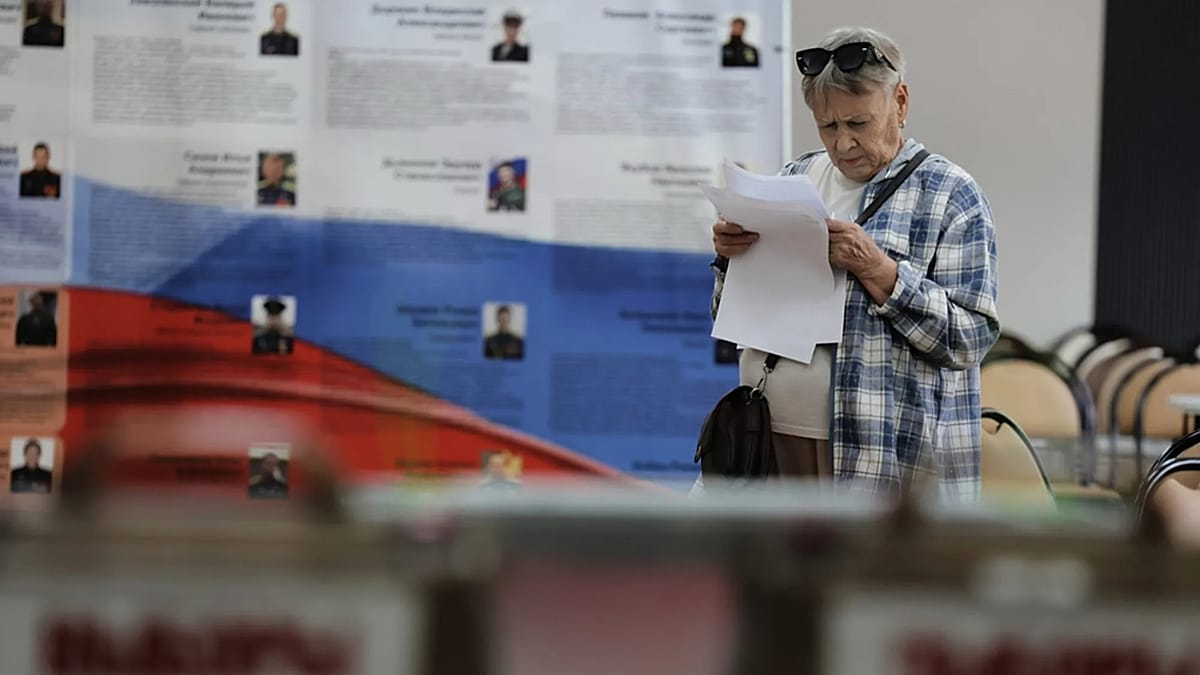
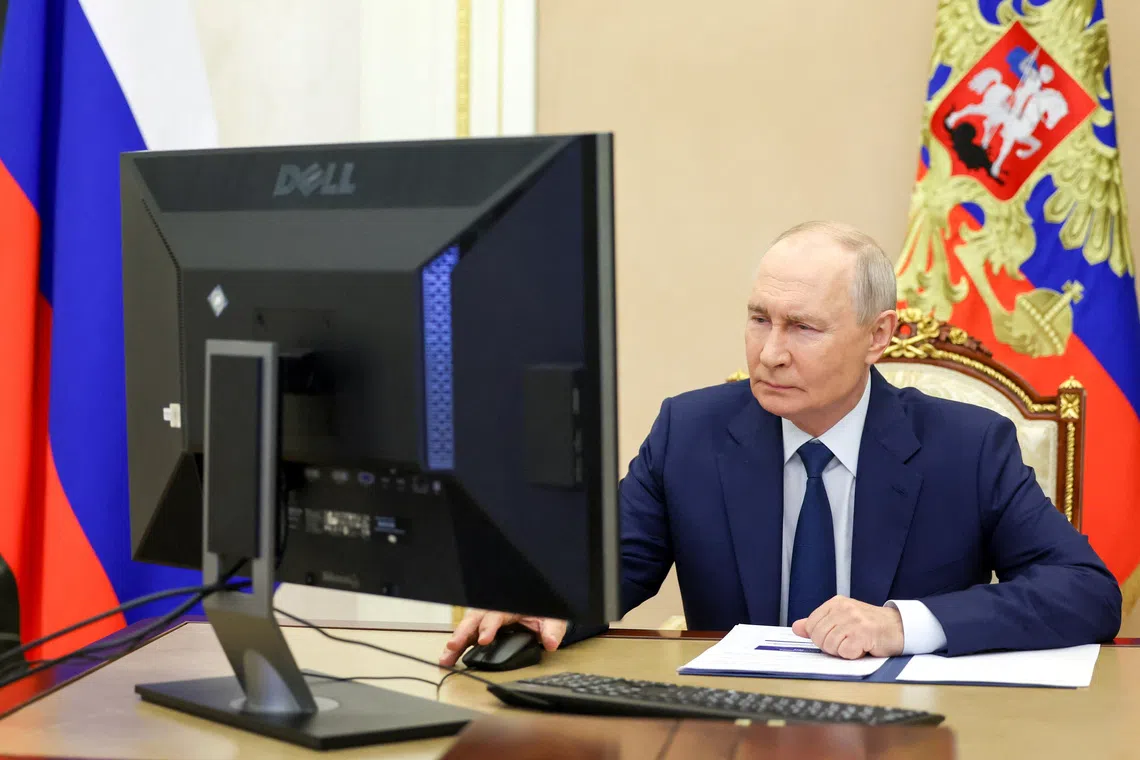
Photo via Deutsche Welle

A war-fatigued and anxious Russia picks a new parliament

Read the original at Deutsche Welle ↗
Cite

Klein, A. (2026, September 17). A war-fatigued and anxious Russia picks a new parliament. Deutsche Welle. https://www.dw.com/en/a-war-fatigued-and-anxious-russia-picks-a-new-parliament/a-79312440?maca=en-rss-en-world-4025-rdf

Dated when The Aporia collected the article, usually within hours of publication. Check the original for its exact date and byline.

Deutsche Welle · collected 2026-09-17 · by Anastasia Klein

Quick Summary

Russian voters head to the polls from September 18 to 20 for parliamentary elections amid growing anxiety and war fatigue due to economic hardships and uncertainty caused by Russia's ongoing conflict with Ukraine. According to independent polling, nearly half of Russians feel alarmed about their daily lives because of the war’s negative impacts, including rising prices and internet restrictions. The Kremlin closely monitors voter turnout as these elections serve as a barometer for public support, despite United Russia campaigning on continued military engagement in Ukraine. However, opposition figures note that while many Russians still back President Putin, they increasingly desire an end to the conflict.
Written by AI on 2026-09-17, from this article's own text only (the story summary below draws on all the coverage).

AI analysis

Story summary

Russia held its parliamentary election from September 18 to 20, 2026, marking the first such vote since President Vladimir Putin's full-scale invasion of Ukraine in 2022. Preliminary results showed a landslide victory for United Russia, securing over three-fourths of the seats in the State Duma, with 349 out of 450 total seats. The election included residents from four illegally annexed regions of Ukraine and Crimea, which was seized by Russia in 2014; Kyiv denounced these votes as illegal.

The Kremlin tightly controlled the electoral process, barring genuine opposition candidates like those from the anti-war Yabloko party, ensuring United Russia's dominance. Putin emphasized voter turnout as a demonstration of public support for his policies and the war effort. Despite economic pressures and anxiety among Russians due to the ongoing conflict, nearly 60% of eligible voters participated.

Notably, 46 veterans of Russia’s war in Ukraine were elected to the State Duma, with Kremlin spokesman Dmitry Peskov praising their involvement in lawmaking. However, critics argue that this election lacked genuine political competition and fair democratic practices. The results further cemented Putin's control over Russian politics while highlighting the limitations of his image as an untouchable ruler following a Ukrainian drone strike on Moscow during voting. Kyiv condemned the inclusion of annexed territories in Russia’s electoral process.

Written for “Russian Parliamentary Election Cyberattacks And Fraud Claims” on 2026-11-01, grounded in this article and the 69 other(s) covering the same event.

Story

📰 Russian Parliamentary Election Cyberattacks And Fraud Claims
Politics · 70 article(s) covering the same event. Compare every outlet's account →

Compared with similar articles

This article reads leans strongly left and hedges 12% of its claims. Each row says how that neighbour differs.
The Guardian
⚖️ Leans strongly left Hedges 2 of 35 claims Outlet record 66/100
The Straits Times
Hedges 0 of 28 claims Outlet record 66/100
TIME
⚖️ Leans left further right than this Hedges 3 of 44 claims Outlet record 59/100
“Article A discusses public sentiment and anxiety regarding Russia's war with Ukraine, while Article B reports on the parliamentary elections that are taking place as a result of political circumstances in Russia.”
The Straits Times
⚖️ Leans left further right than this Hedges 4 of 37 claims Outlet record 66/100
“The articles describe different stages and aspects of the situation in Russia leading up to parliamentary elections; Article A focuses on local conditions before voting, while Article B discusses broader public sentiment post-voting.”
The Straits Times
⚖️ Leans left further right than this Hedges 1 of 29 claims Outlet record 66/100
Times of India
⚖️ Leans right further right than this Hedges 0 of 12 claims Outlet record 59/100
Toronto Star
⚖️ Leans left further right than this Hedges 6 of 51 claims Outlet record 64/100
“The articles discuss different aspects of Russia's situation related to the war with Ukraine but describe distinct topics and do not report on the same specific incident.”
The Independent
⚖️ Leans left further right than this Hedges 7 of 28 claims Outlet record 59/100
“The articles discuss the context and implications of parliamentary elections in Russia but do not describe the exact same incident or occurrence.”
Euronews
⚖️ Leans strongly left Hedges 1 of 37 claims Outlet record 60/100
The Straits Times
⚖️ Leans strongly right further right than this Hedges 7 of 20 claims Outlet record 66/100
“Article A discusses public sentiment and anxiety in Russia regarding the war with Ukraine, while Article B focuses on the expected outcome of the parliamentary elections and Putin's leverage.”
How this article was measured signals, leaning charts, publisher record, byline, topics and claims

Signals How these are calculated →

Claims extracted
48
sentences that state something as happening or true
Uncertain
12%
6 of 48 hedged ("reportedly", "may", "according to")
Leaning
Leans strongly left
of the writing, not the subject · beta estimate
Publisher signals
95/100
Deutsche Welle's corrections and hedging, across everything collected from it. Not a measure of accuracy.
Outlets on this story
70
Politics
Same framing elsewhere
1
articles that frame the event the way this one does
Analyzed 2026-09-17 · how these are computed

How this is being covered How these are calculated →

Article leaning vs. publisher reliability
Source leaning vs. consistency

Publisher

Deutsche Welle · 550 article(s) · 0 correction(s) detected
No corrections detected for this publisher. That may mean careful reporting, or simply that nothing has been checked.

Who wrote this

Anastasia Klein
2 article(s) here · 1 carrying a prediction
🔮 Intelligence officials of several European countries, including Latvia and the Czech Republic have warned that Russia could seek to test NATO in the upcoming "months, not years."
2026-10-02 · assertive framing · Latvians head to the polls with Russia on their minds
🔮 Some are even leaving the country, afraid they could be drafted after the elections.
Also by Anastasia Klein
Nothing else under this byline is closely related to this article, so these are simply their most recent.

Topics

ExtremeScan Kremlin Russia Russians Ukraine

Subjects

Russians NORP · 9× Yabloko ORG · 7× Kremlin ORG · 6× Ukraine GPE · 5× ExtremeScan ORG · 3× Putin PERSON · 3× Russia GPE · 2× Russian NORP · 2× Zavadskaya PERSON · 2× FOM ORG · 1×

Narrative

"They are crucial for him because they demonstrate that the majority supports the main party, the party of war, and that he has legitimacy for further escalation and the continuation of this war," Russian opposition politician in exile Ilya Yashin told DW.
framing: assertive · carried by 1 article(s) · first seen 2026-09-17
🔮 Some are even leaving the country, afraid they could be drafted after the elections.
2026-09-17 · Deutsche Welle
A war-fatigued and anxious Russia picks a new parliament · assertive framing

Claims (48 extracted, 6 hedged)

Nearly half of those surveyed by state pollster FOM say a sense of alarm is the prevailing mood among the people around them. asserted
sense → survey → them
According to data by independent pollster ExtremeScan, 60% of Russians believe that the war against Ukraine has had negative consequences for their day-to-day lives. uncertain
war → accord → lives
"Anxiety and war fatigue are driven by increasing uncertainty," Margarita Zavadskaya, a sociologist and senior research fellow at the Finnish Institute of International Affairs in Helsinki, told DW. asserted
Zavadskaya → drive → DW
She says this year has seen a shift in public opinion. asserted
year → say → opinion
Rising prices, internet crackdowns, fuel shortages caused by Ukrainian strikes on oil refineries and rumors of another mobilization drive are making it harder for Russians to plan for the future. asserted
Russians → rise → future
Some are even leaving the country, afraid they could be drafted after the elections. uncertain
they → leave → elections
Sociologist and the founder of ExtremeScan Elena Koneva said people were starting to ask the question: "How much does this war cost me and my family? asserted
war → say → me
And am I ready to pay this price? asserted
I → pay → price
" That could pose a problem for the Kremlin. uncertain
That → pose → Kremlin
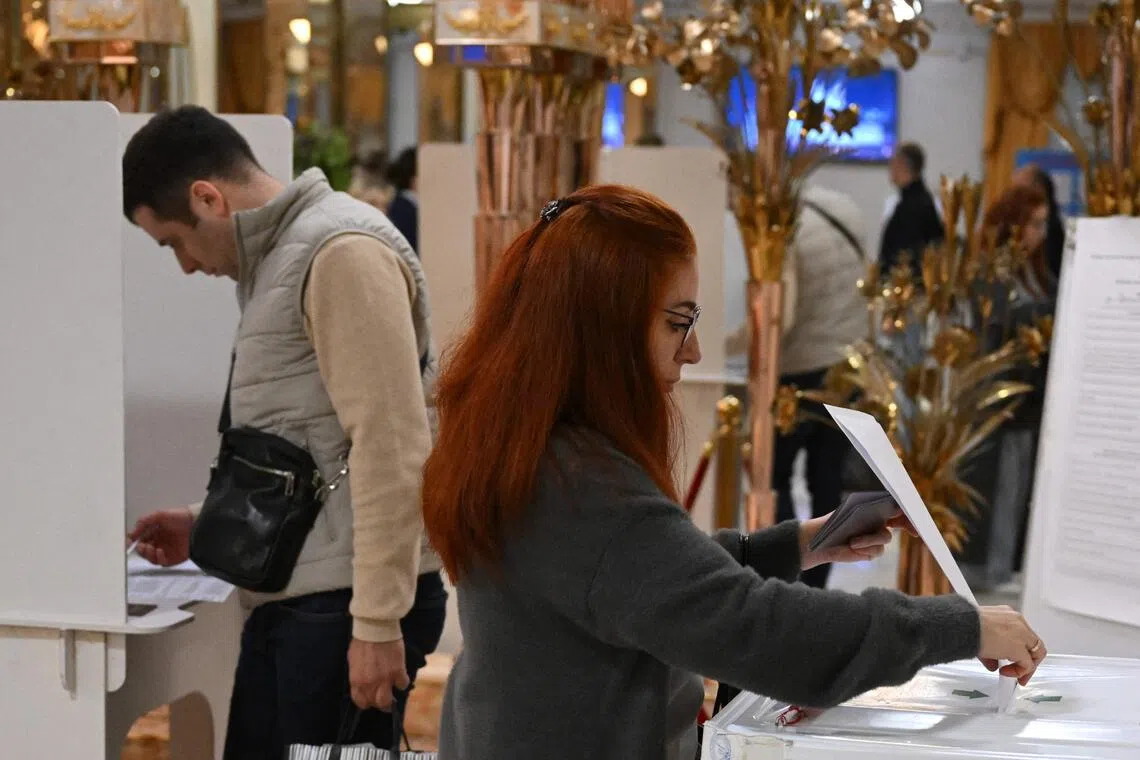
From September 18 to 20, Russians are voting for a new parliament (the State Duma) for the first time since 2022. asserted
Russians → vote → 2022
It's the first parliamentary election to take place in Russia during the Ukraine war. asserted
It → take → war
And although there are unlikely to be any surprises in the official results, the Kremlin will be closely monitoring turnout. asserted
Kremlin → be → turnout
"The Kremlin is confident it can fabricate whatever figures it needs. asserted
it → fabricate → figures
The question is how high of a price it will have to pay," said Zavadskaya. asserted
Zavadskaya → have → price
Although elections in authoritarian systems like that of Russian President Vladimir Putin have little to do with democratic change, they still serve an important purpose. asserted
they → have → purpose
They are a reality check on whether the population remains loyal. asserted
population → remain → ?
"They are crucial for him because they demonstrate that the majority supports the main party, the party of war, and that he has legitimacy for further escalation and the continuation of this war," Russian opposition politician in exile Ilya Yashin told DW. asserted
Yashin → demonstrate → DW
In the fifth year of the war in Ukraine, there is little sign the Kremlin is willing to end the conflict. asserted
Kremlin → be → conflict
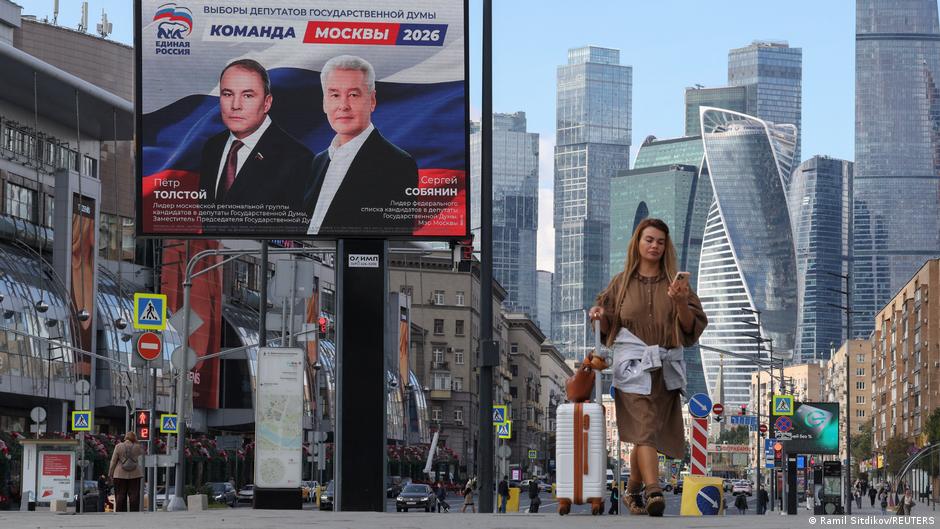
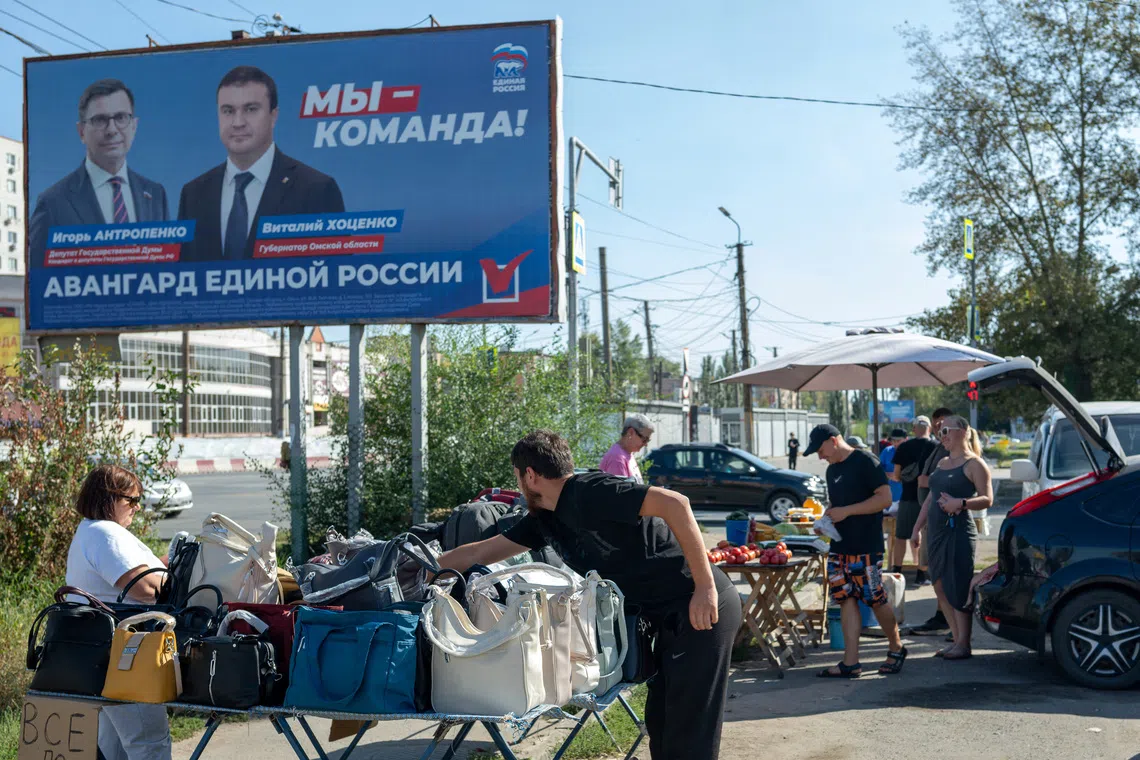
United Russia, a party de facto led by Putin, is campaigning on a platform that lists victory in the war among its priorities. asserted
that → lead → priorities
Its candidate list is headed by people presented as veterans of the war against Ukraine. asserted
list → head → Ukraine
But many Russians appear to want the opposite. asserted
Russians → appear → opposite
"The silent majority just wants the war to end," opposition politician Yulia Galyamina, who still lives in Russia, said in a recent interview with online media-outlet Bereg. asserted
who → want → Bereg
Most of these people still support Putin, but they are becoming increasingly anti-war, she said. asserted
she → support → Putin
That mood is also reflected in polling. asserted
mood → reflect → polling
Six in 10 Russians favor peace negotiations with Ukraine, according to independent pollster Levada Center. uncertain
Russians → favor → Center
Recent Kremlin hints at a new round of peace talks in October may be a tactic to calm the electorate, Zavadskaya said. uncertain
Zavadskaya → calm → electorate
Support for Yabloko has been rising One party has sought to capitalize on this anti-war sentiment: Yabloko. asserted
party → rise → sentiment
The liberal opposition party is the only registered political force opposing the war in Ukraine. asserted
party → register → Ukraine
Although its rating was below 5% in July, the party has seen a surge in popularity since then. asserted
party → see → popularity
Many people, especially younger Russians, are joining Yabloko and volunteering. asserted
people → join → Yabloko
According to the independent pollster ExtremeScan, 18% of Russians would have voted for Yabloko. uncertain
% → accord → Yabloko
But they will not be able to: In a recent court decision, Yabloko was barred from running in the parliamentary elections. asserted
Yabloko → bar → elections
"This support for Yabloko is, in fact, a demonstration of people's attitude toward the war," Koneva told DW. asserted
Koneva → tell → DW
What will anti-war voters do? asserted
voters → do → What
Now, with Yabloko out of the race, are there still ways for Russians to express that attitude? asserted
Russians → express → attitude
Yulia Navalnaya, the widow of Alexei Navalny, and opposition politician in exile Maxim Katz are urging supporters to back any party except United Russia in an effort to reduce the ruling party's result in the election. asserted
Navalnaya → urge → election
Yabloko has taken a different approach, encouraging voters to spoil their ballots. asserted
Yabloko → take → ballots
Yashin says neither choice matters. asserted
choice → say → ?
What matters, he says, is showing up at polling stations at noon on Sept. 20. asserted
he → matter → Sept.
"These queues will be a visible expression of public discontent," he said. asserted
he → say → discontent
…and 8 more, not listed.

💬Give feedback
🕘History 🎫Support