Photo via Times of India

Whale Post-Mortem Behaviour: Study details mother’s vigil; scientists urge further observations

Read the original at Times of India ↗
Cite

TOI Science Desk. (2026, September 18). Whale Post-Mortem Behaviour: Study details mother’s vigil; scientists urge further observations. Times of India. https://timesofindia.indiatimes.com/science/wildlife/heartbreaking-and-extremely-rare-mother-humpback-whale-carries-stillborn-calf-through-the-ocean-scientists-explain-the-unusual-behaviour/articleshow/134326041.cms

Dated when The Aporia collected the article, usually within hours of publication. Check the original for its exact date and byline.

Times of India · collected 2026-09-18 · by TOI Science Desk analysis

Quick Summary

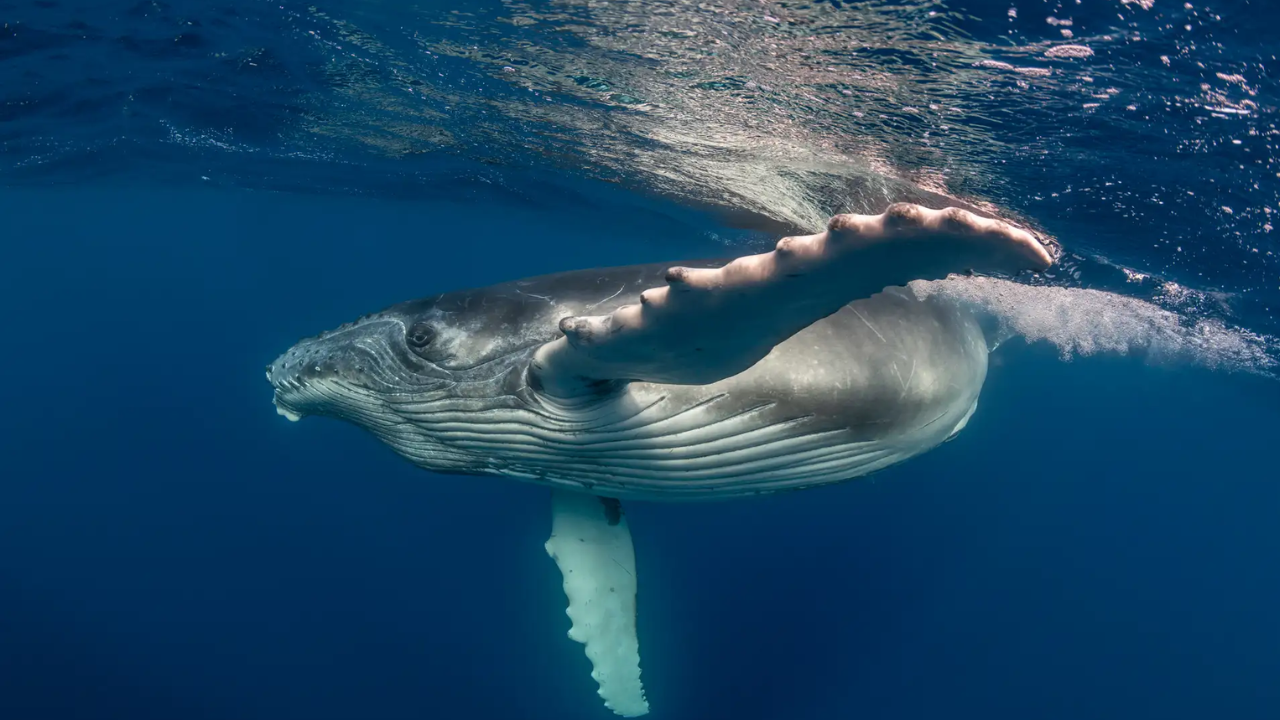
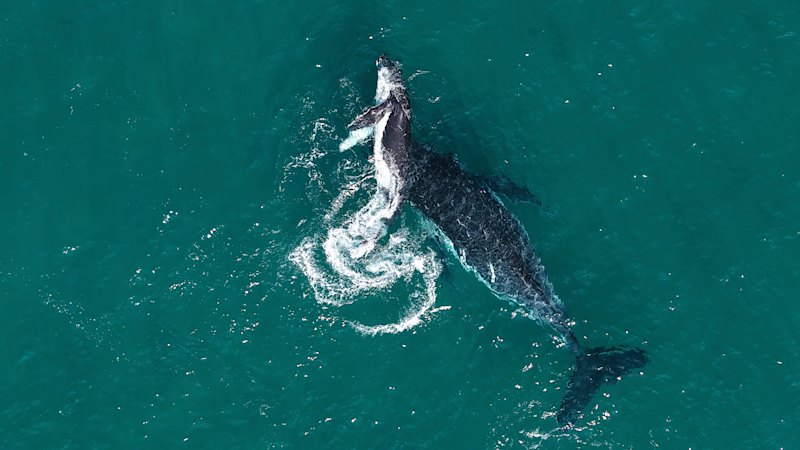
Researchers have documented a humpback whale mother repeatedly returning to her stillborn calf off Australia’s Gold Coast in July 2025, an unusual behavior rarely seen among baleen whales. The study, published in Discover Animals and reported by ABC News, AAP, and Griffith University, shows the mother touching and positioning herself beside the calf for several hours. Scientists suggest this could indicate post-mortem attentive behavior but are cautious about interpreting it as grief due to limited observations of such behaviors in baleen whales.
Written by AI on 2026-09-18, from this article's own text only (the story summary below draws on all the coverage).

AI analysis

Story summary

In July 2025, off Palm Beach Reef on Australia’s Gold Coast, a female humpback whale was filmed displaying what researchers believe is grief over her stillborn calf. The footage, captured by Andrew Mulville from Sea World, shows the mother repeatedly touching and observing the calf for at least two hours. Dr Olaf Meynecke of Griffith University described this behavior as post-mortem attentive, noting that it had not been observed before in humpback whales. This discovery is significant because it may indicate complex emotional responses in marine mammals, though more research is needed to understand these behaviors fully. The study, published in Discover Animals, highlights the importance of further observations to better comprehend how humpbacks respond to death and stress.

Written for “Whale Grief Behavior” on 2026-11-03, grounded in this article and the 3 other(s) covering the same event.

Story

📰 Whale Grief Behavior
Science · 4 article(s) covering the same event. Compare every outlet's account →

Compared with similar articles

This article reads unscored and hedges 26% of its claims. Each row says how that neighbour differs.
ABC News (AU)
Hedges 3 of 27 claims Outlet record 68/100
The Sydney Morning Herald
Hedges 7 of 32 claims Outlet record 61/100
BBC News
Hedges 1 of 3 claims Outlet record 68/100
ABC News (AU)
Hedges 0 of 21 claims Outlet record 68/100
“The articles describe different events involving dead humpback whales in separate locations (Gold Coast vs. Sunshine Coast).”
How this article was measured signals, leaning charts, publisher record, byline, topics and claims

Signals How these are calculated →

Claims extracted
35
sentences that state something as happening or true
Uncertain
26%
9 of 35 hedged ("reportedly", "may", "according to")
Leaning
not political
takes no side on a contested political question
Publisher signals
59/100
Times of India's corrections and hedging, across everything collected from it. Not a measure of accuracy.
Outlets on this story
4
Science
Same framing elsewhere
1
articles that frame the event the way this one does
Analyzed 2026-09-18 · how these are computed

How this is being covered How these are calculated →

Article leaning vs. publisher reliability
Source leaning vs. consistency

Publisher

Times of India · 3984 article(s) · 3 correction(s) detected
Running correction rate · 3 correction(s)

Who wrote this

TOI Science Desk
308 article(s) here · 1 carrying a prediction
🔮 Researchers are continuing to examine daily measurements to determine whether temperatures will climb further.
🔮 According to Reuters reporting by Will Dunham, a new study published in the journal Spixiana documents more than 90 Bangka slow lorises identified between 2015 and 2025.
🔮 “Normally, my job is quite monotonous, so I wanted to create something that would entertain people, turning my ‘serious’ job into something fun,” he said in a Guinness World Records news release.
🔮 The subsequent collision between the two galaxy clusters may then have compressed the cloud or re-energised its particles, causing it to shine more brightly in radio wavelengths once again.
🔮 The mathematicians at the University of California, Davis, argue that the answer may already lie within Einstein’s own equations and that an invisible form of energy may not be needed at all.
🔮 The work will be carried out by the West Tennessee River Basin Authority, which is preparing a plan to restore the river and the land around it.
🔮 Cornell University scientists have developed genetically engineered tomato plants that turn red-purple when nitrogen becomes scarce, giving farmers a visible warning that crops may need fertiliser.
🔮 By studying these crystals and other mineral grains, scientists could establish the meteorite's age and identify later changes caused by water.
🔮 Centuries later, bronze objects found in Scandinavia would preserve chemical signatures consistent with the metals produced at this Spanish site, offering evidence of connections that may have crossed much of Europe.
🔮 Deposited impurities and staining may also have contributed, while low temperatures and humidity could cause the fabric to crack.
Wire or desk byline, not an individual reporter.
Also by TOI Science Desk
Nothing else under this byline is closely related to this article, so these are simply their most recent.
All 308 articles by TOI Science Desk →

Topics

AAP ABC News Australia Discover Animals Griffith University

Subjects

AAP ORG · 1× ABC News ORG · 1× Australia GPE · 1× Discover Animals ORG · 1× Griffith University ORG · 1×

Narrative

What makes this encounter remarkable, researchers argue, is not that it proves whales experience grief in the same way humans do, but that it opens another window into the complex social and behavioural lives of animals whose experiences remain difficult to observe beneath the ocean’s surface.
framing: mixed · carried by 1 article(s) · first seen 2026-09-18
🔮 Researchers believe the mother and an accompanying adult whale may have remained in the area for longer, potentially over subsequent days, although sightings after the initial encounter could not confirm that the same individuals were involved.

Claims (35 extracted, 9 hedged)

A mother humpback whale was filmed repeatedly returning to her stillborn calf off Australia’s Gold Coast, displaying prolonged attention toward the newborn in an encounter researchers describe as the first scientifically documented case of such behaviour in the species. asserted
researchers → film → species
The footage, recorded in July 2025, is now detailed in a new study published in Discover Animals, with ABC News, AAP and Griffith University also reporting on the findings. asserted
News → record → findings
The footage was captured near Palm Beach Reef after the whale had apparently given birth. asserted
whale → capture → birth
The calf was found lying on the seafloor, with no visible movement or breathing. asserted
calf → find → movement
Rather than leaving the area, the mother repeatedly returned to the calf. asserted
mother → leave → calf
Researchers observed her approaching the body, touching it with her head and pectoral fin and positioning herself alongside it. asserted
her → observe → it
At times, she remained almost motionless beside the newborn, appearing to maintain eye-to-eye contact. asserted
she → remain → contact
The observation lasted at least several hours. asserted
observation → last → hours
Researchers believe the mother and an accompanying adult whale may have remained in the area for longer, potentially over subsequent days, although sightings after the initial encounter could not confirm that the same individuals were involved. uncertain
individuals → believe → encounter
Why the behaviour is so unusual Scientists have documented animals responding to dead members of their own species before, particularly among socially complex mammals. asserted
animals → document → mammals
Dolphins, killer whales and other toothed whales have been observed carrying, supporting or remaining with dead calves. asserted
Dolphins → observe → calves
Such behaviour is far less frequently documented among baleen whales, the group that includes humpback whales. asserted
that → document → whales
The new study notes that the apparent absence may partly reflect how difficult these events are to observe in the open ocean. uncertain
events → note → ocean
There is also a biological reason the incident may have been especially difficult to document. uncertain
incident → be → ?
Newborn humpback calves have relatively little blubber and can sink after death. asserted
calves → have → death
That means a mother may lose physical contact with a dead calf relatively quickly, leaving few opportunities for researchers or members of the public to observe what happens afterward. uncertain
what → mean → public
The mother did not try to bring the calf back to the surface One detail particularly interested the researchers. asserted
detail → try → researchers
After birth, a healthy humpback calf needs help from its mother to reach the surface and breathe. asserted
calf → need → surface
In documented births, mothers have been observed supporting or lifting newborn calves. asserted
mothers → document → calves
In this case, however, the mother was not seen attempting to lift the calf from the seafloor. asserted
mother → see → seafloor
Instead, she repeatedly approached it and remained beside it. asserted
she → approach → it
Researchers said this could suggest that she recognised the calf was unresponsive, although the observation cannot establish what the whale understood about the calf’s death. uncertain
whale → say → death
Does this mean whales grieve? asserted
whales → mean → ?
The researchers describe what they observed as post-mortem attentive behaviour, a broader scientific term for sustained attention toward a dead individual. asserted
they → describe → individual
The behaviour can include touching, remaining nearby, supporting or carrying a body. asserted
behaviour → include → body
The new study says the humpback’s actions were consistent with responses documented in other socially complex mammals and could represent a grief-related response. uncertain
actions → say → response
But researchers cannot directly determine an animal’s emotional state from behaviour alone. asserted
researchers → determine → behaviour
Possible explanations include maternal attachment, caregiving instincts, confusion or a response to the sudden loss of a newborn. asserted
explanations → include → newborn
As the study notes, further observations would be needed before scientists could establish what such behaviour means for humpback whales. uncertain
behaviour → note → whales
A rare window into the bond between mother and calf The significance of the encounter goes beyond the emotional reaction it evokes in people. asserted
it → go → people
Humpback whales already show extensive maternal investment, with mothers caring for calves during a prolonged period of development. asserted
mothers → show → development
Researchers say the footage provides an unusually close look at what may happen when that bond is abruptly interrupted. uncertain
bond → say → look
For now, the Gold Coast observation remains a single documented case. asserted
observation → remain → ?
Scientists say continued reporting of rare birth and death events could help determine whether similar responses occur more often than current scientific records suggest. uncertain
records → say → events
What makes this encounter remarkable, researchers argue, is not that it proves whales experience grief in the same way humans do, but that it opens another window into the complex social and behavioural lives of animals whose experiences remain difficult to observe beneath the ocean’s surface. asserted
experiences → make → surface

💬Give feedback
🕘History 🎫Support