Photo via Reason

Review: Ben Franklin, Frankenstein, and the Wonders of Electricity

Read the original at Reason ↗
Cite

Boehm, E. (2026, September 18). Review: Ben Franklin, Frankenstein, and the Wonders of Electricity. Reason. https://reason.com/2026/09/18/bakken-museum/

Dated when The Aporia collected the article, usually within hours of publication. Check the original for its exact date and byline.

Reason · collected 2026-09-18 · by Eric Boehm

Quick Summary

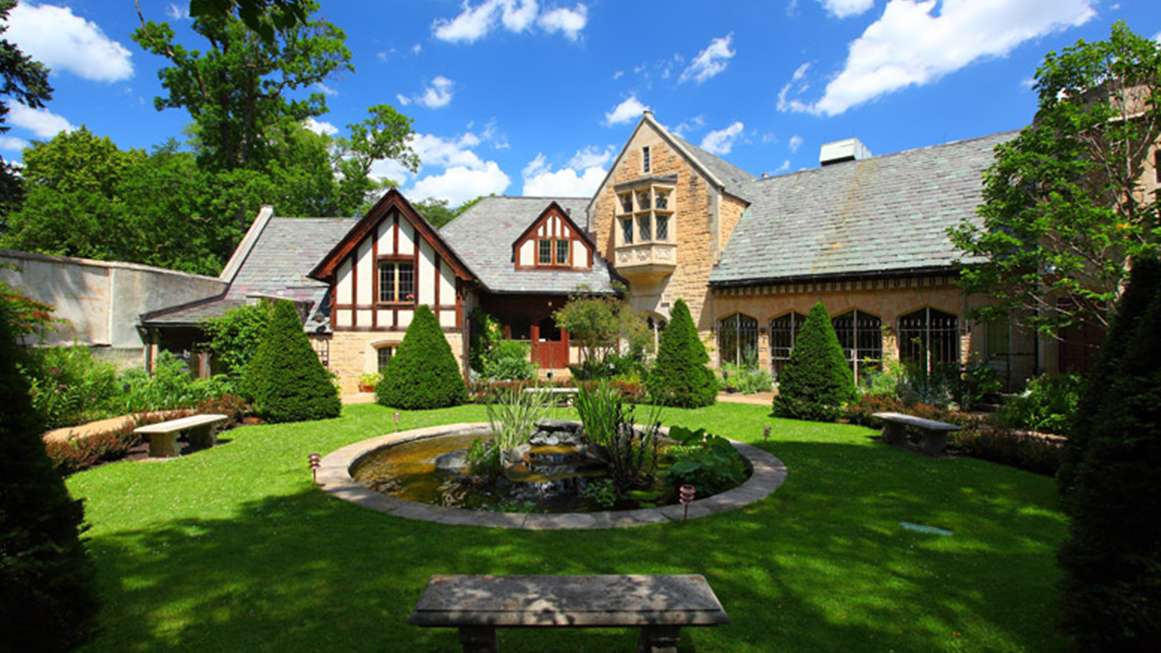
The Bakken Museum in Minneapolis is a unique celebration of electricity’s role in science and literature. Located near a picturesque lake, it features exhibits on electric medical devices and recreates experiments by Ben Franklin. A highlight includes an animatronic presentation inspired by Mary Shelley’s Frankenstein, exploring how early electrical experiments influenced her writing. The museum occupies a Gothic/Tudor mansion with a history of notable owners, including the inventor of the beer tap and Earl Bakken, who founded it in 1976 to showcase electro-medical artifacts.
Written by AI on 2026-09-18, from this article's own text only (the story summary below draws on all the coverage).

AI analysis

Story summary

Tucked away along one of Minneapolis' picturesque lakes, the Bakken Museum is a quirky celebration of human creativity and ingenuity. The museum, themed around electricity, features exhibits on electric-powered medical devices like prosthetics and pacemakers. Visitors can try out recreations of some of Ben Franklin's experiments with static electricity. Notably, there is also an exhibit that explores how early electrical experiments might have inspired Mary Shelley to write *Frankenstein*, complete with a spooky animatronic presentation. The museum itself is housed in a stunning Gothic/Tudor mansion built in 1930, which was purchased by Earl Bakken in 1976 after he invented the world's first wearable pacemaker.

Written for “Electricity and History Review” on 2026-11-02, grounded in this article and the 0 other(s) covering the same event.

Story

📰 Electricity and History Review
Entertainment · 1 article(s) covering the same event.

Compared with similar articles

Nothing to compare against. No article is close enough to this one for the pipeline to have linked or judged the pair.
How this article was measured signals, leaning charts, publisher record, byline, topics and claims

Signals How these are calculated →

Claims extracted
10
sentences that state something as happening or true
Uncertain
0%
0 of 10 hedged ("reportedly", "may", "according to")
Leaning
not political
takes no side on a contested political question
Publisher signals
67/100
Reason's corrections and hedging, across everything collected from it. Not a measure of accuracy.
Outlets on this story
1
Entertainment
Same framing elsewhere
1
articles that frame the event the way this one does
Analyzed 2026-09-18 · how these are computed

How this is being covered How these are calculated →

Article leaning vs. publisher reliability
Source leaning vs. consistency

Publisher

Reason · 1062 article(s) · 4 correction(s) detected
Running correction rate · 4 correction(s)

Who wrote this

Eric Boehm
20 article(s) here · 0 carrying a prediction
🔮 The New York Times reports that Democrats will move quickly on four items that are "consensus items among their members that are basic enough to bypass time-consuming committee consideration and go straight to the floor."
2026-10-30 · mixed framing · What Will Democrats Do?
🔮 Next week's election is a pivotal one for Colorado, as voters will decide a pair of ballot questions that could secure the state's low-tax, small-government reputation—or shatter it.
🔮 Habba will get $50 million over five years to do unspecified work for a company that barely exists, according to The New York Times, while Herrera got a presidential pardon for a 2025 campaign finance charge.
2026-10-22 · assertive framing · The Swamp King
🔮 A proposed "wealth tax" on California's billionaires could backfire and cost the state tens of billions of dollars in the long run.
🔮 America's interminable war with Iran has killed thousands, disrupted commerce that flows through the Strait of Hormuz, and raised prices on the home front. But there may be one silver lining.
🔮 The White House has not said when the purchases will be made, what prices will be paid, or who will be paying (private companies or taxpayers), though the Treasury announced that it would be issuing a "temporary general license to allow the supply of Russian diesel to the global market."
🔮 Instead, Rep. John James (R–Mich.) has introduced a bill that would use some tariff revenue to offset the economic harm being caused by…the tariffs.
🔮 "As of May 2026, USICH had 10 full-time employees and a part-time executive director," the Government Accountability Office (GAO) reported in an audit published last week.
🔮 Pretti's death would quickly become a national news story.
🔮 The Trump administration has touted the recent announcement of a new steel plant in Iowa as proof that the tariffs are working to revitalize American manufacturing—which is only true if you look at the benefits while willfully ignoring the costs.
Also by Eric Boehm
What Will Democrats Do?
2026-10-30 · Reason
The Swamp King
2026-10-22 · Reason
Nothing else under this byline is closely related to this article, so these are simply their most recent.
All 20 articles by Eric Boehm →

Topics

Bakken Gothic Minneapolis the Bakken Museum

Subjects

the Bakken Museum ORG · 2× Bakken ORG · 1× Ben Franklin's PERSON · 1× Earl Bakken PERSON · 1× Frankenstein PERSON · 1× Gothic NORP · 1× Mary Shelley PERSON · 1× Minneapolis GPE · 1× Richard Cornelius PERSON · 1×

Narrative

Tucked away along one of Minneapolis' picturesque lakes, the Bakken Museum is a quirky celebration of human creativity and ingenuity with a backstory that's nearly as fascinating.
framing: assertive · carried by 1 article(s) · first seen 2026-09-18
2026-09-18 · Reason
Review: Ben Franklin, Frankenstein, and the Wonders of Electricity · assertive framing

Claims (10 extracted, 0 hedged)

Tucked away along one of Minneapolis' picturesque lakes, the Bakken Museum is a quirky celebration of human creativity and ingenuity with a backstory that's nearly as fascinating. asserted
that → tuck → backstory
The museum is themed, quite loosely, around electricity. asserted
museum → theme → electricity
Exhibits include the history of electric-powered medical devices, such as prosthetics and pacemakers. asserted
Exhibits → include → prosthetics
Visitors can try out recreations of some of Ben Franklin's experiments with static electricity, though do heed warnings about how to avoid shocks. asserted
Visitors → try → shocks
That real-world science bleeds into fiction in the room featuring early experiments that likely helped inspire Mary Shelley to write Frankenstein. asserted
that → bleed → Frankenstein
A genuinely spooky theatrical presentation of the story is fully animatronic, fittingly including a creature brought to life by the power of electricity. asserted
presentation → include → electricity
That the whole museum is contained within a gorgeous Gothic/Tudor mansion surrounded by gardens only adds to its charm, as does the story of how the Bakken came to be. asserted
Bakken → contain → charm
Since its construction in 1930, the house has had several owners, including Richard Cornelius, the inventor of the beer tap. asserted
house → have → tap
Earl Bakken, who invented the world's first wearable pacemaker, bought the place in 1976 and began using it to display his collection of early electro-medical artifacts. asserted
who → invent → artifacts
Unorthodox and memorable, the Bakken Museum celebrates the spark of imagination that brings new ideas to life, whether in a lab or on the page. asserted
that → celebrate → page
💬Give feedback
🕘History 🎫Support