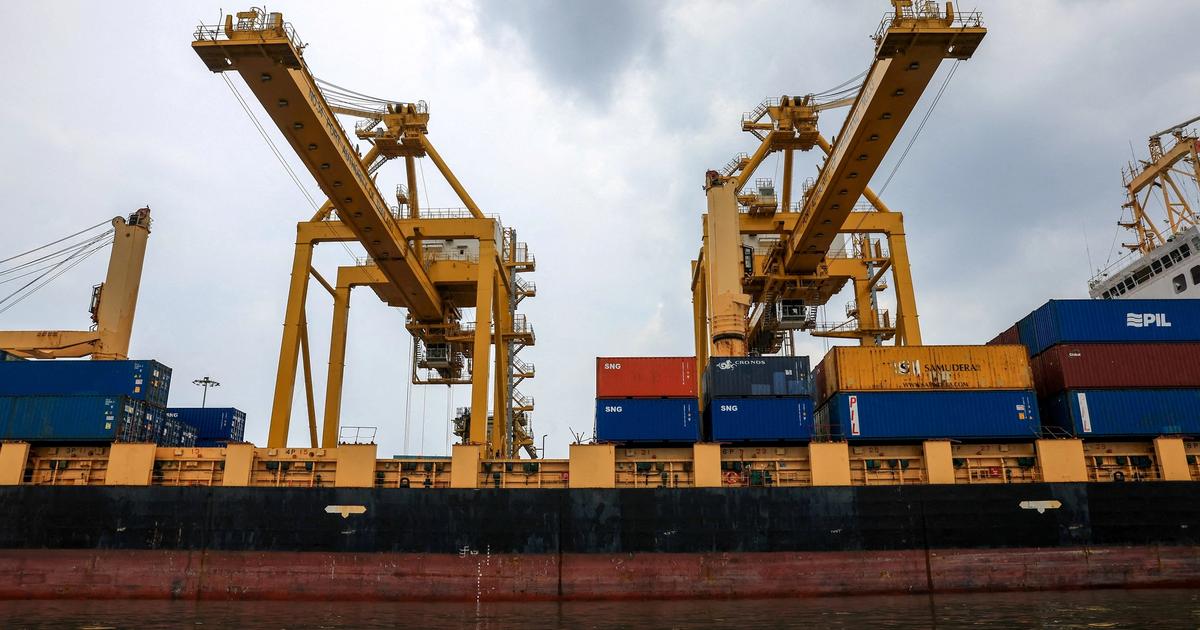
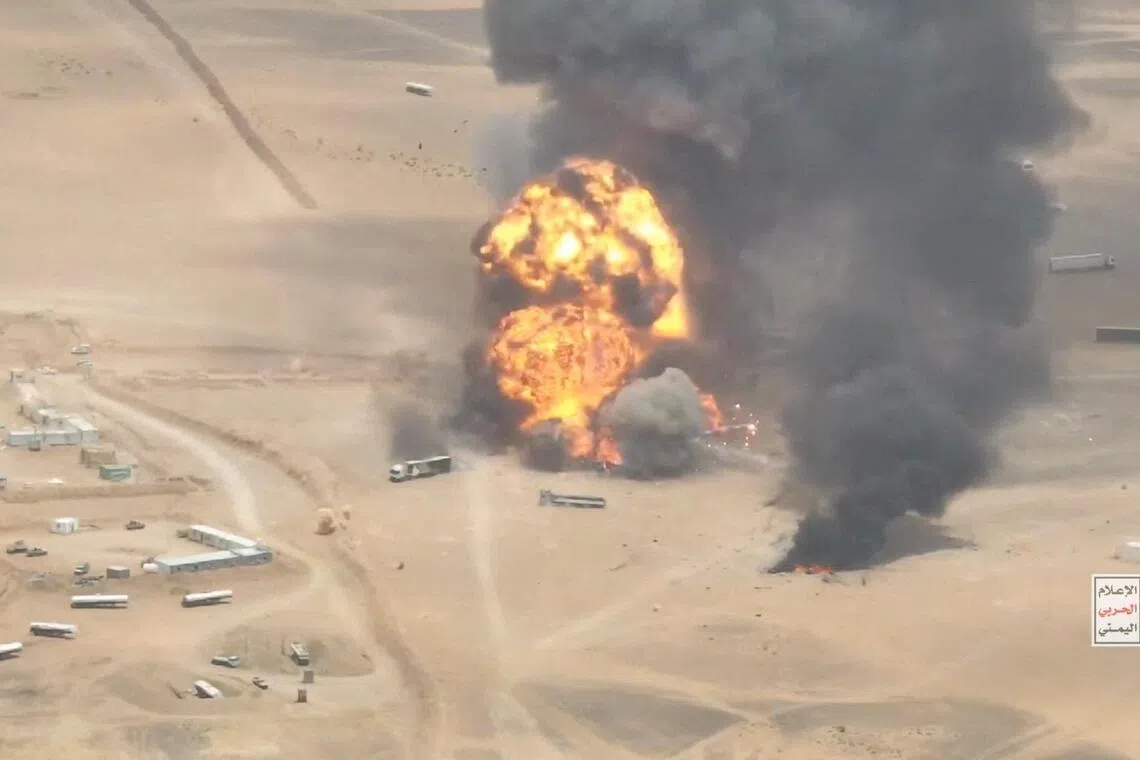
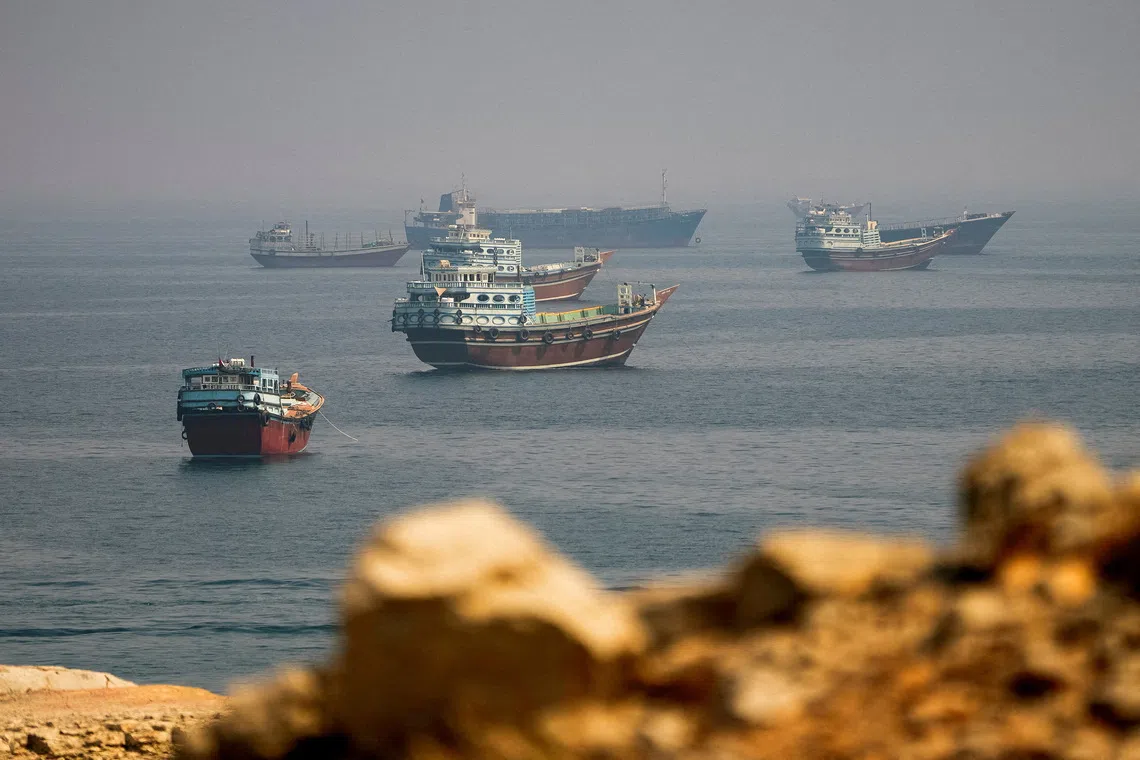
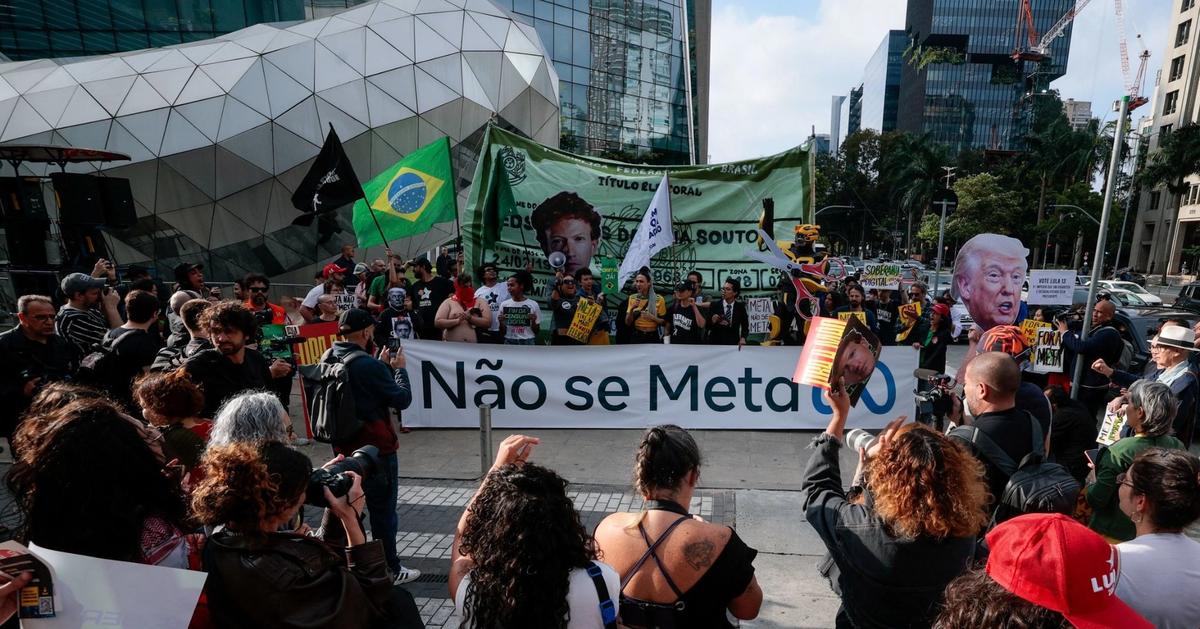
Photo via Semafor

New tanker orders spike as Iran war redraws trade routes

Read the original at Semafor ↗
Cite

Gonzalez, J. (2026, September 18). New tanker orders spike as Iran war redraws trade routes. Semafor. https://www.semafor.com/article/09/18/2026/new-tanker-orders-spike-as-iran-war-redraws-trade-routes

Dated when The Aporia collected the article, usually within hours of publication. Check the original for its exact date and byline.

Semafor · collected 2026-09-18 · by Jeronimo Gonzalez

Quick Summary

This year, shipowners have ordered tankers worth over $20 billion, doubling the amount from 2025 as demand surges due to the Middle East conflict. The closure of Saudi Arabia’s East-West Pipeline has redirected crude oil production from the Americas into longer transoceanic shipping routes, driving up tanker leasing costs to a record high of more than $1 million per day.
Written by AI on 2026-09-18, from this article's own text only (the story summary below draws on all the coverage).

AI analysis

Story summary

Shipowners are commissioning new tankers at an unprecedented rate this year, ordering more than twice as many as in all of 2025 due to increased demand sparked by conflicts in the Middle East. This $20 billion buying spree is the largest in at least a quarter century and reflects how global conflicts like the recent closure of Saudi Arabia’s key East-West Pipeline are changing trade routes. As a result, there's an increased reliance on crude oil from the Americas that must be transported via long transoceanic voyages. This shift has driven tanker leasing costs to record highs, with daily rates increasing tenfold over the past year to more than $1 million per day.
Written for “Iran War Redraws Trade Routes” on 2026-11-04, grounded in this article and the 0 other(s) covering the same event.

Story

📰 Iran War Redraws Trade Routes
Economy/Business · 1 article(s) covering the same event.

Compared with similar articles

This article reads unscored and hedges 0% of its claims. Each row says how that neighbour differs.
The Independent
⚖️ Leans left Hedges 1 of 40 claims Outlet record 59/100
“The articles discuss different aspects of the broader conflict between Iran and other nations, with Article A focusing on increased tanker orders due to changing trade routes and Article B detailing Iran's petrol crisis and government response.”
Semafor
⚖️ Leans right Hedges 1 of 5 claims Outlet record 59/100
“Article A reports on immediate drone attacks and pipeline shutdowns, while Article B discusses broader market responses over time including new tanker orders.”
Semafor
Hedges 0 of 4 claims Outlet record 59/100
“The articles discuss related impacts of energy disruptions and conflicts in Iran but describe different aspects: one focuses on price and supply issues, while the other reports on increased tanker orders due to shifting trade routes.”
BBC News
Hedges 1 of 22 claims Outlet record 66/100
“The articles discuss different aspects of the impact of the US-Iran war on oil markets and shipping, rather than describing the same specific incident or occurrence.”
The Straits Times
Hedges 1 of 19 claims Outlet record 66/100
“While both articles discuss disruptions caused by conflicts involving Saudi Arabia's oil infrastructure, they describe different aspects of the situation: Article A focuses on the global response to trade route changes and increased tanker orders, while Article B specifically reports on a decision by Saudi Aramco not to supply European customers in October.”
National Post
Hedges 1 of 18 claims Outlet record 60/100
“While both articles discuss impacts of Middle East conflicts on oil trade and supply issues, Article A focuses on global tanker orders increasing due to changes in trade routes, while Article B reports specifically on Saudi Arabia halting crude oil supplies to Europe because of an attack on a pipeline. These are related but distinct events.”
The Hindu
Hedges 1 of 8 claims Outlet record 60/100
“While both articles discuss disruptions in oil trade due to conflicts, Article A focuses on a trend of increased tanker orders and changing trade routes, while Article B reports specifically on Saudi Aramco halting crude deliveries to European refiners following an attack.”
The Straits Times
⚖️ Leans right Hedges 0 of 15 claims Outlet record 66/100
“The articles discuss different aspects related to oil trade and tanker demand due to geopolitical changes, but describe distinct events occurring at different times.”
How this article was measured signals, leaning charts, publisher record, byline, topics and claims

Signals How these are calculated →

Claims extracted
4
sentences that state something as happening or true
Uncertain
0%
0 of 4 hedged ("reportedly", "may", "according to")
Leaning
not political
takes no side on a contested political question
Publisher signals
59/100
Semafor's corrections and hedging, across everything collected from it. Not a measure of accuracy.
Outlets on this story
1
Economy/Business
Same framing elsewhere
1
articles that frame the event the way this one does
Analyzed 2026-09-18 · how these are computed

How this is being covered How these are calculated →

Article leaning vs. publisher reliability
Source leaning vs. consistency

Publisher

Semafor · 1509 article(s) · 3 correction(s) detected
Running correction rate · 3 correction(s)

Who wrote this

Jeronimo Gonzalez
69 article(s) here · 0 carrying a prediction
🔮 Experts believe Lula’s recent reelection means the push to regulate tech companies in Brazil will only grow.
🔮 And their liabilities may be bigger than investors realize: Research carried out by Nikkei showed Big Tech’s off-balance-sheet debt from AI-related obligations doubled in six months to about $3.2 trillion, equivalent to around 80% of their combined assets.
🔮 The US said it will suspend South Africa and Rwanda from its free trade pact with sub-Saharan Africa, after months of fraying ties with both nations.
🔮 Intense domestic competition has pushed producers to cut prices, moves that will likely anger China’s trading partners that are already frustrated by a flood of imports they say is undermining their domestic industry.
2026-11-02 · assertive framing · China’s manufacturing growth slows, adding to worries
🔮 “This may be the most transformative tech boom yet, but it’s not big enough to defy the high price of money,” an expert wrote.
🔮 Brazil’s debt burden steadily climbed over Lula’s third term and the deficit hit a record high; his reelection tanked Brazilian markets, reflecting investors’ fears the country’s fiscal picture will only worsen under his tenure as economic growth is forecast to cool in the years ahead and new benefits — including a reduction in the working week and an expansion of housing and education support — take hold.
2026-10-30 · assertive framing · Brazil’s economic outlook darkens as debt soars
🔮 Bolsonaro — who faces a corruption investigation but lost his legal immunity after resigning as a lawmaker to run for president — looked set to join the new right that has risen to power across the region in recent years.
🔮 While the political challenge against Lula’s victory appears to have subsided for now — the party of opposition leader Flávio Bolsonaro, who said the vote was rigged, conceded the election and US President Donald Trump signaled he would not intervene — Brasília is nonetheless staring at a fiscal reckoning.
2026-10-27 · assertive framing · Brazilian markets tumble on Lula's election victory
🔮 Many hope Big Tech earnings due this week will further stabilize a wobbly market that has grown wary of excessive AI spending.
2026-10-27 · assertive framing · Anthropic prospectus cheers investors ahead of IPO
🔮 However, the “soaring” similarity in the export baskets of China and the West could add to already high trade tensions, an expert at the Council on Foreign Relations argued.
2026-10-25 · assertive framing · Western luxury falters in China
Also by Jeronimo Gonzalez
Nothing else under this byline is closely related to this article, so these are simply their most recent.
All 69 articles by Jeronimo Gonzalez →

Topics

Saudi Arabia’s

Subjects

Saudi Arabia’s GPE · 1×

Narrative

The $20 billion buying spree, the biggest in at least a quarter century, comes as global conflicts redraw trade routes, including the recent closure of Saudi Arabia’s key East-West Pipeline.
framing: assertive · carried by 1 article(s) · first seen 2026-09-18
2026-09-18 · Semafor
New tanker orders spike as Iran war redraws trade routes · assertive framing

Claims (4 extracted, 0 hedged)

Shipowners have this year commissioned more than twice the number of tankers than in all of 2025 as they look to keep up with soaring demand sparked by the Middle East conflict. asserted
they → commission → conflict
The $20 billion buying spree, the biggest in at least a quarter century, comes as global conflicts redraw trade routes, including the recent closure of Saudi Arabia’s key East-West Pipeline. asserted
conflicts → come → Pipeline
In response, buyers have turned to crude produced in the Americas, which must be shipped via long transoceanic voyages. asserted
which → turn → voyages
The shift has sent the cost of leasing a tanker soaring to record highs, with daily rates growing around tenfold in the last year to more than $1 million. asserted
rates → send → million
💬Give feedback · no sign-in needed

No sign-in needed for now. Your note is sent without a name, so it cannot be answered.

🕘History 🎫Support