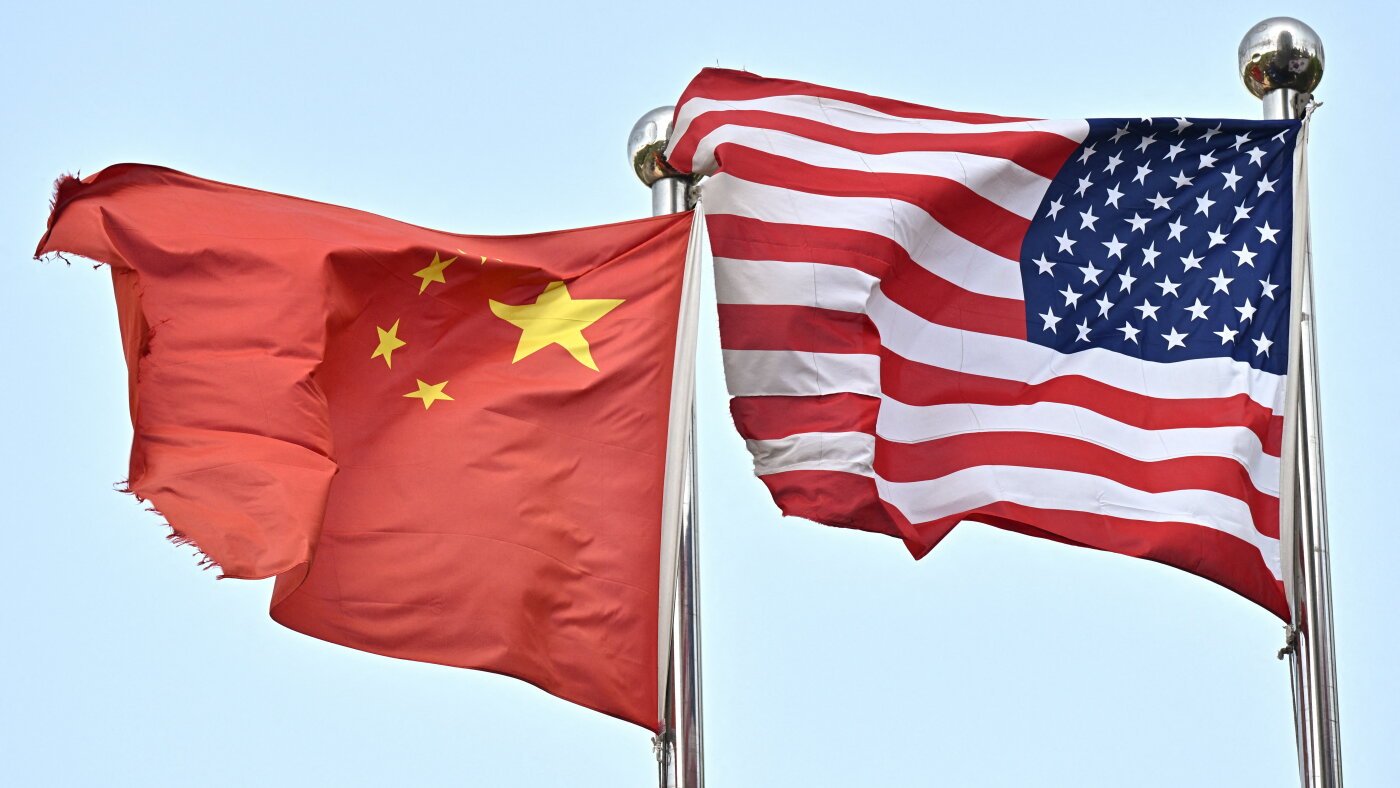
Even as Treasury Secretary Scott Bessent prepares to meet Chinese Vice Premier He Lifeng this weekend to discuss AI, President Donald Trump has dismissed public warnings about runaway AI as a “hoax.”
asserted
Trump → prepare → hoax
Meanwhile, an editorial in the state-owned China Daily accused America’s leading AI companies of using calls for a slowdown to “blunt China’s AI advance.”
asserted
editorial → own → advance
Neither the United States nor China is ready to slow down.
asserted
States → slow → ?
Neither trusts the other.
asserted
Neither → trust → other
And rapidly advancing AI systems will not wait for diplomacy to catch up.
asserted
diplomacy → advance → ?
But these realities do not mean Trump and Xi can ignore the mounting calls for the U.S. and China to talk about AI.
asserted
U.S. → mean → AI
Any such dialogue must avoid the two most common pitfalls for U.S.-China diplomacy: setting the ambitions so low that the talks become meaningless or so high that agreement becomes impossible.
asserted
agreement → avoid → ambitions
Aim too low, and the dialogue becomes a photo op followed by an anodyne communiqué about promoting innovation and reducing risks.
asserted
dialogue → aim → risks
Aim too high, chasing sweeping restrictions on frontier development that neither side has the political trust or the capacity to verify and enforce, and the meeting is set up for failure.
asserted
meeting → aim → failure
The former path fails to meet the stakes of the moment; the latter fails to recognize its constraints.
asserted
latter → fail → constraints
The path to AI safety
A better near-term goal would be for the U.S. and China to pursue AI safety in parallel and demonstrate their progress in practice.
asserted
U.S. → pursue → practice
That effort should be anchored in technical exchanges that make each country’s AI systems safer on their own terms.
asserted
systems → anchor → terms
The two countries should also establish a protocol to communicate about emerging AI incidents before they spiral into international crises.
asserted
they → establish → crises
These steps would represent meaningful progress, far more valuable than lofty statements or unverifiable commitments.
asserted
steps → represent → statements
The Trump Administration should push for technical exchanges on how to actually test models for dangerous capabilities and behaviors that neither country wants to see released into the wild.
asserted
country → push → wild
These include AI systems capable of helping amateurs develop bioweapons, or evading human oversight and control.
asserted
amateurs → include → oversight
American AI companies have been studying these risks for years, and they have also begun to appear in Chinese technical standards related to safety testing.
asserted
they → study → testing
Exchanging best practices and new insights about how to test for and mitigate these risks could render the systems built in both countries meaningfully safer.
uncertain
systems → exchange → countries
These proposed technical exchanges would not depend on “trust” or even strict “reciprocity” between the two superpowers, nor would they require identical conceptions of AI risk.
asserted
they → propose → risk
They would be driven by self-interest.
asserted
They → drive → interest
As the most advanced AI models grow even more powerful, both countries have an interest in ensuring that these systems remain controllable, regardless of where they are built or deployed.
asserted
they → grow → interest
That will require both countries to improve their model testing, monitoring and safeguards, and share promising findings that could enhance safety without surrendering a competitive edge or undermining national security.
uncertain
that → require → security
This diplomacy is less like negotiating a sweeping arms-control treaty than establishing shared safety practices and procedures for a technology neither government fully understands or controls.
asserted
government → negotiate → technology
The premise is not that Washington should trust Beijing, or vice versa, but that neither country benefits if the other loses control of a powerful system.
asserted
other → trust → system
For this approach to work, it must be accompanied by a government-to-government crisis-communication protocol.
asserted
it → work → protocol
What if an American AI model escapes its company’s control and hacks the networks of a Chinese company or the Chinese government?
asserted
model → escape → company
What if a Chinese AI-powered drone attacks a U.S. Navy vessel, and neither side can immediately determine whether the incident was accidental or deliberate?
asserted
incident → power → vessel
Washington detects a Chinese model conducting a dangerous cyber operation but cannot tell whether Beijing authorized it or whether a company has lost control of it?
asserted
company → detect → it
These are not the kind of existential risks President Trump has dismissed, but they are close cousins of incidents already unfolding in real time.
asserted
they → dismiss → time
The two countries need to lay the basic groundwork for dealing with them.
asserted
countries → need → them
Whether the communication channel succeeds or fails will depend on its operational design.
asserted
succeeds → succeed → design
What constitutes a notifiable incident?
asserted
What → constitute → incident
Who are the designated contacts?
asserted
contacts → designate → ?
How do the two sides signal that an incident was unauthorized without revealing sensitive intelligence?
asserted
incident → signal → intelligence
Serious, technically-informed diplomacy will be required to reach even provisional answers to these questions.
asserted
diplomacy → inform → questions
One essential feature of the channel should be that information about an incident, at least initially, be transmitted in writing rather than solely by phone.
asserted
information → transmit → phone
Real-time calls are often poor vehicles for conveying technical information with a Chinese system that runs on committees and documents, increasing the risk of miscommunication and misunderstanding.
asserted
that → convey → miscommunication
Sending a message in writing gives the relevant committees in China the ability to disseminate and analyze it and formulate a response that no individual official in China would feel empowered to give.
asserted
official → send → China
It also reduces the recipient’s ability to shade or distort the message.
asserted
It → reduce → message
Even this approach will be challenging, given China’s spotty record of suspending crisis-communication channels—or simply refusing to use them—precisely when tensions are highest.
asserted
tensions → give → them
…and 12 more, not listed.
 The Aporia