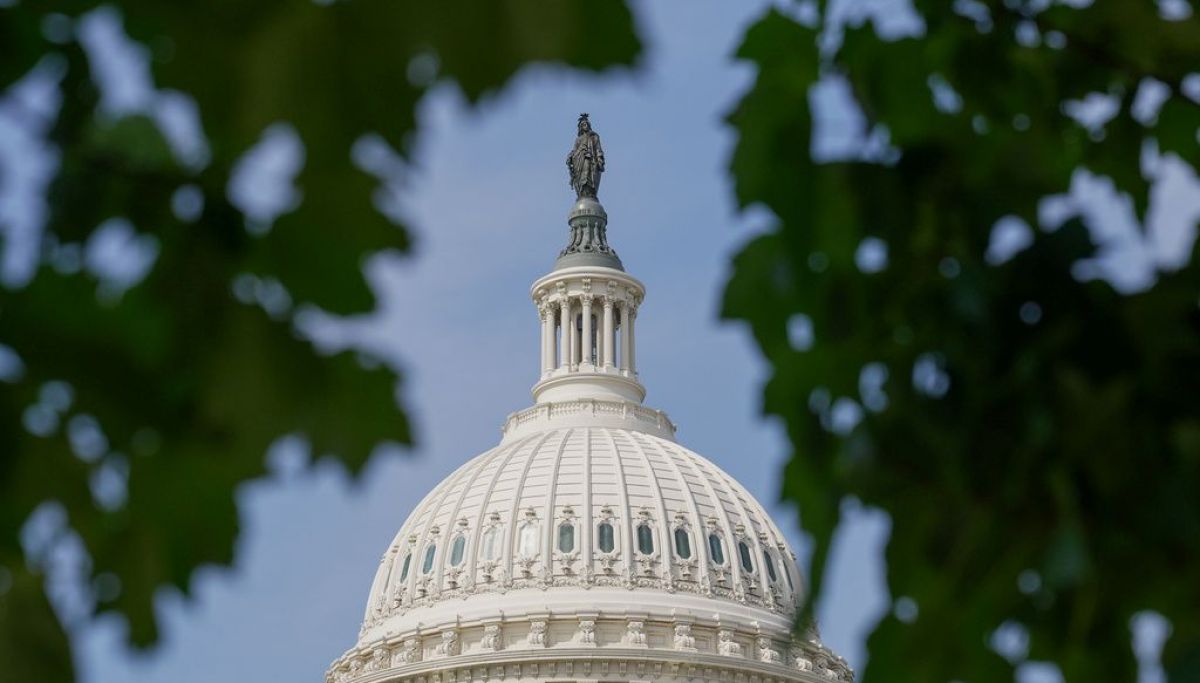
Photo via Washington Examiner

The cannon is loaded. It’s time to light the fuse on America’s building boom

Read the original at Washington Examiner ↗
Cite

Andryszak, A., Wiggins, D., Meyer, D., Naegele, E., & Harbert, K. (2026, September 18). The cannon is loaded. It’s time to light the fuse on America’s building boom. Washington Examiner. https://www.washingtonexaminer.com/op-eds/4731628/bipartisan-permitting-reform-energy-infrastructure/

Dated when The Aporia collected the article, usually within hours of publication. Check the original for its exact date and byline.

Washington Examiner · collected 2026-09-18 · by Amy Andryszak, Dena Wiggins, Dustin Meyer, Edith Naegele, Karen Harbert

Quick Summary

Washington is seeing growing consensus around the need for reforms in infrastructure permitting processes, an issue that typically faces political gridlock. Various stakeholders are now finding common ground on the urgency to build more infrastructure to address current needs in energy, manufacturing, and housing. The U.S. produced record amounts of natural gas in 2025 and is expected to do so again in 2026, with this production strengthening domestic and global energy security while providing stable prices for American consumers amidst geopolitical uncertainty. However, the infrastructure needed to support this growth faces significant delays due to permitting processes and regulatory hurdles, potentially jeopardizing these benefits if not addressed promptly.
Written by AI on 2026-09-19, from this article's own text only (the story summary below draws on all the coverage).

AI analysis

Story summary

In Washington, lawmakers are advancing bipartisan permitting bills aimed at modernizing project approvals while maintaining strong environmental standards. These efforts come as stakeholders across various industries and political perspectives agree on the need for permitting reform to address infrastructure, energy, manufacturing, and housing needs. The U.S. produced a record amount of natural gas in 2025 and is projected to do so again in 2026, according to the Energy Information Administration. This production growth aligns with the country becoming the largest exporter of liquefied natural gas globally, enhancing both domestic and international energy security while bolstering economic stability. The focus now shifts from whether reform is necessary to whether Congress will act on this momentum.

Written for “American Building Boom Begins” on 2026-11-04, grounded in this article and the 0 other(s) covering the same event.

Story

📰 American Building Boom Begins
Economy/Business · 1 article(s) covering the same event.

Compared with similar articles

This article reads leans strongly right and hedges 3% of its claims. Each row says how that neighbour differs.
New York Post
Hedges 1 of 14 claims Outlet record 66/100
“While both articles discuss the need for permitting reform and increased housing supply, they describe different initiatives and timelines.”
Toronto Star
⚖️ Leans right further left than this Hedges 1 of 25 claims Outlet record 64/100
“The articles discuss related themes of regulatory reform but refer to different countries (USA vs. Canada) and distinct legislative contexts.”
Toronto Star
⚖️ Leans strongly right Hedges 0 of 28 claims Outlet record 64/100
“The articles describe different legislative initiatives in the U.S. and Canada, aimed at permitting reform and removing barriers to development, but do not refer to the same specific incident or occurrence.”
Semafor
Hedges 3 of 22 claims Outlet record 59/100
“While both articles discuss progress on permitting reform in the Senate, they do not describe the same specific incident or occurrence.”
How this article was measured signals, leaning charts, publisher record, byline, topics and claims

Signals How these are calculated →

Claims extracted
29
sentences that state something as happening or true
Uncertain
3%
1 of 29 hedged ("reportedly", "may", "according to")
Leaning
Leans strongly right
of the writing, not the subject · beta estimate
Publisher signals
69/100
Washington Examiner's corrections and hedging, across everything collected from it. Not a measure of accuracy.
Outlets on this story
1
Economy/Business
Same framing elsewhere
1
articles that frame the event the way this one does
Analyzed 2026-09-19 · how these are computed

How this is being covered How these are calculated →

Article leaning vs. publisher reliability
Source leaning vs. consistency

Publisher

Washington Examiner · 4155 article(s) · 8 correction(s) detected
Running correction rate · 8 correction(s)

Who wrote this

Amy Andryszak
1 article(s) here · 1 carrying a prediction
🔮 The question is whether Congress will seize this growing momentum and deliver.
The only article under this byline in the corpus.
Dena Wiggins
1 article(s) here · 1 carrying a prediction
🔮 The question is whether Congress will seize this growing momentum and deliver.
The only article under this byline in the corpus.
Dustin Meyer
1 article(s) here · 1 carrying a prediction
🔮 The question is whether Congress will seize this growing momentum and deliver.
The only article under this byline in the corpus.
Edith Naegele
1 article(s) here · 1 carrying a prediction
🔮 The question is whether Congress will seize this growing momentum and deliver.
The only article under this byline in the corpus.
Karen Harbert
1 article(s) here · 1 carrying a prediction
🔮 The question is whether Congress will seize this growing momentum and deliver.
The only article under this byline in the corpus.

Topics

America American Americans U.S. Washington

Subjects

U.S. GPE · 3× America GPE · 2× American NORP · 2× Americans NORP · 2× Congress ORG · 1× Senate ORG · 1× Shelley Moore Capito PERSON · 1× U.S.-produced GPE · 1× Washington GPE · 1× the Energy Information Administration ORG · 1×

Narrative

In the House of Representatives, lawmakers have also advanced several bipartisan permitting bills, underscoring a growing consensus that the nation must modernize project approvals while maintaining strong environmental standards. And while recent regulatory changes and the One Big Beautiful Bill Act mark important steps forward, the work is far from finished.
framing: assertive · carried by 1 article(s) · first seen 2026-09-19
🔮 The question is whether Congress will seize this growing momentum and deliver.
2026-09-19 · Washington Examiner
The cannon is loaded. It’s time to light the fuse on America’s building boom · assertive framing

Claims (29 extracted, 1 hedged)

Permitting reform has been one of Washington’s most discussed and least accomplished priorities for years. asserted
reform → accomplish → years
That trend is now shifting. asserted
trend → shift → ?
Stakeholders who rarely agree on energy policy are finding common ground around a simple and urgent idea: America needs to build. asserted
America → agree → idea
Across industries, regions, and political perspectives, permitting reform has emerged as a shared priority and an essential action needed to meet today’s infrastructure, energy, manufacturing, and housing needs. asserted
reform → emerge → needs
The question is whether Congress will seize this growing momentum and deliver. asserted
Congress → seize → momentum
The U.S. produced a record amount of natural gas in 2025 and is on track to set a record again in 2026, according to the Energy Information Administration. uncertain
U.S. → produce → Administration
This production, driven by continued growth in key producing regions across the country, coincides with the U.S. becoming the largest exporter of liquefied natural gas to our overseas allies. asserted
U.S. → drive → allies
Both trends help strengthen domestic and global energy security while simultaneously supporting U.S. economic security. asserted
trends → help → security
As the importance of U.S.-produced natural gas grows at home and abroad, American consumers and businesses continue to benefit from a reliable, affordable, and abundant energy supply. asserted
consumers → grow → supply
Even amid geopolitical uncertainty and global market disruptions, domestic natural gas prices remained relatively stable, shielding Americans from the volatility experienced in many other parts of the world. asserted
prices → remain → world
We risk losing that advantage if our legislators do not take action. asserted
legislators → risk → action
The infrastructure needed to move natural gas from producing regions to families, businesses, manufacturers, power plants, and export facilities is increasingly constrained, and new projects often face years of delays, overlapping reviews, and regulatory uncertainty. asserted
projects → need → delays
Projects that are clearly in the public interest and needed to support growing demand can spend more time and money navigating permitting processes and extended legal delays than they do on construction. asserted
they → need → construction
That challenge extends beyond natural gas. asserted
challenge → extend → gas
It affects all forms of energy, electric transmission lines, manufacturing facilities, modes of transportation, and countless other investments critical to American competitiveness. asserted
It → affect → competitiveness
We know that energy demand will only continue to grow, which makes America’s ability to build the infrastructure that transports it safely, reliably, and affordably an economic imperative. asserted
that → know → it
If we cannot efficiently permit and construct the projects required to meet growing demand, consumers will ultimately pay the price through higher costs and reduced reliability. asserted
consumers → permit → costs
Improving the outdated and burdensome permitting process will enable essential energy to better reach the families and businesses who need it. asserted
who → improve → it
Simply put, Americans cannot meet the challenges of the coming decades with a permitting system designed for the needs of the 1970s. asserted
Americans → put → 1970s
Congressional leaders have worked diligently across the aisle and in both chambers to elevate this issue and identify practical solutions. asserted
leaders → work → solutions
In the Senate, leaders including Sens. Shelley Moore Capito (R-WV), Sheldon Whitehouse (D-RI), Mike Lee (R-UT), Martin Heinrich (D-NM), and Alan Armstrong (R-OK) have led bipartisan negotiations to modernize federal environmental reviews and permitting processes. asserted
leaders → include → reviews
In the House of Representatives, lawmakers have also advanced several bipartisan permitting bills, underscoring a growing consensus that the nation must modernize project approvals while maintaining strong environmental standards. And while recent regulatory changes and the One Big Beautiful Bill Act mark important steps forward, the work is far from finished. asserted
work → advance → steps
A meaningful bill should include targeted updates to the National Environmental Policy Act and Section 401 of the Clean Water Act, alongside necessary revisions to the judicial review process. asserted
bill → include → process
Too often, permitting reform has fallen victim to unrelated political stalemates or competing political priorities. asserted
reform → fall → stalemates
Congress has a narrow window to act before the coming election cycle consumes attention and we lose that momentum. asserted
we → have → momentum
Missing this opportunity would mean continuing a status quo that serves no one. asserted
that → miss → one
America’s energy success has always been built on abundance, innovation, and the ability to turn ideas into reality. asserted
success → build → reality
To maintain that success, we must be able to build the infrastructure that supports it. asserted
that → maintain → it
The time to pass durable permitting reform is now. asserted
time → pass → reform

💬Give feedback · no sign-in needed

No sign-in needed for now. Your note is sent without a name, so it cannot be answered.

🕘History 🎫Support