Photo via TIME

How a New Trump Administration Rule Could Restrict Access to Green Cards—and Confront Immigrants With a Tough Choice

Read the original at TIME ↗
Cite

Lee, C. (2026, September 18). How a New Trump Administration Rule Could Restrict Access to Green Cards—and Confront Immigrants With a Tough Choice. TIME. https://time.com/article/2026/09/18/trump-green-card-public-assistance-benefits-immigration/

Dated when The Aporia collected the article, usually within hours of publication. Check the original for its exact date and byline.

TIME · collected 2026-09-18 · by Chantelle Lee

Quick Summary

The Trump administration has introduced a new rule set to take effect on Friday, which updates a century-old policy regarding immigrants' access to public benefits and their ability to obtain green cards. This rule broadens the definition of "public charge," potentially preventing immigrants who use non-cash assistance programs like Medicaid or food stamps from securing permanent residency status. The administration defends this change as promoting self-reliance among immigrants, but critics argue it could discourage legal immigrants from accessing necessary public services and exacerbate existing health disparities.
Written by AI on 2026-09-18, from this article's own text only (the story summary below draws on all the coverage).

AI analysis

Story summary

On Friday, the Trump administration's new green card policy went into effect, allowing USCIS officials to consider applicants' use of social benefits when determining if they will become "public charges." This change rescinds a Biden-era rule that restricted immigration officers from weighing such factors. Approximately 1.3 million green card applications were pending as of December 2025, with denial rates estimated between 10 and 16 percent depending on the visa category. The new criteria could deter immigrants from accessing public benefits like Medicaid and food stamps, potentially impacting their eligibility for permanent residency. This policy is part of broader efforts by the Trump administration to tighten immigration regulations.

Written for “Trump Green Card Policy Restrictions” on 2026-11-04, grounded in this article and the 1 other(s) covering the same event.

Story

📰 Trump Green Card Policy Restrictions
Politics · 2 article(s) covering the same event. See how they differ ↓

Compared with similar articles

This article reads unscored and hedges 29% of its claims. Each row says how that neighbour differs.
Daily Mail
⚖️ Leans right Hedges 5 of 18 claims Outlet record 69/100
Al Jazeera
⚖️ Leans left Hedges 2 of 19 claims Outlet record 60/100
“Article A discusses two separate legal setbacks, one involving visa caps and another regarding residency restrictions. Article B focuses on a new rule about green card access based on public assistance usage, which is a different specific policy.”
Washington Examiner
⚖️ Leans strongly right Hedges 4 of 41 claims Outlet record 69/100
“Article A describes Mayor Mamdani and Attorney General James filing lawsuits against a new rule, while Article B explains the details of the Trump administration's rule itself.”
Mother Jones
⚖️ Leans strongly left Hedges 1 of 16 claims Outlet record 60/100
“Article A describes lawsuits filed against the rule before it took effect, while Article B discusses the implementation and impact of the rule itself.”
Los Angeles Times
⚖️ Leans left Hedges 2 of 34 claims Outlet record 95/100
“Article A reports on legal challenges to new rules, while Article B explains the rule itself and its expected impact.”
Times of India
Hedges 0 of 11 claims Outlet record 59/100
“Article A describes the lawsuit filed against the Green Card rule, while Article B explains the implementation and details of the new policy itself.”
ABC News (US)
Hedges 7 of 18 claims Outlet record 70/100
“Article A reports on the lawsuit filed against the new rule, while Article B discusses the details and implications of the rule itself before its implementation.”
The Independent
⚖️ Leans left Hedges 2 of 17 claims Outlet record 59/100
“While both articles discuss the same proposed rule and its implications, they describe different stages of the process: Article A covers legal action against an already introduced measure, while Article B describes the introduction and expected impact of the rule before it takes effect.”
Fox News
⚖️ Leans left Hedges 7 of 51 claims Outlet record 68/100
“Article A reports on legal action against an existing rule, while Article B describes the new rule itself and its implications.”
The Guardian
Hedges 3 of 21 claims Outlet record 66/100
“The articles discuss different stages: Article A reports on a lawsuit filed against the policy, while Article B describes the introduction and imminent implementation of the new rule.”
How this article was measured signals, leaning charts, publisher record, byline, topics and claims

Signals How these are calculated →

Claims extracted
38
sentences that state something as happening or true
Uncertain
29%
11 of 38 hedged ("reportedly", "may", "according to")
Leaning
withheld
no quote in the article backed the model's score
Publisher signals
59/100
TIME's corrections and hedging, across everything collected from it. Not a measure of accuracy.
Outlets on this story
2
Politics
Same framing elsewhere
1
articles that frame the event the way this one does
Analyzed 2026-09-18 · how these are computed

How this is being covered How these are calculated →

Article leaning vs. publisher reliability
Source leaning vs. consistency

Publisher

TIME · 805 article(s) · 2 correction(s) detected
Running correction rate · 2 correction(s)

Who wrote this

Chantelle Lee
26 article(s) here · 1 carrying a prediction
🔮 Less than 24 hours before Election Day, President Donald Trump railed against the Democratic Party and contended that if his supporters show up to the polls, Republicans “will win in a landslide.”
🔮 Polling by the New York Times/Siena, released last week, found that likely voters in South Carolina are essentially evenly split over whether they would vote for the Republican nominee, who was appointed by the state governor to finish the remainder of her late brother’s term after he died in July and later announced that she would run for the seat in the midterms, and Dr. Annie Andrews, a pediatrician who won the Democratic primary in June.
🔮 Because imagine the power and the influence that act could hold.”
🔮 Those issues could be critical ones for voters as they go to the polls.
🔮 The clocks in most of the U.S. will fall back an hour this weekend as Daylight Saving Time once again comes to an end.
🔮 The U.S. Supreme Court said Tuesday that it will take up a case to decide whether a watchdog organization can obtain information to help establish whether the now-defunct Department of Government Efficiency (DOGE) is subject to a federal public records law.
🔮 In less than a month, most of the U.S. will fall back an hour, continuing the cycle of biannual clock changes.
🔮 A poll conducted by the New York Times/Siena University between Sept. 21-30, for instance, found that 49% of likely Texas voters said they would back Hinojosa for governor, while 46% said they would re-elect Abbott.
🔮 Ferrato opened her remarks by honoring her mother, who she said was a survivor and “will be forever the inspiration for my work.” “I pledge allegiance to survivors of domestic abuse and sex trafficking,” Ferrato said.
Also by Chantelle Lee
Nothing else under this byline is closely related to this article, so these are simply their most recent.
All 26 articles by Chantelle Lee →

Topics

DHS Department of Homeland Security Medicaid U.S. the Trump Administration

Subjects

Trump PERSON · 5× the Trump Administration ORG · 3× Joe Biden PERSON · 2× Medicaid ORG · 2× U.S. GPE · 2× Administration ORG · 1× American NORP · 1× DHS ORG · 1× Department of Homeland Security ORG · 1× Donald Trump PERSON · 1×

Narrative

The guidance, though, is vague—it doesn’t include a full list of the benefits that can be taken into consideration, saying only that immigration officers will be “using good judgment and discretion” and will be “making individualized, fact-specific public charge inadmissibility determinations, based on a totality of the alien’s circumstances.” “Now, the officers who are reviewing and adjudicating these cases have much more discretion in how they make that determination—whether they believe the person is likely to become a public charge,” says Melissa Shepard, the legal services director at the Immigrant Defenders Law Center.
framing: mixed · carried by 1 article(s) · first seen 2026-09-18
🔮 President Donald Trump’s Administration is rolling out a new rule that experts predict will make it more difficult for immigrants to get green cards if they access public assistance programs, such as Medicaid and food stamps—and could deter those hoping to obtain the status from enrolling in public benefits.

Claims (38 extracted, 11 hedged)

President Donald Trump’s Administration is rolling out a new rule that experts predict will make it more difficult for immigrants to get green cards if they access public assistance programs, such as Medicaid and food stamps—and could deter those hoping to obtain the status from enrolling in public benefits. uncertain
they → roll → benefits
The rule, which goes into effect on Friday, updates a policy dating back to the 19th century that the U.S. has long used to prohibit immigrants who are believed to be likely to become a “public charge” from getting green cards. asserted
who → go → cards
Trump’s Department of Homeland Security (DHS) has argued that the change “is restoring the basic principle that immigrants must be able to support themselves,” adding that it is “reaffirming the requirement of self-reliance, protecting public resources, and ending policies that encouraged dependency on hard-working American taxpayers.” asserted
that → argue → taxpayers
The rule marks the latest move in Trump’s efforts to sharply restrict both illegal and legal immigration. asserted
rule → mark → immigration
The President enacted a similar change during his first Administration, but the effort was subjected to court challenges and ultimately rescinded by his successor, Joe Biden. asserted
effort → enact → successor
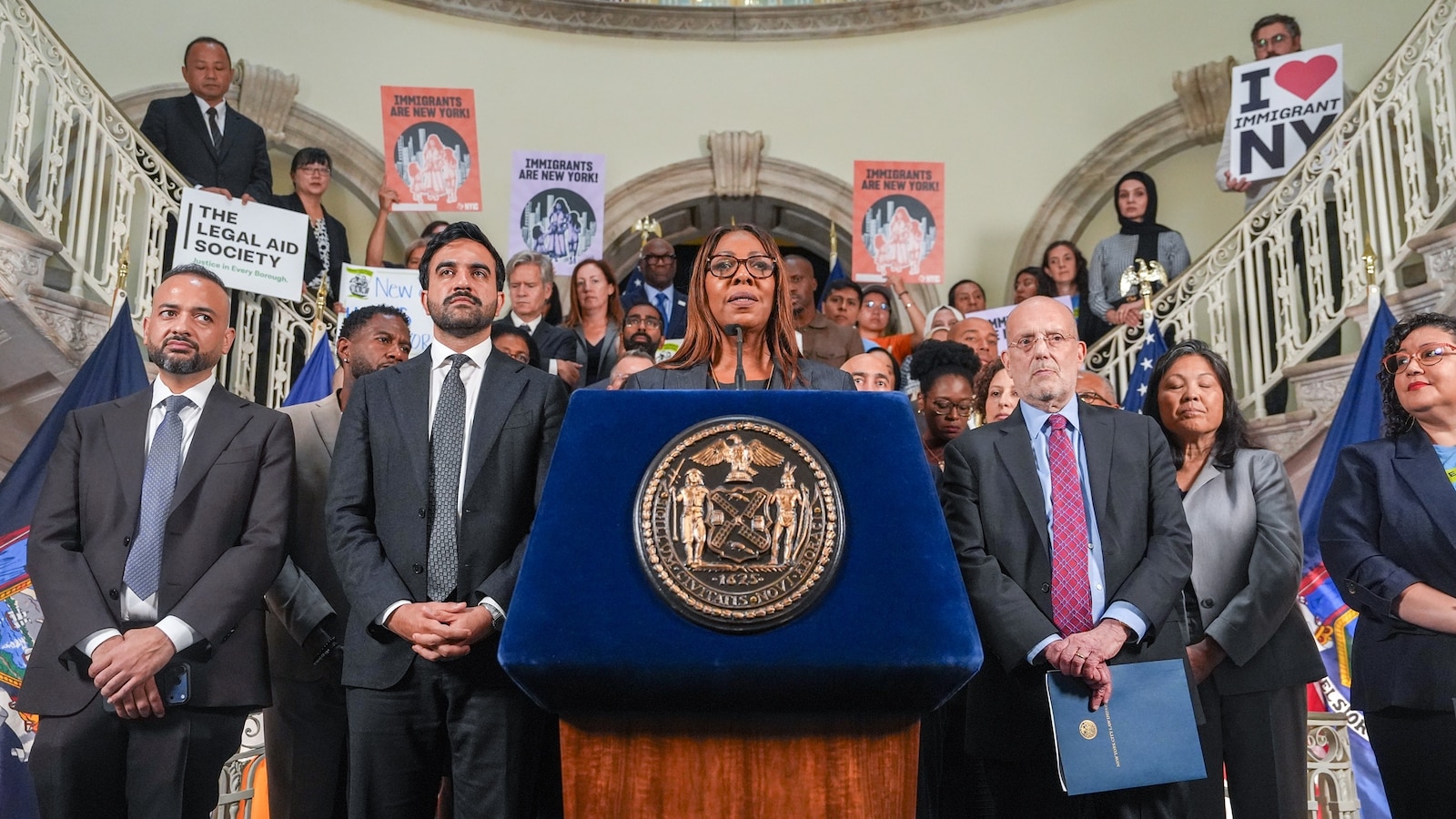
The new rule has already been challenged in court by a coalition of more than a dozen states, including New York and California. asserted
rule → challenge → York
It’s unclear at this point how the ongoing litigation will affect the rollout of the rule. uncertain
litigation → ’ → rule
Here’s what to know about the new rule and how it could affect immigrants. uncertain
it → ’ → immigrants
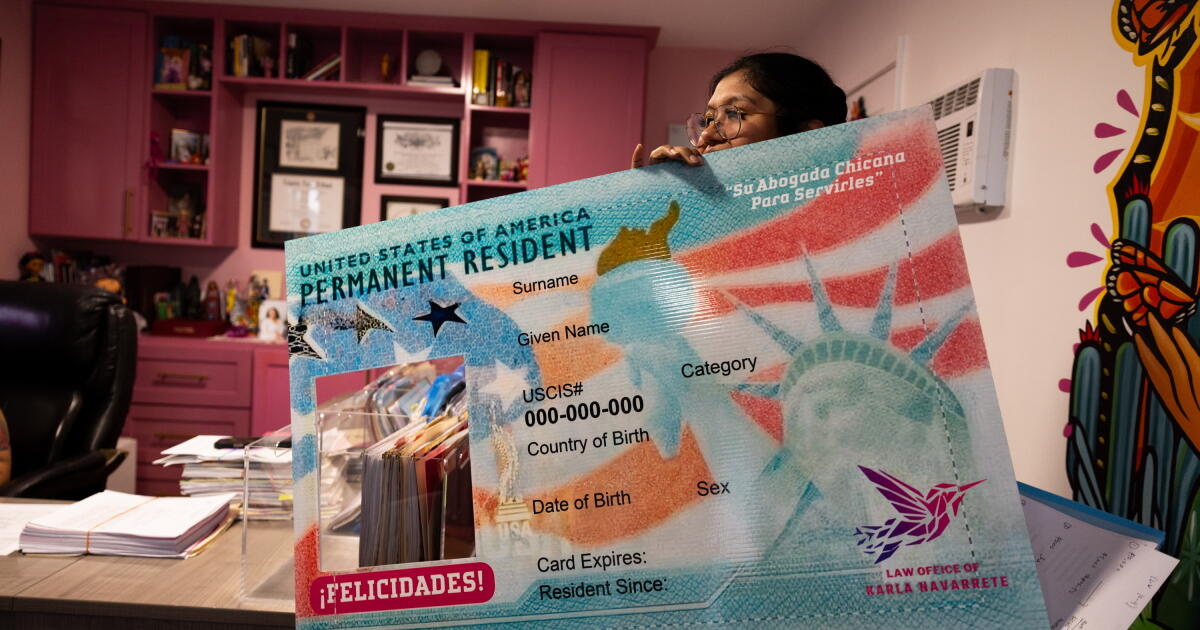
With its new policy, the Trump Administration is implementing a change to what’s known as the “public charge” rule, a policy first established under the Immigration Act of 1882. asserted
what → implement → 1882
Since then, one factor that the U.S. government has considered when reviewing green card applications is whether the applicant is likely to become dependent on government assistance. asserted
applicant → consider → assistance
Historically, officials reviewing these types of applications have only taken into account cash benefit programs—for instance, Supplemental Security Income from Social Security—as “public benefits” that could lead to an immigrant being deemed a “public charge” and having their green card application denied. uncertain
application → review → benefits
They have usually not deemed non-cash public benefits, such as Medicaid and food stamps, as programs that would disqualify an immigrant from obtaining permanent resident status. asserted
that → deem → status
During his first term in the White House, Trump tried to expand the programs that could result in an immigrant being deemed a “public charge,” but a federal judge ruled that the policy had to be vacated, saying it had “numerous unexplained flaws” that made it “arbitrary and capricious.” uncertain
it → try → flaws
When former President Joe Biden was in office, he officially rescinded Trump’s rule and stipulated that non-cash benefits would not result in an immigrant being considered a “public charge.” asserted
immigrant → rescind → rule
How is the Trump Administration’s new policy different from the long-standing “public charge” rule? asserted
policy → stand → rule
In July, the Trump Administration revealed that it was revoking the Biden-era policy and was rolling out a change similar to the one that failed during Trump’s first term. asserted
that → reveal → term
Under the new rule, officials reviewing green card applications are able to consider a broader scope of public benefit programs. asserted
officials → review → programs
The Trump Administration has noted that the new “public charge” rule does not apply to some immigrants—for instance, refugees. asserted
rule → note → instance
The guidance, though, is vague—it doesn’t include a full list of the benefits that can be taken into consideration, saying only that immigration officers will be “using good judgment and discretion” and will be “making individualized, fact-specific public charge inadmissibility determinations, based on a totality of the alien’s circumstances.” “Now, the officers who are reviewing and adjudicating these cases have much more discretion in how they make that determination—whether they believe the person is likely to become a public charge,” says Melissa Shepard, the legal services director at the Immigrant Defenders Law Center. asserted
Shepard → include → Center
“The difference now is that it’s a much broader analysis, whereas before it was a little more limited.” asserted
it → ’ → ?
Adriana Cadena, the executive director of the Protecting Immigrant Families Coalition, says she worries that, because the new policy is so broad, it “opens the door for abuses by immigration officials” during the green card application process. asserted
it → say → process
“It’s going from having guidance and clarity and understanding to opening the door to any kinds of programs,” she says. asserted
she → go → programs
How could the Trump Administration’s new rule affect immigrants? uncertain
rule → affect → immigrants
Immigration experts say that the new policy could result in more green card applications being rejected, as well as cause many immigrants to delay seeking permanent resident status. uncertain
immigrants → say → status
Charles Kuck, an immigration lawyer and former national president of the American immigration Lawyers Association, says that he expects there will be “massive numbers of denials” of green card applications as this new policy is rolled out. asserted
policy → say → applications
He adds that he and his colleagues have heard from some of their clients that they plan to wait until after Trump leaves the White House before filing their green card applications. asserted
Trump → add → applications
People who do not have permanent resident status in the U.S. are not eligible for many public assistance programs, but experts also warn that the new rule could result in immigrants disenrolling from public benefit programs that they or their children are eligible for because they are afraid of potentially harming their chances of obtaining a green card in the future. uncertain
they → have → future
Experts are additionally concerned that the Trump Administration’s new rule opens the door to immigration officials taking into account whether a green card applicant’s family member used a public benefit. asserted
member → open → benefit
The new rule stipulates that “if there is evidence in the record the alien’s family members whom the alien is legally obligated to support receive means-tested public benefits based on the alien’s income falling below the designated threshold, DHS would consider that fact.” asserted
DHS → stipulate → fact
Kuck says he fears that this could lead to a situation where, for example, if a green card applicant’s child who is a U.S. citizen receives a public benefit, such as a free school lunch program, that could lead to their parent’s application being denied. uncertain
application → say → program
According to Shepard, it’s not yet clear how exactly the new policy will be applied in practice because it is so broad and gives immigration officers “so much discretion.” uncertain
it → accord → discretion
But she says she believes the change will cause people to be “a lot more cautious” and potentially fearful to access public assistance programs. asserted
people → say → programs
Cadena says the new rule is “forcing families to choose between either being able to adjust their status in the future or be able to have access to essential programs like food and child care.” asserted
rule → say → food
“In the current environment that we are in, where immigrant family safety is constantly being threatened, immigrant families … want to be able to keep their families together,” Cadena says. asserted
Cadena → threaten → families
“And if keeping their child enrolled in an important program like Medicaid is going to threaten that, then they would more than likely disenroll their children from these programs.” asserted
they → keep → programs
DHS has previously estimated that the rollout of the “public charge” change could lead to more than 950,000 people disenrolling from or choosing not to enroll in public assistance programs. uncertain
people → estimate → programs
The change is the latest action the Trump Administration has taken to restrict immigration, including ramping up efforts to limit several legal pathways to immigration and proposing raising the fees associated with applying for citizenship. asserted
Administration → take → citizenship
“This is just one small factor or small piece of the entire immigration system, I think, that is under attack,” Shepard says. asserted
Shepard → think → attack

💬Give feedback
🕘History 🎫Support