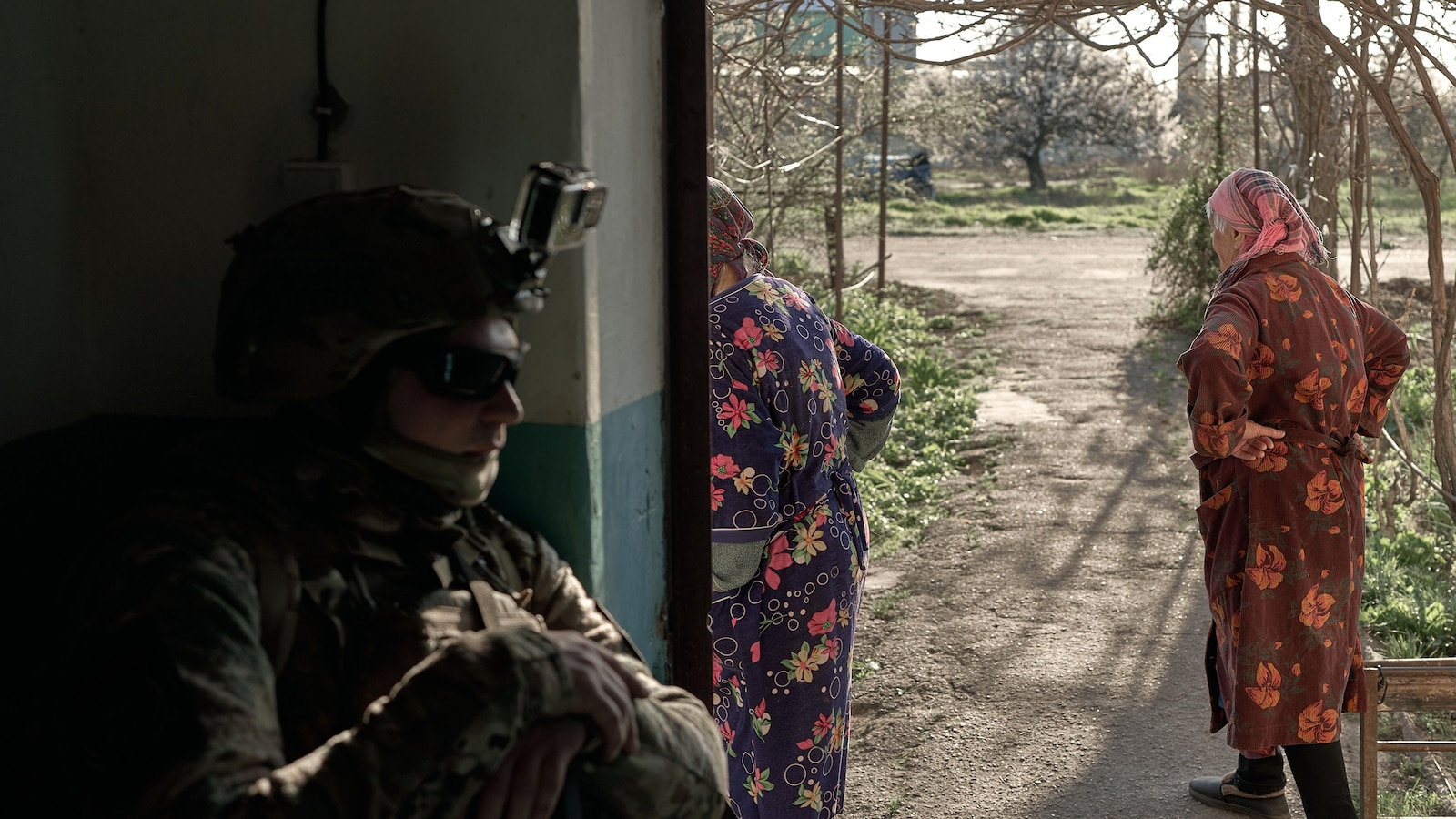
Photo via BBC News

A four-minute warning isn't enough: Russia's new relentless missile tactics exhaust Kyiv residents

Read the original at BBC News ↗
Cite

Kuryshko, D., & Kalimbet, V. (2026, September 18). A four-minute warning isn't enough: Russia's new relentless missile tactics exhaust Kyiv residents. BBC News. https://www.bbc.co.uk/news/articles/cwp93k9gpnv1o?at_medium=RSS&at_campaign=rss

Dated when The Aporia collected the article, usually within hours of publication. Check the original for its exact date and byline.

BBC News · collected 2026-09-18 · by Diana Kuryshko, Victoria Kalimbet

Quick Summary

Russia's recent missile tactics against Kyiv have intensified, leading to frequent air raid alerts and fatalities. In July alone, Russia launched dozens of ballistic missiles over ten days, killing nearly 60 civilians according to official figures. This shift in strategy includes the use of fast-traveling ballistic missiles that provide minimal warning time—sometimes just four minutes—which has left many residents like Daria feeling unsafe and reconsidering their living arrangements.
Written by AI on 2026-09-19, from this article's own text only (the story summary below draws on all the coverage).

AI analysis

Story summary

In recent months, Russia has increased its missile attacks on Kyiv, Ukraine's capital. This year, for instance, in just 10 days of July, Russia launched dozens of missiles in three major strikes, resulting in nearly 60 civilian deaths according to official figures. A BBC Verify analysis found that Kyiv now experiences more daily air raid alerts than at any point since the start of Russia's full-scale invasion in 2022.

For many Ukrainians like Daria, a 27-year-old resident who initially felt secure with just two interior walls separating her from potential danger, these relentless attacks have changed everything. During an attack one night in May, Daria realized she could no longer feel safe even inside her home on the ninth floor. The intensity of blasts caused windows to repeatedly slam open and shut as explosions continued around them.

This new reality forces residents like Natalia, 37, to plan multiple safety measures: from bedding up against walls for protection to moving into shared corridors or basements, while still admitting that these places do not provide full security. Despite the growing dangers, many Ukrainians continue to adapt their survival strategies to cope with Russia's relentless missile tactics.

Written for “Russian Missile Tactics Ukraine” on 2026-11-03, grounded in this article and the 0 other(s) covering the same event.

Story

📰 Russian Missile Tactics Ukraine
World · 1 article(s) covering the same event.

Compared with similar articles

This article reads unscored and hedges 9% of its claims. Each row says how that neighbour differs.
Al Jazeera
Hedges 4 of 44 claims Outlet record 60/100
“The articles describe different events happening at distinct locations and times involving separate incidents.”
NBC News
⚖️ Leans left Hedges 6 of 43 claims Outlet record 60/100
“The articles describe different aspects of the ongoing conflict; one focuses on technological advancements and warnings from Eric Schmidt, while the other discusses Russia's new missile tactics affecting residents in Kyiv.”
Daily Mail
Hedges 2 of 43 claims Outlet record 69/100
“The articles discuss different time periods and aspects of the conflict; Article A focuses on Boris Johnson's comments about Russian attacks, while Article B describes recent missile tactics exhausting Kyiv residents.”
The Independent
Hedges 4 of 53 claims Outlet record 59/100
“The articles describe different aspects and times of the conflict between Russia and Ukraine; one focuses on a successful anti-drone weapon test, while the other discusses Russian missile attacks on Kyiv.”
ABC News (US)
Hedges 6 of 73 claims Outlet record 70/100
“The articles describe attacks on different Ukrainian cities (Kherson and Kyiv) with distinct narratives and timelines.”
BBC News
Hedges 5 of 59 claims Outlet record 68/100
“The articles describe different aspects of the ongoing conflict; one focuses on Ukrainian postal workers delivering mail near front lines, while the other discusses Russian missile tactics affecting Kyiv residents.”
The Straits Times
Hedges 0 of 13 claims Outlet record 66/100
“The articles describe different aspects of the conflict over time and place: one reports on a Ukrainian offensive push, while the other discusses Russia's missile tactics against Kyiv.”
The Straits Times
Hedges 3 of 10 claims Outlet record 66/100
“Article A describes a specific drone attack on a petrol station and warehouse facilities in Kyiv on September 15, while Article B discusses Russia's overall increased intensity of attacks against the Ukrainian capital over several months.”
BBC News
⚖️ Leans left Hedges 3 of 45 claims Outlet record 68/100
“The articles describe different aspects of the conflict between Russia and Ukraine without focusing on the same specific incident.”
NPR
⚖️ Leans left Hedges 2 of 58 claims Outlet record 60/100
“The articles describe different events related to Russia's invasion of Ukraine but do not report on the same specific incident.”
How this article was measured signals, leaning charts, publisher record, byline, topics and claims

Signals How these are calculated →

Claims extracted
75
sentences that state something as happening or true
Uncertain
9%
7 of 75 hedged ("reportedly", "may", "according to")
Leaning
not political
takes no side on a contested political question
Publisher signals
68/100
BBC News's corrections and hedging, across everything collected from it. Not a measure of accuracy.
Outlets on this story
1
World
Same framing elsewhere
1
articles that frame the event the way this one does
Analyzed 2026-09-19 · how these are computed

How this is being covered How these are calculated →

Article leaning vs. publisher reliability
Source leaning vs. consistency

Publisher

BBC News · 5013 article(s) · 6 correction(s) detected
Running correction rate · 6 correction(s)

Who wrote this

Diana Kuryshko
1 article(s) here · 1 carrying a prediction
🔮 Even on nights of heavy bombardment, the 27-year-old could sleep through the explosions in her apartment in Kyiv.
The only article under this byline in the corpus.
Victoria Kalimbet
1 article(s) here · 1 carrying a prediction
🔮 Even on nights of heavy bombardment, the 27-year-old could sleep through the explosions in her apartment in Kyiv.
The only article under this byline in the corpus.

Topics

Kyiv Russia Ukraine Ukrainian Ukrainians

Subjects

Kyiv GPE · 8× Daria PERSON · 6× Russia GPE · 5× Nadia PERSON · 3× Ukraine GPE · 3× Olha PERSON · 2× BBC ORG · 1× Russians NORP · 1× Ukrainian NORP · 1× Ukrainians NORP · 1×

Narrative

Plan A is to spread bedding in the hallway behind two interior walls; Plan B is to move the family into the building's shared corridor; and Plan C is to head for the basement. Even there, she admits, she does not feel entirely safe. "I keep a backpack with essential items," says Natalia, 37.
framing: assertive · carried by 1 article(s) · first seen 2026-09-19
🔮 Even on nights of heavy bombardment, the 27-year-old could sleep through the explosions in her apartment in Kyiv.

Claims (75 extracted, 7 hedged)

- Published For much of Russia's full-scale invasion of Ukraine, Daria was not afraid of the shelling. asserted
Daria → publish → shelling
Even on nights of heavy bombardment, the 27-year-old could sleep through the explosions in her apartment in Kyiv. uncertain
old → sleep → Kyiv
Like many Ukrainians, she relied on the "two-wall rule": staying safe by keeping two walls between herself and the outside world. asserted
she → rely → herself
But this year that has changed. asserted
that → change → ?
In recent months, Russia has scaled up the intensity and frequency of its attacks against the Ukrainian capital. asserted
Russia → scale → capital
In the first 10 days of July alone, the Russians launched dozens of ballistic missiles in three major attacks, killing nearly 60 civilians, according to official figures. uncertain
Russians → launch → figures
Similar large scale attacks took place in August and September. asserted
attacks → take → August
A BBC Verify analysis of government figures found Kyiv is now suffering more daily air raid alerts than at any time since Russia's full-scale invasion in 2022. asserted
Kyiv → find → 2022
It was during an attack one night in May that Daria realised she no longer felt safe in her home. uncertain
she → realise → home
She and her boyfriend were in the corridor of their ninth-floor apartment, watching a boxing match, as explosions went off around them, the blast waves causing the windows to repeatedly slam open and shut. asserted
windows → watch → them
When the fight ended, "there was no longer anything to distract me," Daria says. asserted
Daria → end → me
"That's when I realised I was really scared." asserted
I → realise → ?
At first, she thought she would start using a nearby bomb shelter during attacks. asserted
she → think → attacks
But in June, when a young mother was killed running to a shelter in Kyiv, Daria decided she needed to leave the city altogether. asserted
she → kill → city
She returned to her family's country house, 30km (18.6 miles) away in Romankiv, and now spends a total of four hours a day commuting to and from Kyiv, where she works in the defence sector. asserted
she → return → sector
Residents in Kyiv who say they had got used to Russia's missile and drone strikes have told the BBC World Service the renewed intensity of the attacks is making them rethink how they live their lives. asserted
they → say → lives
Previously, Ukraine's air-defence network and military intelligence gave residents a degree of predictability. asserted
network → give → predictability
Large-scale attacks could often be detected in advance, allowing people to spend the night in shelters, leave the city or take other precautions. uncertain
people → detect → precautions
But since the summer, Russia has changed its tactics. asserted
Russia → change → tactics
It has relied less on aircraft, whose movements can be spotted ahead of time, and more on ballistic missiles that travel at tremendous speed and provide little warning. asserted
that → rely → warning
Air-raid alerts sometimes begin only moments before impact, or even simultaneously with the first explosions. asserted
alerts → begin → explosions
Daria can see her nearest shelter from the window of her apartment, which she still rents. asserted
she → see → which
Even so, it takes around 10 minutes to reach it. asserted
it → take → it
During a ballistic attack, she might have just four minutes' warning or less, she says. uncertain
she → have → warning
She decided to leave Kyiv in June after holidaying abroad this summer and seeing people living "normal" lives. asserted
people → decide → lives
Since then, she has only spent one night in Kyiv. asserted
she → spend → Kyiv
Yet, for many, leaving is not an option. asserted
leaving → leave → many
Sixty-two-year-old Olha Vlasova lives on the seventh floor of a high-rise apartment block with her 98-year-old mother, Nadia Tsybina. asserted
Vlasova → live → mother
Despite her age, Nadia remains intensely engaged with the world. asserted
Nadia → remain → world
From her bed she follows events in Ukraine and abroad, discussing everything from US President Donald Trump's policies, to anti-corruption protests in Kyiv, and the Epstein files. asserted
she → follow → Kyiv
She's also learned that she can often tell, simply by listening, whether a Russian missile or drone has been intercepted or has reached its target. asserted
missile → learn → target
This summer, she says she has heard fewer interceptions. asserted
she → say → interceptions
"It's upsetting when there's nothing to shoot them down with," Nadia says. asserted
Nadia → be → them
"I can hear them firing with whatever they've got, rifles, machine guns." asserted
they → hear → rifles
With Nadia confined to her bed, she and Olha cannot go to a shelter, however serious an attack is. asserted
attack → confine → shelter
Instead, as soon as an air-raid siren sounds, Olha covers her mother with a blanket, pushes a mattress into their window frame, and then hides in a wardrobe which puts two walls between her and outside. asserted
which → sound → her
Nadia places a pillow over her head to protect her face from flying glass. asserted
Nadia → place → glass
Once in her wardrobe, Olha will often stay awake watching the news all night. asserted
Olha → stay → news
"They come in, they bomb us," Nadia says. asserted
Nadia → come → us
"You haven't even had time to fall asleep, and there's another alert. asserted
You → have → time
…and 35 more, not listed.

💬Give feedback
🕘History 🎫Support