The Aporia
The Straits Times. (2026, September 19). Hungarians and Slovaks share breakfast on Danube bridge that survived war and division. The Straits Times. https://www.straitstimes.com/world/europe/hungarians-and-slovaks-share-breakfast-on-danube-bridge-that-survived-war-and-division
The Straits Times. “Hungarians and Slovaks share breakfast on Danube bridge that survived war and division.” The Straits Times, 19 Sept. 2026, https://www.straitstimes.com/world/europe/hungarians-and-slovaks-share-breakfast-on-danube-bridge-that-survived-war-and-division.
The Straits Times. “Hungarians and Slovaks share breakfast on Danube bridge that survived war and division.” The Straits Times, September 19, 2026. https://www.straitstimes.com/world/europe/hungarians-and-slovaks-share-breakfast-on-danube-bridge-that-survived-war-and-division.
Dated when The Aporia collected the article, usually within hours of publication. Check the original for its exact date and byline.
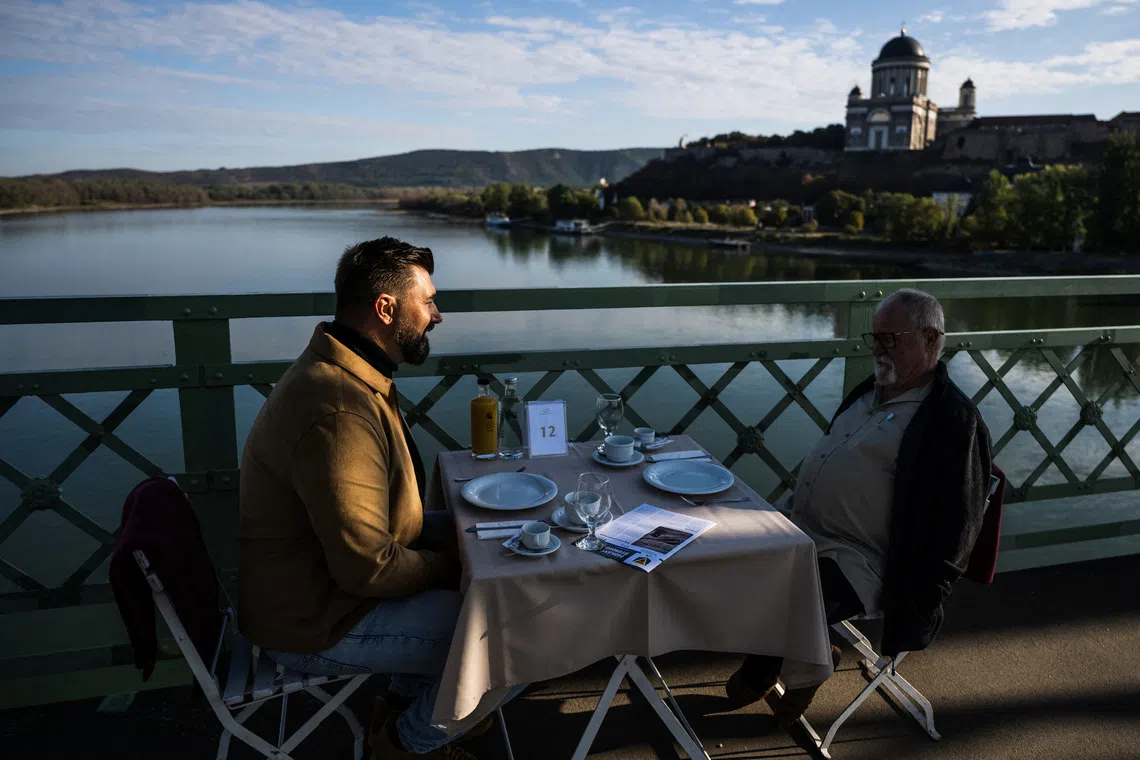
On September 19, residents from Esztergom in Hungary and Sturovo (also known as Parkany) in Slovakia gathered on the historic Maria Valeria Bridge to share a communal breakfast. The bridge, which has been destroyed twice since its construction in 1895—most recently by retreating German forces during World War II—and then rebuilt in 2001, served as a symbolic venue for fostering friendship between the two communities. Organized by Norbert Nagy, the event featured tables laid out along the bridge offering food like croissants and coffee to encourage interaction among locals from both sides of the border. Despite some tensions often stirred up by politicians, local people highlighted their peaceful coexistence, with Laszlo Valacsay stating that such issues are not generated by the residents but rather by those in power. Ethnic Hungarians constitute about 9% of Slovakia's population of 5.5 million people, many of whom live in villages along this border area.