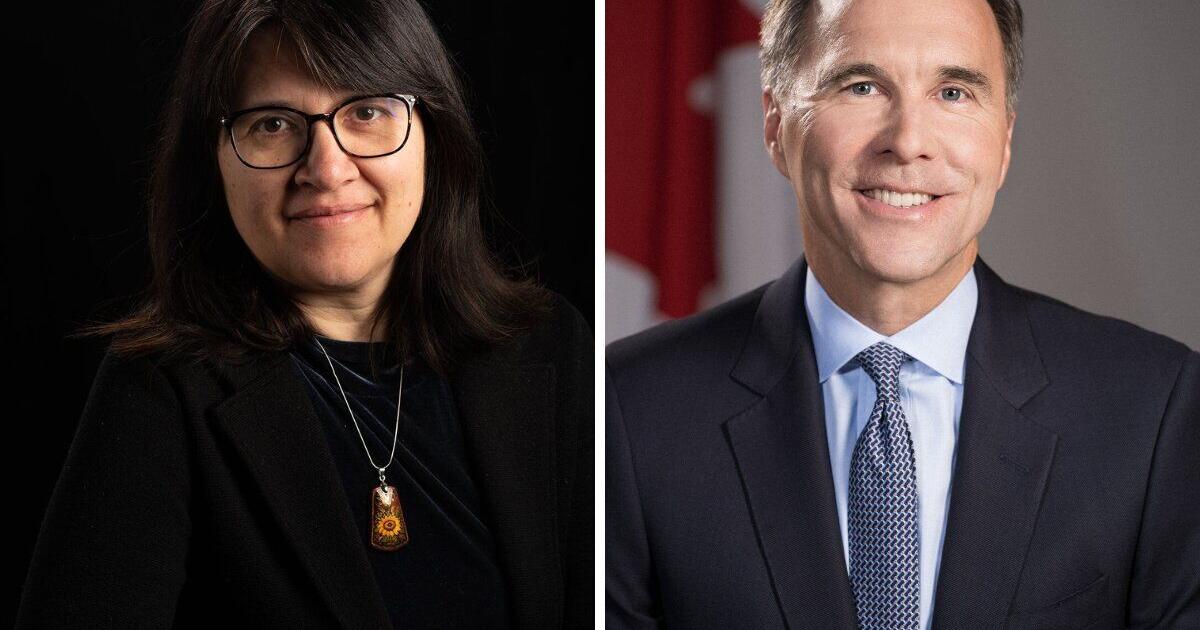
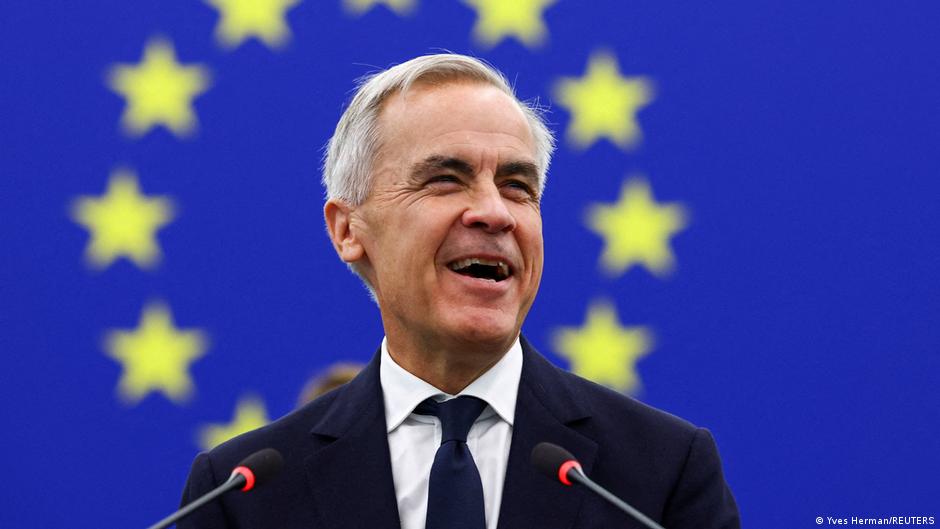
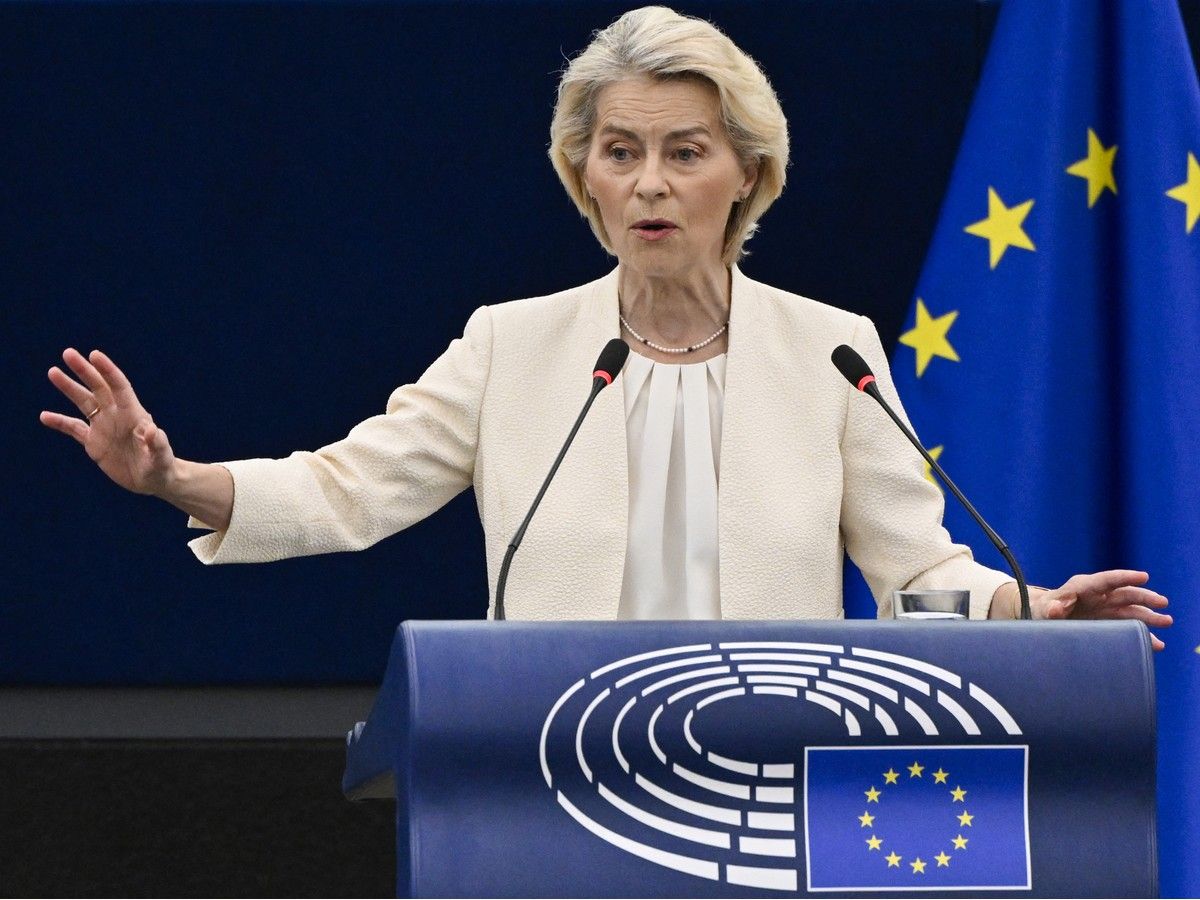
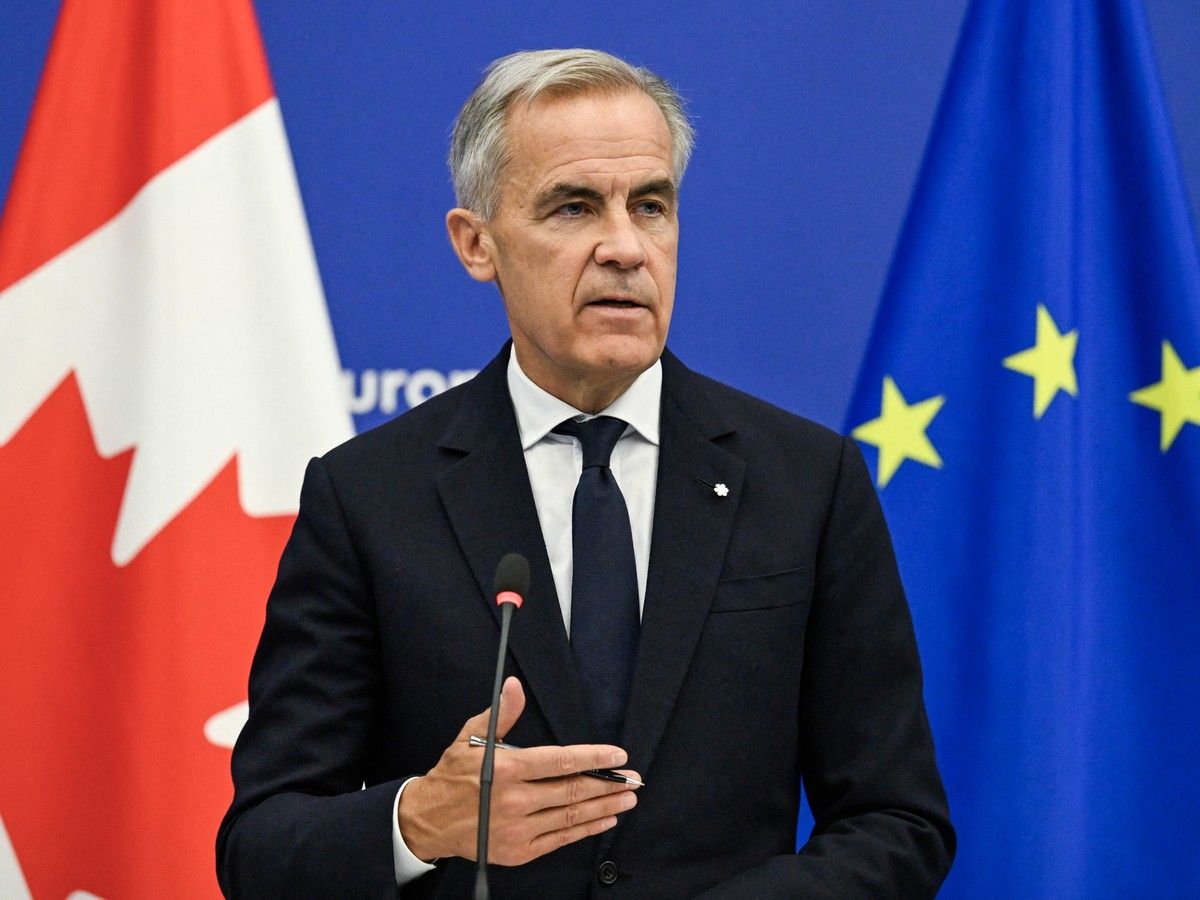
Photo via Toronto Star

Should Canada apply to become the 28th member state of the European Union?

Read the original at Toronto Star ↗
Cite

Berz, K. L. (2026, September 19). Should Canada apply to become the 28th member state of the European Union? Toronto Star. https://www.thestar.com/opinion/contributors/should-canada-apply-to-become-the-28th-member-state-of-the-european-union/article_e3eff477-6435-41b5-b35f-c36c63902c11.html

Dated when The Aporia collected the article, usually within hours of publication. Check the original for its exact date and byline.

Toronto Star · collected 2026-09-19 · by Katharine Lake Berz

Quick Summary

European Commission President Ursula von der Leyen recently proposed making Canada an “associate member” of the European Union, a novel relationship that could deepen ties between the two regions. Prime Minister Mark Carney welcomed this idea as Canada seeks to diversify its trade and strengthen sovereignty in response to U.S. policies under President Donald Trump. Political scientist Maria Popova advocates for full EU membership for Canada to protect against threats to Canadian sovereignty, while former finance minister Bill Morneau cautions that such a move could jeopardize the significant economic relationship with the United States.
Written by AI on 2026-09-19, from this article's own text only (the story summary below draws on all the coverage).

AI analysis

Story summary

Prime Minister Mark Carney of Canada is exploring closer ties with the European Union (EU), aiming for a "unique alliance" rather than full membership. The push comes amid tensions with the United States, including tariffs on billions of dollars in cross-border trade. Reports suggest Canada and the EU are discussing ways to let Canadian goods, services, and workers move freely within strategic supply chains such as energy, AI, defense, and critical minerals. Carney is set to address the European Parliament in Strasbourg this week to pitch Canada's partnership proposal. While some officials initially hinted at an "associate member" status for Canada, Carney has clarified that discussions will focus on forming a unique alliance rather than seeking full EU membership or associate status.

Written for “Canada EU Alliance Talks” on 2026-11-02, grounded in this article and the 87 other(s) covering the same event.

Story

📰 Canada EU Alliance Talks
Politics · 88 article(s) covering the same event. Compare every outlet's account →

Compared with similar articles

This article reads leans left and hedges 8% of its claims. Each row says how that neighbour differs.
Deutsche Welle
Hedges 2 of 33 claims Outlet record 95/100
The Globe and Mail
Hedges 0 of 2 claims Outlet record 52/100
“The articles discuss different aspects of Canada's relationship with the EU; one reports on Carney announcing a unique alliance, while the other discusses von der Leyen proposing an associate membership and Carney welcoming this idea in European Parliament.”
Toronto Star
Hedges 6 of 26 claims Outlet record 64/100
“While both articles discuss potential EU-Canada relations and mention similar figures, they describe different aspects of the topic—one focusing on government proposals and reactions, while the other reports public opinion poll results.”
National Post
Hedges 4 of 34 claims Outlet record 60/100
“While both articles discuss similar discussions about Canada's relationship with the EU, they describe different stages or angles of the discourse rather than a single specific occurrence.”
BBC News
Hedges 4 of 27 claims Outlet record 68/100
“The articles discuss similar topics but describe different stages or aspects of a developing situation rather than the exact same occurrence.”
The Globe and Mail
Hedges 0 of 2 claims Outlet record 52/100
“While both articles discuss Prime Minister Carney's stance on Canada becoming an associate member of the EU, they describe different moments in the process and do not clearly refer to the exact same specific event or statement.”
Al Jazeera
⚖️ Leans left Hedges 7 of 55 claims Outlet record 60/100
“The articles discuss related topics regarding Canada's potential relationship with the EU but do not describe the same specific incident or occurrence.”
Toronto Star
Hedges 0 of 6 claims Outlet record 64/100
“The articles discuss different viewpoints regarding Canada's potential relationship with the EU but describe distinct events - one welcoming the idea and another rejecting it.”
BBC News
⚖️ Leans left Hedges 5 of 26 claims Outlet record 68/100
“While both articles discuss the possibility of Canada becoming an associate member of the EU, they describe different stages or contexts in the discussions rather than a single specific occurrence.”
National Post
Hedges 2 of 32 claims Outlet record 60/100
“While both articles discuss Prime Minister Mark Carney's engagement with the EU, they describe different aspects of the situation—one focuses on Carney’s speech and its implications for Canada-EU relations, while the other discusses the broader idea of Canada becoming an associate member of the EU.”
How this article was measured signals, leaning charts, publisher record, byline, topics and claims

Signals How these are calculated →

Claims extracted
60
sentences that state something as happening or true
Uncertain
8%
5 of 60 hedged ("reportedly", "may", "according to")
Leaning
Leans left
of the writing, not the subject · beta estimate
Publisher signals
64/100
Toronto Star's corrections and hedging, across everything collected from it. Not a measure of accuracy.
Outlets on this story
88
Politics
Same framing elsewhere
1
articles that frame the event the way this one does
Analyzed 2026-09-19 · how these are computed

How this is being covered How these are calculated →

Article leaning vs. publisher reliability
Source leaning vs. consistency

Publisher

Toronto Star · 11094 article(s) · 28 correction(s) detected
Running correction rate · 28 correction(s)
2026-10-26
Correction
2026-10-24
Correction
2026-10-07
Correction
2026-09-24
Correction

Who wrote this

Katharine Lake Berz
3 article(s) here · 1 carrying a prediction
🔮 Hopefully, these unconventional pairings will inspire new ideas to help make Canada a better place for everyone.
2026-10-24 · assertive framing · It's time to stop changing the clocks
🔮 Joining the EU would safeguard Canada’s progressive values and provide economic stability.
🔮 He knew he could be next.
Also by Katharine Lake Berz
It's time to stop changing the clocks
2026-10-24 · Toronto Star
Nothing else under this byline is closely related to this article, so these are simply their most recent.

Topics

Canada Canadian U.S. the European Union the United States

Subjects

Canada GPE · 13× the United States GPE · 9× Canadian NORP · 8× U.S. GPE · 5× Trump PERSON · 4× Maria Popova PERSON · 3× Russia GPE · 3× Bill Morneau PERSON · 2× Donald Trump PERSON · 2× the European Union ORG · 2×

Narrative

Former federal finance minister Bill Morneau, who played a key role in negotiating the Canada-U.S.-Mexico trade agreement disagreed, arguing that Canada’s enormous economic relationship with the United States remains too important to jeopardize.
framing: assertive · carried by 1 article(s) · first seen 2026-09-19
🔮 Joining the EU would safeguard Canada’s progressive values and provide economic stability.
2026-09-19 · Toronto Star
Should Canada apply to become the 28th member state of the European Union? · assertive framing

Claims (60 extracted, 5 hedged)

What once seemed a far-fetched idea — Canada loosening its economic dependence on the United States and moving closer to the European Union — is suddenly being discussed at the highest levels of government. asserted
Canada → seem → government
This week, European Commission President Ursula von der Leyen proposed making Canada the EU’s first “associate member,” an unprecedented relationship that has yet to be defined. asserted
that → propose → ?
Prime Minister Mark Carney welcomed the idea Thursday, telling the European Parliament that Canada wants a deeper alliance with Europe as it seeks to diversify its trade and strengthen its sovereignty. asserted
it → welcome → sovereignty
But how far should Canada go? asserted
Canada → go → ?
In a conversation last year, McGill University political scientist Maria Popova argued Canada should seek full EU membership as protection against U.S. President Donald Trump’s threats to Canadian sovereignty. asserted
Canada → argue → sovereignty
Former federal finance minister Bill Morneau, who played a key role in negotiating the Canada-U.S.-Mexico trade agreement disagreed, arguing that Canada’s enormous economic relationship with the United States remains too important to jeopardize. asserted
relationship → play → States
A growing number of Canadians are contemplating what once seemed unthinkable — abandoning North American free-trade agreements and joining the European Union. asserted
what → grow → Union
McGill University’s Maria Popova is urging Canada to seek European Union membership to counter U.S. President Donald Trump’s threats to Canadian sovereignty. asserted
Popova → urge → sovereignty
Popova, an Associate Professor of Political Science and Scientific Director of Montreal’s Jean Monnet Centre, spoke with former federal Finance Minister Bill Morneau. asserted
Popova → speak → Morneau
Morneau, who played a key role in Canada’s 2017 USMCA negotiations — the trade deal between the United States, Mexico, and Canada — believes that strong relations with the United States are vital to Canadian prosperity. asserted
relations → play → prosperity
The Trump administration in the United States is threatening Canadian sovereignty and jilting our long-standing trading partnership. asserted
administration → threaten → partnership
Europe offers more reliable allies who are committed to liberal democracy, freedom of speech and the rule of law. asserted
who → offer → law
Joining the EU would safeguard Canada’s progressive values and provide economic stability. asserted
Joining → join → stability
It would also send a strong geopolitical message to the U.S. that we will not let them bully or conquer us. asserted
them → send → us
I agree we should look for ways to deepen our alliances, but we need to recognize how significant our current ties are with the United States and how important they are for Canadian livelihoods. asserted
they → agree → livelihoods
The footprint between our two countries is enormous: about three-quarters of Canadian exports go to the United States and almost half of Canadian imports come from the United States. asserted
half → go → States
Dislodging this strong relationship could put us in real jeopardy. uncertain
Dislodging → dislodge → jeopardy
But the U.S. is changing, and the Trump administration’s erosion of democratic norms is concerning. asserted
erosion → change → norms
It has repeatedly undermined faith in elections, violated civil rights and tried to deny fair trial, defied judicial decisions, incited political violence and attacked the media. asserted
It → undermine → media
Like Russia, the United States no longer seems to respect the sovereignty of other states, threatening to make Canada the 51st state, annex Greenland from Denmark and take the Panama Canal. asserted
Canada → seem → Canal
I worry that the goal of both Vladimir Putin’s Russia and the Trump administration is to divide the world into neat spheres of influence where the U.S. controls North America and Russia controls Europe. asserted
Russia → worry → Europe
By joining the EU, Canada would send a strong message that we are challenging Putin and Trump and that we want to be united with countries that believe in liberal democracy like we do. asserted
we → join → democracy
I understand what you’re saying. asserted
you → understand → what
Political decisions south of the border are putting our historically strong relationship at risk. asserted
decisions → put → risk
But only 4.5 per cent of Canadian exports go to the EU. asserted
cent → go → EU
We have a much bigger stake in finding a way to work with our American friends and neighbours. asserted
We → have → friends
And it’s important to recognize that they are our American friends and neighbours especially when their government does things we find unreliable. asserted
we → ’ → things
I believe that our prime minister is navigating through these rocky shoals in a skilful way. asserted
minister → believe → way
I have hope that we’ll get through this. asserted
we → have → this
Will we end up in a situation where tariffs are higher than they were previously? asserted
they → end → situation
That may be an unfortunate outcome — because tariffs don’t add to the wealth of either country. uncertain
tariffs → add → country
But I think we can create a new normal that keeps the benefits we want. asserted
we → think → benefits
We do have a pretty good deal right now. asserted
We → have → deal
But the question is whether this deal will last. asserted
deal → last → ?
The Trump administration appears to admire dictators like Putin. asserted
administration → appear → Putin
What happens if the U.S. becomes more authoritarian and tries to control our economic choices, our immigration policy and our military without us being an equal partner? asserted
us → happen → choices
We could become a vassal state to the much bigger, much more powerful United States. uncertain
We → become → States
I agree that we need to be open-minded about how we can create deeper relationships with other countries that share our values. asserted
that → agree → values
But joining the EU and adopting the euro would mean relinquishing control over our fiscal policy. asserted
joining → join → policy
Decisions on taxation, spending and interest rates would be co- asserted
Decisions → co → taxation
…and 20 more, not listed.

💬Give feedback
🕘History 🎫Support