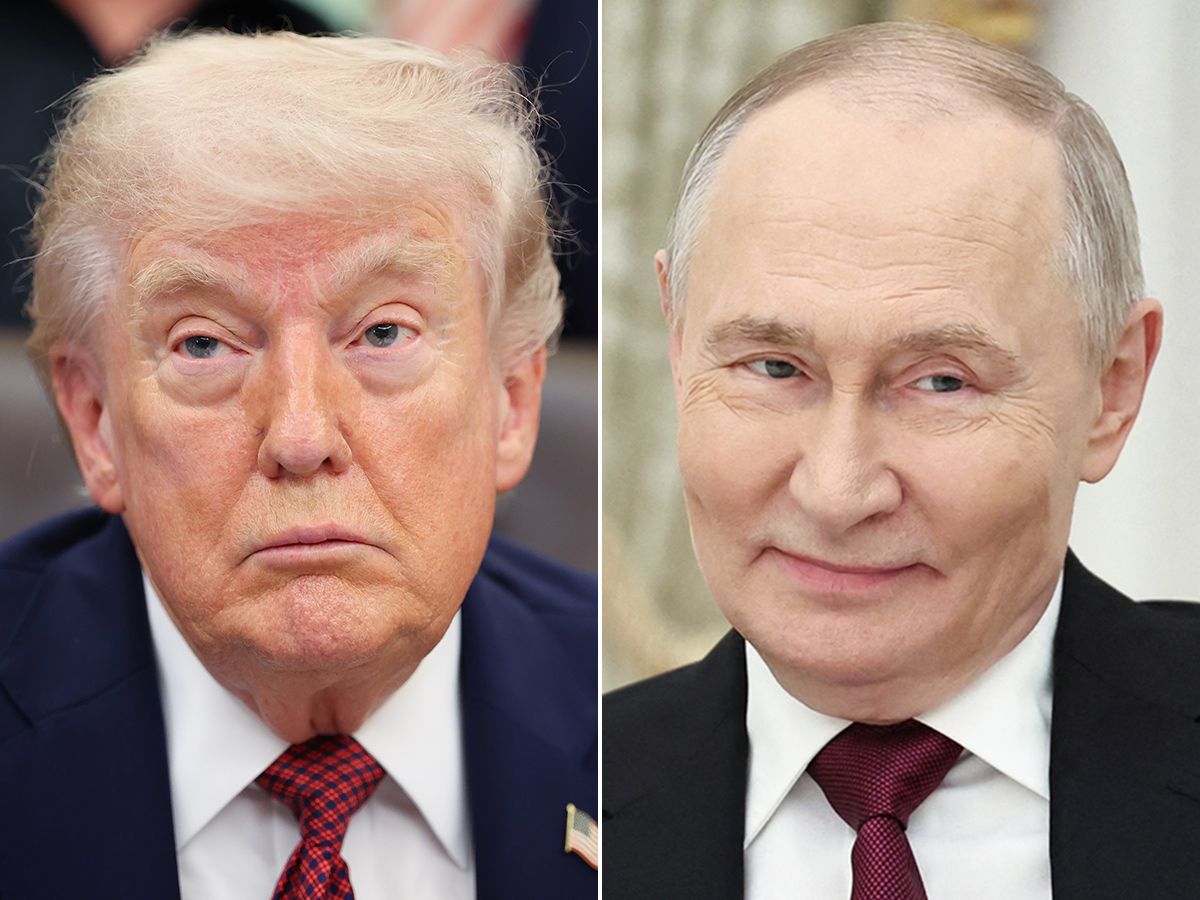
Photo via Washington Examiner

Trump broke Putin’s empire. Congress is handing it right back

Read the original at Washington Examiner ↗
Cite

Epstein, J. (2026, September 19). Trump broke Putin’s empire. Congress is handing it right back. Washington Examiner. https://www.washingtonexaminer.com/op-eds/4730226/us-central-asia-jackson-vanik-repeal/

Dated when The Aporia collected the article, usually within hours of publication. Check the original for its exact date and byline.

Washington Examiner · collected 2026-09-19 · by Joseph Epstein

Quick Summary

The article discusses how Russia's war in Ukraine has weakened Moscow’s influence over its former empire, and highlights actions taken by the Trump administration to capitalize on this shift. In August 2025, Washington brokered a peace deal between Armenia and Azerbaijan, established a transit corridor bypassing Russian control, and secured significant economic commitments from Central Asian countries. However, the article criticizes Congress for maintaining outdated laws like the Jackson-Vanik amendment that hinder full economic engagement with these nations, despite their efforts to align closer with the U.S.
Written by AI on 2026-09-19, from this article's own text only (the story summary below draws on all the coverage).

AI analysis

Story summary

In August 2025, the Trump administration displaced Russia as the mediator between Armenia and Azerbaijan, hosting both leaders at the White House and finalizing a peace agreement that had eluded Russia for three decades. This move led to the creation of the "Trump Route," a transit corridor under joint U.S.-Armenian control across southern Armenia, which bypasses Russian and Iranian trade routes entirely. In November 2025, Central Asian leaders visited Washington, securing over $130 billion in commercial commitments, including Uzbekistan's pledge to invest over $100 billion in the American economy over a decade and Kazakhstan signing contracts worth $17 billion, with one specific contract for a $1.1 billion tungsten venture involving a U.S. firm, Cove Kaz Capital, holding a 70% stake. These developments indicate that while Russia's war in Ukraine weakened Moscow’s control over its former empire, the United States has capitalized on the opportunity to strengthen its influence in the region through strategic diplomatic and economic moves.

Written for “Russia Us Relations” on 2026-11-03, grounded in this article and the 0 other(s) covering the same event.

Story

📰 Russia Us Relations
Politics · 1 article(s) covering the same event.

Compared with similar articles

This article reads unscored and hedges 2% of its claims. Each row says how that neighbour differs.
Washington Examiner
⚖️ Leans strongly right Hedges 1 of 33 claims Outlet record 70/100
“The articles discuss different aspects of U.S. policy towards Russia under President Trump but do not describe the same specific incident.”
The Guardian
⚖️ Leans left Hedges 1 of 10 claims Outlet record 66/100
“The articles describe different aspects of U.S. policy towards Russia and sanctions, but not the same specific signing ceremony or legislative enactment.”
The Bulwark
⚖️ Leans right Hedges 0 of 10 claims
“The articles cover different aspects of geopolitical events without focusing on the same specific incident.”
Semafor
Hedges 1 of 5 claims Outlet record 59/100
“The articles discuss different aspects related to geopolitical strategies and conflicts between Ukraine, Russia, and the US, but they do not describe the same specific incident or occurrence.”
National Post
⚖️ Leans left Hedges 1 of 16 claims Outlet record 60/100
“The articles discuss different aspects of U.S. policy towards Russia; one focuses on diplomatic moves to displace Moscow's influence, while the other reports on Trump signing sanctions against Russia.”
Toronto Star
⚖️ Leans right Hedges 2 of 44 claims Outlet record 64/100
“The articles discuss different aspects of political events in Russia and its relations with Ukraine, not a single specific incident.”
New York Post
⚖️ Leans strongly left Hedges 1 of 11 claims Outlet record 66/100
“The articles discuss different aspects of geopolitical strategies and conflicts involving Russia and Ukraine without describing the same specific incident.”
How this article was measured signals, leaning charts, publisher record, byline, topics and claims

Signals How these are calculated →

Claims extracted
47
sentences that state something as happening or true
Uncertain
2%
1 of 47 hedged ("reportedly", "may", "according to")
Leaning
withheld
no quote in the article backed the model's score
Publisher signals
70/100
Washington Examiner's corrections and hedging, across everything collected from it. Not a measure of accuracy.
Outlets on this story
1
Politics
Same framing elsewhere
1
articles that frame the event the way this one does
Analyzed 2026-09-19 · how these are computed

How this is being covered How these are calculated →

Article leaning vs. publisher reliability
Source leaning vs. consistency

Publisher

Washington Examiner · 3982 article(s) · 7 correction(s) detected
Running correction rate · 7 correction(s)

Who wrote this

Joseph Epstein
2 article(s) here · 1 carrying a prediction
🔮 China is building a railway through Kyrgyzstan and Uzbekistan that will feed its freight into the corridor.
🔮 Russia’s war in Ukraine accomplished something no American strategy could have engineered on its own: It hollowed out Moscow’s grip on its former empire.
Also by Joseph Epstein
Nothing else under this byline is closely related to this article, so these are simply their most recent.

Topics

American Congress Kazakhstan Russia Washington

Subjects

Congress ORG · 5× Kazakhstan GPE · 5× Russia GPE · 5× American NORP · 4× Armenia GPE · 4× Washington GPE · 4× Azerbaijan GPE · 3× U.S. GPE · 3× Uzbekistan GPE · 3× Ukraine GPE · 2×

Narrative

Out of that came the Trump Route for International Peace and Prosperity, a transit corridor under joint U.S.-Armenian control across southern Armenia that closes the missing link in the Middle Corridor — the trade route that moves goods from Asia to Europe while bypassing Russia and Iran entirely.
framing: assertive · carried by 1 article(s) · first seen 2026-09-19
🔮 Russia’s war in Ukraine accomplished something no American strategy could have engineered on its own: It hollowed out Moscow’s grip on its former empire.
2026-09-19 · Washington Examiner
Trump broke Putin’s empire. Congress is handing it right back · assertive framing

Claims (47 extracted, 1 hedged)

Russia’s war in Ukraine accomplished something no American strategy could have engineered on its own: It hollowed out Moscow’s grip on its former empire. uncertain
It → accomplish → empire
The White House noticed and moved. asserted
House → notice → ?
The Trump administration has moved at a remarkable pace. asserted
administration → move → pace
In August 2025, Washington displaced Moscow as broker of the Armenia-Azerbaijan conflict, hosting both leaders at the White House and producing the framework that closed out a conflict Russia had spent three decades managing for its own benefit. asserted
Russia → displace → benefit
Out of that came the Trump Route for International Peace and Prosperity, a transit corridor under joint U.S.-Armenian control across southern Armenia that closes the missing link in the Middle Corridor — the trade route that moves goods from Asia to Europe while bypassing Russia and Iran entirely. asserted
that → come → Russia
Three months later, Central Asia’s five presidents came to Washington and left behind more than $130 billion in commercial commitments. asserted
presidents → come → commitments
Uzbekistan pledged over $100 billion of investment in the American economy across the coming decade. asserted
Uzbekistan → pledge → decade
Kazakhstan signed $17 billion in contracts, including a $1.1 billion tungsten venture in which a U.S. firm, Cove Kaz Capital, took a 70% stake in the Northern Katpar and Upper Kairakty deposits — roughly 1.4 million tons of tungsten trioxide. asserted
firm → sign → trioxide
Tungsten goes into armor-piercing rounds, drill bits, and jet engines, and Beijing has been throttling its exports. asserted
Beijing → go → exports
Kazakhstan then announced it would join the Abraham Accords, the first country added in five years. asserted
it → announce → years
In January, Kazakhstan, Uzbekistan, and Azerbaijan signed on as founding members of the Board of Peace. asserted
Kazakhstan → sign → Peace
Congress, meanwhile, has kept two Soviet-era statutes on the books that do nothing except remind these governments that Washington’s goodwill has an expiration date. asserted
goodwill → keep → date
The first is the Jackson-Vanik amendment, Section 402 of the Trade Act of 1974, which denied normal trade relations to nonmarket economies that blocked emigration. asserted
that → deny → emigration
It had one purpose — forcing the Kremlin to let Soviet Jews leave — and it worked. asserted
it → have → Kremlin
Then the Soviet Union dissolved and the restriction attached itself to the successor states, none of which restricts emigration. asserted
none → dissolve → emigration
Congress has since graduated Armenia, Georgia, Kyrgyzstan, Moldova, Ukraine, and, in 2012, Russia. asserted
Congress → graduate → 2012
Kazakhstan joined the World Trade Organization in 2015, and American companies still cannot fully cash in on that membership, because only Congress can grant permanent normal trade relations. asserted
Congress → join → relations
Without it, U.S. exporters get no locked-in tariff commitments and no access to WTO dispute settlement against Astana. asserted
exporters → get → Astana
Presidents paper over the gap with annual waivers, which is precisely the insult: a country courting American investment is told its trade status renews once a year, at Washington’s pleasure. asserted
status → paper → pleasure
The second relic is Section 907 of the 1992 Freedom Support Act, which barred nearly all U.S. government assistance to Azerbaijan over its blockade of Armenia. asserted
which → bar → Armenia
The blockade ended long ago. asserted
blockade → end → ?
So did the war, at a White House ceremony the president himself hosted. asserted
president → do → ceremony
Every administration since 2002 has waived Section 907 annually, and each waiver leaves the underlying ban in place, ready to snap back. asserted
waiver → waive → place
Nobody defends either law on the merits anymore. asserted
Nobody → defend → merits
They survive because repeal requires floor time, and floor time goes to bills that move votes in Ohio and Pennsylvania. asserted
that → survive → Ohio
For decades, that calculation made a rough kind of sense: The region was a Russian preserve, and outside of basing rights for Afghanistan and Chevron’s stake in Tengiz, there was not much on offer. asserted
region → make → offer
The Middle Corridor and the scramble for critical minerals changed the arithmetic. asserted
Corridor → change → arithmetic
The components that power advanced weapons, smartphones, and data centers are increasingly mined and processed in places Congress still treats as Brezhnev’s Russia. asserted
Congress → mine → Russia
The bills are already written. asserted
bills → write → ?
S. 3103 and its House companion, H.R. 5917, would repeal Jackson-Vanik for Central Asia and extend permanent normal trade relations. asserted
S. → repeal → relations
The sponsors range from Sen. Steve Daines (D-MT) and Jim Risch (D-ID) to Sen. Chris Murphy (D-CT) and Sen. Michael Bennet (D-CO), about as bipartisan as anything in this Congress. asserted
sponsors → range → Congress
They have sat since last fall. asserted
They → sit → fall
H.R. 6534, filed in December to repeal Section 907 outright, has sat since then. asserted
H.R. → file → Section
The administration wants them passed. asserted
them → want → ?
At a Senate Foreign Relations hearing on June 2, Daines called the restrictions “Soviet-era relic restrictions” and asked whether removing them was a priority for the State Department. asserted
removing → call → Department
Secretary of State Marco Rubio answered: “Yeah, it’s a detriment. asserted
it → answer → State
We’d like to see it removed.” asserted
it → like → ?
At his confirmation hearing, he called Jackson-Vanik “a relic of an era that’s past” and noted that permanent removal “will require legislative action.” asserted
removal → call → action
So does the region. asserted
region → do → ?
Kazakh Deputy Prime Minister Serik Zhumangarin flew to Washington last October to press members of Congress for repeal. asserted
Zhumangarin → fly → repeal
…and 7 more, not listed.

💬Give feedback
🕘History 🎫Support