Photo via CBC News

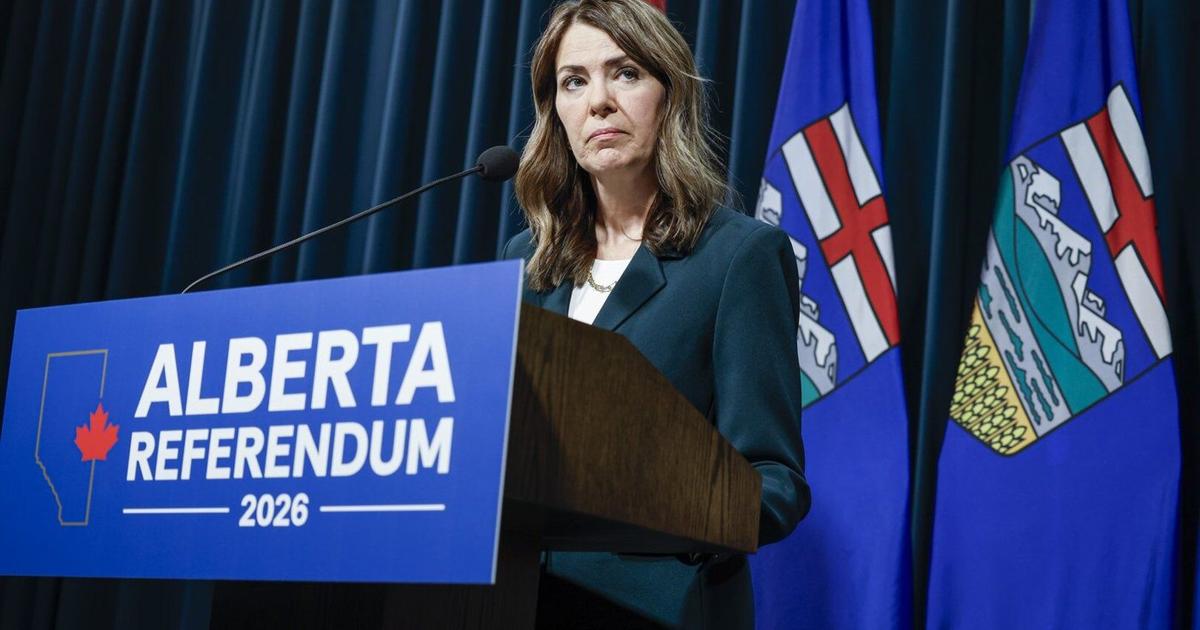
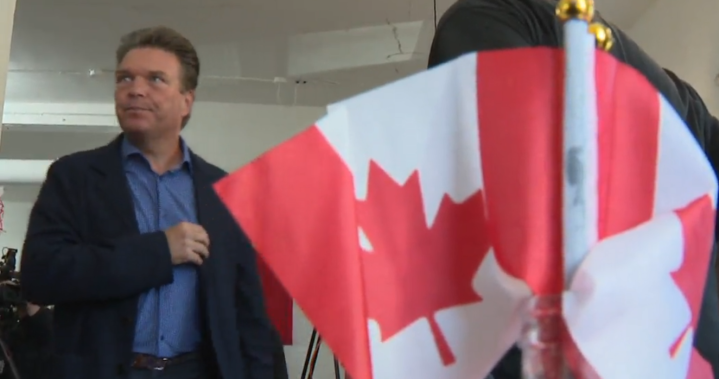
If most Albertans don't want to leave Canada, where is the pro-Canada movement?

Read the original at CBC News ↗
Cite

Boyd, A. (2026, September 19). If most Albertans don't want to leave Canada, where is the pro-Canada movement? CBC News. https://www.cbc.ca/news/canada/calgary/alberta-referendum-canada-federalists-campaign-remain-9.7350021?cmp=rss

Dated when The Aporia collected the article, usually within hours of publication. Check the original for its exact date and byline.

CBC News · collected 2026-09-19 · by Alex Boyd

Quick Summary

In Alberta, with a month until referendum voting on separation from Canada, separatists have raised three times more money than their counterparts advocating for remaining part of Canada. Despite polls showing that most Albertans oppose leaving Canada, separatist voices dominate online discussions by an eight-to-one margin. Pro-Canada groups remain fragmented due to election finance rules prohibiting collaboration, leading some organizers to focus solely on voter turnout rather than persuasion.
Written by AI on 2026-09-19, from this article's own text only (the story summary below draws on all the coverage).

AI analysis

Story summary

In Alberta, upcoming provincial elections will determine whether Albertans remain part of Canada. Despite consistent polls showing that most Albertans oppose separation from Canada, separatist groups have raised three times more money and dominate online discussions by an eight-to-one margin. The pro-Canada side remains fragmented due to election finance rules preventing collaboration among different organizations such as Team Canada and Our Alberta Advantage, leading to concerns about complacency among supporters. Federalists worry that emotional debates over the past few months have entrenched voter positions, making it difficult to sway undecided voters now. With only a month until voting day, pro-Canada campaigners are focused on mobilizing their base to ensure high turnout at the polls.

Written for “Alberta Pro Canada Movement” on 2026-11-02, grounded in this article and the 0 other(s) covering the same event.

Story

📰 Alberta Pro Canada Movement
Politics · 1 article(s) covering the same event.

Compared with similar articles

This article reads leans left and hedges 17% of its claims. Each row says how that neighbour differs.
The Globe and Mail
⚖️ Leans left Hedges 0 of 2 claims Outlet record 52/100
“Article A reports on a specific by-election win, while Article B discusses the broader context of separatist movements and public sentiment leading up to an upcoming referendum.”
CBC News
Hedges 3 of 12 claims Outlet record 74/100
“The articles discuss different aspects of Alberta's potential separation from Canada; one reports on a commissioned economic study, while the other discusses the political and online presence of separatists.”
Global News
Hedges 10 of 24 claims Outlet record 63/100
“The articles discuss related topics but do not describe the same specific event; Article A reports on a cost analysis of Alberta's potential separation, while Article B addresses the political landscape and public opinion leading up to an upcoming vote.”
Global News
Hedges 0 of 14 claims Outlet record 63/100
“The articles discuss different aspects related to Alberta's political climate but do not describe the same specific incident.”
CBC News
Hedges 2 of 46 claims Outlet record 74/100
“The articles discuss related political events in Alberta but describe distinct occurrences: one focuses on fundraising and online presence of separatists, while the other covers a UCP riding group's demand for leadership review.”
Toronto Star
⚖️ Leans right further right than this Hedges 3 of 38 claims Outlet record 64/100
“Article A discusses the current dominance of separatists in fundraising and online conversation ahead of an upcoming vote, while Article B provides a historical context leading up to the vote on October 19.”
The Globe and Mail
⚖️ Leans strongly right further right than this Hedges 1 of 33 claims Outlet record 52/100
“Article A discusses the general context and funding disparity for the separatist movement ahead of an upcoming referendum, while Article B covers a specific virtual assembly where Premier Smith made a speech advocating for Alberta's future in Canada.”
Toronto Star
Hedges 1 of 34 claims Outlet record 64/100
“Article A discusses the general context of separatist movements and fundraising leading up to an upcoming vote, while Article B reports on a specific emotional speech given by Premier Danielle Smith at a virtual assembly.”
Global News
Hedges 3 of 24 claims Outlet record 63/100
“While both articles discuss efforts related to the Alberta referendum, they describe different aspects: Article A focuses on separatists' dominance in fundraising and online presence, while Article B reports on a specific group's decision to become an official advertiser for remaining in Canada.”
The Globe and Mail
⚖️ Leans right further right than this Hedges 1 of 32 claims Outlet record 52/100
“Article A discusses the general trend of separatist movements and fundraising efforts leading up to an election, while Article B focuses on Premier Danielle Smith's response to a specific social media post about her messaging on independence.”
How this article was measured signals, leaning charts, publisher record, byline, topics and claims

Signals How these are calculated →

Claims extracted
59
sentences that state something as happening or true
Uncertain
17%
10 of 59 hedged ("reportedly", "may", "according to")
Leaning
Leans left
of the writing, not the subject · beta estimate
Publisher signals
74/100
CBC News's corrections and hedging, across everything collected from it. Not a measure of accuracy.
Outlets on this story
1
Politics
Same framing elsewhere
1
articles that frame the event the way this one does
Analyzed 2026-09-19 · how these are computed

How this is being covered How these are calculated →

Article leaning vs. publisher reliability
Source leaning vs. consistency

Publisher

CBC News · 1795 article(s) · 5 correction(s) detected
Running correction rate · 5 correction(s)

Who wrote this

Alex Boyd
8 article(s) here · 1 carrying a prediction
🔮 Meanwhile, it remains to be seen whether her list of priorities for the upcoming sitting, which include public sector hiring based on "merit," protections for data centre development and the future of bike lanes, will speak to the cities.
🔮 “Albertans have already made up their minds how they will vote regardless of your character assassination.”
🔮 But that decision might not be hers to make Should an appeal of the original separation petition win, it could still move ahead Premier Danielle Smith has drawn a line in the sand, saying that she will not hold another referendum on Alberta separation should the majority of her province vote to remain in Canada.
🔮 In a normal election, party leaders would be scrutinized over their online campaign materials, Ross said.
🔮 With a month to go, separatists have way more money and are dominating the online conversation Over the last year, a steady drumbeat of polling has found again and again that most Albertans oppose separation — but based on fundraising and online chatter, you might not know that.
🔮 In 2025, nationwide protests broke out after Zelensky tried to implement reforms that would curb the independence of Nabu and Sap.
🔮 It is unclear whether other countries or authorities would comply with an arrest warrant issued by Russia.
Also by Alex Boyd
Nothing else under this byline is closely related to this article, so these are simply their most recent.
All 8 articles by Alex Boyd →

Topics

Alberta Albertans Canada Our Alberta Advantage Team Canada

Subjects

Alberta GPE · 4× Albertans NORP · 4× Canada GPE · 4× Lead Not Leave ORG · 2× Quebec GPE · 2× Avnish Nanda PERSON · 1× Nanda PERSON · 1× Our Alberta Advantage ORG · 1× Team Canada ORG · 1× Thomas Lukaszuk PERSON · 1×

Narrative

Rules keep groups separate, leaders say But unlike the generally cohesive Yes and No campaigns in Quebec, it was never realistic — or allowed — for pro-Canada groups to unite under the same banner, says Jared Wesley, a professor of political science at the University of Alberta and a member of Lead Not Leave.
framing: assertive · carried by 1 article(s) · first seen 2026-09-19
🔮 With a month to go, separatists have way more money and are dominating the online conversation Over the last year, a steady drumbeat of polling has found again and again that most Albertans oppose separation — but based on fundraising and online chatter, you might not know that.

Claims (59 extracted, 10 hedged)

If most Albertans don't want to leave Canada, where is the pro-Canada movement? asserted
movement → want → Canada
With a month to go, separatists have way more money and are dominating the online conversation Over the last year, a steady drumbeat of polling has found again and again that most Albertans oppose separation — but based on fundraising and online chatter, you might not know that. uncertain
you → go → that
In a month, Albertans will head to the polls to vote on the future of the province, and the separatists occupy an outsize share of the spotlight, having raised three times the money and dominating the online conversation by as much as eight to one. asserted
separatists → head → one
The pro-Canada side, meanwhile, remains divided, thanks largely to election finance rules that prevent collaboration, and worries about complacency. asserted
that → remain → complacency
More than one federalist organizer has said that the time for persuasion is over. asserted
time → say → persuasion
After an emotional and hotly-contested few months, most Albertans have dug in their heels on a position, federalists say. asserted
federalists → contest → position
The challenge now? Getting people to actually vote. asserted
people → get → ?
“I think the federalist side in this referendum campaign has hit a point of real unease,” says Avnish Nanda, the spokesperson for Our Alberta Advantage, which launched a new campaign to get out the vote this week. asserted
which → think → vote
Called 5x for Canada, it features a series of tongue-in-cheek videos designed to equip people to get their friends to cast a ballot. asserted
friends → call → ballot
“The separatists are just everywhere,” Nanda said. asserted
Nanda → say → ?
Polling might cap support for independence at about a quarter of the province, but if a bigger proportion of separatists show up, the math gets dicey, he pointed out. “Even if they don’t win outright, if the separatists get 30 per cent of the vote, I think Alberta is forever changed.” Team Canada Making the case for Canada is a patchwork of groups and individuals, including former deputy premier Thomas Lukaszuk, who, along with volunteers, has spent over a year driving a maple leaf-emblazoned RV almost 40,000 kilometres around the province. There’s a team of academics and former politicians working as a “pop-up think-tank” under the name Lead Not Leave, and Conservatives for Canada, the campaign launched by the federal party to target their own supporters. uncertain
who → cap → supporters
Polling suggests right-leaning voters are more likely to have separatist sympathies. uncertain
voters → suggest → sympathies
In perhaps the strangest case of odd bedfellows, rival ex-premiers Rachel Notley and Jason Kenney have joined forces for a Canadian Chamber of Commerce campaign in support of keeping Alberta in Canada. asserted
Notley → join → Canada
Kenney in particular has emerged as a vocal anti-separatist, who has argued that, historically, followers of the movement couldn’t “get elected to dog catcher.” asserted
followers → emerge → movement
Each group has functioned mostly individually. asserted
group → function → ?
“I see them rowing in the same direction,” Lukaszuk said of the other groups. asserted
Lukaszuk → see → groups
Rules keep groups separate, leaders say But unlike the generally cohesive Yes and No campaigns in Quebec, it was never realistic — or allowed — for pro-Canada groups to unite under the same banner, says Jared Wesley, a professor of political science at the University of Alberta and a member of Lead Not Leave. asserted
Wesley → keep → Leave
During Quebec’s referendum, each side was required to more or less co-operate under a national committee. asserted
side → require → committee
In comparison, Alberta’s rules prevent collaboration. asserted
rules → prevent → collaboration
Campaign finance rules say groups — third party advertisers, specifically — can’t work together lest they risk running afoul of spending limits. asserted
they → say → limits
“Any conversation among federalists that are a part of these various groups always starts off with, ‘To be clear, we’re not co-ordinating, right?’” asserted
we → start → ordinating
Wesley says with a laugh. asserted
Wesley → say → laugh
“I mean, to be frank, the law simply does not allow us to compare notes.” asserted
us → mean → notes
The separatists are all going to vote. asserted
separatists → go → ?
Every one of them will crawl over broken glass to vote.- asserted
one → crawl → glass
That means groups can’t share resources, co-ordinate events or vet each other’s public communications, he said. asserted
he → mean → communications
In some ways, the splintered nature of the movement is an advantage, he argued. asserted
he → argue → movement
“I think the notion that everyone should be part of one team on either side of the debate is based on an old way of political communications,” he said. asserted
he → think → communications
The media environment right now is very divided, Wesley said, meaning people get their information from a dizzying array of news organizations, websites and social media posts, often based on their own interests and political leanings. asserted
people → say → interests
Because the federalist groups are similarly varied, they speak to different parts of the population, he added. asserted
he → speak → population
Some of them are moderate, some are progressive, some are conservative,” he said. asserted
he → say → them
“The way that our public sphere is fractured suggests that’s not a bad strategy.” uncertain
that → fracture → ?
Premier Danielle Smith has repeatedly said she does not want Alberta to separate, but also put the question about separatism on the ballot and has been criticized by both sides for the role she has played in the campaign so far. asserted
she → say → campaign
This week the Alberta government launched a $4-million advertising campaign on the referendum questions, which urges viewers to “stand up for a strong and sovereign Alberta within a united Canada,” but doesn’t otherwise argue the federal case. asserted
which → launch → case
In an emailed statement, Smith's press secretary, Sam Blackett, said the government will use "various channels" to communicate with Albertans about the referendum questions, including online, TV, radio and social media. asserted
government → email → online
"The Premier also travels across Alberta every summer and will continue speaking directly with Albertans through town halls, public events, media interviews and more," he wrote. asserted
he → travel → halls
The prime minister has been critical of the referendum — calling it a “dangerous bluff” back in May — and recently met with Forever Canadian campaigners, but hasn’t spearheaded a campaign. uncertain
minister → call → campaign
In July, Opposition Leader Pierre Poilievre appointed Alberta MP Dane Lloyd as the party’s point person on the referendum, writing at the time that Lloyd’s task was “not to scold Albertans” but to “hear” them. asserted
task → appoint → them
But the party’s third-party advertiser, Conservatives for Canada, was only registered on Sept. 4 and has yet to raise any funds. asserted
advertiser → register → funds
This is the official entity that allows them to raise money and take a position on the referendum under election financing rules. asserted
them → allow → rules
…and 19 more, not listed.

💬Give feedback
🕘History 🎫Support