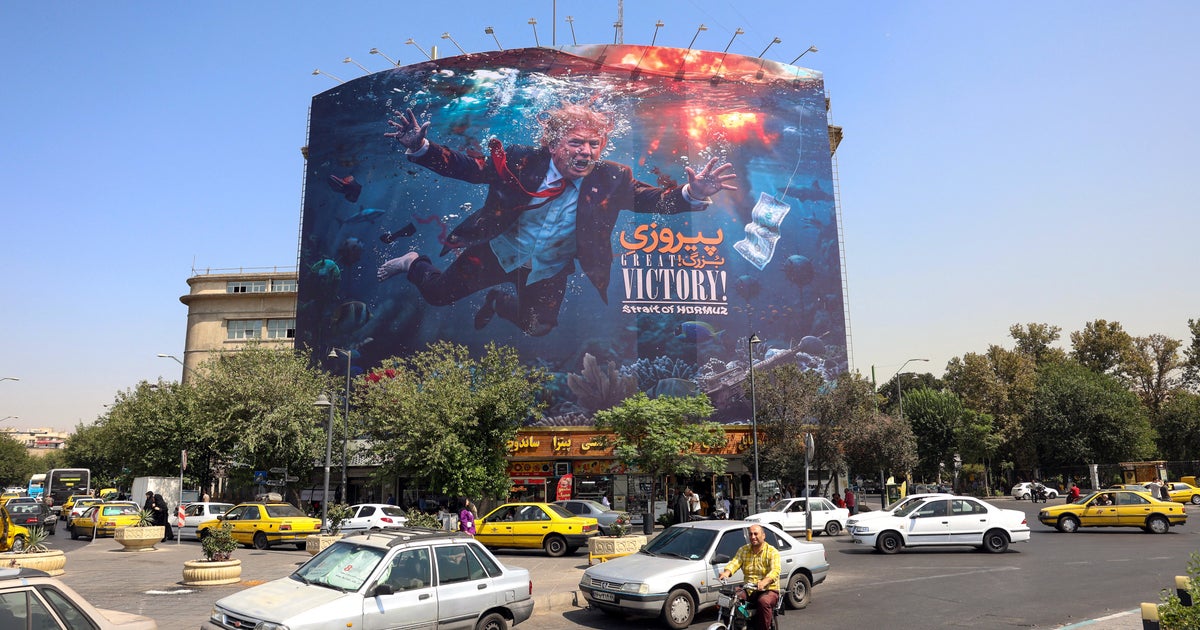
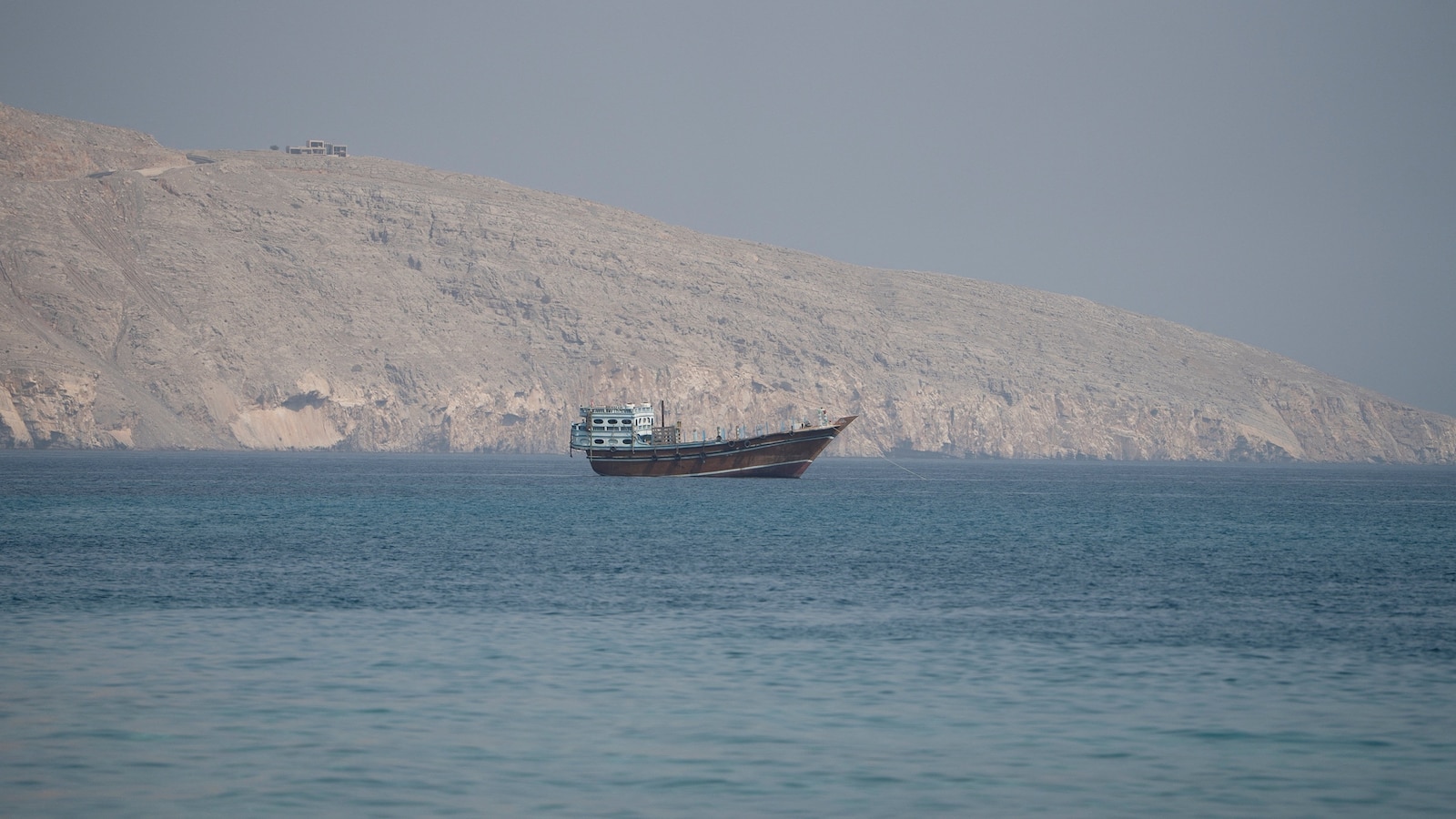
Photo via The Straits Times

Iran mocks US threat of ‘economic D-day’, says it’s an admission of defeat

Read the original at The Straits Times ↗
Cite

Iran mocks US threat of ‘economic D-day’, says it’s an admission of defeat. (2026, August 24). The Straits Times. https://www.straitstimes.com/world/middle-east/iran-mocks-us-threat-of-economic-d-day-says-its-an-admission-of-defeat

Dated when The Aporia collected the article, usually within hours of publication. Check the original for its exact date and byline.

The Straits Times · collected 2026-08-24

Quick Summary

Iran's Deputy Foreign Minister Kazem Gharibabadi mocked the US threat of an "economic D-day" against the country, calling it an admission of defeat. This comes after US Treasury Secretary Scott Bessent declared a massive economic pressure campaign on Iran, claiming the US had already dismantled its military capabilities and nuclear program. Bessent is scheduled to explain new US sanctions on Iran on August 24. The key date mentioned in the article is February 28, when the Middle East war between the US, Israel, and Iran began.
Written by AI on 2026-08-24, from this article's own text only (the story summary below draws on all the coverage).

AI analysis

Story summary

President Trump announced on August 18, 2026, what he described as "the most crushing economic operation ever taken against any country" targeting Iran, aiming to escalate pressure beyond existing sanctions. This move came after a 60-day ceasefire expired without diplomatic resolution to the war initiated by the US and Israel in February. Iran's military has signaled a shift towards more aggressive offensive operations, threatening retaliation against Gulf states like the United Arab Emirates (UAE) that assist the U.S. In response, the UAE halted all trade and financial dealings with Iran following accusations of missile attacks on August 18. Treasury Secretary Scott Bessent later detailed new sanctions targeting five key economic areas: digital assets, technology, gold, aviation, and shipping, aiming to cut off Iran's remaining economic lifelines globally, while China remains a major concern due to its significant trade ties with Iran.

Written for “US Sanctions on Iran Economy” on 2026-10-31, grounded in this article and the 40 other(s) covering the same event.

Story

📰 US Sanctions on Iran Economy
Politics · 41 article(s) covering the same event. See how they differ ↓

Compared with similar articles

This article reads leans left and hedges 6% of its claims. Each row says how that neighbour differs.
BBC News
Hedges 2 of 25 claims Outlet record 68/100
Toronto Star
⚖️ Leans left Hedges 0 of 2 claims Outlet record 64/100
CBC News
⚖️ Leans strongly right further right than this Hedges 2 of 19 claims Outlet record 60/100
BBC News
⚖️ Leans right further right than this Hedges 4 of 39 claims Outlet record 68/100
The Independent
⚖️ Leans strongly right further right than this Hedges 4 of 56 claims Outlet record 59/100
CBS News
⚖️ Leans right further right than this Hedges 16 of 136 claims Outlet record 66/100
The Hindu
⚖️ Centre further right than this Hedges 2 of 33 claims Outlet record 60/100
ABC News (US)
⚖️ Leans strongly left further left than this Hedges 0 of 5 claims Outlet record 70/100
Morning news brief Same event
NPR
⚖️ Centre further right than this Hedges 0 of 2 claims Outlet record 60/100
Al Jazeera
Hedges 6 of 35 claims Outlet record 60/100
How this article was measured signals, leaning charts, publisher record, byline, topics and claims

Signals How these are calculated →

Claims extracted
18
sentences that state something as happening or true
Uncertain
6%
1 of 18 hedged ("reportedly", "may", "according to")
Leaning
Leans left
of the writing, not the subject · beta estimate
Publisher signals
66/100
The Straits Times's corrections and hedging, across everything collected from it. Not a measure of accuracy.
Outlets on this story
41
Politics
Same framing elsewhere
1
articles that frame the event the way this one does
Analyzed 2026-08-24 · how these are computed

How this is being covered How these are calculated →

Article leaning vs. publisher reliability
Source leaning vs. consistency

Publisher

The Straits Times · 4076 article(s) · 5 correction(s) detected
Running correction rate · 5 correction(s)

Who wrote this

No reporter is named on this article.

Topics

Iran Iranian TEHRAN Washington the United States

Subjects

Iran GPE · 14× Washington GPE · 5× TEHRAN GPE · 4× Iranian NORP · 3× the United States GPE · 3× China GPE · 2× America GPE · 1× Kazem Gharibabadi PERSON · 1× Scott Bessent PERSON · 1× the Financial Times ORG · 1×

Narrative

“Your narrative doesn’t add up: You say that Iran’s military power has been ‘dismantled’, 100 per cent of its military factories ‘destroyed’ and its nuclear programme ‘buried’,” Kazem Gharibabadi, deputy foreign minister, said in a post on X. Yet, he added, “there is a need for ‘the largest financial invasion in history’ and the mobilisation of ‘all institutions and powers’ of the United States!
framing: assertive · carried by 1 article(s) · first seen 2026-08-24
🔮 Spokesman Esmaeil Baghaei said taking part would “definitely have its own consequences”.
2026-08-24 · The Straits Times
Iran mocks US threat of ‘economic D-day’, says it’s an admission of defeat · assertive framing

Claims (18 extracted, 1 hedged)

Iran mocks US threat of ‘economic D-day’, says it’s an admission of defeat AI generated asserted
it → mock → defeat
Iran dismissed on Aug 24 Washington’s declaration of a massive economic pressure campaign, saying it disproves US claims to have dismantled Tehran’s military and nuclear capabilities. uncertain
it → dismiss → capabilities
“Your narrative doesn’t add up: You say that Iran’s military power has been ‘dismantled’, 100 per cent of its military factories ‘destroyed’ and its nuclear programme ‘buried’,” Kazem Gharibabadi, deputy foreign minister, said in a post on X. Yet, he added, “there is a need for ‘the largest financial invasion in history’ and the mobilisation of ‘all institutions and powers’ of the United States! asserted
he → add → States
“ US Treasury Secretary Scott Bessent wrote earlier in the Financial Times that Washington was launching the “single greatest financial offensive marshalled against an adversary”, calling it an “economic D-Day”. asserted
Washington → write → it
Bessent posted on X that the measure came after the United States “dismantled Iran’s military capabilities, destroyed nearly 100 per cent of its military factories, and buried its nuclear programme”. asserted
States → post → programme
He is scheduled to explain the new US sanctions on Iran on Aug 24. asserted
He → schedule → Aug
In response, Iran’s foreign ministry warned countries against joining the US economic campaign. asserted
ministry → warn → campaign
Spokesman Esmaeil Baghaei said taking part would “definitely have its own consequences”. asserted
taking → say → consequences
The United States and Israel triggered the Middle East war with a massive wave of strikes against Iran on Feb 28, triggering Iranian retaliation across the region. asserted
States → trigger → region
An April 8 ceasefire ended nearly 40 days of intense bombardment, but control over the Strait of Hormuz soon emerged as a key flashpoint in the conflict. asserted
control → end → conflict
Iran has controlled the vital energy conduit since the war began. asserted
war → control → conduit
Reopening the strait, vital for global oil and gas supplies, has become a US priority, but Tehran insists the waterway will remain closed until Washington lifts its naval blockade on Iranian ports, removes oil sanctions and unfreezes Iranian assets abroad. asserted
Washington → reopen → assets
Last week, US President Donald Trump announced that Washington would ramp up economic pressure on Iran “on an unprecedented scale”. asserted
Washington → announce → scale
Washington has urged other countries, including China, to join efforts to further isolate Iran’s economy. asserted
Washington → urge → economy
In an article published on Aug 24 in Iran’s Ettela’at newspaper, Tehran’s Foreign Minister Abbas Araghchi said relations with China “have taken on deeper, more structural, and more comprehensive dimensions.” asserted
relations → publish → dimensions
Iran has faced US and international sanctions since the 1979 Islamic revolution. asserted
Iran → face → revolution
Trump has repeatedly pursued a “maximum pressure” policy of economic sanctions against Iran, reinstating the approach after returning to office in January 2025 following a similar campaign during his first term. asserted
Trump → pursue → term
Iran has repeatedly dismissed the sanctions policy as a failure, insisting that economic pressure and threats will not force it to change course. asserted
pressure → dismiss → course

💬Give feedback
🕘History 🎫Support