Photo via BBC News

How much could Trump's 'economic D-Day' hurt Iran?

Read the original at BBC News ↗
Cite

Jr, B. D. (2026, August 21). How much could Trump's 'economic D-Day' hurt Iran? BBC News. https://www.bbc.co.uk/news/articles/cre4gdvlj9ro?at_medium=RSS&at_campaign=rss

Dated when The Aporia collected the article, usually within hours of publication. Check the original for its exact date and byline.

BBC News · collected 2026-08-21 · by Bernd Debusmann Jr

Quick Summary

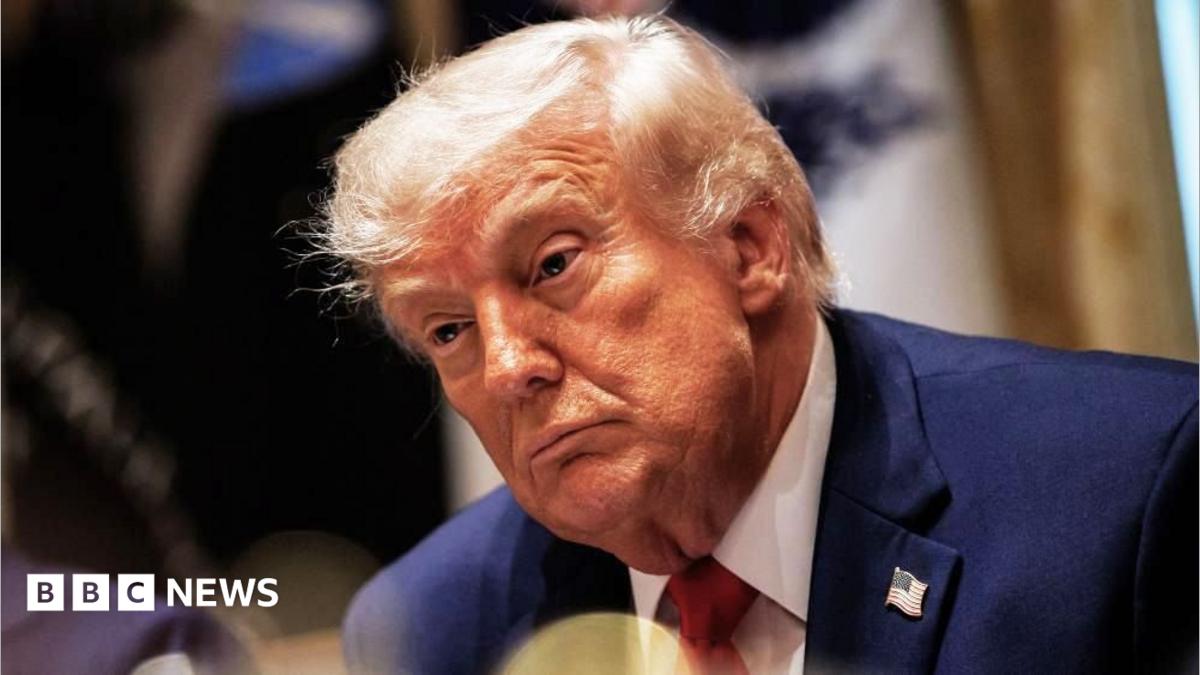
US President Donald Trump has announced an "economic D-Day" aimed at pressuring countries into stopping business with Iran, threatening them with "tremendous" economic consequences. According to Treasury Secretary Scott Bessent, any country found doing business with Iran will face enforcement from the US government and Treasury. The exact mechanisms of this plan are unclear, but it is expected to be revealed in a news conference on August 24. The move comes as the conflict between the US and Iran appears stalled, with previous strategies failing to yield results.
Written by AI on 2026-08-21, from this article's own text only (the story summary below draws on all the coverage).

AI analysis

Story summary

President Trump announced on August 18, 2026, what he described as "the most crushing economic operation ever taken against any country" targeting Iran, aiming to escalate pressure beyond existing sanctions. This move came after a 60-day ceasefire expired without diplomatic resolution to the war initiated by the US and Israel in February. Iran's military has signaled a shift towards more aggressive offensive operations, threatening retaliation against Gulf states like the United Arab Emirates (UAE) that assist the U.S. In response, the UAE halted all trade and financial dealings with Iran following accusations of missile attacks on August 18. Treasury Secretary Scott Bessent later detailed new sanctions targeting five key economic areas: digital assets, technology, gold, aviation, and shipping, aiming to cut off Iran's remaining economic lifelines globally, while China remains a major concern due to its significant trade ties with Iran.

Written for “US Sanctions on Iran Economy” on 2026-10-31, grounded in this article and the 40 other(s) covering the same event.

Story

📰 US Sanctions on Iran Economy
Politics · 41 article(s) covering the same event. See how they differ ↓

Compared with similar articles

This article reads leans right and hedges 10% of its claims. Each row says how that neighbour differs.
The Straits Times
⚖️ Leans left further left than this Hedges 0 of 4 claims Outlet record 66/100
CBS News
⚖️ Leans left further left than this Hedges 5 of 41 claims Outlet record 66/100
The Straits Times
Hedges 3 of 4 claims Outlet record 66/100
The Independent
⚖️ Leans strongly right further right than this Hedges 4 of 56 claims Outlet record 59/100
National Post
⚖️ Leans right Hedges 3 of 36 claims Outlet record 60/100
CBC News
⚖️ Leans strongly left further left than this Hedges 3 of 25 claims Outlet record 60/100
The Straits Times
⚖️ Leans left further left than this Hedges 1 of 18 claims Outlet record 66/100
Mother Jones
⚖️ Leans strongly left further left than this Hedges 1 of 17 claims Outlet record 95/100
Los Angeles Times
Hedges 9 of 50 claims Outlet record 95/100
How this article was measured signals, leaning charts, publisher record, byline, topics and claims

Signals How these are calculated →

Claims extracted
39
sentences that state something as happening or true
Uncertain
10%
4 of 39 hedged ("reportedly", "may", "according to")
Leaning
Leans right
of the writing, not the subject · beta estimate
Publisher signals
69/100
BBC News's corrections and hedging, across everything collected from it. Not a measure of accuracy.
Outlets on this story
41
Politics
Same framing elsewhere
1
articles that frame the event the way this one does
Analyzed 2026-08-21 · how these are computed

How this is being covered How these are calculated →

Article leaning vs. publisher reliability
Source leaning vs. consistency

Publisher

BBC News · 4716 article(s) · 6 correction(s) detected
Running correction rate · 6 correction(s)

Who wrote this

Bernd Debusmann Jr
11 article(s) here · 1 carrying a prediction
🔮 - Published Democrats in the US Congress are already planning how they would use their power if they win a majority in the House or Senate in next week's midterm elections.
🔮 - Published The Trump administration wants to block the certification of the Senate election in Alaska if Republican Senator Dan Sullivan loses, arguing that another candidate with the same name may confuse voters.
🔮 - Published Top Iranian and US officials have held talks at the UN in New York on a day when the US leader said he could "annihilate" the Islamic Republic if the conflict went unresolved.
🔮 A single member of Iran's delegation watched on during the president's speech in New York, in which he said he could "annihilate" the Islamic Republic if the conflict went unresolved.
🔮 Senator Richard Blumenthal, a New York Democrat, previously described the legislation as "scorching sanctions" which would "throttle Putin's war machine".
2026-09-18 · assertive framing · Trump signs sweeping Russia sanctions bill
🔮 It is unclear what exactly a ban would entail, and whether employees of those outlets would be prevented from entering the White House grounds.
🔮 In a post on X, Wiles said her pathology tests "came back clear" after a visit to the Mayo Clinic earlier this week.
🔮 And in a lengthy Truth Social post on 3 September, Trump claimed that the US had "virtually unlimited" amounts of ammunition and is "stockpiling and preparing for any contingency that could happen".
🔮 An expert on military uses of outer space noted that "precious little" was publicly known about the technology, and told the BBC there could be a "whole range of different weapons systems". Speaking to Radio 4's Today programme, Dr Bleddyn Bowen, from the Royal United Services Institute (RUSI), said he was "totally guessing" but that the US could have been referring to "some kind electronic warfare or radio jamming platform".
🔮 To break the deadlock, Trump has vowed an "economic D-Day" under which any country that does business with Iran would face "tremendous" economic consequences.
2026-08-21 · assertive framing · How much could Trump's 'economic D-Day' hurt Iran?
Also by Bernd Debusmann Jr
Nothing else under this byline is closely related to this article, so these are simply their most recent.
All 11 articles by Bernd Debusmann Jr →

Topics

CNBC Iran Treasury the Islamic Republic the Joint Comprehensive Plan of Action

Subjects

Iran GPE · 12× Iranian NORP · 2× Parker PERSON · 2× Trump PERSON · 2× Bessent PERSON · 1× CNBC ORG · 1× Donald Trump PERSON · 1× JD Vance PERSON · 1× Scott Bessent PERSON · 1× Treasury ORG · 1×

Narrative

Michael Parker, an eight-year veteran of the Office of Foreign Assets Control and expert on economic sanctions, said the new strategy will likely represent an effort to "expand the economic blast radius" of sanctions by targeting third countries that still deal with Iran but which have economies that depend on the US dollar.
framing: assertive · carried by 1 article(s) · first seen 2026-08-21
🔮 To break the deadlock, Trump has vowed an "economic D-Day" under which any country that does business with Iran would face "tremendous" economic consequences.
2026-08-21 · BBC News
How much could Trump's 'economic D-Day' hurt Iran? · assertive framing

Claims (39 extracted, 4 hedged)

- Published Nearly six months after US President Donald Trump vowed a swift victory over Iran, the conflict appears to be at a standstill, with prospects of a military victory or negotiated settlement growing dimmer. asserted
prospects → publish → victory
To break the deadlock, Trump has vowed an "economic D-Day" under which any country that does business with Iran would face "tremendous" economic consequences. asserted
that → break → consequences
Iran, however, has long faced sanctions and has so far shown a willingness to endure pain, and a capacity to adapt to immense economic and military pressure as the conflict drags on. asserted
conflict → face → pressure
The key question for the US then becomes, will further sanctions work where other strategies have failed? asserted
strategies → become → US
The exact mechanics of the new US economic pressure campaign remain unclear, with Treasury Secretary Scott Bessent promising to reveal them in a news conference on 24 August. uncertain
Bessent → remain → August
But in an interview with CNBC, Bessent made clear that the US was willing to take action against any country - friend or foe - that it believes is extending a lifeline to Iran. asserted
it → make → Iran
"You are either with us or against us," he said. asserted
he → say → us
"If you insist on doing business with [Iran], either transferring money, buying their oil or doing seaborne sea transfers, then the US Treasury and the US government... will put its full might and force toward enforcing against you." uncertain
Treasury → insist → you
Vice-President JD Vance has described the sanctions as a "new phase" of the conflict in which economic pressure was the "most effective" tool available to the US. asserted
pressure → describe → US
"They're going to try to apply economic pressure to us, but what has been true over the last couple of weeks is that they felt a lot more pressure than we have," Vance said on the Clay Travis and Buck Sexton show. " asserted
Vance → go → show
We're going to keep that going because we think that's the best way to ultimately achieve the final objective." asserted
that → go → objective
Iran has faced significant US sanctions since nearly the beginning of the Islamic Republic in 1979. asserted
Iran → face → 1979
The economic pressure campaign intensified after the first Trump administration withdrew from the Joint Comprehensive Plan of Action, a 2015 pact between world powers and Iran to curb its nuclear programme. asserted
administration → intensify → programme
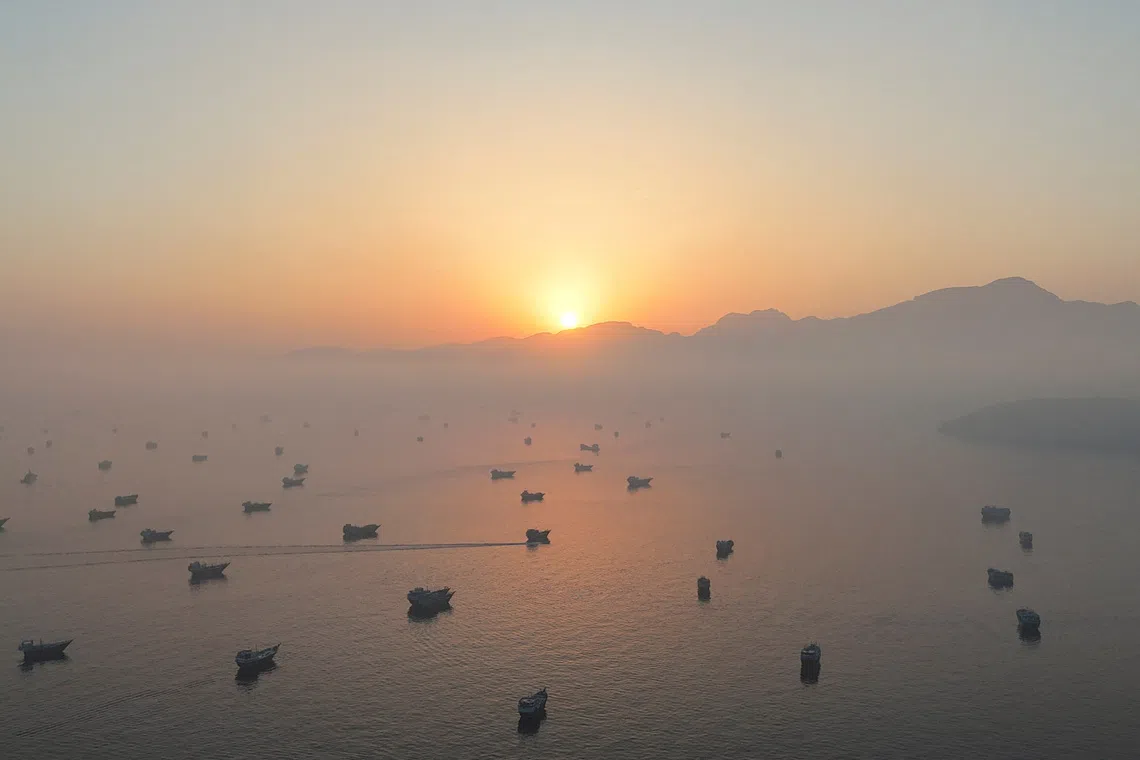
And in the current conflict, the US government has already announced Operation Economic Fury, a two-pronged US economic campaign combining US Treasury-co-ordinated sanctions against regime financial flows and a naval blockade against Iranian ports. asserted
government → announce → ports
Imran Bayoumi, a geostrategy expert with the Atlantic Council in Washington DC and former policy adviser for the defence department, told the BBC that the latest announcement was likely the result of mounting frustration that other options have not delivered the results Trump wants. asserted
Trump → tell → results
"This is really a recognition that the US is almost stuck in this war," he said. asserted
he → say → war
"This is just another tool that the US is using," Bayoumi added. asserted
Bayoumi → use → that
"We've not seen a clear strategy laid out by the administration with either military or economic tools. asserted
We → see → tools
The question of what the US is trying to achieve is still unanswered." asserted
US → try → what
Michael Parker, an eight-year veteran of the Office of Foreign Assets Control and expert on economic sanctions, said the new strategy will likely represent an effort to "expand the economic blast radius" of sanctions by targeting third countries that still deal with Iran but which have economies that depend on the US dollar. asserted
that → say → dollar
"Thus far, the US has largely used the threat of these secondary sanctions against foreign financial institutions to encourage compliance with sanctions policy," he said. asserted
he → use → policy
"But this is a lever that is sort of unexplored insofar as targeting anything touching the US dollar that is also touching Iran," Parker added. asserted
Parker → target → Iran
As an example, Parker pointed to foreign financial institutions that help Iran evade sanctions, or directs money towards Iranian coffers. asserted
Iran → point → coffers
How Iran would respond to these moves remains unclear, but sanctions experts say that Iran has so far proved adept at using irregular channels to circumvent sanctions - such as "shadow" vessels transporting oil or new commercial fronts unlisted by US sanctions. uncertain
Iran → respond → sanctions
"You keep seeing new names popping up, because Iran is adapting really quickly," said Mohammed Hammouda, an export control and sanctions manager at the London Stock Exchange. asserted
Hammouda → keep → Exchange
"Whatever sanctions one does, they find a new road [around it]." asserted
they → do → it
These Iranian counter-moves, he added, often left those charged with enforcing compliance playing a game of catch-up. asserted
he → add → up
"Sanctions are all on paper, but the hard work is behind the scenes," Hammouda said. asserted
Hammouda → say → scenes
"There are teams worldwide trying to impose sanctions and identify those parties involved, which is why Iran has to try to adapt. asserted
Iran → be → parties
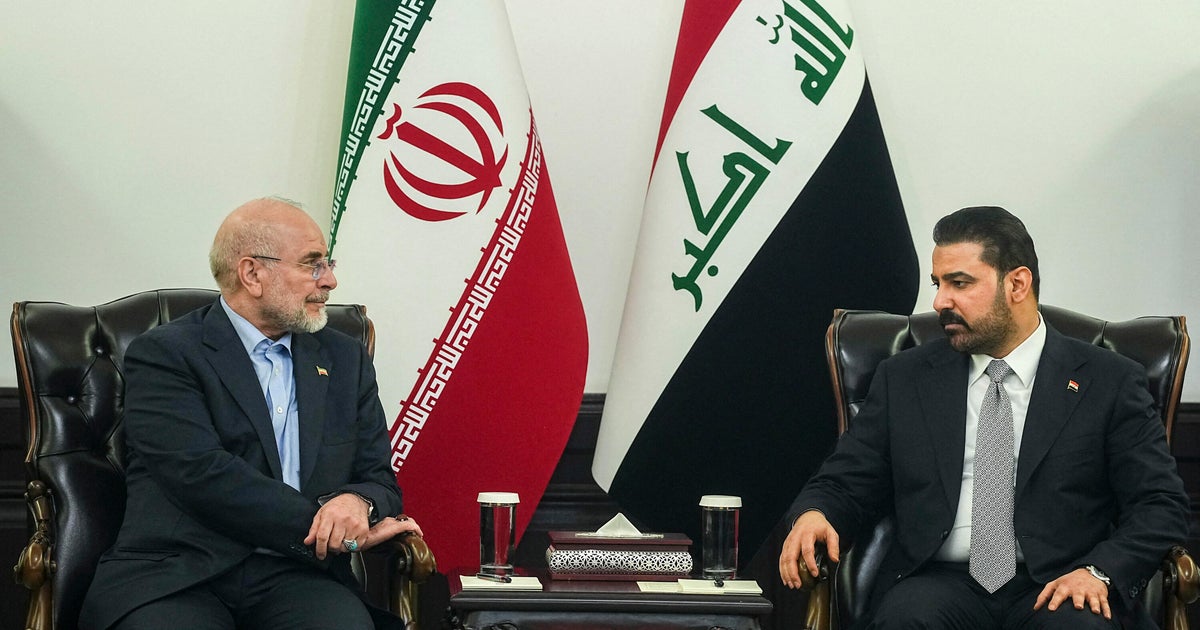
" How effective these sanctions are will largely be determined by how the countries that are ultimately targeted - which could include US allies like Turkey and Iraq, as well as China - react. uncertain
which → determine → Turkey
"Some of this is out of Iran's hands," Parker said. asserted
Parker → say → hands
"Iran's ability to evade or avoid sanctions is, in large part, contingent on other countries and financial institution's willingness to give them [Iran] access to the formal banking system." asserted
ability → evade → system
Parker believes that the sanctions were "only as powerful" as the willingness of targeted countries to comply with US foreign policy objectives or face potentially painful sanctions on trade involving the US dollar. asserted
sanctions → believe → dollar
Some experts question whether that willingness currently exists. asserted
willingness → question → ?
"I can't really see China agreeing to that, for example," Bayoumi said. asserted
Bayoumi → see → example
"These states have all been able to navigate their own interests with the Trump administration." asserted
states → navigate → administration
"The underlying point is that this is just another tool," he added. asserted
he → add → ?
"But the broader question of strategy remains. asserted
question → remain → strategy
Absent that, I'm not sure this is going to change anything long term." asserted
this → go → anything

💬Give feedback
🕘History 🎫Support