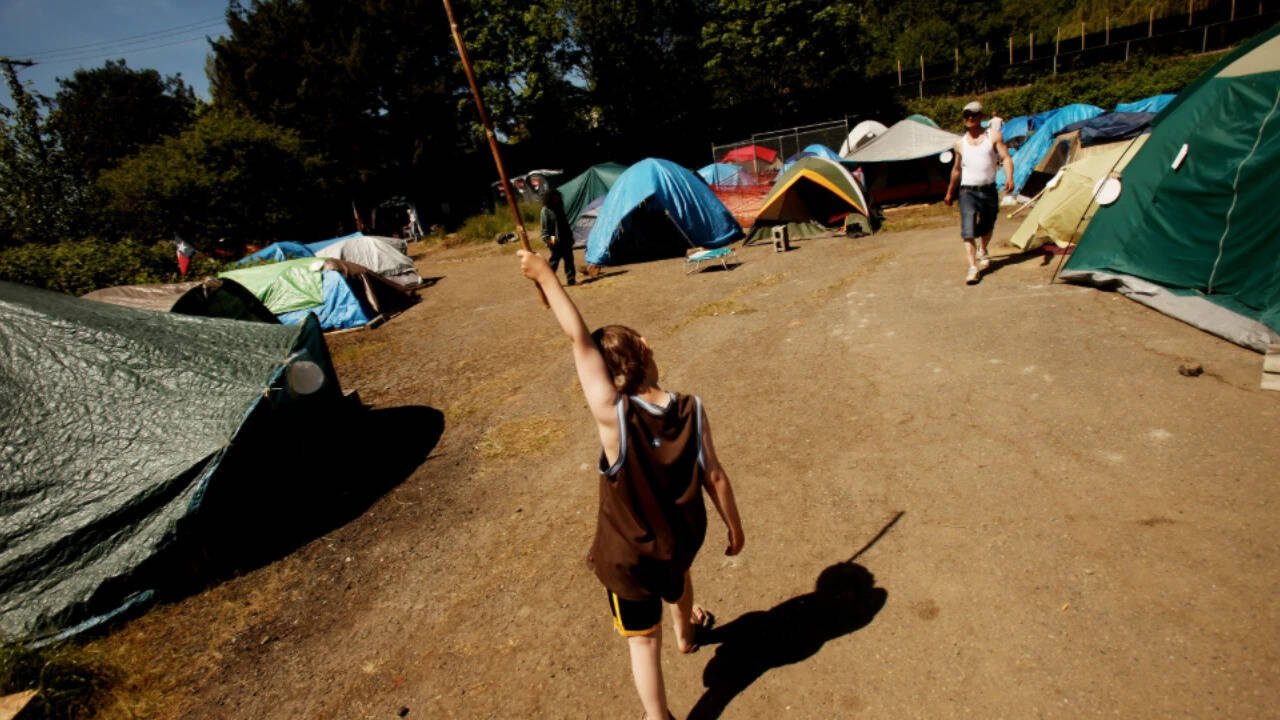
A 10-year-old boy in Seattle walked into a school for the first time last week after spending much of his childhood living in a tent in a North Seattle park.
asserted
boy → walk → park
His first day of school came after an 11-month effort by a local nonprofit, neighbours and others to help him and his mother move out of life on the streets.
asserted
him → come → streets
The boy had been living in the tent with his mother, who was struggling with fentanyl addiction and was being sexually exploited, according to Kristine Moreland, executive director of The More We Love, a Kirkland-based organisation that works with homeless women and children, KRI reported.
uncertain
KRI → live → women
The boy's father had also refused offers of housing, food and other services.
asserted
father → refuse → housing
Moreland said the boy had been living in difficult conditions and had never experienced school before.
asserted
boy → say → school
“This young man has been in fight or flight since the day he was born,” she said.
asserted
she → bear → day
After his first day in the classroom, however, the boy gave the people who had been helping him a simple response.
asserted
who → give → response
“I want to go back.”
asserted
I → want → ?
His journey towards school began in October last year, when Moreland and her team first visited the tent where the boy was living.
asserted
boy → begin → tent
The situation had already drawn the attention of neighbours, who had repeatedly contacted the Seattle Police Department and Child Protective Services.
asserted
who → draw → Department
Neighbours kept raising concerns
According to Moreland, authorities had determined on several occasions that the boy was not in imminent danger.
uncertain
boy → keep → danger
The nonprofit, however, continued visiting the tent and trying to help the family.
asserted
nonprofit → continue → family
“Everybody kept saying the same thing: He is ok.
asserted
He → say → thing
He is safe,” Moreland said.
asserted
Moreland → say → ?
“We continued to show up at that tent, knowing that that was not the case.”
asserted
that → continue → tent
The situation received wider attention in December after KIRO Newsradio reported on the boy.
asserted
Newsradio → receive → boy
Moreland was recorded offering the family immediate shelter, including a private room that was available that day.
asserted
that → record → room
The boy's father rejected the offer.
asserted
father → reject → offer
“Not from you,” he told her.
asserted
he → tell → her
The situation changed in the early hours of New Year's Day.
asserted
situation → change → Day
A Seattle police officer called Moreland and told her that the boy and his mother were ready to accept help.
asserted
boy → call → help
The mother entered treatment for active fentanyl addiction, while The More We Love helped connect her with recovery services.
asserted
We → enter → services
The organisation also arranged behavioural health treatment for the boy through Seattle Children's Hospital.
asserted
organisation → arrange → Hospital
Moreland said her team worked with another mission to find long-term housing for the family.
asserted
team → say → family
However, that agency was unable to manage the boy's behavioural challenges and the family was released back to the streets.
asserted
family → manage → streets
That did not end the effort to help them.
asserted
That → end → them
“We said, not a chance.
asserted
We → say → chance
Our case managers have dug in day after day, helping this little man get through this,” Moreland said.
asserted
Moreland → dig → this
The boy had been living in the tent with his mother, who was struggling with fentanyl addiction
A fresh new start
The boy's mother remains in recovery, Moreland said.
asserted
Moreland → live → recovery
She described that progress as a big deal while also pointing to the difficulties involved in learning to parent while dealing with addiction and trauma.
asserted
She → describe → addiction
“She has been in the cycle predominantly her whole life,” Moreland said.
asserted
Moreland → say → cycle
“We really have to work on her traumas as well.”
asserted
We → have → traumas
For the boy, the nonprofit's work did not stop with getting him into school.
asserted
work → stop → school
Moreland said the boy still faces challenges as he adjusts to a new life, including the possibility of being bullied at school.
asserted
he → say → school
She said people should not romanticise what comes next simply because he has now reached a classroom.
asserted
he → say → classroom
“And what if he was still living in the tent?” Moreland said.
asserted
Moreland → live → tent
Many families still need help
Moreland said the boy's situation is not unique.
asserted
situation → need → help
She said she receives calls every day from law enforcement and community partners about women and children living in encampments across the region.
asserted
she → say → region
The More We Love has also received a $500,000 matching donation from an anonymous donor to support efforts to help women and children living in encampments.
asserted
We → receive → encampments
Moreland said donations to the organisation through its website would be matched.
asserted
donations → say → website
…and 5 more, not listed.
 The Aporia