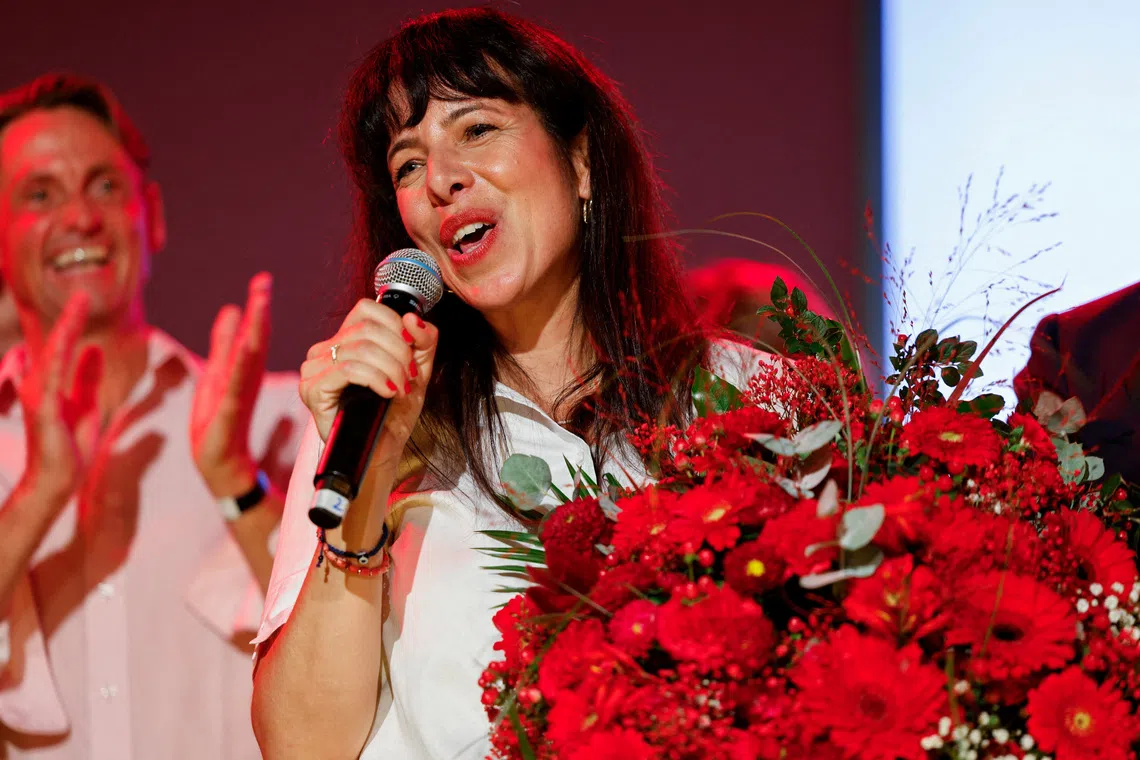
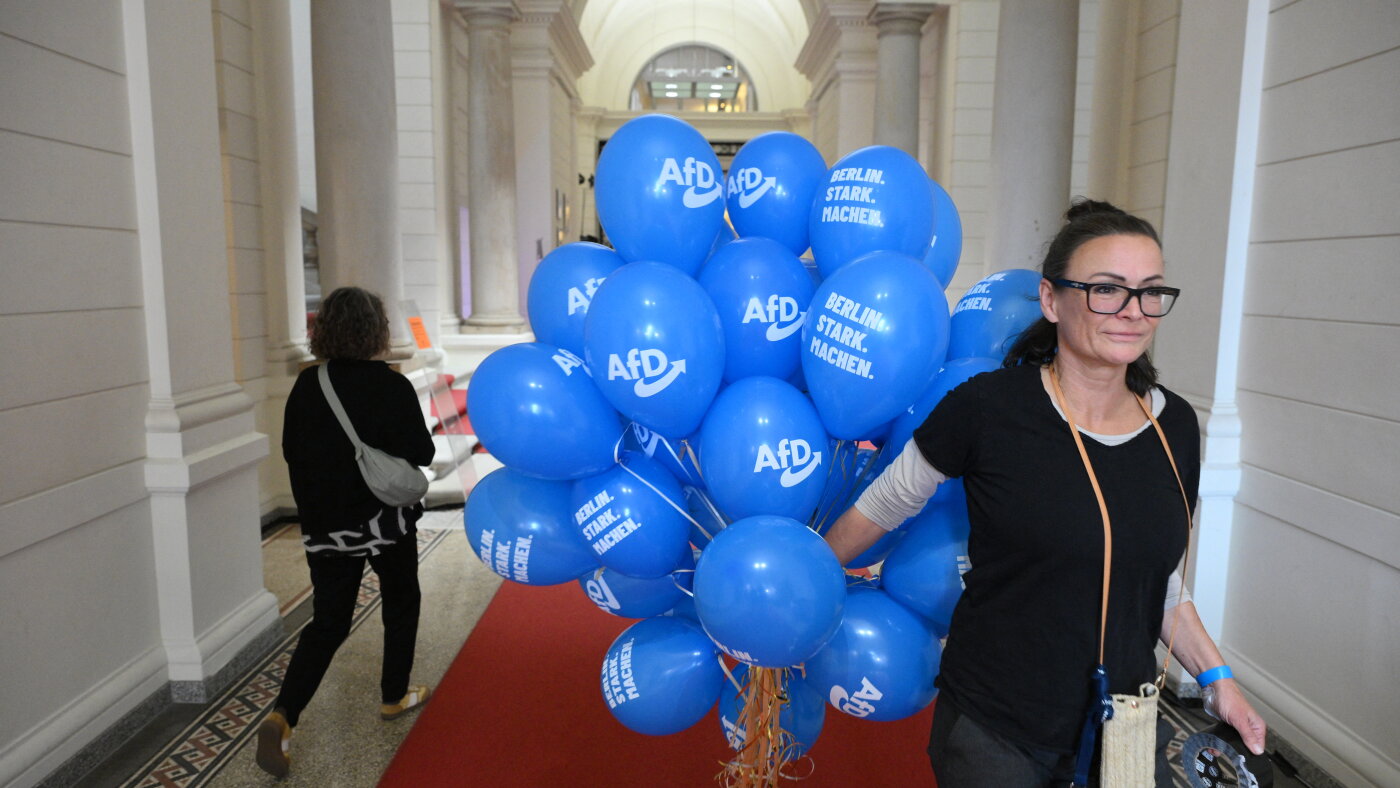
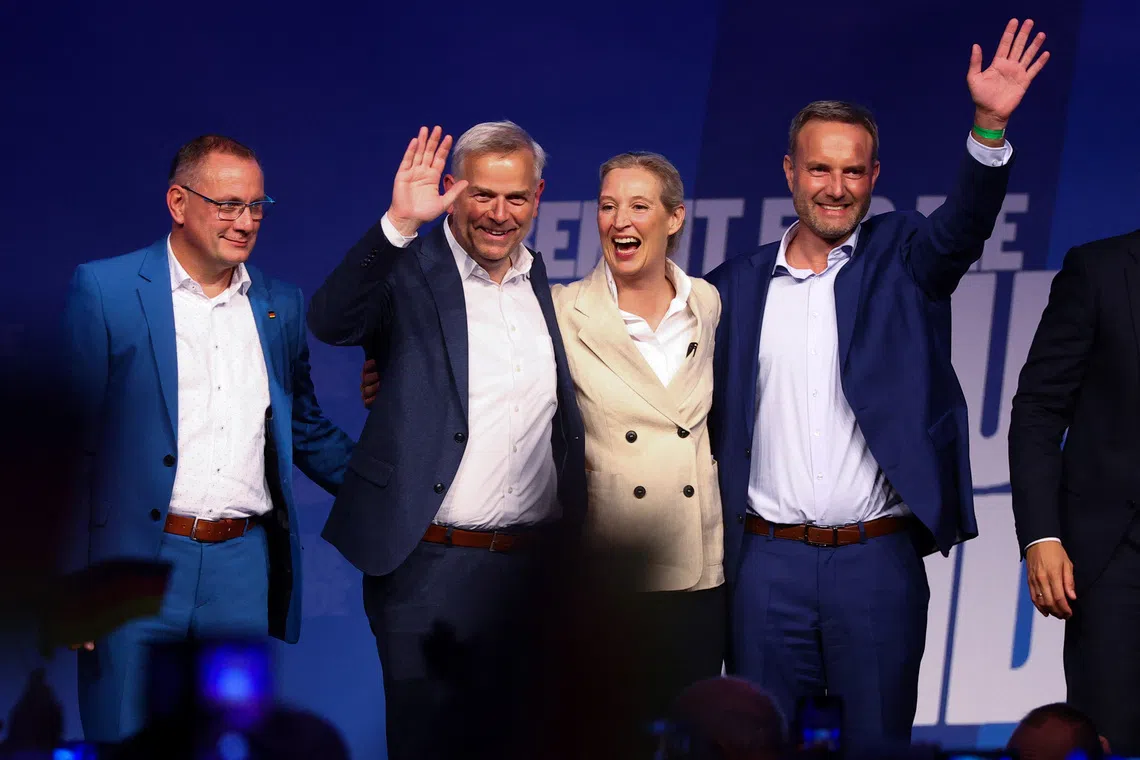
The far-left Die Linke party won Berlin elections Sunday (September 20, 2026), according to exit polls, making its lead candidate Elif Eralp the top contender to become the next mayor of Germany's capital city.
uncertain
candidate → win → city
Ms. Eralp, 45, and her pro-poor party have promised dramatic steps to solve Berlin's housing crisis and bring down rents, including with a controversial pledge to expropriate flats held by large corporate landlords.
asserted
Eralp → promise → landlords
The daughter of Turkish migrants, Eralp has also campaigned as being the best person to counter the rise of the far-right and anti-immigration Alternative for Germany (AfD) party.
asserted
Eralp → campaign → party
"I believe it would indeed send a powerful signal if someone with a migration background were to become governing mayor of Berlin," she said on the eve of the vote.
asserted
she → believe → vote
Celebrating on Sunday (September 20), she exclaimed: "In our city, love and justice have triumphed over hatred."
asserted
love → celebrate → hatred
Ms. Eralp — whose party wants to reduce social inequality and the power of big business — has been compared to Zohran Mamdani, the charismatic left-wing outsider who became mayor of New York.
asserted
who → want → York
"Naturally, the success of a democratic socialist in New York — the heartland of capitalism — is a major success," Ms. Eralp said on Friday (September 18), calling Mr. Mamdani "a great role model".
asserted
Eralp → say → Mamdani
The election win by the Die Linke, at about 25% according to exit polls, was a historic first for Berlin and dealt a blow to the centre-right CDU of embattled Chancellor Friedrich Merz, which came second with about 20%.
uncertain
which → accord → %
In order to govern, however, Eralp must now convince other parties — likely the centre-left SPD and the Greens — to join her in a so-called "red-red-green coalition".
asserted
Eralp → govern → coalition
However, the SPD's lead candidate Steffen Krach has already made clear he opposes the expropriation idea by Die Linke, a party which traces its roots in part to communist East Germany's ruling party.
asserted
which → make → party
Germany's mainstream parties have many other differences with the hard-left party, especially on security policy, where it opposes military aid for Ukraine and advocates for Germany to leave NATO.
asserted
Germany → have → NATO
Die Linke has also been criticised for anti-Israeli messages from some district-level figures — an especially sensitive issue in Germany, given its dark history of Nazi rule and the Holocaust.
asserted
Linke → criticise → rule
Ms. Eralp had repeatedly emphasised her desire to support and foster Jewish life in Berlin.
asserted
Eralp → emphasise → Berlin
But fierce criticism of Israel from some local branches of Die Linke, particularly in Berlin's Neukoelln neighbourhood that is home to many Arab and Muslim immigrants, have drawn negative headlines.
asserted
that → draw → headlines
A concert in August at a local Die Linke campaign event in Neukoelln provoked scandal after a performer advocated an "intifada" (uprising) and chanted "Death to the IDF!", the Israel Defense Forces.
asserted
performer → provoke → IDF
Ms. Eralp distanced herself from the incident, but it drew fierce criticism from the Greens and the SPD — and once again prompted the press to question whether Die Linke is fit for governing.
asserted
Linke → distance → governing
Still, the Greens during the campaign appeared to prefer backing a coalition with Die Linke over the other obvious possibility of joining with the conservative CDU.
asserted
Greens → appear → CDU
But in the SPD, which has a history of close ties to organised labour and working-class voters, there are some dissenting voices.
asserted
which → have → labour
The SPD chose to break with a left-wing coalition after the previous election in 2023 and is currently junior partners with the CDU.
asserted
SPD → choose → CDU
Ms. Eralp now has a few days or weeks to convince her potential partners that she has her state branch under control and is suited to govern.
asserted
she → have → control
Ms. Erlap's parents, who were active in socialist politics and trade unions in Turkey, fled to Germany in 1980 following a military coup when the mother was eight months pregnant.
asserted
mother → flee → coup
Ms. Eralp was born in Munich and went on to study law in Hamburg, going on to defend migrants' rights.
asserted
Eralp → bear → rights
She was hired as a staffer for Die Linke's faction in the German parliament in 2010, and moved to Berlin permanently not long after.
asserted
She → hire → Berlin
She lives in the trendy Kreuzberg district with her husband and two children — and is often quick to emphasise that, like most Berliners, they rent their flat and are not homeowners.
asserted
they → live → flat
 The Aporia