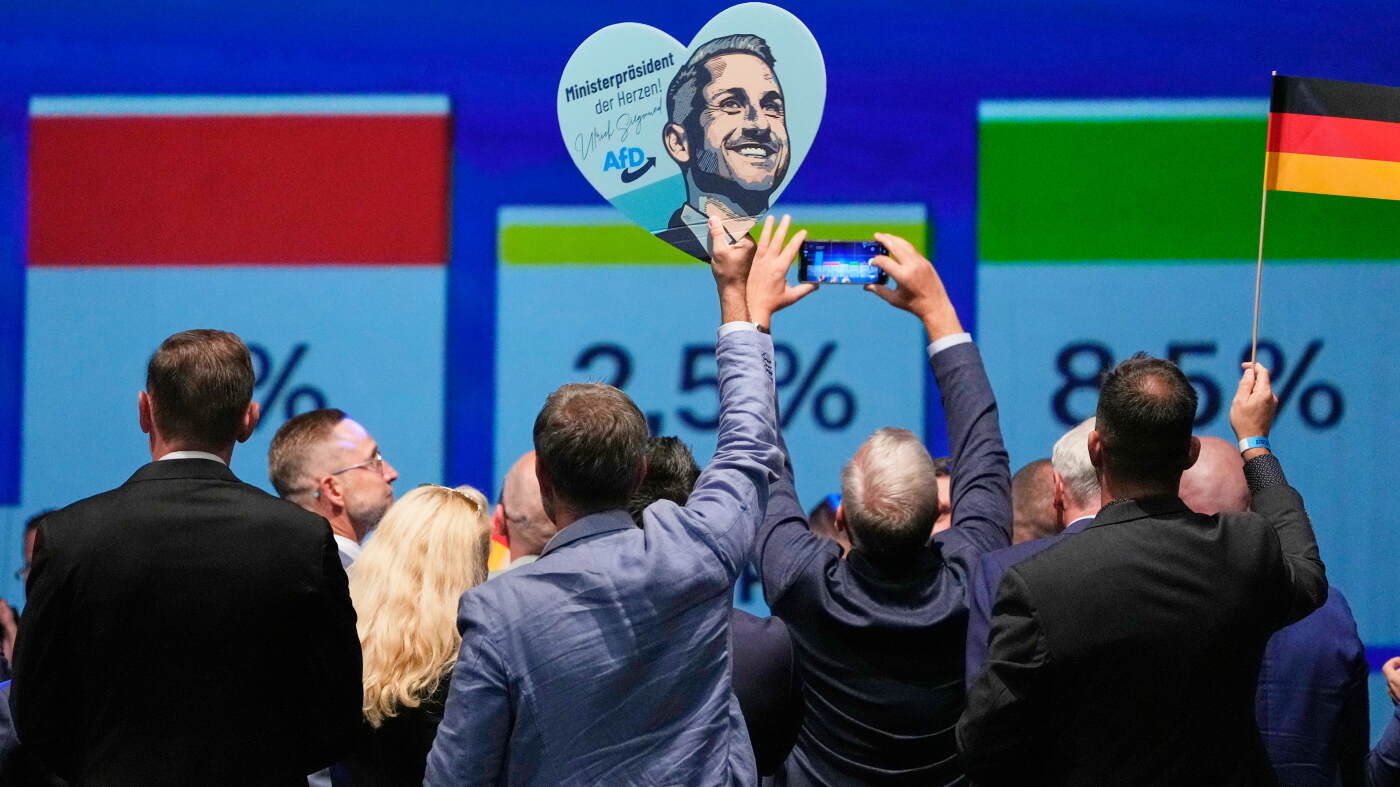
Photo via NPR

German chancellor stands his ground after his party loses in state elections

Read the original at NPR ↗
Cite

Nicholson, E. (2026, September 21). German chancellor stands his ground after his party loses in state elections. NPR. https://www.npr.org/2026/09/21/g-s1-144231/germany-state-elections-merz

Dated when The Aporia collected the article, usually within hours of publication. Check the original for its exact date and byline.

NPR · collected 2026-09-21 · by Esme Nicholson

Quick Summary

German Chancellor Friedrich Merz remained steadfast after his party suffered significant losses in state elections for Mecklenburg-Western Pomerania and Berlin. The CDU received only 4.9% of the vote in Mecklenburg-Western Pomerania, failing to clear the parliamentary threshold, while in Berlin it placed third with just 18.2%. Meanwhile, the far-right AfD made substantial gains, securing 38.2% in Mecklenburg-Western Pomerania and 16.3% in Berlin. Despite these setbacks, Merz refused to resign and pledged to continue pushing his federal agenda of tax and welfare reforms.
Written by AI on 2026-09-21, from this article's own text only (the story summary below draws on all the coverage).

AI analysis

Story summary

Chancellor Friedrich Merz faces significant pressure as voters in Berlin and Mecklenburg-Western Pomerania go to the polls on Sunday, following the far-right AfD's major victory in Saxony-Anhalt just two weeks prior where it won nearly 44% of the vote compared to the CDU’s 17%. With about 3.8 million voters eligible across both states, the AfD is expected to make substantial gains at Merz’s expense, potentially undermining his ability to push through promised economic reforms. Polls indicate that Merz's approval ratings have fallen to around 14%, and his CDU party risks losing its status as the largest party in Berlin and falling below the threshold for representation in Mecklenburg-Western Pomerania. These outcomes could further jeopardize Merz’s leadership, especially given the CDU’s recent struggles with unpopular reforms and low public approval.

Written for “German State Elections And Chancellor…” on 2026-11-02, grounded in this article and the 40 other(s) covering the same event.

Story

📰 German State Elections And Chancellor…
Politics · 41 article(s) covering the same event. Compare every outlet's account →

Compared with similar articles

This article reads unscored and hedges 4% of its claims. Each row says how that neighbour differs.
The Hindu
Hedges 2 of 25 claims Outlet record 60/100
BBC News
Hedges 3 of 13 claims Outlet record 68/100
NPR
Hedges 1 of 13 claims Outlet record 60/100
New York Post
⚖️ Leans left Hedges 3 of 12 claims Outlet record 66/100
Times of India
⚖️ Leans right Hedges 2 of 14 claims Outlet record 59/100
CBS News
Hedges 3 of 21 claims Outlet record 66/100
Times of India
⚖️ Leans strongly left Hedges 3 of 13 claims Outlet record 59/100
The Straits Times
⚖️ Leans right Hedges 4 of 30 claims Outlet record 66/100
Toronto Star
⚖️ Leans right Hedges 2 of 21 claims Outlet record 64/100
ABC News (AU)
⚖️ Leans right Hedges 0 of 3 claims Outlet record 68/100
How this article was measured signals, leaning charts, publisher record, byline, topics and claims

Signals How these are calculated →

Claims extracted
23
sentences that state something as happening or true
Uncertain
4%
1 of 23 hedged ("reportedly", "may", "according to")
Leaning
withheld
no quote in the article backed the model's score
Publisher signals
60/100
NPR's corrections and hedging, across everything collected from it. Not a measure of accuracy.
Outlets on this story
41
Politics
Same framing elsewhere
1
articles that frame the event the way this one does
Analyzed 2026-09-21 · how these are computed

How this is being covered How these are calculated →

Article leaning vs. publisher reliability
Source leaning vs. consistency

Publisher

NPR · 1012 article(s) · 3 correction(s) detected
Running correction rate · 3 correction(s)

Who wrote this

Esme Nicholson
6 article(s) here · 1 carrying a prediction
🔮 "It's no longer clear how a party will end up governing effectively because there are too many parties and forming viable majorities is becoming impossible."
🔮 He stressed that implementing these reforms "require backbone, steadfastness and patience" and that he will "demonstrate this" as "chancellor of our country."
🔮 Tusk said that these potential strikes "intend to paralyze NATO" or "at least weaken the alliance's willingness to respond collectively" in an attempt to demonstrate that Article 5 "exists only in theory."
🔮 Falling just shy of an absolute majority, it's not yet clear whether the AfD will be able to govern the state of Saxony-Anhalt.
🔮 Projections show the party is comfortably ahead of Chancellor Friedrich Merz's conservative Christian Democratic Union (CDU), but it remains unclear whether the AfD will win enough seats to secure a majority in the state parliament.
🔮 The 35-year-old former marketing man is a TikTok star in his own right and his party is comfortably leading polls Sunday's state election, which could make the AfD the first far-right party to lead a German state government since World War II.
Also by Esme Nicholson
Nothing else under this byline is closely related to this article, so these are simply their most recent.
All 6 articles by Esme Nicholson →

Topics

AfD BERLIN CDU German New York

Subjects

Merz PERSON · 8× BERLIN GPE · 6× AfD ORG · 5× CDU ORG · 4× Eralp PERSON · 3× Alternative for Germany ORG · 2× Friedrich Merz PERSON · 2× German NORP · 2× Mecklenburg PERSON · 2× New York GPE · 2×

Narrative

Sudha David-Wilp of the think tank German Marshall Fund told NPR that despite talk of replacing him, Merz will counter any political reckoning by standing his ground. "Merz himself has wanted to be chancellor for so long that he is probably loath to throw in the towel," David-Wilp said, "and he also knows the bar is very high to oust a chancellor in Germany." But as an increasingly fragmented political landscape makes for unstable coalitions with parties blocking each other from implementing policy, the AfD tells the mainstream parties it's just waiting in the wings for the next federal election.
framing: assertive · carried by 1 article(s) · first seen 2026-09-21
🔮 He stressed that implementing these reforms "require backbone, steadfastness and patience" and that he will "demonstrate this" as "chancellor of our country."

Claims (23 extracted, 1 hedged)

German chancellor stands his ground after his party loses in state elections BERLIN — asserted
party → stand → elections
Last night, Friedrich Merz should have been on his way to New York to attend the United Nations General Assembly. asserted
Merz → attend → Assembly
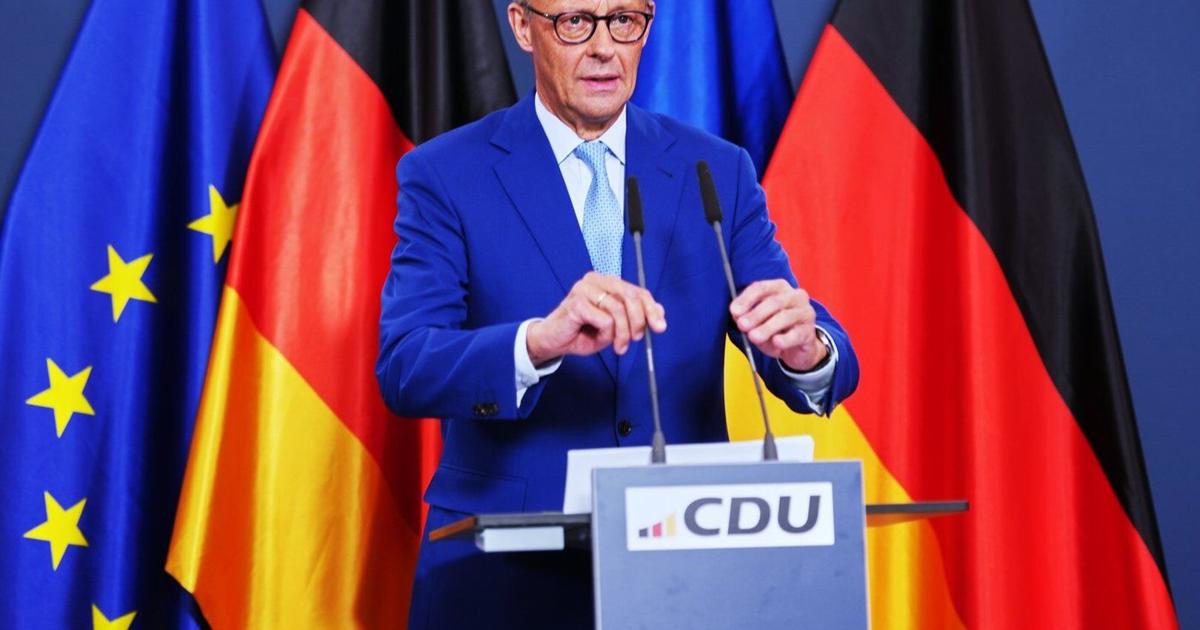
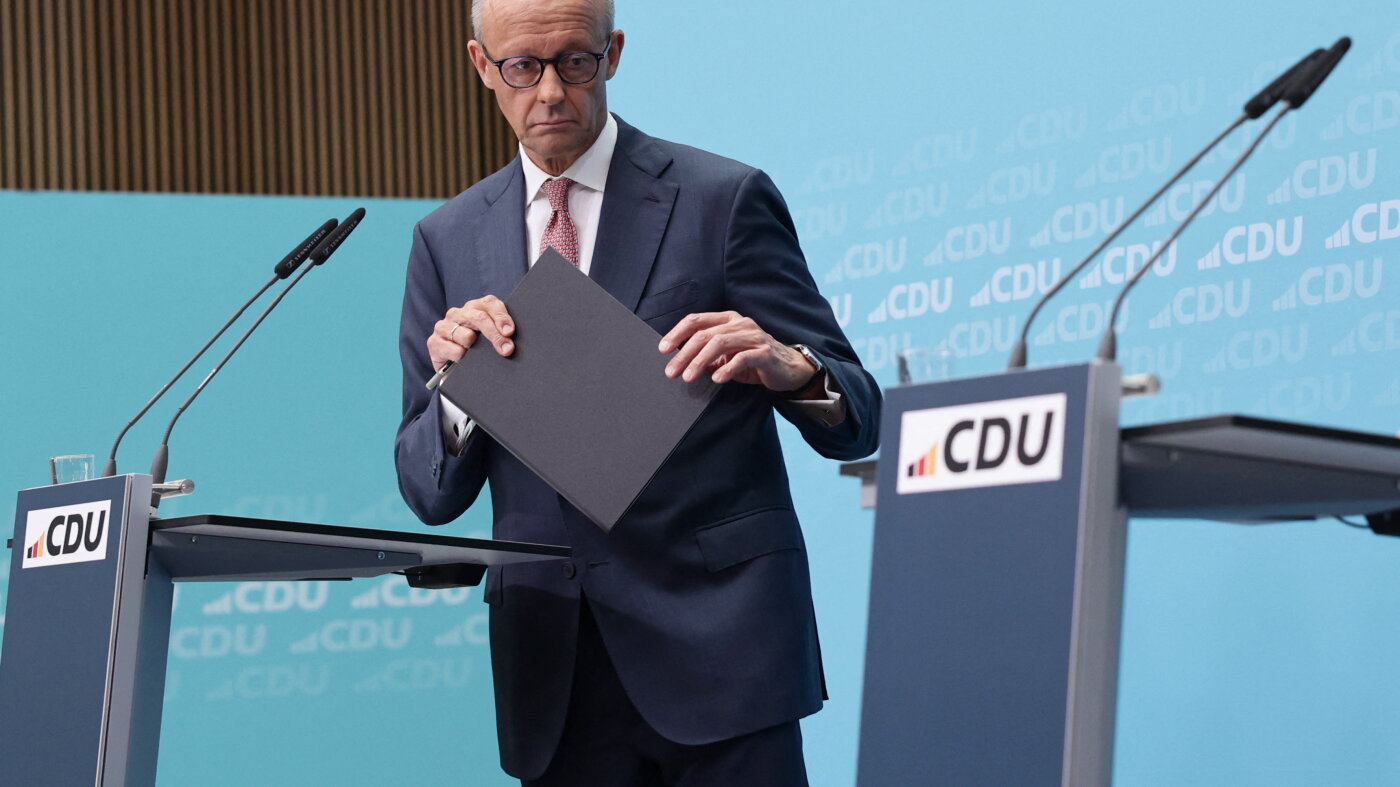
Instead he was at his Christian Democratic Union (CDU) party's headquarters in Berlin from where he broke the stunned silence as exit polls for two state elections showed its worst result since World War II. asserted
polls → break → II
State elections for parliament seats, which in turn elect a government and a governor, were held in Mecklenburg-Western Pomerania and in the city of Berlin. asserted
which → elect → Berlin
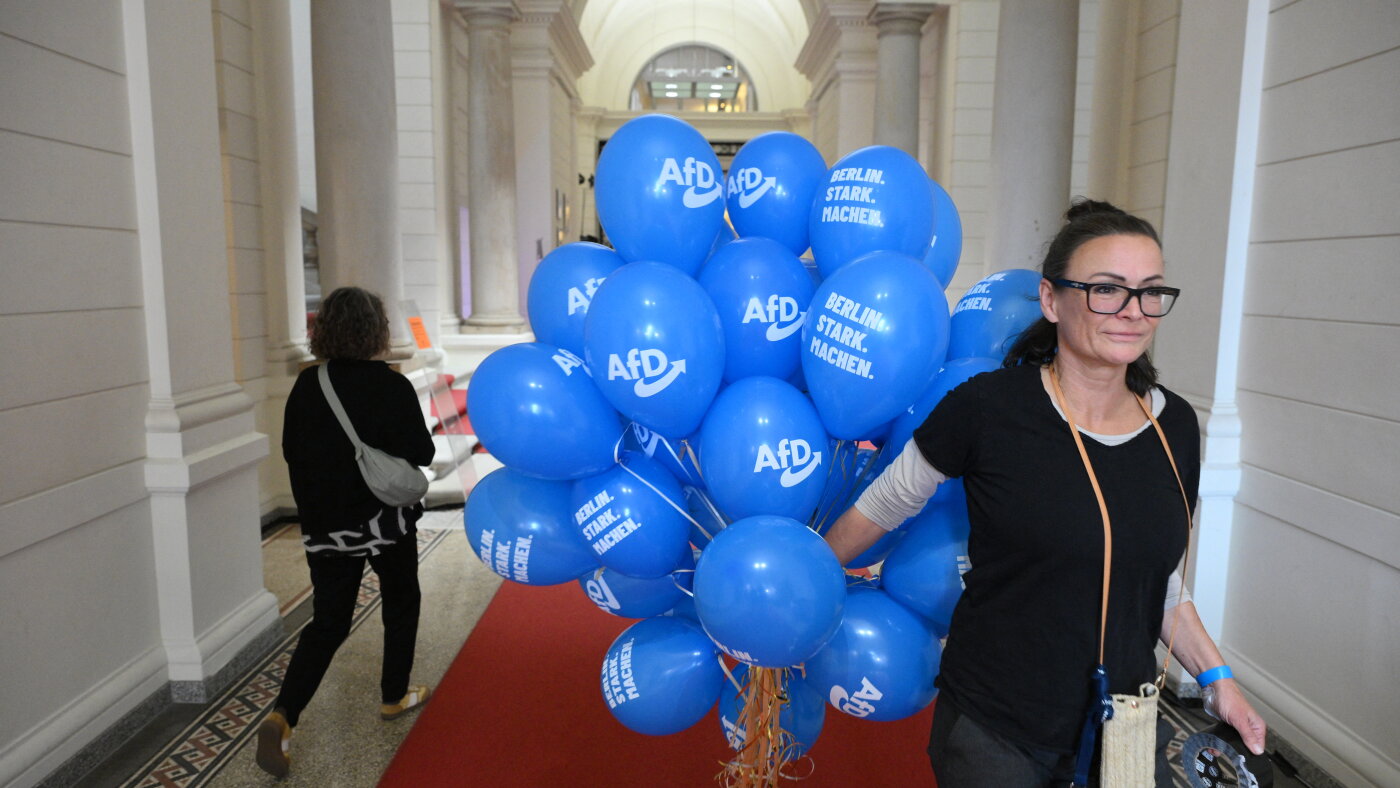
In both places, the far-right Alternative for Germany (AfD) made significant gains since the last state elections in 2021 and 2023, receiving 38.2% in the rural northeastern state and 16.3 % in the capital. asserted
Alternative → make → capital
In Berlin, the far-left Die Linke came in first with 25.7% of the vote, seven percentage points ahead of the CDU. asserted
Linke → come → CDU
Receiving just 4.9% of the vote in Mecklenburg-Western Pomerania, the CDU hasn't even cleared the threshold meant to keep fringe parties out of parliament. asserted
CDU → receive → parliament
Merz quashed talk within the press and his own party about his possible resignation despite Sunday's losses for his party just two weeks after a crushing defeat in the state of Saxony-Anhalt. asserted
Merz → quash → Anhalt
Usually, the German federal chancellor does not comment so promptly on state election results, especially for two states with relatively small electorates. asserted
chancellor → comment → electorates
But his party's crushing defeat in both states is starting to reflect poorly on Merz. asserted
defeat → crush → Merz
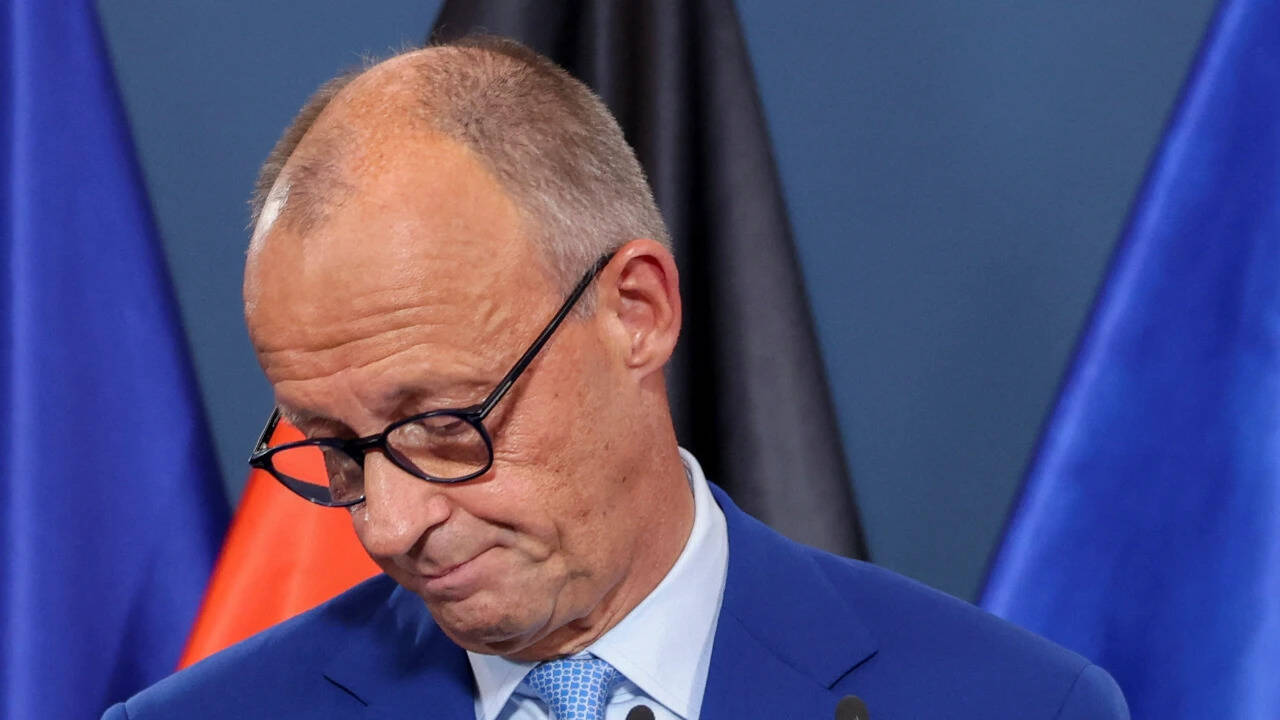
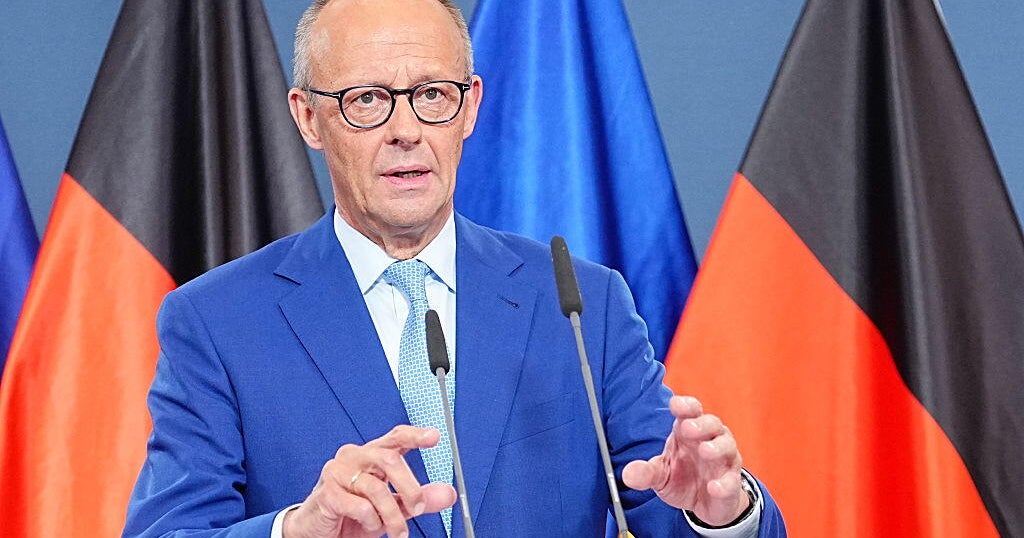
Merz conceded that the night spells "disaster" for the political center, but assured the public he'd push ahead with his federal agenda of tax and welfare reforms, describing them as "the antidote to the poison of authoritarianism." asserted
he → concede → authoritarianism
He stressed that implementing these reforms "require backbone, steadfastness and patience" and that he will "demonstrate this" as "chancellor of our country." asserted
he → stress → country
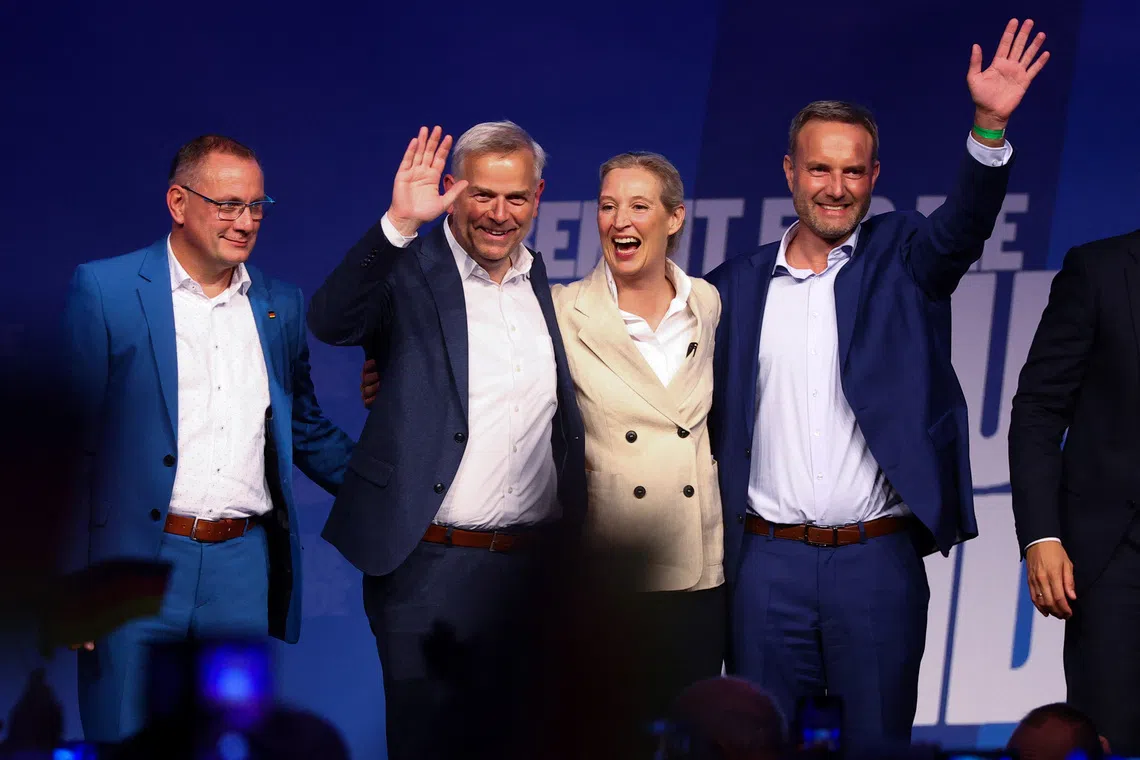
Speaking to public broadcaster ARD, federal leader of the far-right Alternative for Germany — or AfD — Alice Weidel said the more Merz digs in his heels, the more her party benefits. asserted
party → speak → heels
"Friedrich Merz is the wrong chancellor for the CDU," Weidel said, "and he is dragging the party down with him." asserted
he → say → him
The far-right AfD also beat Merz's coalition partner, the Social Democrats (SPD), in Mecklenburg-Western Pomerania. asserted
AfD → beat → Pomerania
But the AfD is unlikely to find coalition partners willing to form a government so the incumbent SPD state governor, Manuela Schwesig — who came in second with 35% of the vote — is expected to find the allies she needs to remain in office. asserted
she → find → office
In Berlin — which is both a city and a state whose mayor also serves as state governor — the far-left party, Die Linke, brought home its best ever result with a 25.7% share of the vote. asserted
party → serve → vote
Its leader, Elif Eralp, pledged to make Berlin affordable again, drawing comparisons with New York Mayor Zohran Mamdani. Taking to the stage as the results came in, Eralp said that Berliners will not tolerate the AfD's policies, adding "in our city, love and justice have triumphed over hate." Eralp — whose parents fled Turkey after the coup d'etat in 1980 — pledges to introduce a rent cap and seize apartments owned by large corporate real estate developers. asserted
parents → pledge → developers
But this second policy could prove contentious, even make-or-break as she enters into coalition negotiations this week. uncertain
she → prove → negotiations
Germany's electoral model is a combination of winner-take-all and proportional representation, meaning that parties need partners to form the parliamentary majority needed to govern. asserted
parties → take → majority
For Eralp to take office as mayor, she needs to form a government with at least two other parties. asserted
she → take → parties
On a federal level, Merz - whose party co-governs with the Social Democrats — is finding that kind of consensus difficult with just one coalition partner. asserted
kind → co → partner
Sudha David-Wilp of the think tank German Marshall Fund told NPR that despite talk of replacing him, Merz will counter any political reckoning by standing his ground. "Merz himself has wanted to be chancellor for so long that he is probably loath to throw in the towel," David-Wilp said, "and he also knows the bar is very high to oust a chancellor in Germany." But as an increasingly fragmented political landscape makes for unstable coalitions with parties blocking each other from implementing policy, the AfD tells the mainstream parties it's just waiting in the wings for the next federal election. asserted
it → tell → election

💬Give feedback
🕘History 🎫Support