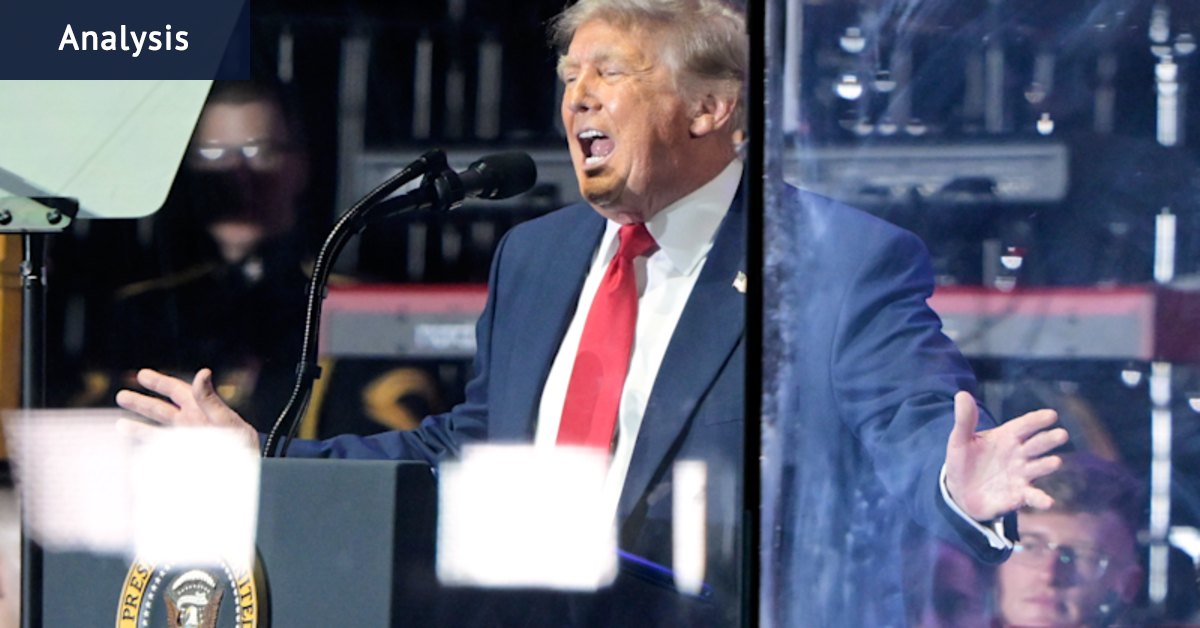
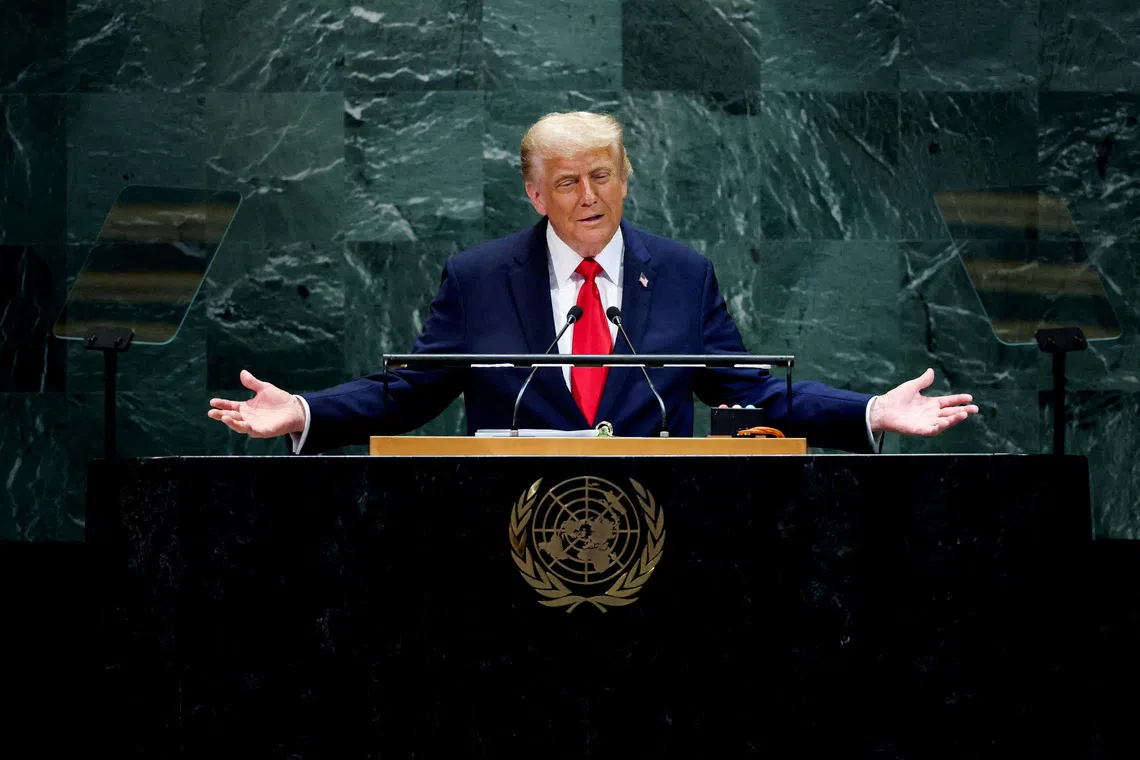
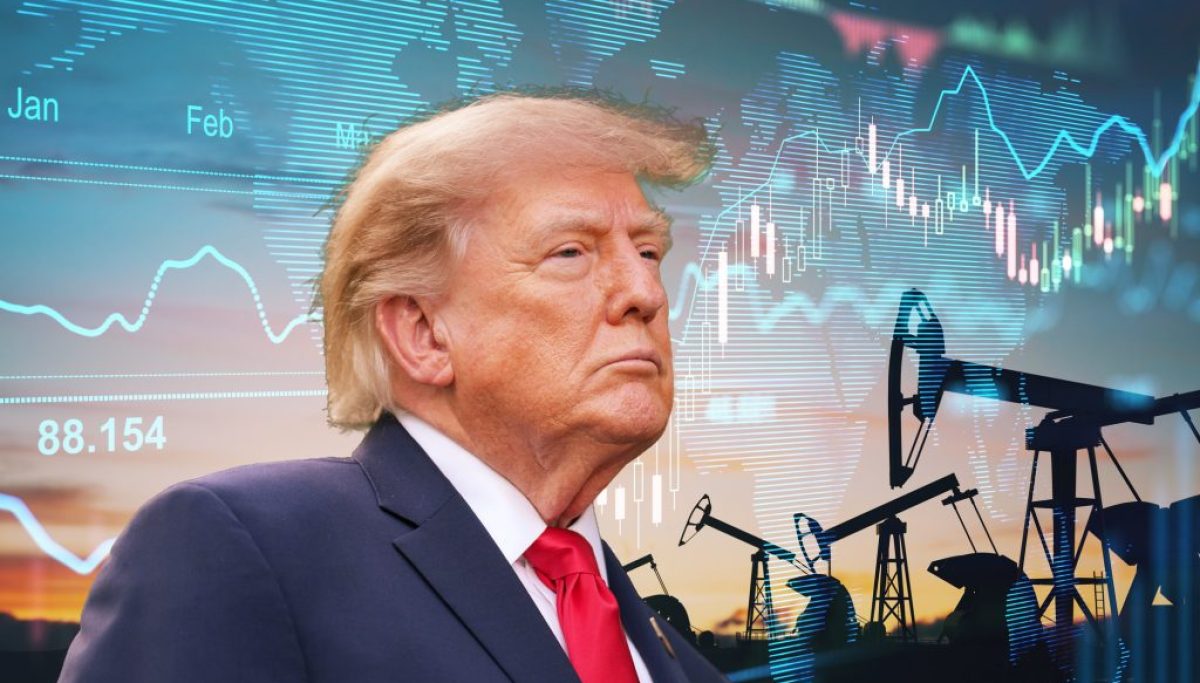
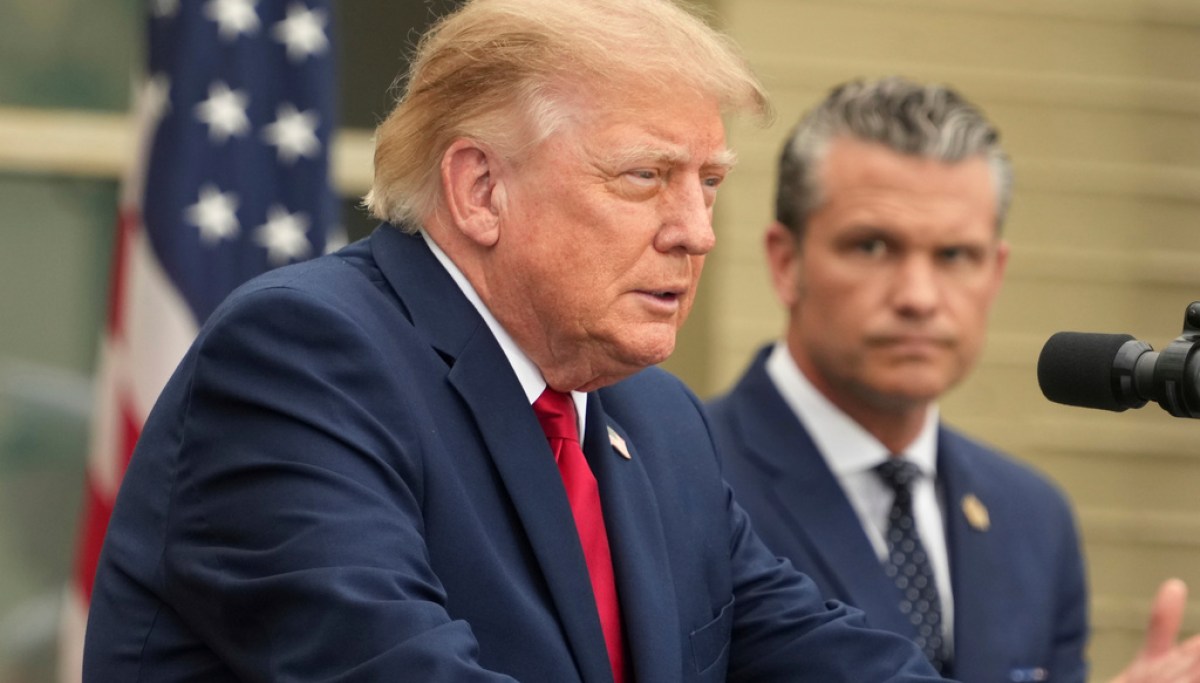
In the event of a midterms election battering, it is possible that a deflated Donald Trump, constrained by a Democrat-controlled Congress, will gradually have to face up to the indignity of irrelevance.
asserted
Trump → deflate → irrelevance
While continuing to sign off Truth Social posts with his usual, “Thank you for your attention to this matter”, no one will actually be paying much attention.
asserted
one → continue → attention
His meandering press conferences will no longer be carried live by TV networks.
asserted
conferences → carry → networks
The Republican party will move on to the question of his successor.
asserted
party → move → successor
Trump could announce he had changed the name of the Champs-Élysées to Sunset Boulevard and even Google Maps will stifle a yawn.
uncertain
Maps → announce → yawn
He would become that most pitied of political animals, the lame duck.
asserted
He → become → animals
Yet somehow this scenario does not seem to fit the Trump personality, the US media landscape or indeed the recent history of other presidential endings.
asserted
scenario → seem → endings
Just before completing their own terms in office, George W Bush launched the Iraq war “surge”, Bill Clinton got China into the World Trade Organization and Ronald Reagan helped end the cold war.
asserted
Reagan → complete → war
Trump will also surely rage against the dying of the light.
asserted
Trump → rage → light
Many observers, including the former US secretary of state Hillary Clinton and the former UK foreign secretary David Lammy, predict Trump will concentrate even more on his disruptive foreign policy after November’s midterms, seeking to go even further and faster.
asserted
Trump → include → midterms
Potential legislative gridlock in Congress would block him off from domestic initiatives, so the thinking goes, but much less so foreign policy.
asserted
thinking → block → initiatives
The likes of António Guterres, attending his final UN general assembly as secretary general this week, who have tried to impress on Trump that the US could achieve more in alliance with others than alone, are likely to receive short shrift.
uncertain
US → attend → shrift
Those hoping for a return from the orderless world to one of order, loosely built around a set of recognisable values, are likely to be disappointed.
asserted
Those → hop → values
That assessment is accelerating a trend across the world of countries forming a complex web of diplomatic, military and trading alliances designed to act as protective shields from an unpredictable and predatory US president.
asserted
assessment → accelerate → president
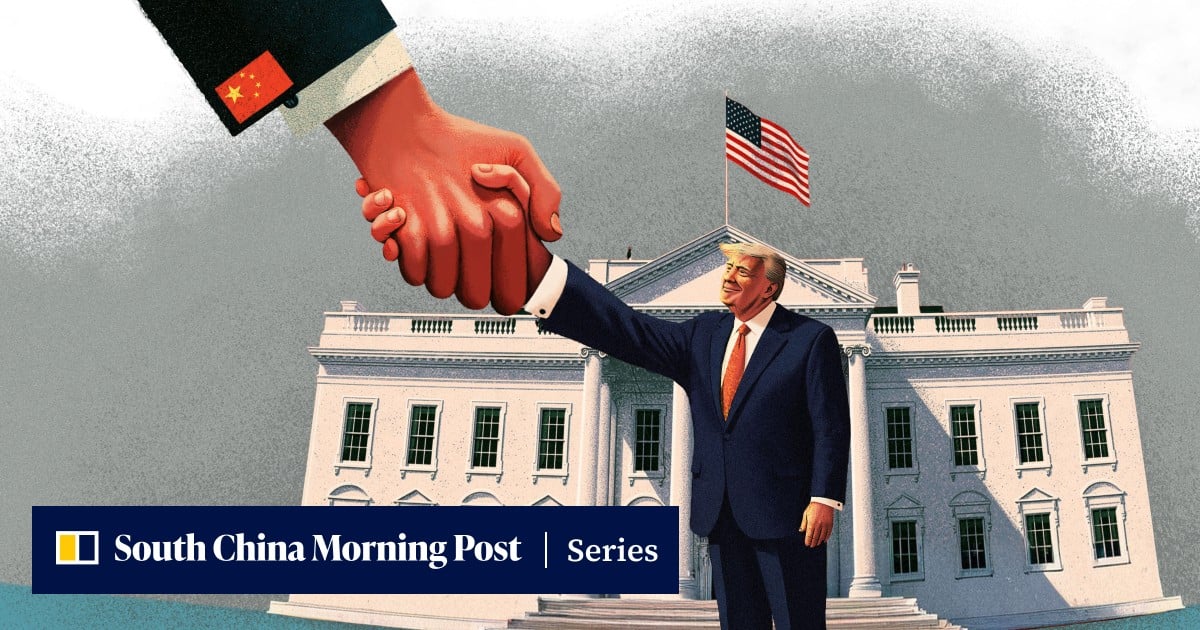
These hedging alliances, born out of fear of entrapment or of abandonment, are springing up across the globe, changing the matrix of diplomacy, often but not always in favour of the other superpower of the age, China.
asserted
alliances → hedge → age
John Bew, a foreign policy adviser to four former British prime ministers, describes the process as the creation of “a sub-threshold international order”.
asserted
Bew → describe → order
As Mark Carney, the Canadian prime minister, urged in a speech at Davos in January, the middle powers are reorganising.
asserted
powers → urge → January
Mark Leonard, the director of the European Council of Foreign Relations, said: “The world is moving from a situation where countries saw themselves within the context of an alliance system – ‘How do we plug and play and make it all about interoperability with American grand strategy?’ – towards one where the primary goal is: ’How do we hedge and how do we make sure that we can defend ourselves if America isn’t there?’
asserted
America → say → ourselves
”
Wherever one looks it is the alliances in which the US does not feature – from Brics to the Shanghai Cooperation Organisation (SCO) – that are thriving and deepening.
asserted
that → look → Organisation
The recent Brics summit in Delhi ended with a declaration 140 dense paragraphs long that centred on how sovereign states can insulate their economies, supply lines, and payment infrastructures from weaponised western financial networks.
asserted
states → end → networks
The aim was to show that the “global south” can shape rules without turning into an anti-American alliance.
asserted
south → show → alliance
“The operational strategy does not aim to eradicate the dollar overnight,” the Indian commentator Navroop Singh explained, “but to construct a parallel, non-dollar pipeline through which bilateral commerce, especially in strategic commodities like oil, gas, agriculture, and critical minerals can flow unhindered by extraterritorial oversight of the United States.
asserted
commerce → aim → States
At this month’s SCO meeting at Bishkek in Kyrgyzstan, China’s president, Xi Jinping, said: “The overwhelming majority of countries do not subscribe to power politics, do not want conflict and confrontation, and do not wish to remain closed off and left behind.
asserted
majority → say → conflict
Instead, they aspire to secure an equal place on the world stage through their own development and international cooperation.
asserted
they → aspire → development
Formed to manage border disputes among former Soviet states, the SCO’s activities long ago expanded to include an economic dimension fostering connectivity, trade and investment.
asserted
activities → form → connectivity
By contrast, in the groupings that the US dominates, such as the G7 and Nato, the recent key ambition has been to shape an agenda that avoids a Trump walkout.
asserted
that → dominate → walkout
Success is measured according to whether the west avoids public disintegration.
uncertain
west → measure → disintegration
Some operate inside existing institutions, others involve the creation of specific new cooperation trading mechanisms such as memorandums of understanding on trade in critical minerals or the development of new overlapping institutions.
asserted
others → operate → institutions
In the case of the UK, the Chatham House thinktank suggests as many as six different mini-alliances could be formed to build submarines and air engines, share critical minerals, or promote free trade.
uncertain
alliances → suggest → trade
The biggest and most striking recent manifestation of this new order came in the Middle East on 7 August, when Turkey, Pakistan and Saudi Arabia signed the Mecca pact – a defensive military alliance that for some is about ending the dependency on the US military umbrella, and for others combatting Iran.
asserted
that → come → Iran
Either way, it is likely to rewrite the Middle East’s security architecture.
asserted
it → rewrite → architecture
Trita Parsi, from the US foreign policy thinktank the Quincy Institute For Responsible Statecraft, said: “If you sit in the Gulf Cooperation Council countries right now, you must feel tremendously vulnerable because you have put all your eggs in the American security basket and it turned out not only not to work, but it was supposed to be a guarantee that others would be deterred from attacking you.
asserted
others → say → you
Instead, the US started a war against the wishes of most Gulf countries and within that war, the entire infrastructure of the US bases turned out not to be a deterrent, but a magnet.
asserted
infrastructure → start → bases
Not only were exposed bases pummelled by Iranian missiles and drones to the point, in the words of Gen David Petraeus, that they became “no longer viable”, the Gulf states also discovered the US was prepared to allow Israel to bomb Qatar’s capital, Doha, in the hope of assassinating the Hamas leadership.
asserted
Israel → expose → leadership
It was the first such attack on a GCC state, and changed the GCC’s security calculations as to whether Iran or Israel ultimately was the primary threat in the region.
asserted
Iran → change → region
The US insists in public it will reinvest in better-protected bases and will shortly lay out a postwar vision in which the US remains indispensable to the Gulf’s security.
asserted
US → insist → security
But Majed al-Ansari, Qatar’s foreign ministry spokesperson, said: “Gulf nations cannot rely solely on the US and other international alliances for their security.
asserted
nations → say → security
Self-sufficiency when it comes to security is the only way forward.”
asserted
it → come → security
Parsi admitted it was not clear what kind of tree would grow out of the seed sown in Mecca.
asserted
kind → admit → Mecca
“Is it another bloc formation that at its core divides the region, leading to rivalry and confrontation, or is it, as the Turks insist, an open constellation that is not targeting anyone but based on collective security?”
Saudi Arabia’s Vision 2030, meanwhile, requires foreign investment, tourism and reliable energy routes.
asserted
Vision → divide → investment
…and 31 more, not listed.
 The Aporia