The capture of Western Yemen is making the country's humanitarian crisis worse

Read the original at NPR ↗
Cite

Batrawy, A. (2026, September 21). The capture of Western Yemen is making the country's humanitarian crisis worse. NPR. https://www.npr.org/2026/09/20/nx-s1-5973884/the-capture-of-western-yemen-is-making-the-countrys-humanitarian-crisis-worse

Dated when The Aporia collected the article, usually within hours of publication. Check the original for its exact date and byline.

NPR · collected 2026-09-21 · by Aya Batrawy

Quick Summary

NPR reports on how the capture of Western Yemen by Houthi rebels has worsened the country's humanitarian crisis, leading to a displacement of 125,000 people within days and exacerbating food insecurity for 18 million Yemenis. The conflict has disrupted aid delivery and left many displaced in areas with insufficient resources, as described by Alison Bottomley from the Norwegian Refugee Council.
Written by AI on 2026-09-21, from this article's own text only (the story summary below draws on all the coverage).

AI analysis

Story summary

The Iran-backed Houthi rebels in Yemen have taken control of Western parts of the country, displacing over 130,000 people this month alone. The U.N. World Food Programme reports that an additional 125,000 people were displaced within days, and more are expected to flee as fighting continues. With half of Yemen's population in need of humanitarian assistance and 18 million facing acute food insecurity, the crisis is deepening. The UNHCR warns that tens of thousands more could be driven from their homes over the next three months, with over 3,000 already fleeing to Africa by boat. This fighting has extended the wider Middle East conflict into a new theater and threatens to exacerbate an already dire humanitarian situation in Yemen.

Written for “Yemen Humanitarian Crisis” on 2026-10-31, grounded in this article and the 1 other(s) covering the same event.

Story

📰 Yemen Humanitarian Crisis
World · 2 article(s) covering the same event. See how they differ ↓

Compared with similar articles

This article reads leans left and hedges 7% of its claims. Each row says how that neighbour differs.
The Straits Times
Hedges 4 of 8 claims Outlet record 66/100
The Hindu
⚖️ Leans right further right than this Hedges 3 of 57 claims Outlet record 60/100
The Bulwark
⚖️ Leans left Hedges 4 of 84 claims
“Article A discusses the humanitarian crisis worsened by Houthi capture of Western Yemen, while Article B provides a broader analysis of the geopolitical situation involving Saudi Arabia and the Houthis without focusing on a specific incident.”
The Guardian
⚖️ Leans left Hedges 8 of 79 claims Outlet record 66/100
“While both articles discuss ongoing conflicts between Houthi rebels and Saudi-backed forces in Yemen, they describe different stages of the conflict with distinct timeframes.”
The Straits Times
Hedges 0 of 23 claims Outlet record 66/100
“Article A describes a specific incident where Rawya Hassan's family flees their camp due to Houthi bombardment, while Article B discusses broader developments in Yemen's humanitarian crisis following the capture of Western Yemen by Houthis.”
The Guardian
Hedges 2 of 28 claims Outlet record 66/100
“While both articles discuss the military situation in Yemen involving Houthi advances, Article A focuses on the sudden collapse of anti-Houthi forces' assault on Sana'a and efforts to regroup, while Article B discusses the humanitarian impact of Houthis capturing Western Yemen. The timing difference suggests these are reporting different stages of the conflict.”
Al Jazeera
⚖️ Leans left Hedges 6 of 32 claims Outlet record 60/100
“Article A discusses the capture of Western Yemen by Houthi rebels, while Article B focuses on subsequent battles for strategic mountains near the Red Sea.”
The Guardian
Hedges 1 of 3 claims Outlet record 66/100
“While both articles discuss recent military advances by Houthi rebels in Yemen, they do not specify the exact same incident occurring at precisely the same time and place.”
Toronto Star
Hedges 1 of 42 claims Outlet record 64/100
“While both articles discuss recent fighting involving Houthis in Yemen, Article A focuses on the humanitarian impact following the capture of Western Yemen by Houthi rebels, while Article B discusses the broader context and divisions within anti-Houthi factions over their common enemy. The events described are related but not identical.”
The Independent
⚖️ Leans left Hedges 6 of 31 claims Outlet record 59/100
“While both articles discuss displacement and humanitarian issues due to conflict in Yemen, they describe different phases or outcomes of the crisis.”
How this article was measured signals, leaning charts, publisher record, byline, topics and claims

Signals How these are calculated →

Claims extracted
44
sentences that state something as happening or true
Uncertain
7%
3 of 44 hedged ("reportedly", "may", "according to")
Leaning
Leans left
of the writing, not the subject · beta estimate
Publisher signals
60/100
NPR's corrections and hedging, across everything collected from it. Not a measure of accuracy.
Outlets on this story
2
World
Same framing elsewhere
1
articles that frame the event the way this one does
Analyzed 2026-09-21 · how these are computed

How this is being covered How these are calculated →

Article leaning vs. publisher reliability
Source leaning vs. consistency

Publisher

NPR · 974 article(s) · 3 correction(s) detected
Running correction rate · 3 correction(s)

Who wrote this

Aya Batrawy
2 article(s) here · 1 carrying a prediction
🔮 And it says that number will likely rise as frontline fighting moves.
🔮 Why Houthi gains in Yemen could push gas prices even higher DUBAI, United Arab Emirates -
Also by Aya Batrawy
Nothing else under this byline is closely related to this article, so these are simply their most recent.

Topics

Iran NPR Saudi Taiz Yemen

Subjects

Yemen GPE · 10× BATRAWY PERSON · 7× Bottomley PERSON · 5× Mokha GPE · 5× Taiz GPE · 5× Saudi NORP · 4× Houthis NORP · 3× NPR ORG · 3× Houthi NORP · 2× Iran GPE · 2×

Narrative

The capture of Western Yemen is making the country's humanitarian crisis worse NPR speaks with people in Yemen and in aid groups who say the fighting is displacing families to areas without enough aid to support them. DEBBIE ELLIOTT, HOST: Aid groups say half of Yemen's population is in need of humanitarian assistance and that 18 million people are facing acute food insecurity after years of conflict.
framing: assertive · carried by 1 article(s) · first seen 2026-09-21
🔮 And it says that number will likely rise as frontline fighting moves.

Claims (44 extracted, 3 hedged)

The capture of Western Yemen is making the country's humanitarian crisis worse NPR speaks with people in Yemen and in aid groups who say the fighting is displacing families to areas without enough aid to support them. DEBBIE ELLIOTT, HOST: Aid groups say half of Yemen's population is in need of humanitarian assistance and that 18 million people are facing acute food insecurity after years of conflict. asserted
people → make → conflict
But this month, things got worse. asserted
things → get → ?
The Iran-backed Houthi rebels, already in control of Yemen's capital, managed to dislodge Saudi-backed forces from Western Yemen. asserted
rebels → back → Yemen
This reignited hostilities and shattered a fragile truce. asserted
This → reignite → truce
NPR's international correspondent Aya Batrawy is following the story from Dubai and reports on the deepening crisis unfolding in Western Yemen. asserted
Batrawy → follow → Yemen
The U.N. World Food Programme says that in just a matter of days this month, 125,000 people were displaced in Yemen. asserted
people → say → Yemen
And it says that number will likely rise as frontline fighting moves. asserted
fighting → say → ?
It's a very dynamic, moving, massive scale of displacement. asserted
It → move → displacement
Bottomley says the situation is dire, with roads difficult to navigate and not enough aid to reach everyone. asserted
situation → say → everyone
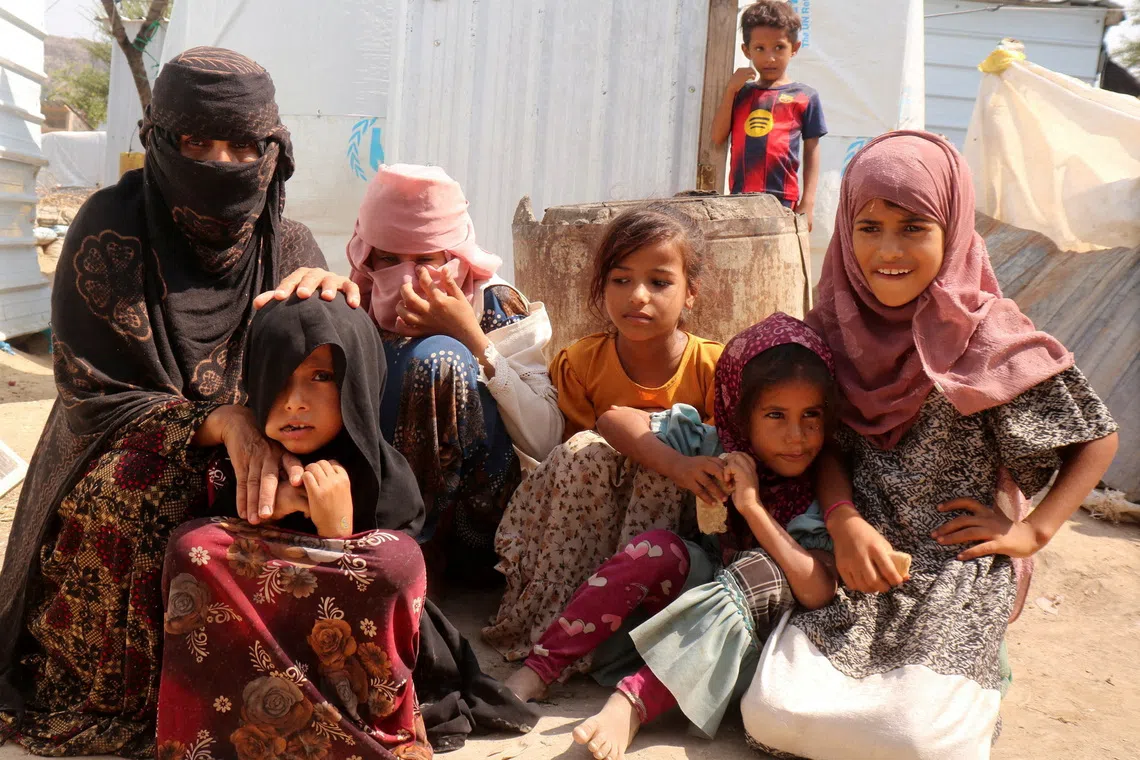
Most of the camps are already full, so they're hoping to find space, or they move on, or they try to find someone in the local villages that will help them. asserted
that → hop → them
But people are also sleeping under trees. asserted
people → sleep → trees
Like, they're just waiting on the side of the road. asserted
they → wait → road
Most of the people are displaced in Taiz. asserted
Most → displace → Taiz
That's where some of the fiercest clashes are happening. asserted
some → happen → clashes
That's the Red Sea shipping corridor where Iran-backed Houthis have attacked Saudi oil tankers. asserted
Houthis → back → tankers
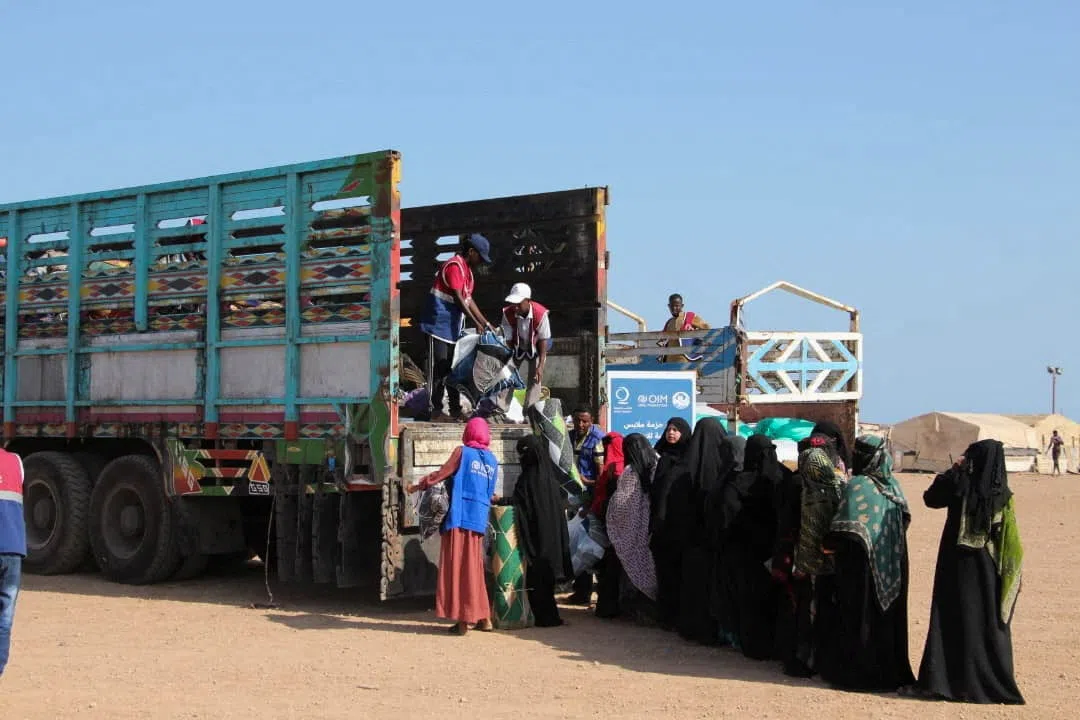
Aid groups say they're rushing to set up new displacement camps with water, food and mattresses in parts of the governorate of Taiz. asserted
they → say → Taiz
Bottomley shared sound with NPR from one of those new displacement camps there. asserted
Bottomley → share → camps
The Houthis captured parts of Taiz, including the port city of Mokha, so swiftly that Saudi-backed Yemeni government forces left their vehicles behind. asserted
forces → capture → vehicles
And families didn't have time to grab their clothes as they fled shelling and gunfire. asserted
they → have → shelling
But not everyone can leave. asserted
everyone → leave → ?
There are pregnant women who need urgent care. asserted
who → be → care
There are women who need cesarean sections. asserted
who → be → sections
There are children who need treatment and patients with medical conditions who simply cannot wait. asserted
who → be → conditions
She says most other health facilities in the city are no longer functioning. asserted
facilities → say → city
The team that remains that the hospital is still there, working under very difficult circumstances and doing everything they can to keep these services going. asserted
they → remain → services
The situation remains very uncertain and extremely stressful for everyone. asserted
situation → remain → everyone
The World Health Organization says it can no longer transfer patients from Mokha to the government stronghold of Aden in the south and that the city of Taiz, quote, "must plan for isolation." asserted
city → say → isolation
Many people can't leave Taiz. asserted
people → leave → Taiz
The roads to Aden in the south are under missile fire, says Faisal al-Asali, who leads the human rights group the Protection of Freedoms of Taiz and is opposed to Houthi rule. asserted
who → say → rule
And he says there are heavy strikes on Mokha ever since the Houthis took the city. asserted
Houthis → say → city
The Saudi air force and the Yemeni government's army have been launching airstrikes on Mokha and elsewhere. asserted
force → launch → Mokha
The U.N. says only 20% of its funding needs for Yemen have been met this year. asserted
% → say → Yemen
We know how to respond to the needs. asserted
We → know → needs
We're able to do it. asserted
We → do → it
But we really lack the money, the funding that we need to do it at the scale that's required now. asserted
that → lack → scale
And this is the sort of displacement - it doesn't resolve itself. asserted
it → resolve → itself
Similarly, Mercy Corps, now known as Prosper Global, says more funding is urgently needed. asserted
funding → know → Global
Of course, as you know, these families are arriving in host communities that are already very affected by the conflict that has been going on in Yemen for years. asserted
that → know → years
So we need, of course, additional support for both the displaced and for the host communities. asserted
we → need → communities
But unable to wait, the U.N. Refugee Council says more than 2,400 people have fled Yemen this past week alone, taking boats to Djibouti in the Horn of Africa. asserted
people → wait → Africa
…and 4 more, not listed.

💬Give feedback
🕘History 🎫Support