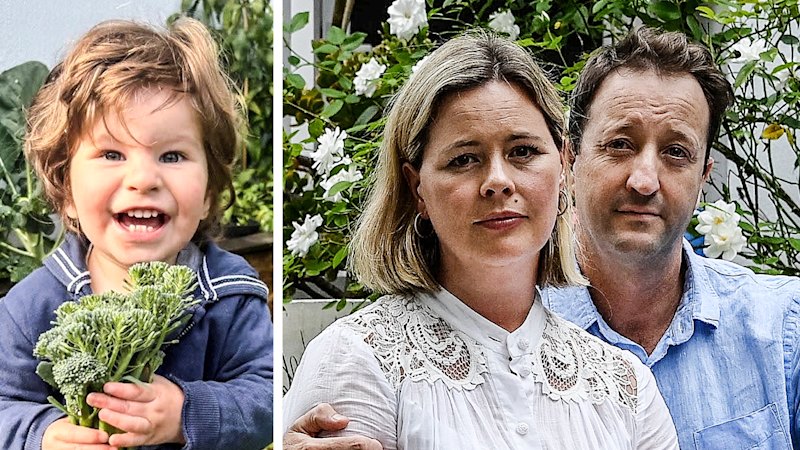
The registered nurse who triaged a two-year-old who died at the Northern Beaches Hospital has told a coronial inquest she had no alert about his abnormal heartbeat, was working with 12-year-old guidelines and was finishing a long shift during which she had been assaulted.
asserted
she → triage → which
NSW State Coroner Teresa O’Sullivan is examining the litany of problems at Northern Beaches Hospital that led to Joe Massa going from playing peek-a-boo to entering cardiac arrest within a day.
asserted
Massa → examine → day
The toddler’s death shocked Sydney and led to the hospital, which was previously run by the private operator Healthscope, to be transferred into public hands.
asserted
which → shock → hands
His mother Elouise Massa’s advocacy following his death also led to “Joe’s Law”, which bans future public-private partnerships.
asserted
which → follow → partnerships
Massa gently stroked a tiny pair of her son’s shoes as she gave evidence on Monday, the first day of the inquest.
asserted
she → stroke → inquest
She said clinicians at the hospital were rude and did not listen to her concerns as Joe’s condition rapidly deteriorated.
asserted
condition → say → concerns
Massa took Joe to the Northern Beaches emergency department about 7am on September 14, 2024, after she became concerned about his severe vomiting and dry retching overnight.
asserted
she → take → vomiting
“He looked terrible,” she said.
asserted
she → look → ?
“He could barely keep his head up, he was going in and out of consciousness, he was floppy.”
uncertain
he → keep → consciousness
She told the court she had “a mother’s instinct” that something was “very wrong”.
asserted
something → tell → instinct
Joe was triaged as a category three patient who required treatment within 30 minutes, despite having a “red zone” heart rate of 182 beats per minute.
asserted
who → triage → minute
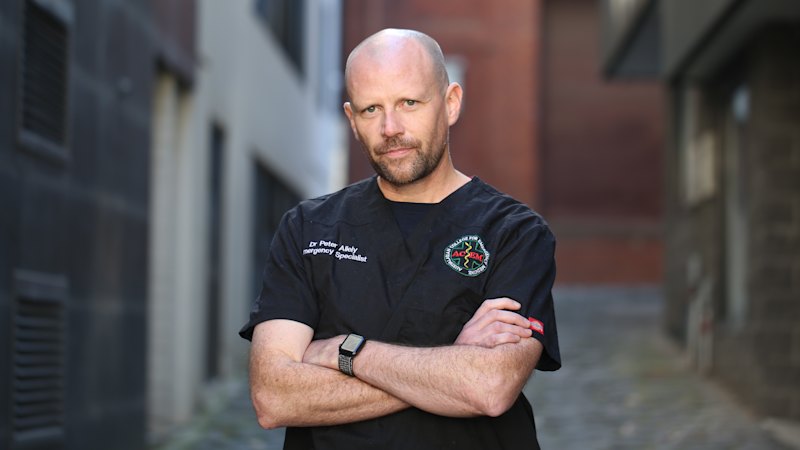
The registered nurse who triaged Joe, Hilary O’Neill, said she saw the toddler at the end of a 12-hour overnight shift without a proper break, during which she said she was assaulted by a mental health patient, who threw her against an ambulance door.
asserted
who → register → door
O’Neill said the only reference she had to assess Joe’s heart rate was a resuscitation guideline from 2012.
asserted
she → say → 2012
The system informed her Joseph was one year old – he was aged 22 months – and she assessed his initial heart rate of 160-170 BPM as just above the normal range.
She did not re-check the guide after he later recorded the higher heart rate.
asserted
he → inform → rate
“There were no track or trigger systems in place to alert me that it was in the red zone,” she said.
asserted
she → be → zone
The inquest heard that in the public hospital system, clinical software would have automatically flagged that the reading was outside normal parameters, and notified all staff who reviewed the patient file.
asserted
who → hear → file
O’Neill said if she had known Joe’s heart rate was in the red zone, she would have put him in category two, which would have resulted in him being given a bed on the ward with constant cardiac monitoring.
asserted
him → say → monitoring
O’Neill also said she contacted the chief medical officer on duty and asked for a bed.
asserted
she → say → bed
She said the doctor told her that paediatric emergency nurses would collect him.
asserted
nurses → say → him
However, the mother and son were instead left on a chair in the waiting room for two and a half hours, where Massa said she was instructed to continue a “sip and wait process” of rehydration.
asserted
she → leave → rehydration
Massa said trying to cradle Joe on her lap, fill a medical syringe with liquid from a cup of electrolytes, administer the fluid to Joe, note his intake on a form and set a new timer every five minutes was “near impossible”.
asserted
trying → say → timer
She said her son was declining rapidly but that her repeated requests for a bed were denied, and the doctor on duty instead treated Joe in the waiting area: “I was pacing around with him in my arms ... petrified.”
asserted
I → say → arms
The statement Massa created a few days after Joe’s death was a key point of reference throughout her testimony.
asserted
Massa → create → testimony
She said she put together the record of events while “lying in bed crying” as a friend took notes.
asserted
friend → say → notes
“I knew instinctively Joe wasn’t cared for properly, and we knew it would be a wise idea to make notes, so down the track [I had] events freshly on paper.
asserted
I → know → paper
The court heard Joe was given a bed by 9.51am, but was moved to the hospital’s resuscitation unit by 10.41am after a nurse raised concern about the toddler’s condition.
asserted
nurse → hear → condition
Massa said the family was left alone in the resuscitation bay, during which time hospital staff said they were gathering a team together.
asserted
they → say → team
“I was always by his side,” Massa said.
asserted
Massa → say → side
She said she called a friend whose husband was a doctor, and hung up at about 10.47am: “I was on the phone in utter despair, wanting to get out of this hospital, not knowing what to do.”
asserted
I → say → what
It was at about this time that Joe went into cardiac arrest.
asserted
Joe → go → arrest
He was given CPR and circulation returned about 30 minutes later.
asserted
circulation → give → CPR
He was intubated and transferred to Sydney Children’s Hospital but suffered irreversible brain damage.
asserted
He → intubate → damage
Joe’s life support was withdrawn two days later.
asserted
support → withdraw → ?
The clinicians involved in the boy’s treatment and a coalition of independent experts are expected to continue their testimony at the inquest in the coming days.
asserted
clinicians → involve → days
 The Aporia