Photo via NBC News

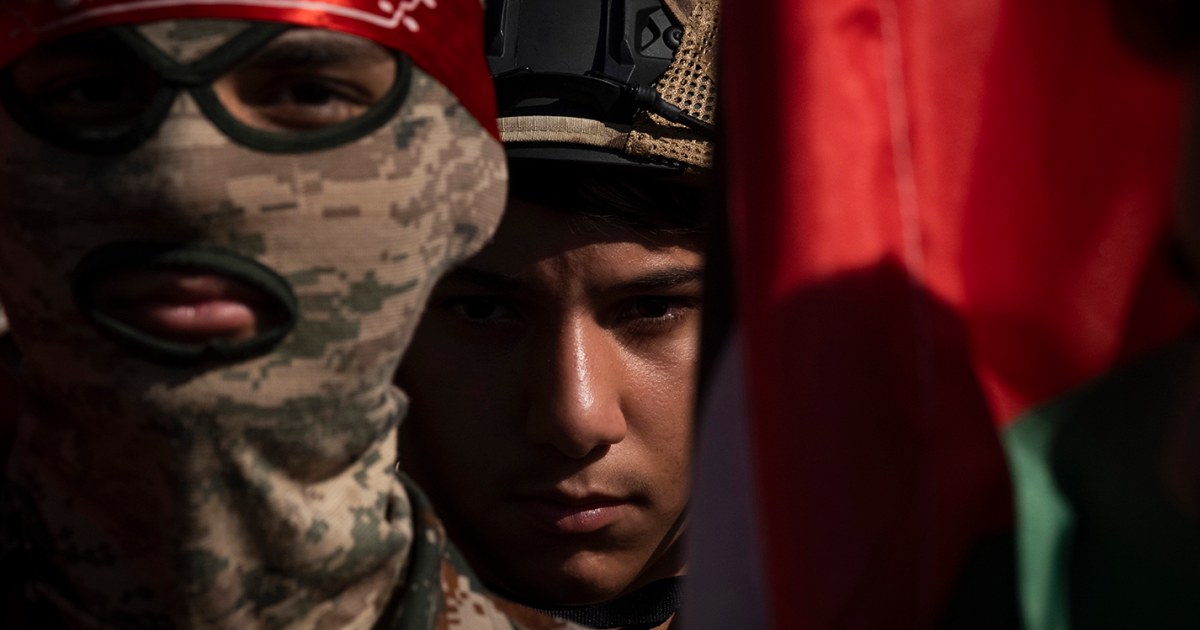
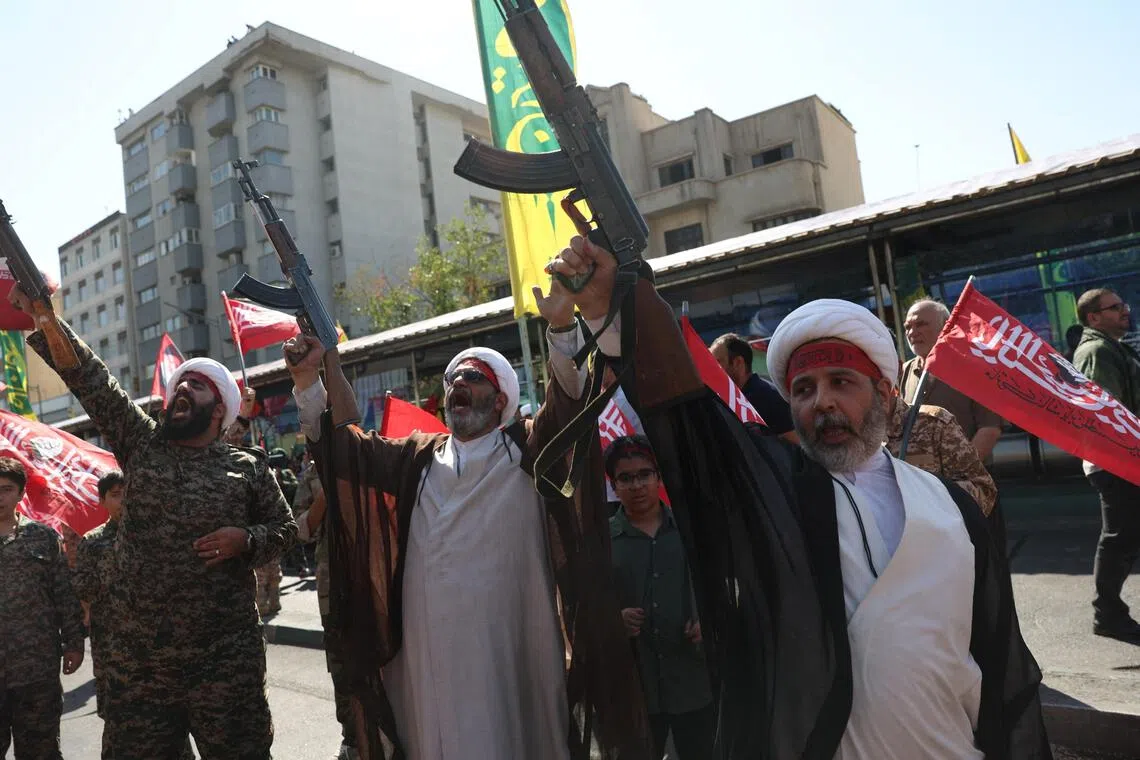
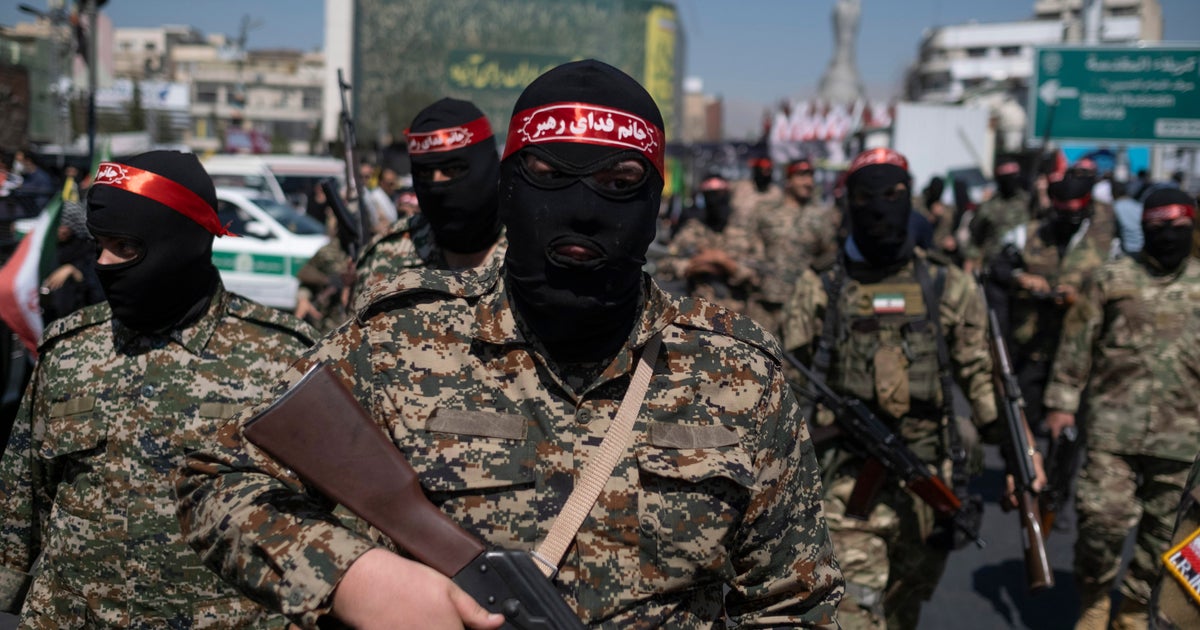
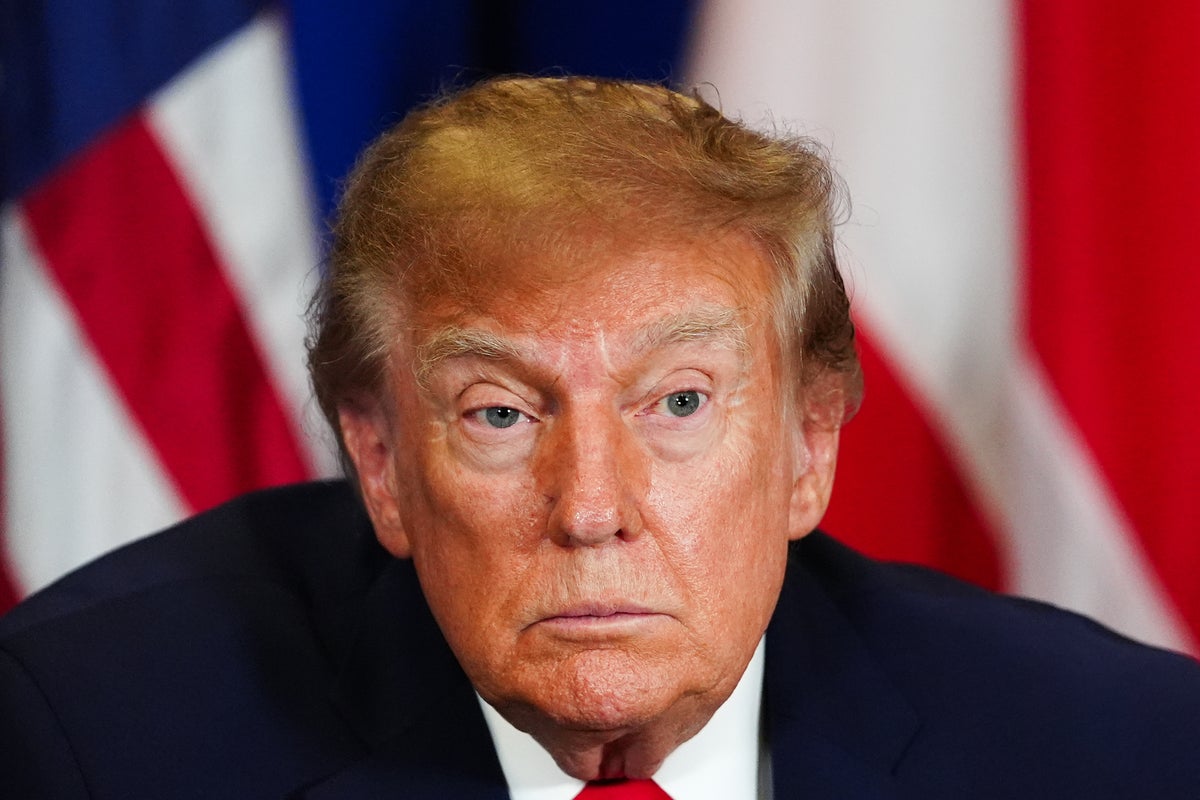
Iran warns of ‘new weapons’ as Trump weighs meeting with Iranian president

Read the original at NBC News ↗
Cite

Silva, C. D. (2026, September 21). Iran warns of ‘new weapons’ as Trump weighs meeting with Iranian president. NBC News. https://www.nbcnews.com/world/middle-east/trump-wiping-out-iran-warns-new-weapons-rcna598954

Dated when The Aporia collected the article, usually within hours of publication. Check the original for its exact date and byline.

NBC News · collected 2026-09-21 · by Chantal Da Silva

Quick Summary

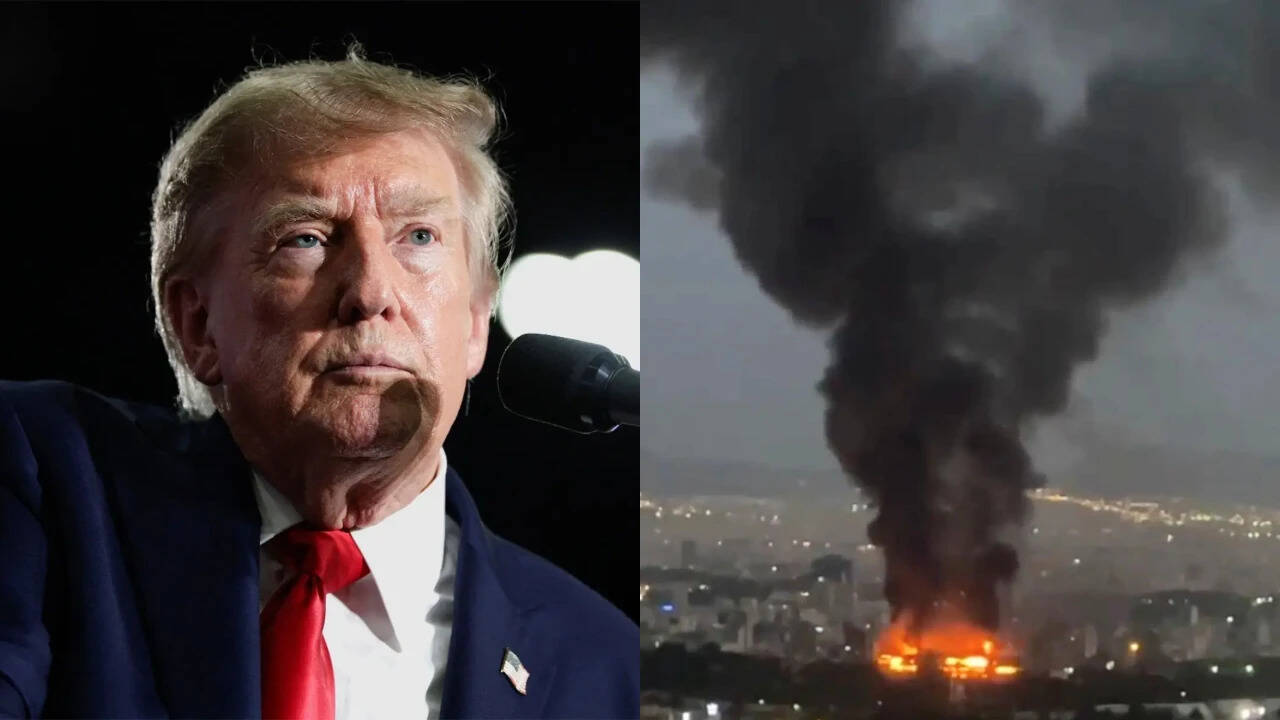
Iran threatened Monday it would employ new weapons if the U.S. attacks again, as reported by Fars news agency through an Iranian Revolutionary Guard Corps spokesman. President Trump, meanwhile, suggested he might meet with Iran’s president at the United Nations this week and indicated he was considering options ranging from military action to economic sanctions or negotiation. Oil prices dropped slightly on hopes for potential talks amid ongoing tensions over attacks in Yemen and the Strait of Hormuz blockades.
Written by AI on 2026-09-21, from this article's own text only (the story summary below draws on all the coverage).

AI analysis

Story summary

As of September 2026, President Donald Trump told reporters that the U.S. is "hopefully toward the end" of its ongoing war with Iran, which began on February 28 and has lasted for seven months. Despite this hopeful statement, there are no clear timelines or significant de-escalation efforts in sight. The conflict continues to disrupt global oil supplies through the Strait of Hormuz, pushing up oil prices to over $108 per barrel. Additionally, Iran's foreign minister is under pressure from China and international concerns to reopen the strait and return to a previous interim peace deal with the U.S.

Meanwhile, tensions have escalated beyond Iran into Yemen, where Houthi rebels, aligned with Iran, pose significant threats near the Red Sea, complicating efforts at regional stability. The conflict has also drawn in other nations such as Saudi Arabia, which is offering extra crude oil through Oman to ease supply disruptions and stabilize oil prices.

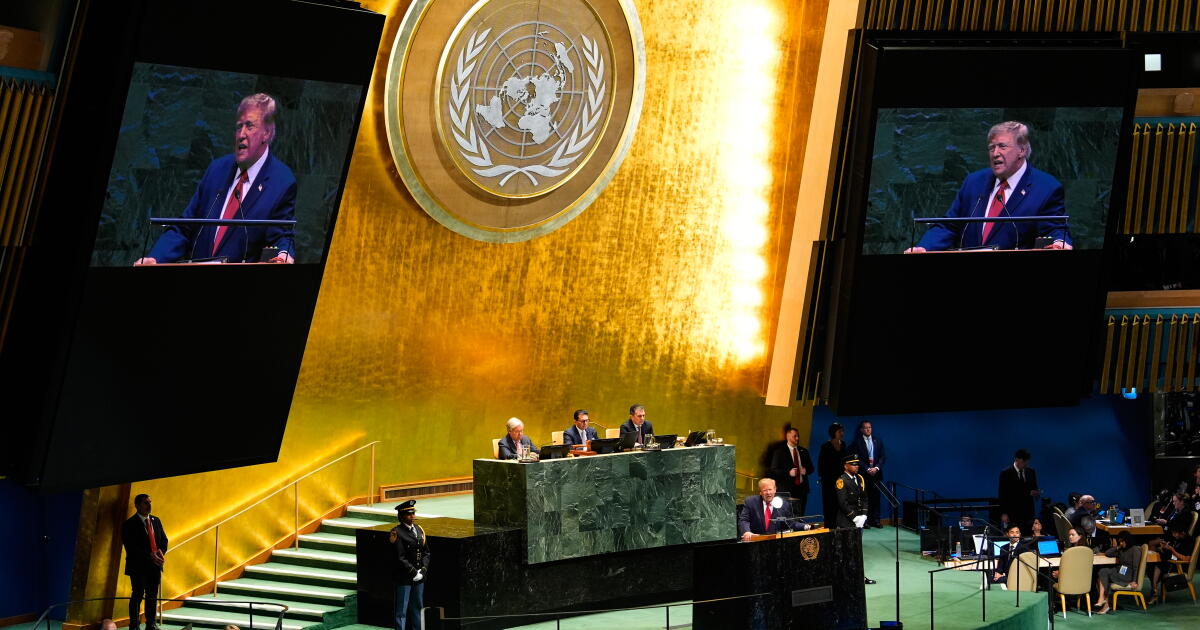
At the United Nations General Assembly, Trump further alarmed global leaders by threatening to "annihilate" Iran if necessary, raising concerns about the potential for catastrophic outcomes involving nuclear weapons. This rhetoric contrasts sharply with past U.S. presidents who emphasized caution regarding such extreme measures. Despite these challenges, there is an urgent need for multilateral solutions and effective engagement through international bodies like the UN to address ongoing conflicts and crises around the world.

Written for “Trump's UN Speech Controversies” on 2026-11-03, grounded in this article and the 206 other(s) covering the same event.

Story

📰 Trump's UN Speech Controversies
Politics · 207 article(s) covering the same event. See how they differ ↓

Compared with similar articles

This article reads leans left and hedges 7% of its claims. Each row says how that neighbour differs.
The Straits Times
Hedges 1 of 12 claims Outlet record 66/100
CBS News
Hedges 4 of 42 claims Outlet record 66/100
The Guardian
⚖️ Leans left Hedges 2 of 41 claims Outlet record 66/100
“The articles discuss different aspects of US-Iran tensions without describing the same specific incident.”
The Independent
Hedges 4 of 40 claims Outlet record 59/100
“The articles describe different points in time and distinct statements from Iran and the U.S., not the same specific incident.”
Times of India
Hedges 2 of 25 claims Outlet record 59/100
“The articles describe different phases of a broader conflict: Article A discusses Trump's internal deliberations on potential military action, while Article B reports Iran's response and warnings after Trump's rhetoric.”
The Independent
Hedges 9 of 48 claims Outlet record 59/100
“The articles describe different points in time and distinct events: one focuses on Trump's comments regarding a 'big decision' after UN reports, while the other discusses Iran's warnings about new weapons following increased rhetoric.”
Dawn
Hedges 5 of 30 claims Outlet record 72/100
“The articles describe related developments in U.S.-Iran tensions but cover different days and focus on distinct elements: Article A details warnings and Trump's abrupt departure, while Article B reports Iran's threat of new weapons and Trump's consideration of a meeting.”
Al Jazeera
Hedges 1 of 19 claims Outlet record 60/100
“While both articles discuss Iran's warning about potential US strikes and retaliation, they refer to different statements made at distinct times by different entities (Iran’s central military command vs. Iran’s Islamic Revolutionary Guard Corps spokesman).”
Los Angeles Times
Hedges 2 of 25 claims Outlet record 95/100
“The articles describe different speeches and statements made by Trump and Iran's spokesman over a period of time, rather than the same specific incident.”
Daily Mail
⚖️ Leans left Hedges 5 of 25 claims Outlet record 69/100
“While both articles discuss Iran's warnings and Trump's rhetoric towards Iran, they refer to different time periods and contexts: Article A is about a warning given Monday in response to Trump's weekend rhetoric, while Article B discusses Iran's reaction to Trump's UN speech on Tuesday.”
How this article was measured signals, leaning charts, publisher record, byline, topics and claims

Signals How these are calculated →

Claims extracted
27
sentences that state something as happening or true
Uncertain
7%
2 of 27 hedged ("reportedly", "may", "according to")
Leaning
Leans left
of the writing, not the subject · beta estimate
Publisher signals
60/100
NBC News's corrections and hedging, across everything collected from it. Not a measure of accuracy.
Outlets on this story
207
Politics
Same framing elsewhere
1
articles that frame the event the way this one does
Analyzed 2026-09-21 · how these are computed

How this is being covered How these are calculated →

Article leaning vs. publisher reliability
Source leaning vs. consistency

Publisher

NBC News · 2025 article(s) · 1 correction(s) detected
Running correction rate · 1 correction(s)

Who wrote this

Chantal Da Silva
7 article(s) here · 1 carrying a prediction
🔮 Herzog will then consult with party chairs and choose a candidate who he thinks has the best chance to form a government.
🔮 The deadly incident comes just days before a crucial election that will decide whether Netanyahu can hold on to power.
🔮 Iran warned Monday it would use “new weapons with new capabilities” if the U.S. launched a fresh assault after President Donald Trump ramped up the rhetoric against Tehran over the weekend.
🔮 That was followed by an advance on the strategic coastal town of Dhubab and the apparent withdrawal from Perim — also known as Mayun — of forces from the Saudi-backed, internationally recognized Yemeni government.
🔮 “Ukraine has always been and will remain constructive.
Also by Chantal Da Silva
Nothing else under this byline is closely related to this article, so these are simply their most recent.
All 7 articles by Chantal Da Silva →

Topics

Houthis Iran Saudi U.S. Yemeni

Subjects

Houthis NORP · 8× Iran GPE · 8× Trump PERSON · 7× Saudi Arabia GPE · 3× U.S. GPE · 3× Yemen GPE · 3× Saudi NORP · 2× Washington GPE · 2× Yemeni NORP · 2× Donald Trump PERSON · 1×

Narrative

A total of 22 tankers, mainly Very Large Crude Carriers, or VLCCs, exited Hormuz in the week of September 13, with Saudi Arabia and Iraq each accounting for 43% of the volume, the outlet reported, citing data from tracking group Kpler, which maintains the MarineTraffic website. Meanwhile, at least 51 vessels made the crossing along the Bab el-Mandeb Strait, with 33 vessels exiting the waterway over the weekend as the Houthis tightened their grip over the strait, the outlet reported.
framing: assertive · carried by 1 article(s) · first seen 2026-09-21
🔮 Iran warned Monday it would use “new weapons with new capabilities” if the U.S. launched a fresh assault after President Donald Trump ramped up the rhetoric against Tehran over the weekend.

Claims (27 extracted, 2 hedged)

Iran warned Monday it would use “new weapons with new capabilities” if the U.S. launched a fresh assault after President Donald Trump ramped up the rhetoric against Tehran over the weekend. asserted
Trump → warn → weekend
“If a new aggression takes place, we will definitely change the weapons and geography of the war,” Hossein Mohebbi, a spokesman for Iran’s Islamic Revolutionary Guard Corps said Monday, according to semiofficial Fars news agency. uncertain
Mohebbi → take → agency
Mohebbi did not provide details on what the new weapons were or which new locations could be hit. uncertain
locations → provide → details
Earlier, Trump said he would “probably” be open to meeting with Iranian counterpart President Masoud Pezeshkian during the United Nations General Assembly this week, Fox News’s chief foreign correspondent Trey Yingst reported Sunday. asserted
Yingst → say → Assembly
The possibility of a meeting offered some small glimmer of hope for a resolution to the nearly seven-month war with Iran, which has resulted in Iran blocking the key Strait of Hormuz, and its Yemeni allies bombing a crucial east-west oil pipeline and threatening another crucial waterway. asserted
allies → offer → waterway
Resultant economic shockwaves have hit the U.S. and world economy, driving up oil and diesel prices and fueling inflation. asserted
shockwaves → hit → inflation
Trump also said he was still deciding how to proceed with the war, describing his options as “wiping Iran out, letting them rot economically, or making a deal.” “My question is, if and when do I blow the entire nation up,” he said. asserted
he → say → nation
“They better behave,” Trump warned. asserted
Trump → behave → ?
The president has previously said he did not believe the Iran war would end until after November’s midterm elections. asserted
war → say → elections
He has also said oil prices would not come down until then. asserted
prices → say → ?
Oil prices slid to their lowest point in more than a week on Monday as hopes for renewed talks between the U.S. and Iran grew, while signs of a recovery in Saudi crude exports eased supply concerns, despite continued attacks by the Iran-backed Houthis. asserted
signs → slide → Houthis
Trump told Fox News that Washington was in constant communication with the Houthis — and that the Yemeni rebel group had agreed not to fight the United States, Yingst reported. asserted
Yingst → tell → States
Trump has said that the administration had been in touch with the Houthis, but did not say when. asserted
administration → say → Houthis
“The Houthis called us, and they don’t want to fight with us,” he said earlier this month. asserted
he → call → us
“They would much prefer not having us involved, and they’re letting most ships go through.” asserted
ships → prefer → ?
Violence escalated over the weekend, with the Houthis saying they had used missiles and drones to attack “sensitive” sites in Riyadh on Saturday, as well as an Aramco facility in the Red Sea city of Yanbu, a key oil export hub. asserted
they → escalate → Yanbu
Meanwhile, fighting flared in southwest Yemen as the rebel group made gains against Saudi-backed forces. asserted
group → flare → forces
The New York Times reported Monday that the president had considered, but ultimately decided against on Sunday joining Saudi Arabia in joint strikes against the Houthis in Yemen. asserted
president → report → Yemen
NBC News was not immediately able to independently confirm the newspaper’s reporting. asserted
News → confirm → reporting
The White House did not immediately respond to a request for comment. asserted
House → respond → comment
“This is a really fluid situation,” Adam Baron, a fellow at New America, a think tank based in Washington, D.C., who follows Yemen and the wider Gulf region, said Monday. asserted
who → base → Yemen
He cautioned that when it comes to Trump he would not “rule out anything” when it comes to Trump’s stance on whether to help Saudi Arabia in its fight against the Houthis. asserted
it → caution → Houthis
Shipping data showed 17 commodity vessels transited the Strait of Hormuz over the weekend, down from 37 a week earlier, though Middle Eastern producers continue to export oil on tankers with their transponders off, Reuters reported. asserted
Reuters → show → transponders
A total of 22 tankers, mainly Very Large Crude Carriers, or VLCCs, exited Hormuz in the week of September 13, with Saudi Arabia and Iraq each accounting for 43% of the volume, the outlet reported, citing data from tracking group Kpler, which maintains the MarineTraffic website. Meanwhile, at least 51 vessels made the crossing along the Bab el-Mandeb Strait, with 33 vessels exiting the waterway over the weekend as the Houthis tightened their grip over the strait, the outlet reported. asserted
outlet → exit → strait
Yemen’s Ministry of Health and Environment accused Saudi Arabia of launching airstrikes targeting telecommunications towers in the Khabb wa ash-Sha’af district of Al-Jawf Governorate on Sunday that killed four telecommunications workers and injured three others. asserted
that → accuse → others
“Targeting essential service infrastructure, including telecommunications towers, constitutes a flagrant violation of international and humanitarian laws,” the ministry said in a post on Telegram. asserted
ministry → target → Telegram
“It reveals the aggressor’s determination to disrupt basic services and exacerbate the suffering of the Yemeni people,” it said. asserted
it → reveal → people

💬Give feedback
🕘History 🎫Support