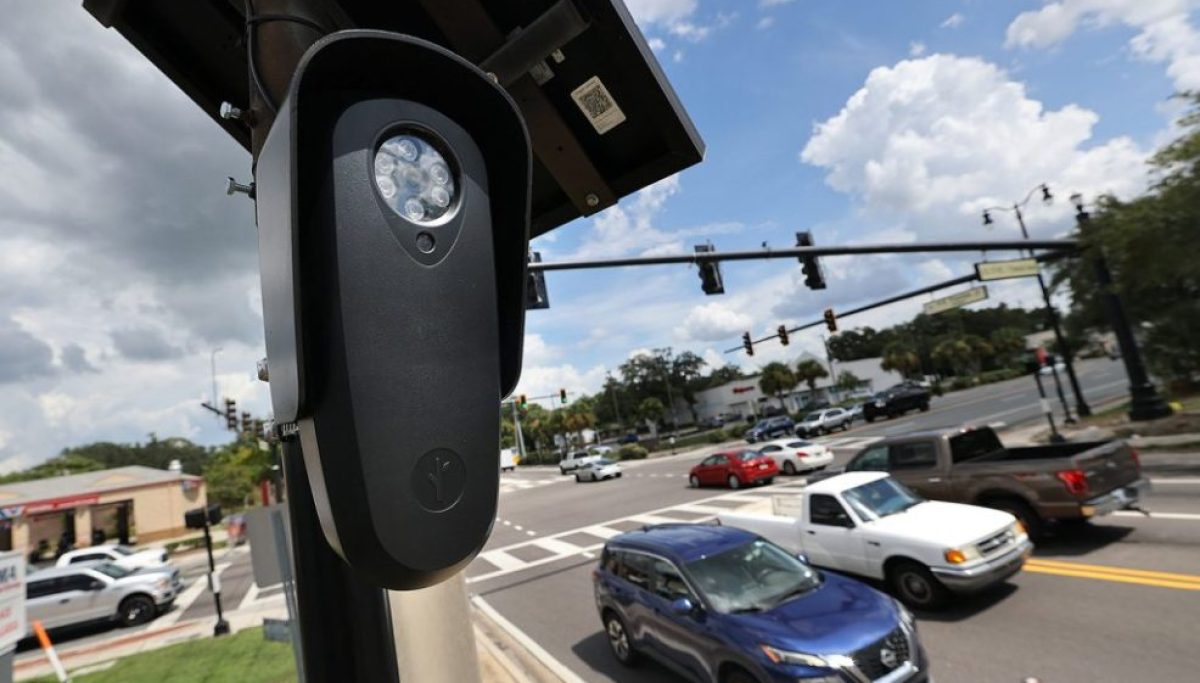
Photo via Washington Examiner

Your screen just went dark. That doesn’t mean the election was stolen

Read the original at Washington Examiner ↗
Cite

Oktenli, B. (2026, September 21). Your screen just went dark. That doesn’t mean the election was stolen. Washington Examiner. https://www.washingtonexaminer.com/op-eds/4733678/election-day-tech-disruptions-ai-deepfakes/

Dated when The Aporia collected the article, usually within hours of publication. Check the original for its exact date and byline.

Washington Examiner · collected 2026-09-21 · by Burak Oktenli

Quick Summary

The article discusses potential election security issues where fake audio recordings or electronic failures could mislead voters about voting disruptions. It emphasizes the importance of distinguishing between operational problems with voter check-in systems and actual compromises to ballot counting. The Election Assistance Commission warns that artificial intelligence can exacerbate cyber threats by impersonating officials, but also provides guidance on maintaining election integrity through backups and contingency plans for when technology fails.
Written by AI on 2026-09-21, from this article's own text only (the story summary below draws on all the coverage).

AI analysis

Story summary

Last week, the Election Assistance Commission updated its state-by-state electronic poll-book certification information and continues to test systems for functionality, security, and accessibility through a structured review process. In a joint advisory, the FBI and the Cybersecurity and Infrastructure Security Agency (CISA) warned that denial-of-service attacks could make voter information tools or unofficial election night reporting unavailable while leaving the actual voting process intact. This scenario highlights concerns about fake audio recordings of local election officials announcing suspensions in voting, which could mislead voters. The commission also warns that artificial intelligence can scale existing cyber threats and be used to imitate election officials through various media forms like text, images, audio, and video. A critical question is whether lawful voting can continue when prevention measures fail, emphasizing the need for preparedness and continuity in case of disruptions.

Written for “Election Integrity Claims” on 2026-11-05, grounded in this article and the 0 other(s) covering the same event.

Story

📰 Election Integrity Claims
Politics · 1 article(s) covering the same event.

Compared with similar articles

This article reads unscored and hedges 15% of its claims. Each row says how that neighbour differs.
The Straits Times
⚖️ Leans right Hedges 1 of 8 claims Outlet record 66/100
“Article A reports actual attacks on voting systems during a parliamentary vote in Russia, while Article B describes a hypothetical scenario and general warnings about election security issues.”
How this article was measured signals, leaning charts, publisher record, byline, topics and claims

Signals How these are calculated →

Claims extracted
61
sentences that state something as happening or true
Uncertain
15%
9 of 61 hedged ("reportedly", "may", "according to")
Leaning
not political
takes no side on a contested political question
Publisher signals
69/100
Washington Examiner's corrections and hedging, across everything collected from it. Not a measure of accuracy.
Outlets on this story
1
Politics
Same framing elsewhere
1
articles that frame the event the way this one does
Analyzed 2026-09-21 · how these are computed

How this is being covered How these are calculated →

Article leaning vs. publisher reliability
Source leaning vs. consistency

Publisher

Washington Examiner · 4257 article(s) · 8 correction(s) detected
Running correction rate · 8 correction(s)

Who wrote this

Burak Oktenli
10 article(s) here · 1 carrying a prediction
🔮 A defense laboratory could add one simple test: approve a benign configuration, change one material dependency, and ask whether reviewers correctly determine which evidence still applies.
🔮 It would be a mistake to treat one monthly jobs report as proof that AI is either destroying employment or already delivering a productivity miracle.
🔮 The next day, Rep. Greg Steube (R-FL) introduced the Facilitating Liberty and Accountability for Flock Observations Act, which would require federal agencies to obtain a warrant before accessing or sharing data from networked ALPR systems.
🔮 OpenAI has also said that some organizations may review a notification and conclude that the model accessed intentionally public information or exposed a design weakness rather than causing a significant security incident.
🔮 As of Sept. 22, public reporting still has not established where the force would sit, what authorities it would hold, or which mission would distinguish it from agencies already handling cybercrime, national security, critical infrastructure, and technology policy.
🔮 In a joint advisory, the FBI and the Cybersecurity and Infrastructure Security Agency warned that denial-of-service attacks could make voter information tools or unofficial election night reporting unavailable while leaving the underlying voting process intact.
🔮 CNN could not determine which chatbot was used, and the actual cargo has not been publicly identified.
🔮 China urged the U.S. to halt its military buildup in space and warned that the disclosure could fuel an arms race.
🔮 That is the case when Congress should begin testing for a Department of Cyber War — not a new military service and not an agency empowered to wage war, but a civilian institution whose central mission would be national continuity during severe cyber conflict.
🔮 It requires the imagination to prepare for dangers that will not look like the last one.
Also by Burak Oktenli
Nothing else under this byline is closely related to this article, so these are simply their most recent.
All 10 articles by Burak Oktenli →

Topics

EAC FBI The Election Assistance Commission the Cybersecurity and Infrastructure Security Agency

Subjects

EAC ORG · 4× FBI ORG · 1× The Election Assistance Commission ORG · 1× the Cybersecurity and Infrastructure Security Agency ORG · 1×

Narrative

And last week, the commission updated its state-by-state electronic poll-book certification information, while its federal voluntary program continues to test systems for functionality, security, and accessibility through a structured review process.
framing: assertive · carried by 1 article(s) · first seen 2026-09-21
🔮 In a joint advisory, the FBI and the Cybersecurity and Infrastructure Security Agency warned that denial-of-service attacks could make voter information tools or unofficial election night reporting unavailable while leaving the underlying voting process intact.
2026-09-21 · Washington Examiner
Your screen just went dark. That doesn’t mean the election was stolen · assertive framing

Claims (61 extracted, 9 hedged)

Imagine arriving at a polling place where the electronic voter check-in system has stopped working. asserted
system → imagine → place
Election workers are switching to a backup procedure. asserted
workers → switch → procedure
At the same time, an audio recording begins circulating online in what sounds like the voice of a local election official. asserted
what → begin → official
It says voting has been suspended and tells people to stay home. asserted
voting → say → people
But it combines two problems election officials are already preparing for. asserted
officials → combine → problems
The Election Assistance Commission warns that artificial intelligence can scale existing cyber threats and can be used to imitate election officials through text, images, audio, and video. asserted
intelligence → warn → text
The same agency is also publishing continuity resources and Election Day simulations for equipment failures. asserted
agency → publish → failures
That suggests a more useful election-security question than simply asking whether every attack can be prevented: Can lawful voting continue when prevention fails? uncertain
prevention → suggest → question
A disruption is not automatically a compromised election The first step is identifying which function has actually failed. asserted
function → compromise → ?
Electronic poll books, for example, help workers check voters in, assign the correct ballot style, and record that a voter has been issued a ballot. asserted
voter → help → ballot
The EAC explicitly distinguishes them from voting systems: Electronic poll books do not collect or tabulate cast vote records. asserted
books → distinguish → records
An electronic poll-book outage can therefore create a serious operational problem without establishing that ballots or vote counts have been compromised. asserted
ballots → create → problem
That distinction matters because an AI-fueled information environment can erase it in seconds. asserted
environment → matter → seconds
The same principle applies to public-facing election websites. asserted
principle → apply → websites
In a joint advisory, the FBI and the Cybersecurity and Infrastructure Security Agency warned that denial-of-service attacks could make voter information tools or unofficial election night reporting unavailable while leaving the underlying voting process intact. uncertain
tools → warn → process
An attacker could then falsely describe a visible outage as proof that voting itself had failed. uncertain
voting → describe → proof
Election continuity begins by refusing to collapse unlike failures into one story. asserted
continuity → begin → story
Backups have to work under pressure Election offices are not starting from zero. asserted
offices → work → zero
In March, the EAC released Election Day simulations showing how officials can respond when electronic poll books, ballot-marking devices, or scanners break down. asserted
books → release → simulations
And last week, the commission updated its state-by-state electronic poll-book certification information, while its federal voluntary program continues to test systems for functionality, security, and accessibility through a structured review process. asserted
program → update → process
The current federal certification process includes penetration testing, test execution, and formal certification decisions. asserted
process → include → testing
Certification matters. asserted
Certification → matter → ?
Continuity asks what happens when a certified system becomes unavailable anyway. asserted
system → ask → ?
The EAC’s February disaster guidance recommends redundant communications, cross-trained staff, and analog or printed materials such as ballots, voter lists, staff rosters, and voting-location contacts. asserted
guidance → recommend → ballots
They are exactly the sort of infrastructure that keeps a polling place functioning when normal technology is degraded. asserted
technology → keep → place
If electronic check-in fails during peak turnout, how quickly can workers move to the authorized alternative? asserted
workers → fail → alternative
Can staff later reconcile ballots issued during the interruption? asserted
staff → reconcile → interruption
Can accessible voting continue? asserted
voting → continue → ?
Which official is authorized to alter procedures if the outage persists? asserted
outage → authorize → procedures
A familiar voice is not authentication AI makes emergency communications harder because election workers and voters may receive convincing synthetic instructions. uncertain
workers → make → instructions
The EAC advises officials to treat AI-generated text, images, video, and audio as potential impersonation tools and to direct voters toward verifiable official information. asserted
EAC → advise → information
The practical safeguard is not asking a poll worker to become a deepfake expert. asserted
safeguard → ask → worker
It is establishing independent verification channels before Election Day: known contact numbers, authenticated internal systems, predetermined escalation paths, and a second route for confirming unusual instructions. asserted
It → establish → instructions
Public communication needs redundancy, too. asserted
communication → need → redundancy
The EAC recommends preparing printed information and building relationships with media and community partners for situations in which electronic communication becomes difficult. asserted
communication → recommend → which
A useful emergency message should distinguish what is affected, what remains available, and when the next verified update will arrive. asserted
update → distinguish → ?
Do not confuse delayed information with failed voting The postelection period creates another opening for confusion. asserted
period → confuse → confusion
The EAC explains that election night results remain unofficial even when a website says every precinct has reported. asserted
precinct → explain → ?
Canvassing, reconciliation, audits where required, and certification follow afterward. asserted
Canvassing → require → ?
A delayed public results page or a longer count is therefore not, by itself, evidence that the election failed. asserted
election → fail → itself
…and 21 more, not listed.

💬Give feedback · no sign-in needed

No sign-in needed for now. Your note is sent without a name, so it cannot be answered.

🕘History 🎫Support