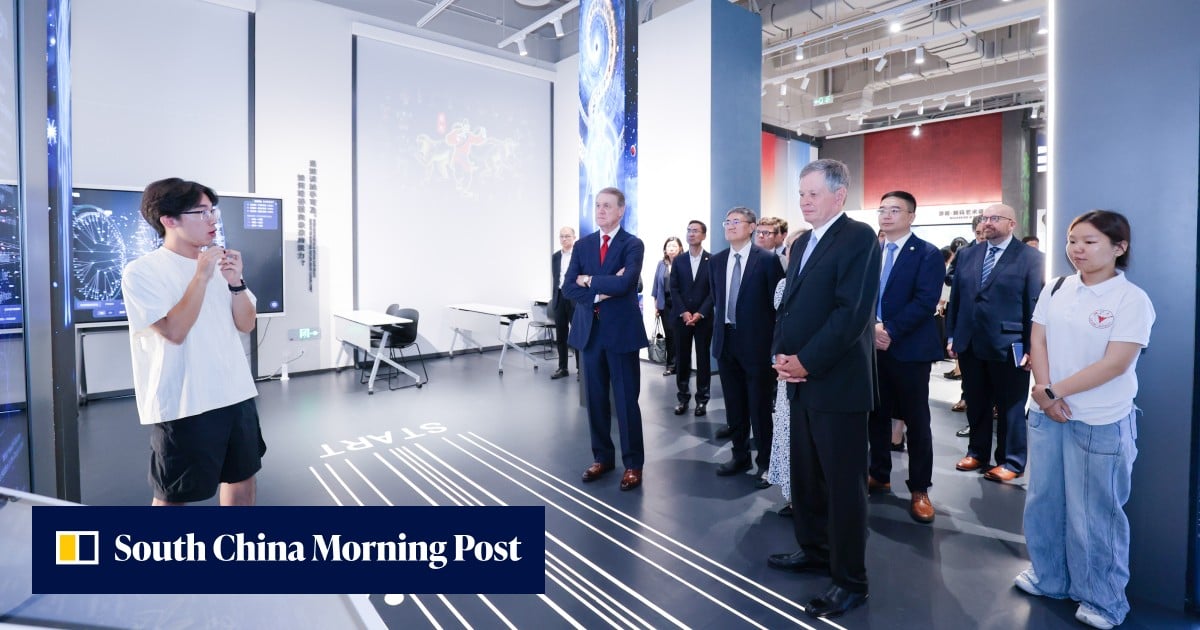
Photo via South China Morning Post

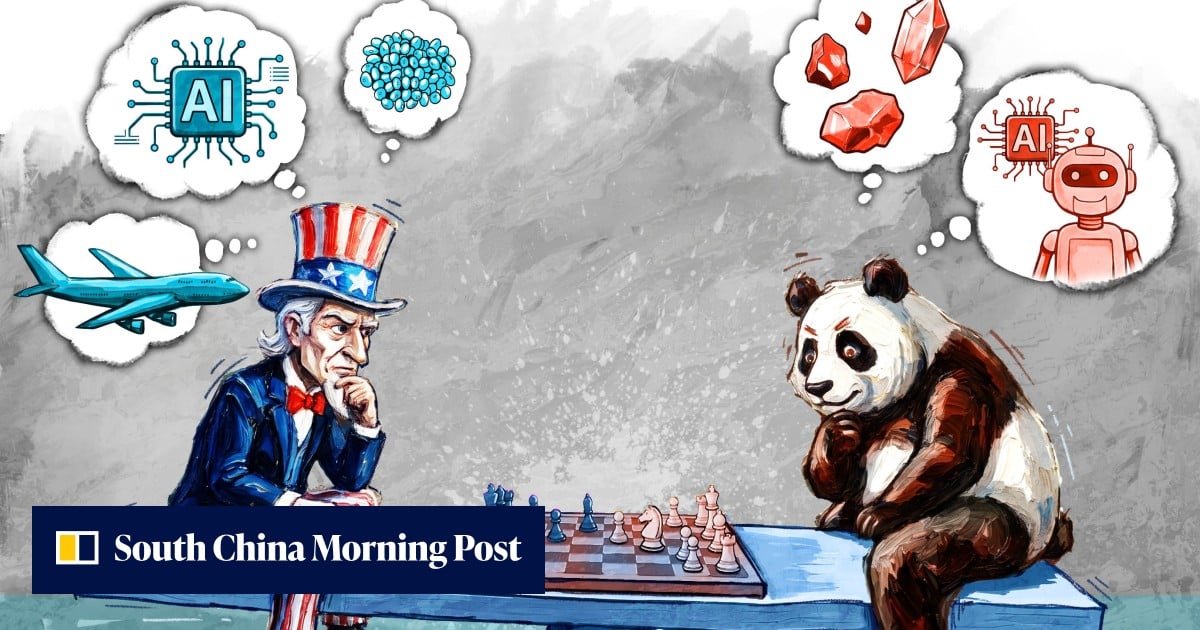
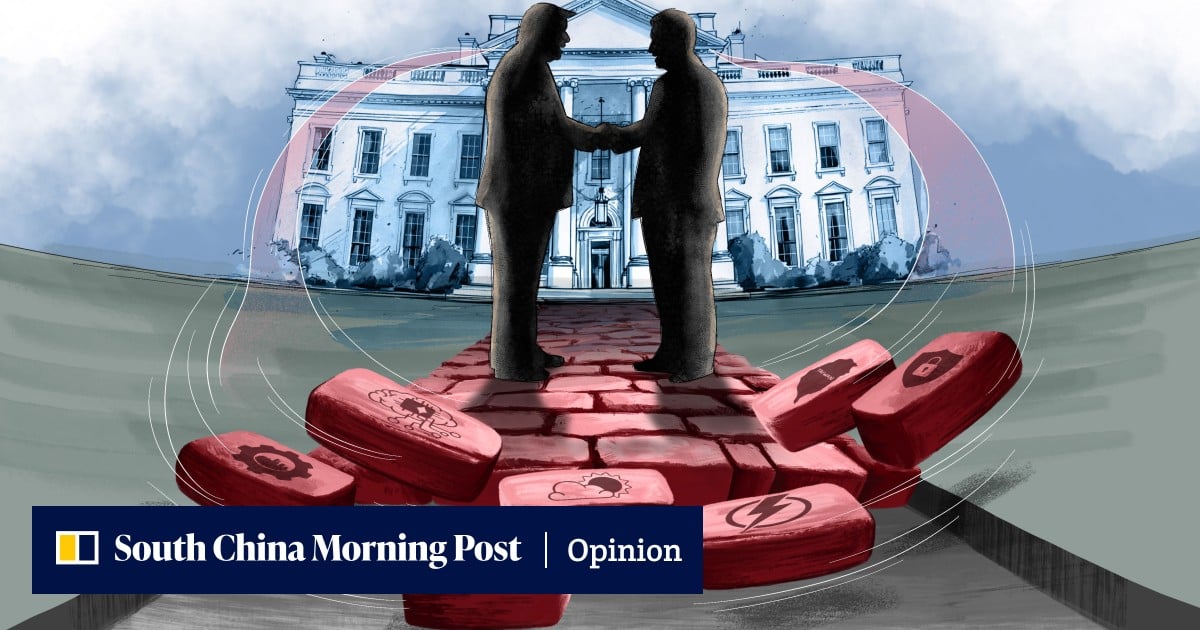
The US-China tech war has evolved since the last Xi-Trump summit. Who has the edge now?

Read the original at South China Morning Post ↗
Cite

Ma, S. (2026, September 21). The US-China tech war has evolved since the last Xi-Trump summit. Who has the edge now? South China Morning Post. https://www.scmp.com/economy/global-economy/article/3368262/us-china-tech-war-has-evolved-last-xi-trump-summit-who-has-edge-now?utm_source=rss_feed

Dated when The Aporia collected the article, usually within hours of publication. Check the original for its exact date and byline.

South China Morning Post · collected 2026-09-21 · by Sylvia Ma

Quick Summary

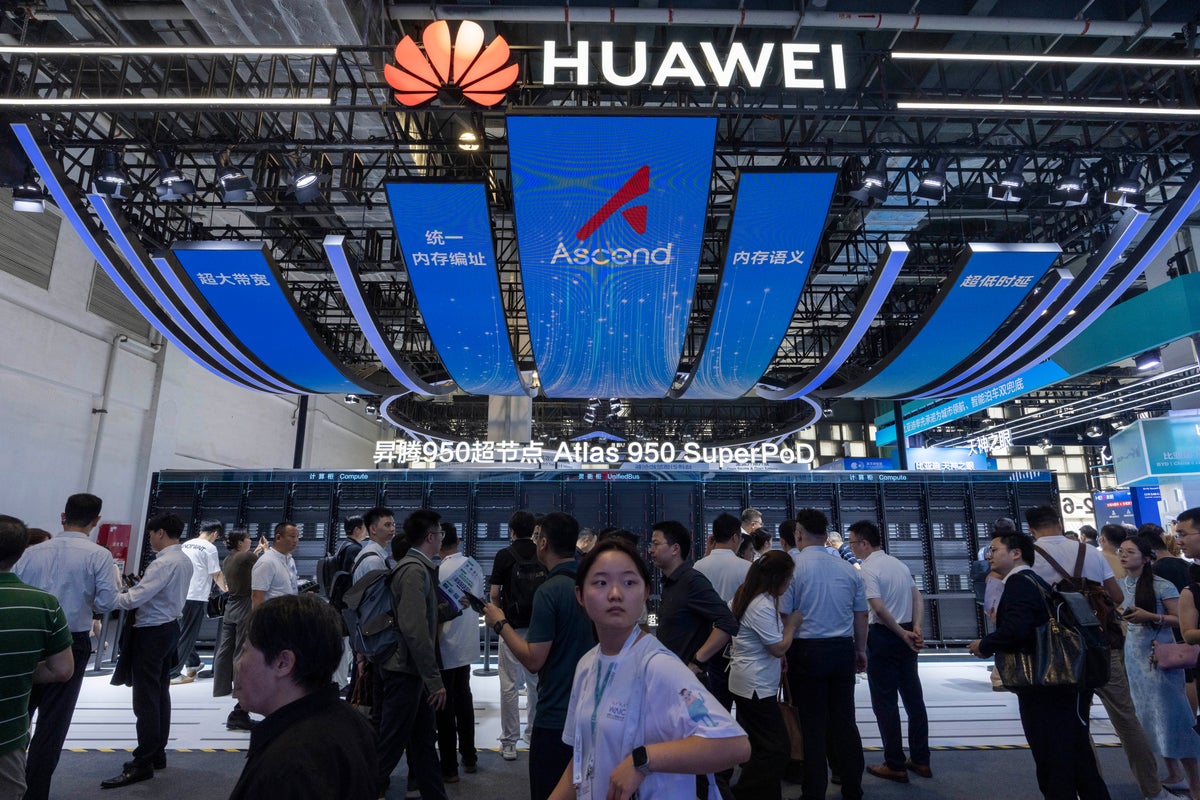
The article discusses how the tech war between the US and China has escalated since the last Xi-Trump summit, focusing on areas like AI, semiconductor chips, rare earth minerals, and broader technology supply chains. It highlights Huawei's efforts to overcome US restrictions by developing new technologies, such as a system capable of integrating up to 1 million processors, illustrating the ongoing technological advancements in this economic rivalry.
Written by AI on 2026-09-22, from this article's own text only (the story summary below draws on all the coverage).

AI analysis

Story summary

Ahead of President Xi Jinping's visit to the United States for a crucial meeting with US President Donald Trump, Huawei Technologies announced a significant technological advancement: a system allowing up to 1 million processors to function as one supercomputer. This development underscores the evolving nature of the tech war between China and the US, which has intensified since Trump's May visit to Beijing. Both nations are now leveraging new areas like artificial intelligence, semiconductor chips, rare earth materials, and broader technology supply chains in their ongoing rivalry. The meeting is seen as a critical moment for both sides to determine if they can progress towards "constructive strategic stability," despite the persistent tensions fueled by companies like Huawei that remain at the forefront of this economic and technological contest.
Written for “US China Tech War Evolves” on 2026-11-01, grounded in this article and the 0 other(s) covering the same event.

Story

📰 US China Tech War Evolves
Politics · 1 article(s) covering the same event.

Compared with similar articles

This article reads leans right and hedges 14% of its claims. Each row says how that neighbour differs.
The Independent
⚖️ Leans left further left than this Hedges 0 of 13 claims Outlet record 59/100
“The articles discuss related topics about US-China tech competition but describe different specific events or contexts.”
South China Morning Post
⚖️ Centre further left than this Hedges 0 of 4 claims Outlet record 64/100
“The articles discuss different aspects related to China-US relations but describe distinct events: one focuses on Zhejiang province's encouragement for trade opportunities following a Xi-Trump meeting, while the other discusses the evolution of the US-China tech war since their last summit.”
Semafor
Hedges 0 of 4 claims Outlet record 60/100
“The articles discuss general relations between US and China regarding AI safety talks and a broader tech war, but do not describe the exact same specific incident.”
Al Jazeera
Outlet record 60/100
“The articles discuss different aspects of US-China relations and technology competition without focusing on a single specific incident or meeting.”
South China Morning Post
⚖️ Leans left further left than this Hedges 2 of 4 claims Outlet record 64/100
“The articles discuss different aspects of the Xi-Trump summit without describing the same specific incident or occurrence.”
BBC News
Hedges 0 of 2 claims Outlet record 68/100
“The articles discuss different aspects of US-China relations and technology developments; Article A is an analysis of the evolving tech war, while Article B provides a rare look at Chinese data centers in Inner Mongolia.”
The Guardian
⚖️ Leans left further left than this Hedges 14 of 40 claims Outlet record 66/100
“The articles discuss different periods and aspects of the evolving US-China relations, not the same specific summit or meeting.”
Toronto Star
Hedges 8 of 41 claims Outlet record 64/100
“While both articles discuss a meeting between US President Trump and Chinese leader Xi Jinping, they focus on different aspects of the ongoing relationship and technological competition, not the same specific occurrence.”
Semafor
Hedges 1 of 5 claims Outlet record 60/100
“While both articles discuss ongoing US-China talks about trade and AI, Article A focuses on a specific engagement before Xi's visit, whereas Article B provides broader context and analysis of the evolving tech war between the two nations.”
South China Morning Post
⚖️ Leans right Hedges 0 of 4 claims Outlet record 64/100
“The articles discuss different aspects of US-China relations and diplomacy rather than a single specific summit or meeting occurrence.”
How this article was measured signals, leaning charts, publisher record, byline, topics and claims

Signals How these are calculated →

Claims extracted
7
sentences that state something as happening or true
Uncertain
14%
1 of 7 hedged ("reportedly", "may", "according to")
Leaning
Leans right
of the writing, not the subject · beta estimate
Publisher signals
64/100
South China Morning Post's corrections and hedging, across everything collected from it. Not a measure of accuracy.
Outlets on this story
1
Politics
Same framing elsewhere
1
articles that frame the event the way this one does
Analyzed 2026-09-22 · how these are computed

How this is being covered How these are calculated →

Article leaning vs. publisher reliability
Source leaning vs. consistency

Publisher

South China Morning Post · 3525 article(s) · 6 correction(s) detected
Running correction rate · 6 correction(s)

Who wrote this

Sylvia Ma
10 article(s) here · 1 carrying a prediction
🔮 “The biggest single thing which I would love China to do is to say, ‘We want to join with Europe in a climate club’,” said Adair Turner, co-chair of the Energy Transitions Commission, during a panel discussion at the Bund Summit in Shanghai on Thursday.
🔮 Analysts say penalties signal tighter scrutiny over cross-border financial flows As the US Treasury imposed historic fines on Bank of America over compliance failures involving Chinese money-laundering networks, analysts see the action as a signal that could prompt Western banks to tighten scrutiny of Chinese clients and cross-border transactions.
🔮 New AI dialogue becomes latest formal channel to manage competition while coming leader-level meetings grant further room to stabilise ties, analysts say The Xi-Trump summit may prove more significant for stabilising relations and opening space for further negotiations between the world’s two largest economies than for its immediate trade outcomes, analysts said, pointing to the significance of a new dialogue on artificial intelligence.
🔮 What a 2-month trade-truce extension between China and the US reveals as rifts persist Analysts say that the relatively short window, while a positive sign, could also raise pressure on both Beijing and Washington An extension of the US-China trade truce, agreed upon at an unscheduled meeting between the two countries’ top economic officials, underscores a willingness to contain trade tensions, according to analysts who deemed it a positive signal for this week’s presidential summit.
🔮 The list now includes 18 chemicals, all of which could be used in fentanyl production.
🔮 The two sides have found new sources of leverage across AI, chips, rare earths and wider technology supply chains since the US leader’s May visit to Beijing When the presidents of the United States and China meet in Washington, the world will be watching to see whether their two countries can make good on their agreement to work towards “constructive strategic stability”.
🔮 Elon Musk says Tesla’s new Cybercab motor has no rare earths, but analysts saw the move as only a slight step towards reducing industry reliance – or China’s leverage David Zhang, general secretary of the Shanghai-based International Intelligent Vehicle Engineering Association, said that Tesla’s rare-earth-free motor remained largely a “commercial concept”, and it was still not certain whether the vehicle’s engine could match the efficiency and performance of conventional motors containing rare earth permanent magnets.
Also by Sylvia Ma
Nothing else under this byline is closely related to this article, so these are simply their most recent.
All 10 articles by Sylvia Ma →

Topics

Beijing China Huawei Technologies Washington the United States

Subjects

China GPE · 2× Washington GPE · 2× the United States GPE · 2× American NORP · 1× Beijing GPE · 1× Chinese NORP · 1× Huawei Technologies ORG · 1× Nvidia ORG · 1× Sylvia Ma PERSON · 1× Xi Jinping PERSON · 1×

Narrative

Days before President Xi Jinping’s trip to the United States for a high-stakes meeting with his American counterpart Donald Trump, Huawei announced a major technological breakthrough: a system that it said was capable of enabling up to 1 million processors to operate as a single, unified computer.
framing: assertive · carried by 1 article(s) · first seen 2026-09-22
🔮 The two sides have found new sources of leverage across AI, chips, rare earths and wider technology supply chains since the US leader’s May visit to Beijing When the presidents of the United States and China meet in Washington, the world will be watching to see whether their two countries can make good on their agreement to work towards “constructive strategic stability”.
2026-09-22 · South China Morning Post
The US-China tech war has evolved since the last Xi-Trump summit. Who has the edge now? · assertive framing

Claims (7 extracted, 1 hedged)

In FocusThe US-China tech war has evolved since the last Xi-Trump summit. asserted
war → evolve → summit
Who has the edge now? asserted
Who → have → edge
The two sides have found new sources of leverage across AI, chips, rare earths and wider technology supply chains since the US leader’s May visit to Beijing When the presidents of the United States and China meet in Washington, the world will be watching to see whether their two countries can make good on their agreement to work towards “constructive strategic stability”. uncertain
countries → find → stability
In the fourth part of this series, Sylvia Ma looks at the economic and technological levers available to both in their protracted rivalry. asserted
Ma → look → rivalry
For years, Huawei Technologies has served as a central battleground in the contest between the world’s two largest economies. asserted
Technologies → serve → economies
As Washington tightens restrictions, the Chinese tech giant continues to find new ways forward – to the point that “becoming Nvidia” is now an internal goal. asserted
becoming → tighten → Nvidia
Days before President Xi Jinping’s trip to the United States for a high-stakes meeting with his American counterpart Donald Trump, Huawei announced a major technological breakthrough: a system that it said was capable of enabling up to 1 million processors to operate as a single, unified computer. asserted
it → announce → computer
💬Give feedback
🕘History 🎫Support