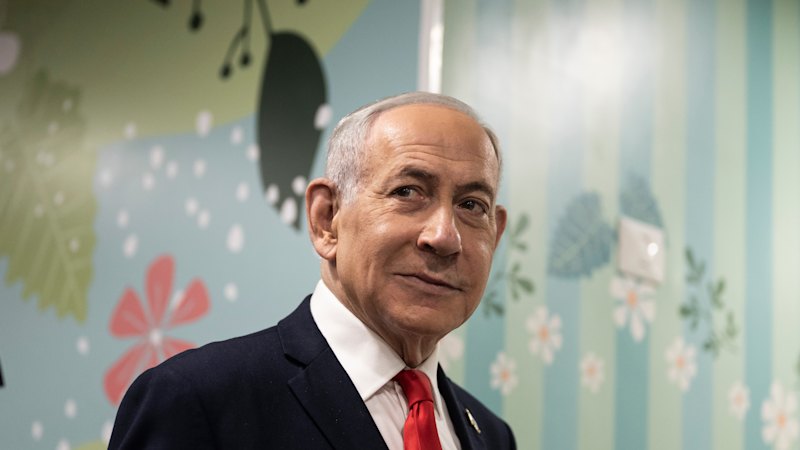
Photo via The Sydney Morning Herald

Funding Putin: ‘Blood oil’ imports from major Asian supplier surge

Read the original at The Sydney Morning Herald ↗
Cite

Knott, M. (2026, September 22). Funding Putin: ‘Blood oil’ imports from major Asian supplier surge. The Sydney Morning Herald. https://www.smh.com.au/politics/federal/funding-putin-blood-oil-imports-from-major-asian-supplier-surge-20260922-p60z1t.html?ref=rss&utm_medium=rss&utm_source=rss_feed

Dated when The Aporia collected the article, usually within hours of publication. Check the original for its exact date and byline.

The Sydney Morning Herald · collected 2026-09-22 · by Matthew Knott analysis

Quick Summary

A new report by the Centre for Research on Energy and Clean Air (CREA) reveals that 68% of oil imported from Brunei's Hengyi refinery into Australia in the first seven months of this year was Russian-derived, up significantly from 24% two years ago. The analysis highlights a loophole allowing Russian crude to enter Australia after being refined abroad, with Australia importing 2.6 million tonnes of such oil since Russia’s invasion of Ukraine began in 2022. This has raised concerns among Ukrainian advocates and policymakers about inadvertently funding the war through fuel imports.
Written by AI on 2026-09-22, from this article's own text only (the story summary below draws on all the coverage).

AI analysis

Story summary

A new report by the Centre for Research on Energy and Clean Air (CREA) reveals that 68% of fuel exported from Brunei's Hengyi refinery to Australia in the first seven months of 2023 was derived from Russia, compared to just 24% two years ago. Since the start of the war in Ukraine in 2022, Australia has imported a total of 2.6 million tonnes of Russian-origin oil from this refinery, primarily diesel. Despite banning direct imports of Russian oil after Russia's invasion of Ukraine, Australia is still receiving significant amounts through intermediaries like Brunei, raising concerns about inadvertently funding Vladimir Putin’s war efforts. Chemical engineer Mark Corrigan argues that the Australian government should prioritize cracking down on Russia's energy revenues instead of securing fuel supplies via such means. The Department of Foreign Affairs and Trade (DFAT) has issued new guidance warning importers they could be breaching sanctions by bringing in Russian-origin oil processed in third countries.

Written for “Russian Oil Imports Surge” on 2026-11-04, grounded in this article and the 0 other(s) covering the same event.

Story

📰 Russian Oil Imports Surge
Economy/Business · 1 article(s) covering the same event.

Compared with similar articles

This article reads leans left and hedges 8% of its claims. Each row says how that neighbour differs.
Daily Mail
Hedges 1 of 28 claims Outlet record 69/100
“The articles discuss different aspects of Australia's relationship with Ukraine and its stance on Russian oil, not a single specific incident.”
Al Jazeera
⚖️ Leans left Hedges 7 of 43 claims Outlet record 60/100
“Article A discusses US tariffs against Russian oil buyers, while Article B focuses on an analysis of Australian imports from a Brunei refinery.”
Al Jazeera
Hedges 3 of 18 claims Outlet record 60/100
“The articles describe different events: one about Russia summoning a UK diplomat and seizing assets, and another about oil imports to Australia from Brunei's Hengyi refinery.”
South China Morning Post
⚖️ Leans left Hedges 2 of 4 claims Outlet record 62/100
“The articles discuss different countries' (India and Australia) relationships with Russian oil imports, indicating distinct events.”
Washington Examiner
Hedges 1 of 9 claims Outlet record 69/100
“The articles discuss different aspects related to Russia's role in the Ukraine conflict and its impact on diesel industry and fuel imports, but do not describe the same specific incident.”
The Guardian
Hedges 0 of 22 claims Outlet record 66/100
“The articles discuss different aspects of the energy situation related to Russia and Ukraine but do not describe the same specific incident.”
Washington Examiner
⚖️ Leans strongly right further right than this Hedges 1 of 33 claims Outlet record 69/100
“The articles discuss different aspects of European and Australian countries' involvement with Russia's fuel, not the same specific incident.”
The Sydney Morning Herald
⚖️ Leans left Hedges 4 of 39 claims Outlet record 61/100
“The articles discuss different aspects of fuel and energy issues; Article A focuses on Russian oil imports into Australia from a Brunei refinery, while Article B discusses pressure on the Trump administration to address diesel prices in the US.”
How this article was measured signals, leaning charts, publisher record, byline, topics and claims

Signals How these are calculated →

Claims extracted
25
sentences that state something as happening or true
Uncertain
8%
2 of 25 hedged ("reportedly", "may", "according to")
Leaning
Leans left
of the writing, not the subject · beta estimate
Publisher signals
61/100
The Sydney Morning Herald's corrections and hedging, across everything collected from it. Not a measure of accuracy.
Outlets on this story
1
Economy/Business
Same framing elsewhere
1
articles that frame the event the way this one does
Analyzed 2026-09-22 · how these are computed

How this is being covered How these are calculated →

Article leaning vs. publisher reliability
Source leaning vs. consistency

Publisher

The Sydney Morning Herald · 5986 article(s) · 15 correction(s) detected
Running correction rate · 15 correction(s)

Who wrote this

Matthew Knott
31 article(s) here · 1 carrying a prediction
🔮 “He’s a huge fighter, he will never bend down.”
2026-10-30 · assertive framing · ‘We need Bibi’: How Netanyahu defied the polls
🔮 The Joint List parties have not traditionally sought to join Israeli governing coalitions on the grounds that it would be wrong to provide legitimacy to the Israeli government until the occupation of the Palestinian territories in the West Bank and Gaza ends.
🔮 Israeli President Isaac Herzog will consult all the party leaders to inquire who they could support as prime minister.
🔮 To their dismay, the problem has only worsened in the years since.
🔮 “God willing, we will stay here until the government will take this settlement and put it into Gaza,” says Chaim, a member of the controversial Nachala settler organisation led by Daniella Weiss, known as the godmother of the Israeli settler movement.
🔮 The message was as subtle as a slap in the face: vote for me or armageddon will follow.
🔮 But Rahamim would regularly cross into Gaza to buy jewellery, eat hummus and catch up with Palestinian friends, including some who attended his wedding.
🔮 As blazing sunlight streams through the glass windows of Ehud Barak’s office, the former Israeli prime minister paints a dark portrait of what could unfold as Prime Minister Benjamin Netanyahu prepares to vote next Tuesday.
🔮 He said the party would support providing military aid to Ukraine if it were backed by the United Nations Security Council, but critics have noted Russia would inevitably use its veto power to block any such move.
🔮 US President Donald Trump has made a stunning late intervention in Israel’s elections, endorsing Prime Minister Benjamin Netanyahu in a move the veteran leader hopes could allow him to remain in office.
Also by Matthew Knott
‘We need Bibi’: How Netanyahu defied the polls
2026-10-30 · The Sydney Morning Herald
Nothing else under this byline is closely related to this article, so these are simply their most recent.
All 31 articles by Matthew Knott →

Topics

Australia Brunei Hengyi Russian Ukraine

Subjects

Russian NORP · 12× Australia GPE · 8× Ukraine GPE · 8× Russia GPE · 6× Australian NORP · 4× Brunei GPE · 4× Hengyi GPE · 4× CREA ORG · 3× DFAT ORG · 2× Putin PERSON · 2×

Narrative

Chemical engineer Mark Corrigan, who has campaigned for tougher restrictions on oil imports, said the government should prioritise cracking down on Russia’s energy revenues even as it works with countries like Brunei to secure Australian fuel supplies. “While Europe weathers the current global oil disruption resolutely without Russian supply, the Australian government has misplaced its moral compass, continuing to trade in Russian blood oil through intermediaries like Brunei,” he said.
framing: assertive · carried by 1 article(s) · first seen 2026-09-22
🔮 The Department of Foreign Affairs and Trade (DFAT) issued new guidance following the series, warning importers they could be breaching Australian sanctions law by bringing in Russian-origin oil processed in third countries.
2026-09-22 · The Sydney Morning Herald
Funding Putin: ‘Blood oil’ imports from major Asian supplier surge · assertive framing

Claims (25 extracted, 2 hedged)

The vast majority of fuel arriving in Australia from a key Asian refinery has come from Russia, a new analysis has found, sparking warnings that motorists and businesses are inadvertently funding Vladimir Putin’s war on Ukraine. asserted
motorists → arrive → Ukraine
A new report by the Centre for Research on Energy and Clean Air (CREA) estimates that 68 per cent of oil exported to Australia from Brunei’s Hengyi refinery in the first seven months of the year was Russian-derived, up from 24 per cent two years ago. asserted
cent → estimate → cent
Australia has imported a total of 2.6 million tonnes of Russian-origin oil from the Hengyi refinery since the war in Ukraine began in 2022, mostly in the form of diesel, the Finland-based think tank estimates. asserted
tank → import → diesel
Prime Minister Anthony Albanese travelled to Brunei in April to lock in Australian fuel supplies despite shortages caused by the closure of the Strait of Hormuz. asserted
Albanese → travel → Hormuz
Energy Minister Chris Bowen is travelling to Saudi Arabia this week to meet his counterpart, Prince Abdulaziz bin Salman, as concerns again rise over global energy shortfalls linked to the war in Iran. asserted
concerns → travel → Iran
Australia banned direct imports of Russian oil after Putin’s invasion of Ukraine, but a loophole has allowed Russian crude oil to enter the nation after being refined in third countries such as India, China and Brunei. asserted
oil → ban → India
This masthead’s “blood oil” series, launched last year, highlighted the vast quantities of Russian-origin oil that have flowed into Australia after being refined into diesel and other products. asserted
that → launch → diesel
The Department of Foreign Affairs and Trade (DFAT) issued new guidance following the series, warning importers they could be breaching Australian sanctions law by bringing in Russian-origin oil processed in third countries. uncertain
they → issue → countries
Only Russian oil imports that have been “substantially transformed” were allowed, the department said. asserted
department → transform → ?
The Ukrainian-Australian community has urged the government to go further and impose a total ban on all petroleum products derived from Russian crude. asserted
community → urge → crude
The release of the new report comes ahead of a meeting between Albanese and Ukrainian President Volodymyr Zelensky at the United Nations General Assembly on Wednesday, where they are set to sign a long-awaited security pact. asserted
they → come → pact
CREA analyst Isaac Levi said: “If Australia is truly an ally of Ukraine, it cannot arm Ukraine with one hand while financing Putin’s war with the other. asserted
it → say → other
“Australia must close this loophole with a simple legal ban on oil products made from Russian crude, or innocent Australians will continue unknowingly filling their cars with fuel that provides a financial lifeline to Russia’s death and destruction in Ukraine. asserted
that → close → Ukraine
Australia is easily Hengyi’s biggest destination country, accounting for 43 per cent of its oil-product export volume. asserted
Australia → account → volume
The refinery’s reliance on Russian crude has skyrocketed from an annual share of just 5 per cent in 2022 to 37 per cent last year and 72 per cent in the first seven months of this year. asserted
reliance → skyrocket → year
Hengyi’s Russian crude share reached an all-time high of 88 per cent between April and June 2026, according to CREA. uncertain
share → reach → CREA
A DFAT spokesperson said the government had “imposed strict sanctions and other trade measures to restrict the import, purchase and transport of oil coming from, or that originated in, Russia, in response to its unprovoked and unjustified war against Ukraine”. asserted
that → say → Ukraine
“We consistently review our measures and look at what more we can do, including with international partners, to impose costs on Russia and limit its ability to fund its war,” the spokesperson said. asserted
spokesperson → review → war
“We also expect businesses to prevent their supply chains from inadvertently funding Russia’s unprovoked and unjustified full-scale invasion of Ukraine.” asserted
businesses → expect → Ukraine
Chemical engineer Mark Corrigan, who has campaigned for tougher restrictions on oil imports, said the government should prioritise cracking down on Russia’s energy revenues even as it works with countries like Brunei to secure Australian fuel supplies. “While Europe weathers the current global oil disruption resolutely without Russian supply, the Australian government has misplaced its moral compass, continuing to trade in Russian blood oil through intermediaries like Brunei,” he said. asserted
he → campaign → Brunei
“Australian motorists are forced into complicity funding the renewed barrage of Russian ballistic missiles raining on Kyiv families.” asserted
motorists → force → families
Hengyi Industries, the owner of the refinery, did respond to requests for comment. asserted
Industries → respond → comment
The Australian Federation of Ukrainian Organisations told a Senate inquiry earlier this year that the nation’s “failure to take action risks turning the country into a dumping ground for blood oil that is illegal in comparable jurisdictions”. asserted
that → tell → jurisdictions
The inquiry’s final report, released last month, found Australia has become an international outlier by allowing fuel made from Russian crude oil to enter the country and urged the government to strengthen the sanctions regime US President Donald Trump last week signed a sweeping bill, named after the late senator Lindsey Graham, that directs him to impose up to 100 per cent tariffs on the top five importers of Russian oil or natural gas. asserted
that → release → oil
Subscribers can sign up to our weekly Inside Politics newsletter. asserted
Subscribers → sign → newsletter

💬Give feedback
🕘History 🎫Support