Photo via The Sydney Morning Herald

‘Stop the bleeding’? A Trump move to stop the diesel spike could hurt all of us

Read the original at The Sydney Morning Herald ↗
Cite

Bartholomeusz, S. (2026, September 22). ‘Stop the bleeding’? A Trump move to stop the diesel spike could hurt all of us. The Sydney Morning Herald. https://www.smh.com.au/business/markets/stop-the-bleeding-a-trump-move-to-stop-the-diesel-spike-could-hurt-all-of-us-20260922-p60zd7.html?ref=rss&utm_medium=rss&utm_source=rss_feed

Dated when The Aporia collected the article, usually within hours of publication. Check the original for its exact date and byline.

The Sydney Morning Herald · collected 2026-09-22 · by Stephen Bartholomeusz

Quick Summary

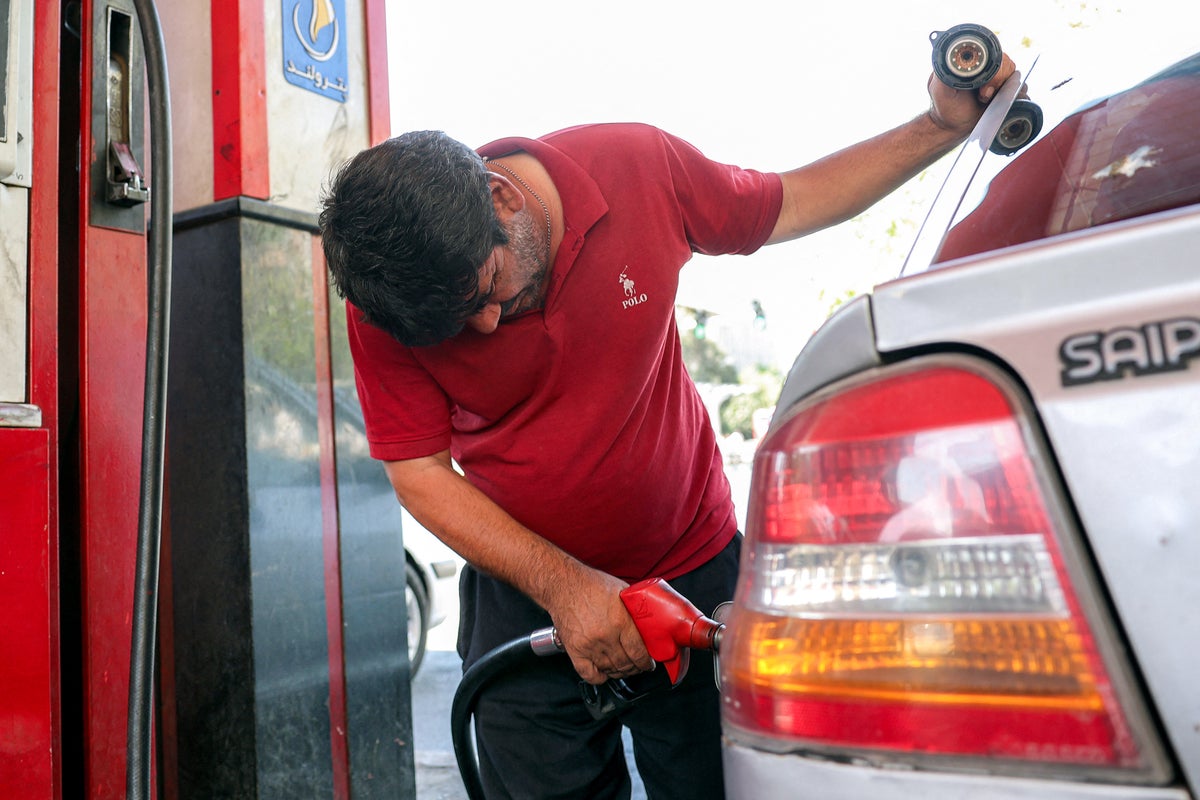
The Trump administration faces pressure to restrict US diesel exports due to rising domestic prices, now at $6.51 per gallon, up 75% from last year. Republican lawmakers advocate for export limits as farmers and other constituents feel economic strain ahead of November's midterm elections. However, critics argue that Trump’s Iran sanctions, rather than Russia’s war with Ukraine, are primarily driving the diesel shortage by curtailing Middle Eastern exports.
Written by AI on 2026-09-22, from this article's own text only (the story summary below draws on all the coverage).

AI analysis

Story summary

Summary

As of mid-October 2023, U.S. President Donald Trump is considering a temporary ban on diesel exports to address record-high domestic fuel prices ahead of November's midterm elections. Average national diesel prices have surged past $6.50 per gallon due to the war in Iran and strikes against Russian refineries by Ukrainian forces. The proposal has gained traction among Republican candidates in key states like Iowa, Michigan, and Kansas, who are facing pressure from constituents affected by soaring fuel costs.

However, experts and industry groups warn that such a ban could exacerbate global diesel shortages and lead to even higher prices both domestically and internationally. U.S. Treasury Secretary Scott Bessent acknowledged the administration is evaluating whether a full or partial export ban would be feasible and beneficial. Nevertheless, many congressional Republicans are skeptical of this approach, fearing it might backfire and increase gasoline costs while further alienating them from Big Oil allies.

Meanwhile, some Republican officials advocate for lifting state-level restrictions on diesel production to mitigate price hikes instead. The potential for a policy backlash looms as the midterm elections draw near, with Democrats hoping to capitalize on voter discontent over economic hardships fueled by escalating conflicts abroad. Overall, the debate highlights the complex interplay between political expediency and economic pragmatism in addressing pressing issues like fuel scarcity during wartime conditions.

Written for “Trump Diesel Export Ban Controversy” on 2026-10-31, grounded in this article and the 15 other(s) covering the same event.

Story

📰 Trump Diesel Export Ban Controversy
Politics · 16 article(s) covering the same event. Compare every outlet's account →

Compared with similar articles

This article reads leans left and hedges 10% of its claims. Each row says how that neighbour differs.
Washington Examiner
Hedges 1 of 25 claims Outlet record 70/100
The Guardian
Hedges 1 of 17 claims Outlet record 66/100
Silver Bulletin
⚖️ Leans left Hedges 2 of 37 claims
“The articles discuss different aspects related to diesel prices but do not describe the same specific incident or occurrence.”
BBC News
Hedges 5 of 20 claims Outlet record 68/100
The Sydney Morning Herald
Hedges 2 of 24 claims Outlet record 61/100
“The articles discuss different aspects of fuel price concerns and supply issues without clearly describing the same specific incident.”
Washington Examiner
⚖️ Leans strongly right further right than this Hedges 2 of 35 claims Outlet record 70/100
“The articles discuss different aspects of Trump's energy policies and priorities without describing the same specific incident.”
Al Jazeera
⚖️ Leans right further right than this Hedges 0 of 15 claims Outlet record 60/100
“The articles describe different policy actions by Trump: one about diesel exports and the other about rolling back fuel economy rules.”
The Bulwark
⚖️ Leans left Hedges 3 of 66 claims
“The articles discuss different aspects of policy responses related to fuel prices and tariffs under Trump's administration but do not describe the same specific incident.”
ABC News (AU)
Hedges 2 of 28 claims Outlet record 68/100
“The articles discuss different political parties' responses to fuel price spikes in distinct countries and contexts.”
The Independent
⚖️ Leans left Hedges 1 of 40 claims Outlet record 59/100
“The articles discuss separate economic issues related to fuel prices and availability in Iran and the United States, respectively.”
How this article was measured signals, leaning charts, publisher record, byline, topics and claims

Signals How these are calculated →

Claims extracted
39
sentences that state something as happening or true
Uncertain
10%
4 of 39 hedged ("reportedly", "may", "according to")
Leaning
Leans left
of the writing, not the subject · beta estimate
Publisher signals
61/100
The Sydney Morning Herald's corrections and hedging, across everything collected from it. Not a measure of accuracy.
Outlets on this story
16
Politics
Same framing elsewhere
1
articles that frame the event the way this one does
Analyzed 2026-09-22 · how these are computed

How this is being covered How these are calculated →

Article leaning vs. publisher reliability
Source leaning vs. consistency

Publisher

The Sydney Morning Herald · 5640 article(s) · 15 correction(s) detected
Running correction rate · 15 correction(s)

Who wrote this

Stephen Bartholomeusz
19 article(s) here · 1 carrying a prediction
🔮 If the US Federal Reserve Board had met a day or two later, would it have left interest rates on hold?
🔮 Anthropic has launched the prospectus for what may be the biggest-ever initial public offering – and the fate of the entire US artificial intelligence complex may rest on it.
🔮 Next week the lower house of the Swiss parliament will debate a proposal from their colleagues in the upper house that would force the bank to capitalise its offshore subsidiaries almost entirely with equity.
2026-10-21 · assertive framing · Could a 164-year-old Swiss giant quit Switzerland?
🔮 Earlier this month, Firmus, a data centre operator, yanked what would have been Australia’s second-largest initial public offering – after investors balked at the $44 billion valuation and the very pricey capitalisation of revenues and earnings from projects that are still on drawing boards.
2026-10-19 · assertive framing · Wall Street’s boom is sitting on a shaky foundation
🔮 Given that the core issue in the election is affordability, the headline rise in the rate in September of 0.6 per cent – a material increase on the 0.4 per cent rise in August – and the year-on-year increase in prices of 3.7 per cent (3.4 per cent previously) couldn’t have come at a worse time for Donald Trump and the Republicans.
🔮 What would it look like if demand for government and corporate debt rose rapidly even as its cost surged?
🔮 When the latest inflation data is released on Wednesday morning in the US, it is expected to show that the inflation rate in the world’s largest economy rose again in September, adding to the cost-of-living pressures that are the key issue in the midterms.
🔮 Donald Trump announced a deal last Friday under which Russia will supply the US and the global market with diesel that Russia may not have and America doesn’t need.
🔮 A delegation of European Union trade negotiators is in Beijing, hoping to avert what could be a full-scale trade confrontation with China.
🔮 The equal weight index has risen 10.8 per cent this year and has actually fallen almost 3 per cent in the past month – the market might be at record levels, but its performance is very narrowly based. Indeed, only four stocks – Nvidia, Apple, Micron and AMD – account for roughly half the S&P 500’s rise this year.
Also by Stephen Bartholomeusz
Could a 164-year-old Swiss giant quit Switzerland?
2026-10-21 · The Sydney Morning Herald
Wall Street’s boom is sitting on a shaky foundation
2026-10-19 · The Sydney Morning Herald
Nothing else under this byline is closely related to this article, so these are simply their most recent.
All 19 articles by Stephen Bartholomeusz →

Topics

Iran Republicans Russia Ukraine Ukrainian

Subjects

Republicans NORP · 4× Russia GPE · 4× Trump PERSON · 4× Iran GPE · 3× Ukraine GPE · 2× Ukrainian NORP · 2× the White House ORG · 2× Australia GPE · 1× Senate ORG · 1× White House ORG · 1×

Narrative

More broadly, with an export ban or restrictions, there’d be more diesel held within the US, but the refineries, which have been operating at close to full capacity, would reduce their crude oil purchases because they’d be physically incapable of delivering much more than they do today, let alone the 30 per cent or so increase in diesel supply required to absorb the diverted export volumes.
framing: assertive · carried by 1 article(s) · first seen 2026-09-22
🔮 That something would have dire consequences for much of the world, including the US - and Australia, the world’s biggest per-capita user of the fuel.
2026-09-22 · The Sydney Morning Herald
‘Stop the bleeding’? A Trump move to stop the diesel spike could hurt all of us · assertive framing

Claims (39 extracted, 4 hedged)

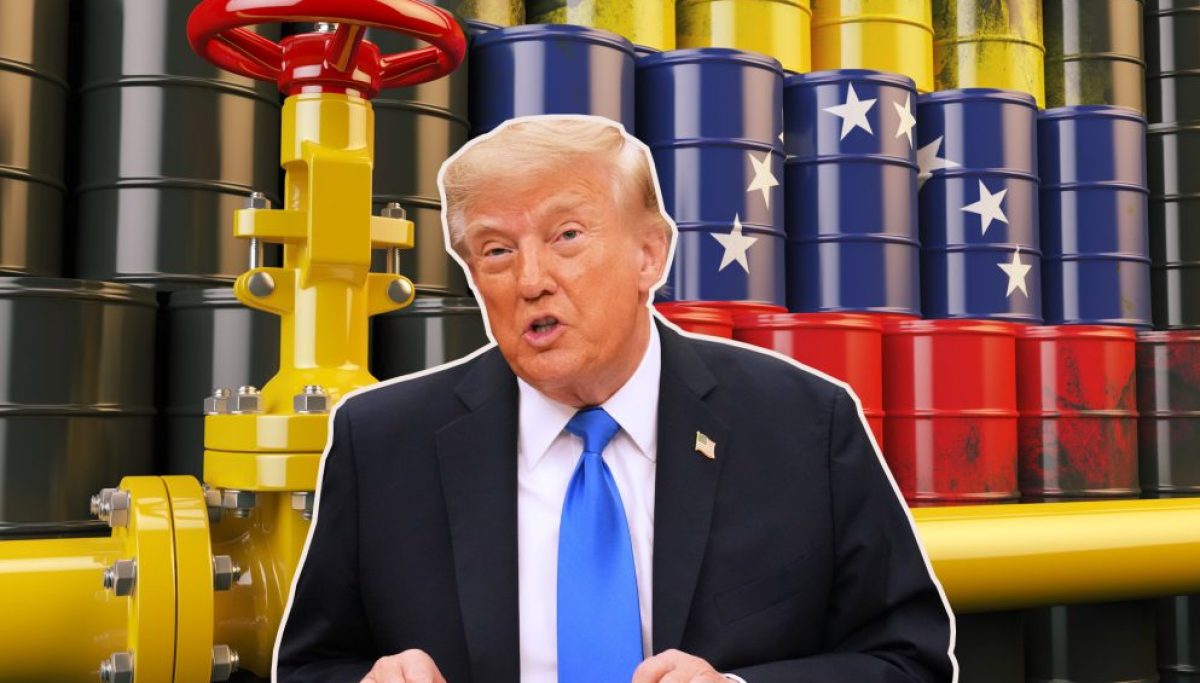
The Trump White House is under mounting pressure to “do something” about the price of diesel in the US. asserted
House → mount → US
That something would have dire consequences for much of the world, including the US - and Australia, the world’s biggest per-capita user of the fuel. asserted
something → have → fuel
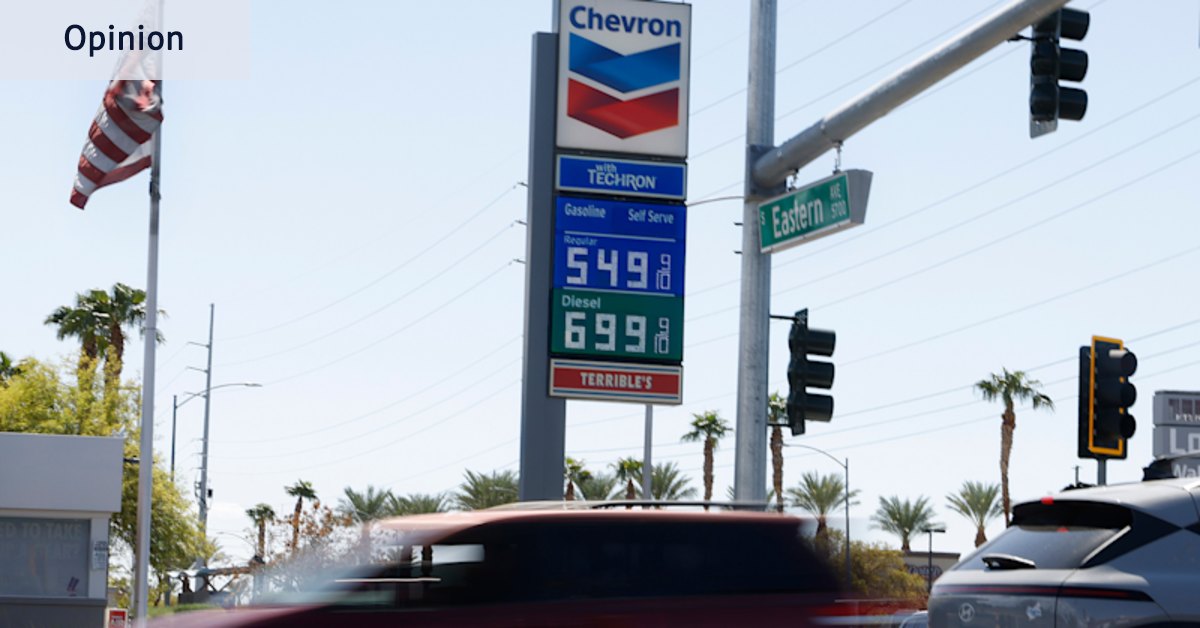
A lengthening queue of Republicans, including Senate majority leader John Thune, have called for the US to consider banning or restricting exports of diesel after its average domestic price hit another record of $US6.51 a gallon on Monday. asserted
price → lengthen → Monday
That’s about 75 per cent higher than the average US price a year ago. asserted
That → ’ → price
With farmers, who are about to start their autumn harvest season, the heartland constituency for Republicans, it isn’t surprising that their political representatives, mainly Republicans, are becoming anxious in the lead-up to November’s midterm elections. asserted
representatives → start → elections
Where the White House initially waved off suggestions of limiting diesel exports, arguing – rightly – that it could be counter-productive, there have been signs recently that the attitude is thawing as the elections loom. uncertain
elections → wave → exports
Donald Trump appears to be very aware of the political implications, but is misdiagnosing the cause of the big spike in prices. asserted
Trump → appear → prices
At the weekend, he repeated his call for Ukraine to stop its drone attacks on Russian refineries, almost all of which – with the exception of a handful of hard-to-reach plants in Siberia – have been damaged by Ukrainian bombing. asserted
all → repeat → bombing
“Russia has unfortunately lost control of its Diesel Oil Industry due to its War with Ukraine,” Trump posted on Truth Social. asserted
Trump → lose → Social
“A large number of their Diesel refineries have been blown up and are, at least temporarily, out of commission. asserted
number → blow → commission
This ridiculous and never ending War with Ukraine must be ended.” As a result of the Ukrainian attacks, Russia – a major exporter of diesel before its invasion of the country – has halted all exports and is now importing diesel, mainly from India. asserted
Russia → end → India
While that is contributing to the surge in diesel prices globally, it isn’t the primary cause. asserted
it → contribute → prices
Last year, Russia exported about 800,000 barrels a day of diesel and gas oil, making it the world’s second-largest exporter behind the US. asserted
it → export → US
The Middle East, as a region, however, exported about 1.5 million barrels a day. asserted
East → export → barrels
It is Trump’s war on Iran that’s the major influence on the diesel shortages that are driving up prices. asserted
that → ’ → prices
With those Middle Eastern exports now reduced by more than 50 per cent, it is Trump’s war on Iran that’s the major influence on the diesel shortages that are driving up prices. asserted
that → reduce → prices
It hasn’t helped that China, a major processor of crude oil into distillates including diesel, halted exports earlier this year after the attacks on Iran. asserted
China → help → Iran
It subsequently resumed them but, with its inventories at their lowest level for more than a year, is expected to reintroduce export curbs. asserted
inventories → resume → curbs
Moreover, unlike crude supply, where the end of hostilities in the Middle East would see a rapid rebound in supply, elevated diesel prices are likely to be a feature of the global markets for months after the war’s conclusion, if not years, because of the extensive damage to the region’s refineries. asserted
end → see → refineries
The same timelines would apply to Russia’s infrastructure if that war were to end. asserted
war → apply → infrastructure
What US Republicans are urging the White House to do to “stop the bleeding” ranges from a complete ban on diesel exports to restrictions that link permitted exports to domestic diesel prices. asserted
that → urge → prices
An export ban would keep the diesel that the US currently exports within the US, but would have devastating consequences for those countries that have become increasingly reliant on America’s record exports since the war in the Middle East erupted. asserted
war → keep → East
In Europe, where record prices are the equivalent of a $US190 a barrel oil price and inventories are at record lows for this time of the year, there are already supply shortages even before the region heads into the northern hemisphere’s winter. asserted
region → be → winter
But any restrictions in exports could have adverse consequences for the US itself, too. uncertain
restrictions → have → US
While it is the world’s largest diesel exporter, it does import about 165,000 barrels a day. asserted
it → import → barrels
That’s because much of its refinery capacity is on the Gulf Coast, with limited pipeline infrastructure to the north-east and west coasts. asserted
much → ’ → coasts
In any event, most of the pipelines linking refineries to their end markets are operating at or near capacity. asserted
most → link → capacity
An export ban would see prices surge further in those regions the infrastructure doesn’t reach, and lead to a build-up of inventories within the refineries. The US accounts for about 1.5 million barrels a day of the daily 8 million barrels or so of the global seaborne trade in diesel. asserted
US → see → diesel
A US export ban would see global prices soar further, with flow-on consequences for those US regions dependent on imported product. asserted
prices → see → product
More broadly, with an export ban or restrictions, there’d be more diesel held within the US, but the refineries, which have been operating at close to full capacity, would reduce their crude oil purchases because they’d be physically incapable of delivering much more than they do today, let alone the 30 per cent or so increase in diesel supply required to absorb the diverted export volumes. asserted
they → hold → volumes
Even a brief relief from high prices might save a few seats and help protect Trump from the inevitability of a lame-duck second half to his presidency Areas close to the refineries might get lower prices, but the rest of the country would probably experience even higher prices. uncertain
rest → save → prices
There also the problem that, unless crude oil prices fell sharply, refinery margins would be squeezed if diesel prices fell, likely leading to reduced, rather than increased, production. asserted
prices → fall → production
Refinery profits and export revenues would be lost, along with longer damage to the refiners’ relationships with their offshore customers, without any lasting benefit in the form of lower domestic prices. asserted
profits → lose → prices
If both a total or partial ban of diesel exports are likely to be counter-productive, why would senior Republicans be forcing it onto the White House agenda? asserted
Republicans → force → agenda
It’s the elections of course, where control of the House, and perhaps even the Senate, is likely to be determined by cost-of-living issues, with gasoline and diesel prices front-of-mind with voters. asserted
prices → ’ → voters
Diesel, because of the role it plays in transport, shipping and agriculture, is also a meaningful influence on the inflation rate. asserted
it → play → rate
The longer prices remain at record levels, the more those prices are likely to feed into the elevated prices of food and consumer goods generally, forcing the inflation rate to remain high and increasing the likelihood of further Federal Reserve Board rate hikes, perhaps as early as next month - just weeks ahead of the midterms. asserted
prices → remain → midterms
It is apparent that there are some in the White House who are aware that, while a ban might cause an initial drop in the price of diesel, the reprieve would be temporary and the longer-term consequences would probably be damaging to the economy, businesses and consumers. Given the proximity of the elections, even a brief relief from high prices might save a few seats and help protect Trump from the inevitability of a lame-duck second half to his presidency, and the investigations and impeachments that would flow from a Democrat majority in the House. uncertain
that → be → House
In those circumstances, with political pressures intensifying to do something about diesel and gasoline prices, would Trump be concerned about those longer-term consequences? asserted
Trump → intensify → consequences

💬Give feedback
🕘History 🎫Support