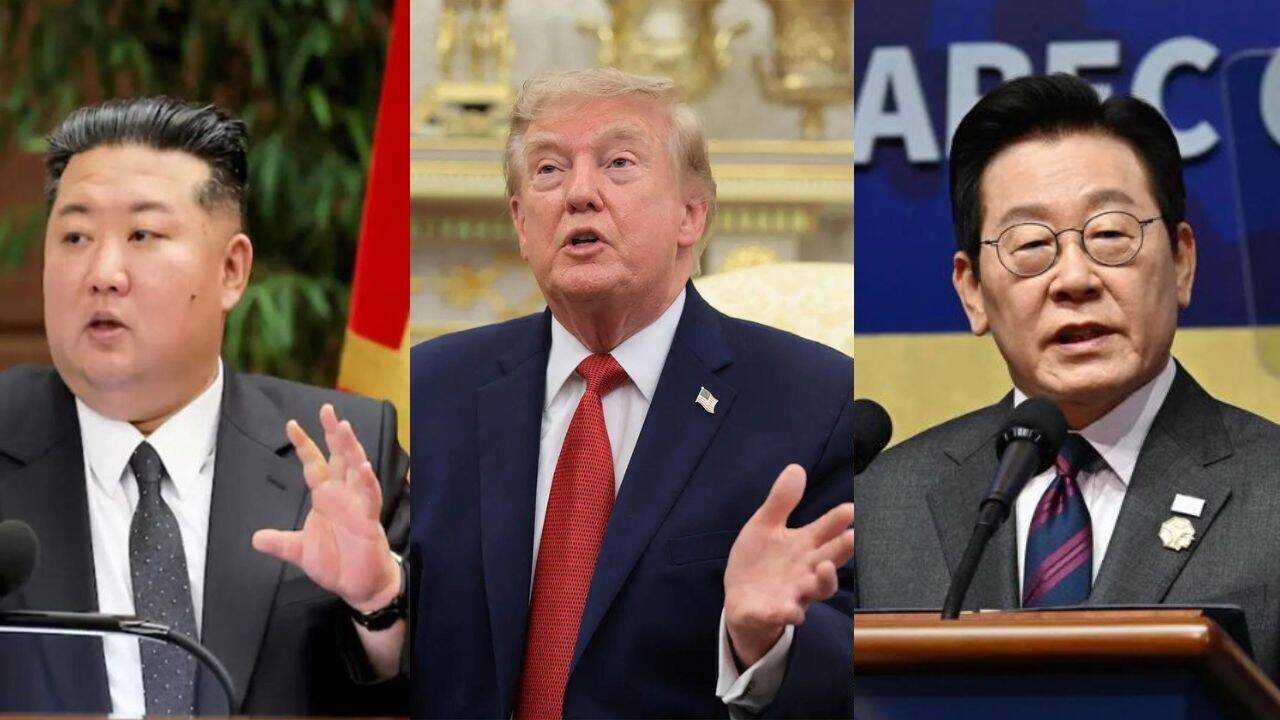
South Korean president Lee Jae Myung has urged US president Donald Trump to seek a nuclear freeze deal with North Korea instead of insisting on immediate denuclearisation, arguing that sanctions have failed to stop North Korea from expanding its weapons programmes.
asserted
sanctions → urge → programmes
In an interview with the New York Times, Lee said Washington could offer sanctions relief in exchange for Pyongyang halting further development of nuclear weapons and intercontinental ballistic missile technology.
uncertain
Pyongyang → say → weapons
“I believe there is significant value in a trade-off between sanctions –– which are not particularly effective anyway –– and a stop to the development of additional nuclear weapons and intercontinental ballistic missile technology,” Lee told NYT.
asserted
Lee → believe → NYT
Lee argued that demanding complete denuclearisation under current circumstances would achieve little, as North Korea has continued to expand its nuclear capabilities while strengthening ties with Russia and China.
“Aiming for denuclearisation under the current circumstances guarantees that nothing will be accomplished,” he said.
asserted
he → argue → circumstances
Why Lee wants a nuclear freeze first
Lee’s proposal would make a nuclear freeze the first step, followed by reciprocal incentives and concessions aimed at building trust with Pyongyang.
asserted
freeze → want → Pyongyang
He said the longer-term goal would be to create conditions in which North Korea feels secure enough to eventually reduce and give up its nuclear arsenal.
asserted
Korea → say → arsenal
The South Korean president believes Trump is uniquely positioned to restart talks with North Korean leader Kim Jong-un, given the two leaders’ previous personal diplomacy.
asserted
Trump → believe → diplomacy
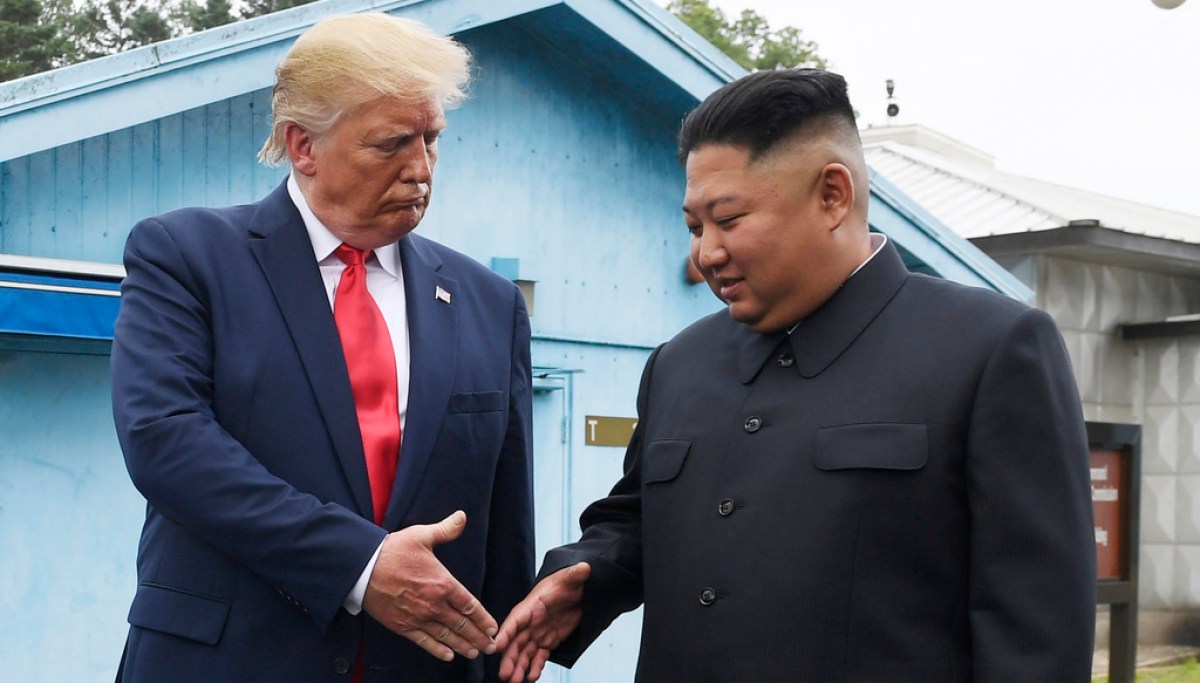
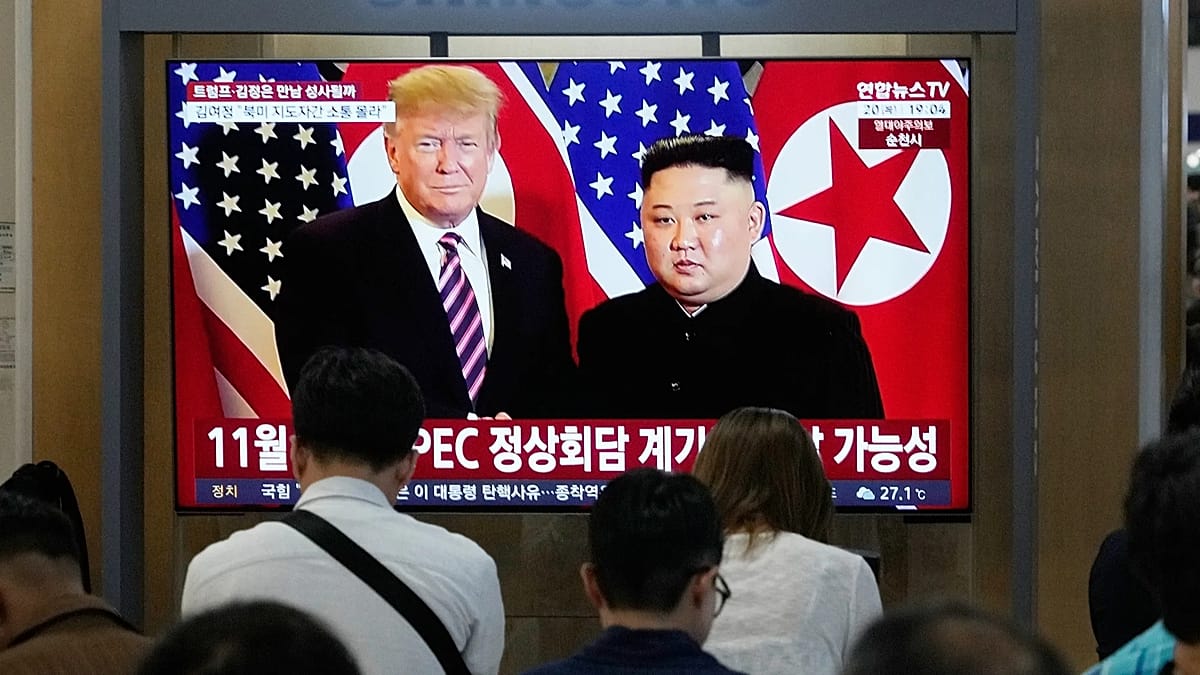
Trump met Kim three times during his first term, including a 2019 meeting at the inter-Korean border, but those talks failed to produce an agreement.
asserted
talks → meet → agreement
Lee said the alternative to diplomacy was increasingly risky as North Korea continued to expand its nuclear arsenal.
asserted
Korea → say → arsenal
“Our estimates suggest that North Korea is now capable of producing, or may already be producing, an additional 10 to 20 nuclear weapons each year,” he said, warning that Pyongyang could eventually be tempted to export nuclear weapons and missiles for money.
uncertain
Pyongyang → suggest → money
North Korea has more leverage now
Lee’s push comes as North Korea has moved closer to Russia and China and become less dependent on negotiations with Seoul or Washington.
asserted
Korea → have → Seoul
Pyongyang has deployed troops and weapons to support Russia’s war in Ukraine, strengthening its relationship with Moscow.
asserted
Pyongyang → deploy → Moscow
North Korea has also deepened ties with Beijing, while its economy has shown signs of growth.
asserted
economy → deepen → growth
That has given Kim more room to resist pressure from Washington.
asserted
That → give → Washington
North Korea has also continued developing its nuclear and missile capabilities despite Trump’s efforts to revive diplomacy.
asserted
Korea → continue → diplomacy
North Korea has also been regularly carrying out military exercises and testing its arsenal of ballistic missiles near South Korean waters, worsening tensions in a region already plagued by military tensions and a long-running standoff between the two Koreas.
asserted
Korea → carry → Koreas
Trump had also recently scaled back a major US-South Korean military exercise, describing such drills as hostile toward Kim.
asserted
Trump → scale → Kim
North Korea has nevertheless continued weapons activity, including recent ballistic missile launches.
asserted
Korea → continue → launches
Lee is not alone in arguing for a shift towards a phased approach.
asserted
Lee → argue → approach
Stephen E Biegun, who served as the US special representative for North Korea during Trump’s first term, recently said Washington could negotiate a “slowing or freezing” of North Korea’s nuclear arsenal.
uncertain
Washington → serve → arsenal
But North Korea has repeatedly signalled that it does not intend to give up its nuclear arsenal, making any freeze deal potentially difficult to negotiate.
asserted
deal → signal → arsenal
Lee nevertheless believes a freeze would be a more realistic starting point than demanding complete denuclearisation at the outset.
asserted
freeze → believe → outset
 The Aporia