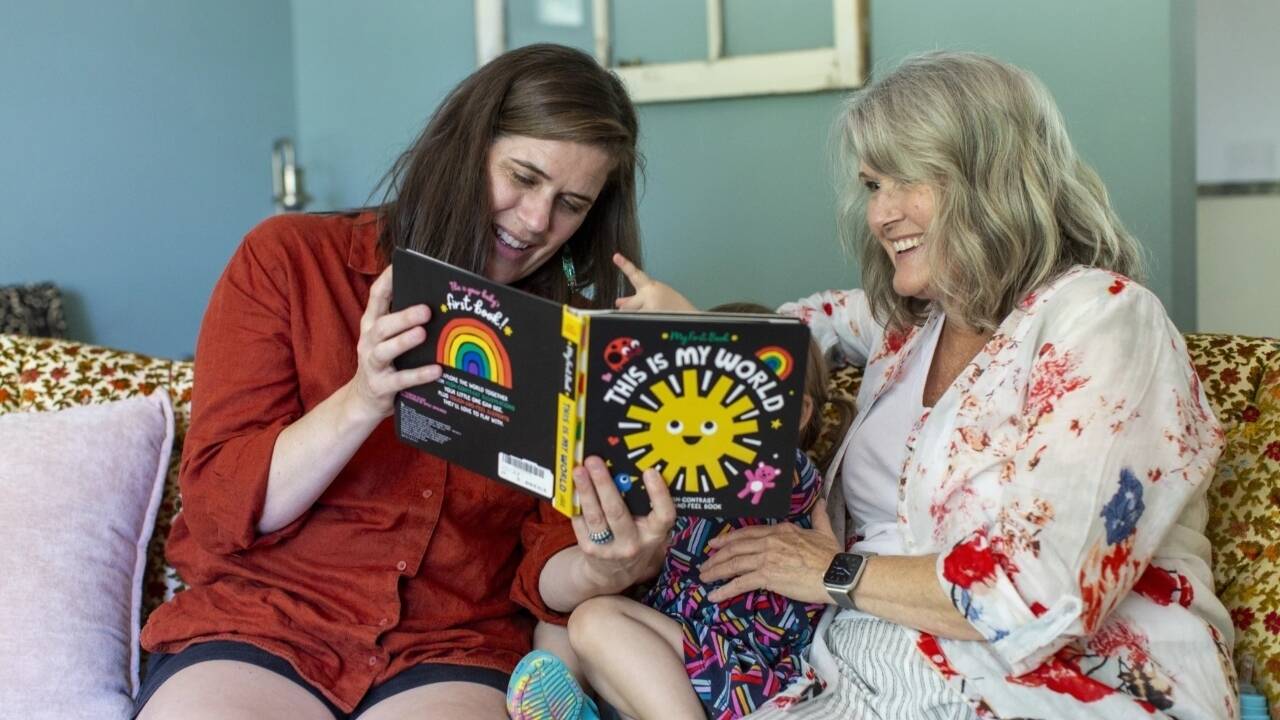
Mary Jo Galusha, 67, a school teacher from Idaho, had a clear picture of how her retirement would look.
asserted
retirement → have → picture
Then her daughter, Stacia Bourne, called with news.
asserted
daughter → call → news
Bourne’s first child’s daycare bill nearly matched the family mortgage.
asserted
bill → match → mortgage
Bourne and her husband even hesitated to have a second child.
asserted
Bourne → hesitate → child
But that ended in a question: could they actually afford a second baby?
uncertain
they → end → baby
"We were thinking we couldn't afford it," Bourne, a University of Delaware psychology professor who lives in Maryland, told NPR.
asserted
who → think → NPR
So, Galusha decided to help.
asserted
Galusha → decide → ?
She now looks after her grandchildren.
asserted
She → look → grandchildren
Her retirement plan looks more than perfect.
asserted
plan → look → ?
Leaving Idaho for grandkids
Stacia Bourne and her husband had their first child, George, in 2020.
asserted
Bourne → leave → 2020
He started daycare when he was 2, but the cost wasn’t something they expected.
asserted
they → start → daycare
"The cost for childcare for him is about the same as our mortgage," Bourne said.
asserted
Bourne → say → mortgage
They were worried about whether they could afford a second child.
uncertain
they → worry → child
That’s when Bourne’s mum, Mary Jo Galusha, offered: she could retire and relocate to the East Coast if Bourne was planning to have another baby.
uncertain
Bourne → ’ → baby
Many months later, the phone rang again.
asserted
phone → ring → ?
"I got a call that Stacia was expecting and that I better start planning on retiring," Galusha recalled.
asserted
Galusha → get → call
She gave notice, traded her Volkswagen Beetle for an SUV with enough room for car seats, and drove across the country to Newark, Delaware.
asserted
She → give → Newark
Robin, the second child, was born in late 2024, and Galusha spends 30 hours a week taking care of the baby while the couple goes to work.
asserted
couple → bear → work
For Galusha, though, it’s not a chore.
asserted
it → ’ → Galusha
If anything, caring for her grandchildren brings her joy.
asserted
caring → care → joy
"It's like magic to watch them grow up," she told the broadcaster.
asserted
she → watch → broadcaster
Grandparents caring for their grandchildren is nothing new.
asserted
Grandparents → care → grandchildren
However, the astronomical spike in childcare costs in the US has made this crucial for many parents.
asserted
this → make → parents
Childcare for children under five in the US costs an average of $13,184 a year in 2025, according to the group Child Care Aware of America.
uncertain
Childcare → cost → America
In some places, it can cost as much as rent or college tuition.
asserted
it → cost → rent
Families who cannot afford childcare or find a place at a daycare are increasingly turning to grandparents for help, according to Nicole Jorwic of Caring Across Generations.
uncertain
who → afford → Generations
"The reality is that because this country hasn't invested in a childcare infrastructure that is flexible and affordable and reliable, grandparents are filling in the gaps that the service system leaves behind," she told the outlet.
asserted
she → invest → outlet
For many families in the US, finding reliable childcare has become increasingly important, says Madonna Harrington Meyer, a Syracuse University sociology professor who studies ageing and grandparenting.
asserted
who → find → ageing
In recent decades, the number of households with both parents working full-time has risen.
asserted
parents → work → households
In 2025, 52% of couples with children had both parents working full-time, up from 31% in 1975, according to
Pew Research Center.
uncertain
parents → have → Center
Families of children with disabilities also struggle to find specialised care.
asserted
Families → struggle → care
"All of these things are reasons people turn to grandparents," Harrington Meyer said.
asserted
Meyer → turn → grandparents
And most grandparents are happy to help.
asserted
grandparents → help → ?
According to a 2024
poll, nearly half of grandparents with grandchildren under 18 cared for them at least once every few months.
uncertain
half → accord → them
Another AARP
report found that grandparents mainly provide childcare because their children are working or busy, and they want to spend more time with their grandchildren.
asserted
they → find → grandchildren
The median amount of time they spend providing care is 200 hours a year, or about 3.8 hours a week.
asserted
they → spend → care
Unlike a formal daycare situation, often grandparents will come to your house, or they'll alternate between watching the children at their own house and at the grandparent's house," Harrington Meyer added.
asserted
Meyer → come → house
 The Aporia