Photo via Semafor

Retailers are picking sides on AI shopping agents

Read the original at Semafor ↗
Cite

Goswami, R. (2026, September 22). Retailers are picking sides on AI shopping agents. Semafor. https://www.semafor.com/article/09/22/2026/retailers-are-picking-sides-on-ai-shopping-agents

Dated when The Aporia collected the article, usually within hours of publication. Check the original for its exact date and byline.

Semafor · collected 2026-09-22 · by Rohan Goswami

Quick Summary

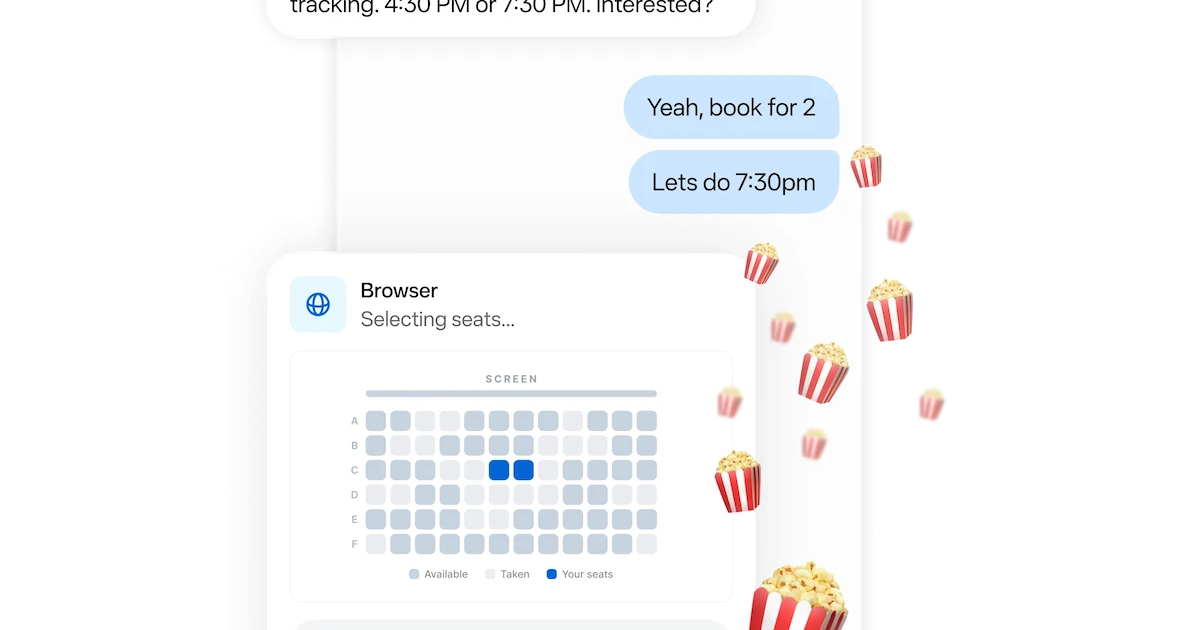
The article discusses the differing stances of online retailers regarding AI shopping assistants. Amazon has banned Meta’s Muse assistant, while Shopify has allowed it onto its platform. This split reflects broader tensions: Amazon aims to maintain control over customer interactions for advertising and upselling opportunities, whereas Shopify focuses on serving merchants through various service offerings. The piece also notes uncertainty around how companies like airlines will handle AI shopping agents, as illustrated by Delta blocking a bot-assisted rebooking attempt.
Written by AI on 2026-09-23, from this article's own text only (the story summary below draws on all the coverage).

AI analysis

Story summary

AI shopping assistants are creating divisions among major retailers. Amazon has banned Meta's AI assistant called Muse, while Shopify has embraced it. This reflects the differing strategies of these companies: Amazon wants to maintain control over customer interactions for advertising and upselling purposes, whereas Shopify focuses on supporting merchants through software licensing, fulfillment services, and financing. The stance of other industries, like airlines, remains unclear; an attempt to use Muse to rebook a flight with Delta encountered a blocking mechanism.
Written for “AI in Retail Controversy” on 2026-10-30, grounded in this article and the 0 other(s) covering the same event.

Story

📰 AI in Retail Controversy
Technology · 1 article(s) covering the same event.

Compared with similar articles

This article reads leans right and hedges 0% of its claims. Each row says how that neighbour differs.
The Sydney Morning Herald
⚖️ Leans left further left than this Hedges 17 of 45 claims Outlet record 61/100
“The articles discuss different aspects of AI agents in retail and everyday tasks; Article A focuses on retailers' reactions to AI shopping agents, while Article B warns about the risks and potential benefits of using AI personal assistants.”
Semafor
Hedges 1 of 6 claims Outlet record 60/100
“The articles discuss different aspects of Meta's AI assistant and its market reception, not the same specific incident.”
How this article was measured signals, leaning charts, publisher record, byline, topics and claims

Signals How these are calculated →

Claims extracted
7
sentences that state something as happening or true
Uncertain
0%
0 of 7 hedged ("reportedly", "may", "according to")
Leaning
Leans right
of the writing, not the subject · beta estimate
Publisher signals
60/100
Semafor's corrections and hedging, across everything collected from it. Not a measure of accuracy.
Outlets on this story
1
Technology
Same framing elsewhere
1
articles that frame the event the way this one does
Analyzed 2026-09-23 · how these are computed

How this is being covered How these are calculated →

Article leaning vs. publisher reliability
Source leaning vs. consistency

Publisher

Semafor · 1392 article(s) · 1 correction(s) detected
Running correction rate · 1 correction(s)

Who wrote this

Rohan Goswami
12 article(s) here · 1 carrying a prediction
🔮 The swift unraveling of one of the world’s most prestigious law firms has rattled corporate law firms wondering if it could happen to them.
2026-10-28 · mixed framing · Big Law faces its reckoning
🔮 The company declined to comment on Authentic’s interest and said it would consider Ariel’s views in the same way it considered the “views of Mattel’s other shareholders.”
2026-10-09 · assertive framing · Ariel goes from listener to caller at Mattel
🔮 After Semafor reported last week that Chipotle had tapped bankers to fend off a potential takeover, we started digging to see who might take over the $40 billion burrito maker.
🔮 Artisan Partners said it is worried that the bank won’t be able to compete with US rivals if it has to raise new capital, as a law advancing in the Swiss parliament would require.
2026-10-01 · assertive framing · UBS shareholder pushes for Swiss exit
🔮 Flock’s technology — and network — could appeal to rivals, such as taser-maker Axon, which operates a network of automated license-plate readers and outfits police vehicles and officers with cameras, or to Motorola Solutions, a competitor to Axon.
2026-09-23 · assertive framing · Flock Safety weighs selling itself
🔮 At the same time, SoftBank’s junk-bond offering, which will fund its investment in OpenAI, appears to have healthy demand.
2026-09-22 · assertive framing · AI-related IPOs postponed as investors grow cautious
🔮 Will internet gatekeepers let them in the door?
2026-09-22 · assertive framing · Retailers are picking sides on AI shopping agents
🔮 The states had argued that the acquisition would give Paramount too much control over the movie and cable TV industries.
🔮 Any credit they get in disclosing and trying to address problems only confirms how little control they have over their models, which invites more regulation and could push users toward open-weight models.
2026-09-17 · mixed framing · OpenAI will tell us when the world is ending
🔮 “Why do judges bother to find companies guilty of running a monopoly if they’re unwilling to break them up?” The American Prospect’s David Dayen wrote.
2026-09-06 · assertive framing · Google avoids another breakup
Also by Rohan Goswami
Big Law faces its reckoning
2026-10-28 · Semafor
Nothing else under this byline is closely related to this article, so these are simply their most recent.
All 12 articles by Rohan Goswami →

Topics

Amazon Delta Meta Muse Shopify

Subjects

Amazon ORG · 2× Shopify ORG · 2× Delta ORG · 1× Meta ORG · 1× Muse ORG · 1×

Narrative

On the other will be e-commerce enablers like Shopify, whose primary relationship is with merchants, and which makes money from licensing storefront software, fulfillment services, and financing.
framing: assertive · carried by 1 article(s) · first seen 2026-09-23
🔮 Will internet gatekeepers let them in the door?
2026-09-23 · Semafor
Retailers are picking sides on AI shopping agents · assertive framing

Claims (7 extracted, 0 hedged)

Will internet gatekeepers let them in the door? asserted
gatekeepers → let → door
Amazon banned Meta’s Muse assistant, while Shopify welcomed it in, the first sign of battle lines being drawn in the way we spend money online. asserted
we → ban → money
As they sharpen, expect a rough sorting. asserted
they → sharpen → sorting
On one side will be retailers like Amazon, which want to keep control of human eyeballs that can be sold to advertisers and pitched on add-on purchases. asserted
that → want → purchases
On the other will be e-commerce enablers like Shopify, whose primary relationship is with merchants, and which makes money from licensing storefront software, fulfillment services, and financing. asserted
which → make → software
Less obvious is how companies that care a lot about customer loyalty but don’t depend on impulse purchases, like airlines, will treat bots. asserted
treat → care → bots
(My efforts to rebook a Delta flight via Muse this weekend ran into a bot-blocker.) asserted
efforts → rebook → blocker
💬Give feedback
🕘History 🎫Support