Photo via Toronto Star

Mark Carney says Liberals have mandate to build faster amid growing pushback

Read the original at Toronto Star ↗
Cite

Patel, R. (2026, September 23). Mark Carney says Liberals have mandate to build faster amid growing pushback. Toronto Star. https://www.thestar.com/politics/mark-carney-says-liberals-have-mandate-to-build-faster-amid-growing-pushback/article_50de51bc-7ef4-4a78-a78c-7cfde7e7a41f.html

Dated when The Aporia collected the article, usually within hours of publication. Check the original for its exact date and byline.

Toronto Star · collected 2026-09-23 · by Raisa Patel

Quick Summary

Prime Minister Mark Carney defended his government's push to speed up major project development against criticism from Indigenous, environmental, and labor groups. The article reports on Carney’s insistence that the Liberal government has a mandate to reduce regulatory barriers for infrastructure projects, presented through new legislation called Bill C-39, aiming to simplify environmental assessments and limit work stoppages. Despite facing opposition over watered-down regulations and diminished workers' rights, Carney argues these measures are necessary for economic growth amid international trade challenges.
Written by AI on 2026-09-23, from this article's own text only (the story summary below draws on all the coverage).

AI analysis

Story summary

Patty Hajdu, Canada’s Jobs Minister, stated that the federal government will not interfere with workers’ right to strike despite considering legal changes to improve labour relations. The minister emphasized that upcoming legislation aims to reduce the number of times the government has to intervene in strikes under Section 107 of the Canada Labour Code. This section allows Ottawa to refer disputes to the Canada Industrial Relations Board, a measure employers and unions have differing views on. While most employers advocate for greater federal power to intervene during labour disruptions that could harm national interests, unions argue against any measures that might compromise their right to strike. Hajdu added that government intervention is a last resort and encouraged parties to resolve issues themselves at the negotiating table. The proposed amendments include introducing a special mediator role who will document arguments in acrimonious negotiations and publish reports identifying sticking points.

Written for “Canada Labour Law Changes” on 2026-10-31, grounded in this article and the 23 other(s) covering the same event.

Story

📰 Canada Labour Law Changes
Politics · 24 article(s) covering the same event. Compare every outlet's account →

Compared with similar articles

This article reads leans strongly right and hedges 9% of its claims. Each row says how that neighbour differs.
The Globe and Mail
Hedges 2 of 42 claims Outlet record 52/100
“While both articles discuss government actions related to strikes and regulatory changes, they describe different specific events occurring on different dates.”
Toronto Star
⚖️ Leans right further left than this Hedges 1 of 25 claims Outlet record 64/100
National Post
Hedges 1 of 15 claims Outlet record 60/100
“The articles discuss similar legislation but describe different perspectives and timing (one day apart), indicating distinct coverage rather than the same specific incident.”
CBC News
⚖️ Leans left further left than this Hedges 3 of 32 claims Outlet record 74/100
“The articles discuss different aspects of Bill C-39, with Article A focusing on Prime Minister Carney's defense and justification for the bill, while Article B focuses on Jobs Minister Patty Hajdu explaining how the bill affects unions.”
Global News
⚖️ Leans left further left than this Hedges 1 of 6 claims Outlet record 63/100
“While both articles discuss similar legislative actions by the Liberal government aimed at speeding up project approvals and reducing labour disruptions, they describe different points in time or aspects of the process. Article A reports on the initial tabling of the bill, while Article B discusses a subsequent day when the Prime Minister defended the legislation against criticism.”
Toronto Star
Hedges 0 of 19 claims Outlet record 64/100
“The articles discuss related legislative actions by Prime Minister Carney's government but describe different timeframes and reactions.”
Toronto Star
⚖️ Leans right further left than this Hedges 0 of 5 claims Outlet record 64/100
“While both articles discuss Bill C-39, they describe different aspects: Article A covers Carney's defense and explanation of the bill, while Article B provides a statement from FETCO about the implications of the bill.”
National Post
⚖️ Leans left further left than this Hedges 7 of 65 claims Outlet record 60/100
“Article A discusses Parliament's return and the agenda for the fall session, while Article B focuses on Prime Minister Carney defending his government's new legislation against pushback. Although both mention similar legislative actions, they describe different stages of events.”
Global News
Hedges 4 of 32 claims Outlet record 63/100
“While both articles discuss potential changes to labor and environmental regulations by the Liberal government, they describe different stages or aspects of related legislative actions rather than a single specific incident.”
Toronto Star
⚖️ Centre further left than this Hedges 1 of 7 claims Outlet record 64/100
“While both articles discuss new legislation by the Liberal government under Prime Minister Mark Carney aimed at changing labour and project review regulations, they appear to describe different stages or aspects of this legislative process.”
How this article was measured signals, leaning charts, publisher record, byline, topics and claims

Signals How these are calculated →

Claims extracted
33
sentences that state something as happening or true
Uncertain
9%
3 of 33 hedged ("reportedly", "may", "according to")
Leaning
Leans strongly right
of the writing, not the subject · beta estimate
Publisher signals
64/100
Toronto Star's corrections and hedging, across everything collected from it. Not a measure of accuracy.
Outlets on this story
24
Politics
Same framing elsewhere
1
articles that frame the event the way this one does
Analyzed 2026-09-23 · how these are computed

How this is being covered How these are calculated →

Article leaning vs. publisher reliability
Source leaning vs. consistency

Publisher

Toronto Star · 10784 article(s) · 28 correction(s) detected
Running correction rate · 28 correction(s)
2026-10-26
Correction
2026-10-24
Correction
2026-10-07
Correction
2026-09-24
Correction

Who wrote this

Raisa Patel
10 article(s) here · 1 carrying a prediction
🔮 the Carney Liberals announced earlier this month — jurisdictions across the country will have to look to Quebec as the rest of the country decides whether to follow the province’s lead.
🔮 “We will work together to achieve shared goals and earn our place as a good neighbour,” he wrote.
🔮 A stopgap extension of federal funding isn’t enough to avert a “looming fiscal cliff” for provinces and territories, health ministers warned Thursday, a day after Ottawa announced it would renew funding for critical health care services for a single year.
🔮 The federal government plans to bar assisted death for people suffering from mental illness alone while allowing advance requests from those who could be robbed of their ability to consent — a change expected to create inconsistencies in how MAID is administered across the country.
🔮 “Bryant and Van Rootselaar had numerous conversations relating to Van Rootselaar’s planning and preparation for the murders, including discussing potential attack locations, the way the attack would unfold, and related topics.
🔮 OTTAWA—Prime Minister Mark Carney’s push to expedite construction of a major oil pipeline to the West Coast could set up a potential legal fight with Indigenous communities, with the national chief of the Assembly of First Nations saying “nothing is off the table” if the government fails to properly obtain consent for the project.
🔮 “Those actions matter, but it would be premature to say they are sufficient.
🔮 Two of the world’s most influential artificial intelligence leaders took the global stage this week, pushing for a collective effort to delay the rollout of a technology they believe could spiral out of control and imperil humankind.
🔮 The legislation seeks to speed up the federal review process by giving the government new powers to relax some environmental conditions if a project is deemed to be in the public interest, and by creating designated regions where projects could be considered “pre-approved.”
🔮 OTTAWA — On the morning that Marjorie Michel was to be sworn in to Prime Minister Mark Carney’s cabinet, she wasn’t entirely certain what her role would be.
Also by Raisa Patel
Nothing else under this byline is closely related to this article, so these are simply their most recent.
All 10 articles by Raisa Patel →

Topics

Bill C-39, Canada Indigenous Liberal OTTAWA

Subjects

Carney PERSON · 5× Canada GPE · 4× Indigenous NORP · 3× Canadian NORP · 2× Liberal NORP · 1× Mark Carney PERSON · 1× New York GPE · 1× OTTAWA GPE · 1× Toronto GPE · 1× the United Nations General Assembly ORG · 1×

Narrative

Woodhouse Nepinak said the bill is being introduced as Ottawa prepares to designate Alberta’s proposed oil pipeline to the west coast as a project of national interest — a process taking place under last year’s law, which the national chief previously slammed as “Trump-like” given its sweeping nature and Carney’s efforts to ram it through Parliament.
framing: assertive · carried by 1 article(s) · first seen 2026-09-23
🔮 The legislation seeks to speed up the federal review process by giving the government new powers to relax some environmental conditions if a project is deemed to be in the public interest, and by creating designated regions where projects could be considered “pre-approved.”

Claims (33 extracted, 3 hedged)

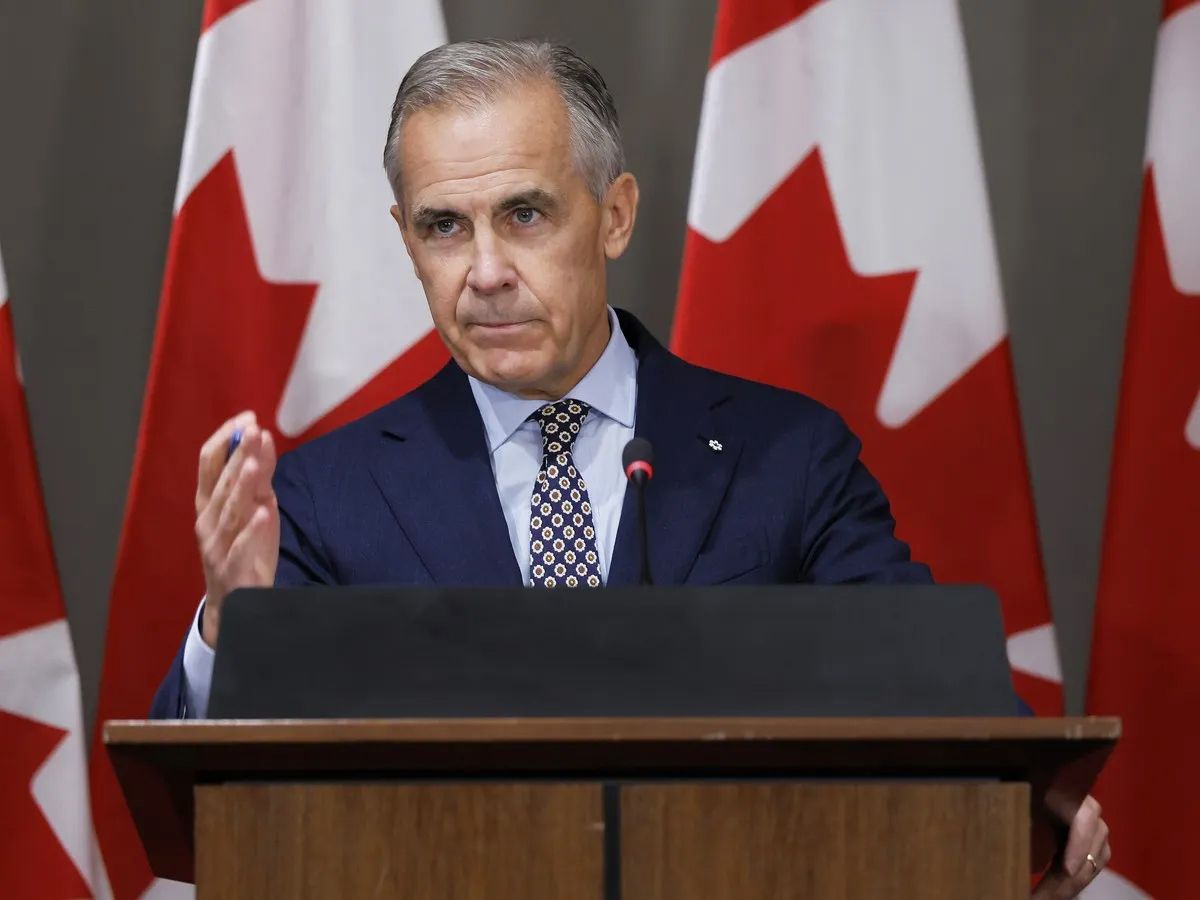
OTTAWA—Facing pushback from Indigenous, environment and labour groups over his agenda to speed up development, Prime Minister Mark Carney insisted Tuesday that his government has a clear mandate to remove regulatory “restrictions” he blamed for strangling construction of major projects in recent decades. asserted
he → face → decades
The prime minister made his defence one day after his Liberal government tabled new legislation meant to reduce work stoppages in federally-regulated industries, and simplify environmental assessments so that project reviews can be conducted within a single year. asserted
reviews → make → year
That legislation, Bill C-39, follows recent moves to sell off the operation of Canada’s four largest airports — including Toronto’s Pearson — to private investors, as well as a law enacted last year that’s meant to fast-track major projects like oil pipelines, ports and nuclear power generation. asserted
that → follow → pipelines
All of those decisions have faced opposition, including from environmental groups concerned about watered-down regulations, unions who worry workers’ ability to go on strike is being hampered, and Indigenous leaders who want to ensure nations are consulted about what happens on their territory. asserted
what → face → territory
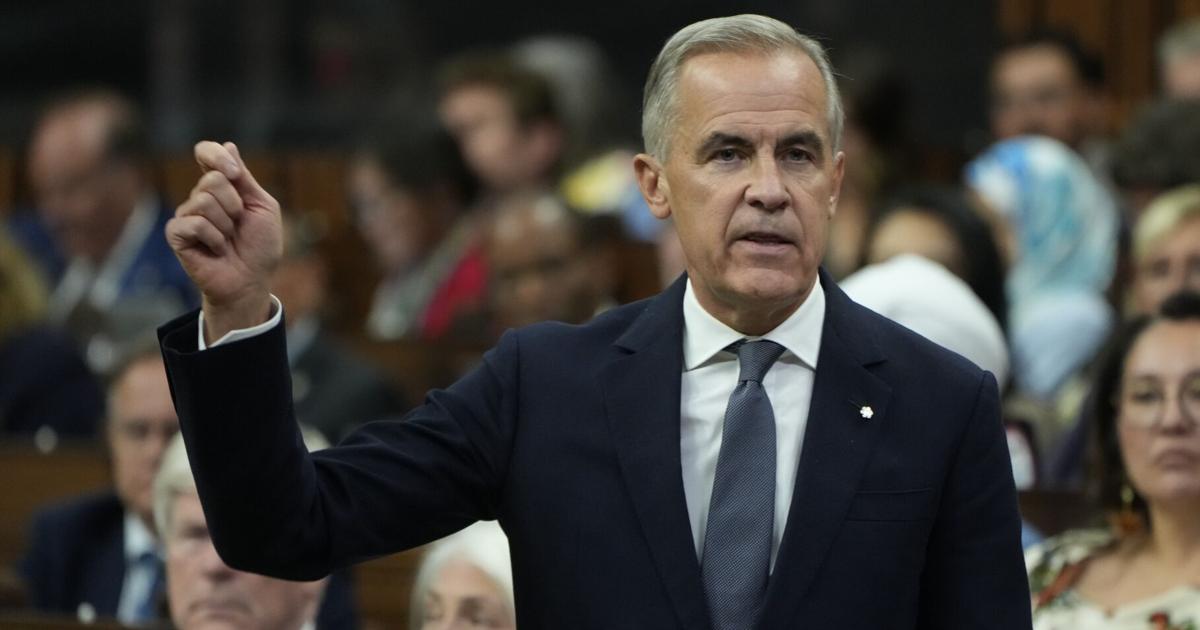
Speaking on the sidelines of the United Nations General Assembly in New York on Tuesday, Carney said his government was elected last year on a clear platform to build major projects faster — and that now is the time to seize “opportunities” for economic growth as Canada faces the crisis of a trade war with the United States. asserted
Canada → speak → States
He also took aim at Canada’s regulatory environment that existed before he took office, including through changes under his predecessor prime minister Justin Trudeau, arguing that there is an urgent need for change so that major “strategic infrastructure” like the St. Lawrence Seaway or trans-Canadian railroads can be constructed again. asserted
infrastructure → take → Seaway
“We used to build in Canada. asserted
We → use → Canada
We used to build big,” Carney said. asserted
Carney → use → ?
“Decade after decade, year after year, we build less.” asserted
we → build → less
The prime minister said that a succession of “well-meaning” restrictions on development has hampered progress in this country, which “meant that we stopped building. asserted
we → say → country
“That’s not good for Canadian independence,” said Carney, insisting that his newly-tabled “Building Canada Strong Act” protects workers, environmental guardrails and Indigenous participation. asserted
Act → ’ → workers
Meanwhile, on Parliament Hill, the proposed law and the Liberals’ wider development agenda were the focus of mounting criticism on Tuesday, with several groups raising concerns about the Carney government’s approach. asserted
groups → propose → approach
The legislation seeks to speed up the federal review process by giving the government new powers to relax some environmental conditions if a project is deemed to be in the public interest, and by creating designated regions where projects could be considered “pre-approved.” uncertain
projects → seek → regions
Other features of the bill include controversial proposals to reduce labour disruptions in part by changing the collective bargaining process in federally regulated sectors so that a strike isn’t allowed until after a special mediator is appointed to try and resolve a dispute between workers and their employer. asserted
mediator → include → workers
Also tucked into the bill is a change that would extend the extraordinary powers created under another marquee Carney government law: Bill C-5. asserted
that → tuck → law
That law, passed last year, paves the way for the federal cabinet to exempt major projects it deems in the national interest from a list of environmental protections, including those in the Species at Risk Act, Fisheries Act, and more. asserted
it → pass → Act
The law included a “sunset clause” that said the government would lose the authority to list projects for fast-tracked approval within five years. asserted
government → include → years
Now, with Bill C-39, the government wants to delete that sunset clause to make sure the new powers are available beyond five years, according to a background document published this week. uncertain
powers → want → document
“Canadians expect us to keep every tool available to build projects faster, to create good paying jobs and to strengthen our economy,” said a spokesperson for One Canadian Economy Minister Dominic LeBlanc. asserted
spokesperson → expect → LeBlanc
Earlier in the day, the head of Canada’s largest Indigenous organization challenged key elements of Carney’s agenda. asserted
head → challenge → agenda
“We warn the government against abusing its majority status and dishonouring the Crown through procedural tools, time allocation, or closure to frustrate Parliament’s ability to hear from rights holders and consider amendments,” said Cindy Woodhouse Nepinak, the National Chief of the Assembly of First Nations. asserted
Nepinak → warn → Nations
Woodhouse Nepinak said the bill is being introduced as Ottawa prepares to designate Alberta’s proposed oil pipeline to the west coast as a project of national interest — a process taking place under last year’s law, which the national chief previously slammed as “Trump-like” given its sweeping nature and Carney’s efforts to ram it through Parliament. asserted
chief → say → Parliament
“Based on our analysis and the lack of project information available, the Assembly of First Nations is requesting that no national interest designation be given to this project until meaningful engagement and decision-making protocols have been fully considered with affected First Nations,” Woodhouse Nepinak said. asserted
Nepinak → base → Nations
She said that while First Nations stand with Canada in its fight against U.S. President Donald Trump’s trade chaos, trust between Ottawa and Indigenous communities is “very fragile.” asserted
trust → say → Ottawa
She pointed to the federal government’s Major Projects Office (MPO), which the Carney government has repeatedly highlighted as a critical bridge for engaging Indigenous communities on proposed developments. asserted
government → point → developments
“I’m going to say it outright. asserted
I → go → it
They don’t know what they’re doing when it comes to First Nations,” the national chief said, adding that the MPO’s CEO, Dawn Farrell, “wouldn’t even come and address our chiefs. asserted
CEO → know → chiefs
“If you’re too good to come and talk to our chiefs, stay home and stay in Calgary,” she said. asserted
she → ’re → Calgary
The MPO has not yet responded to the Star’s request for comment. asserted
MPO → respond → comment
Eleven seniors, all part of a “climate caravan” protesting further pipeline development, were also arrested outside West Block on Tuesday. asserted
all → protest → Tuesday
Inside that building, Bea Bruske, the president of the Canadian Labour Congress, backed some measures in the bill that support workers, but condemned provisions she said infringed on the right to strike. asserted
she → back → right
The government said it would protect the workers’ right to strike, but instead, this bill explicitly gives government the power to end legal strikes when a minister decides that a strike is or could become contrary to the national interest, and the national interest is defined solely by the opinion of the minister,” Bruske said. uncertain
Bruske → say → minister
Carney rejected that characterization in New York, telling reporters his legislation “reinforces” those rights and “the responsibility of employers...to negotiate in good faith.” asserted
legislation → reject → faith

💬Give feedback
🕘History 🎫Support