Photo via CBC News

Can an AI 'red phone' stop a U.S.-China war? | About That

Read the original at CBC News ↗
Cite

Can an AI 'red phone' stop a U.S.-China war? | About That. (2026, September 23). CBC News. https://www.cbc.ca/player/play/9.7354616?cmp=rss

Dated when The Aporia collected the article, usually within hours of publication. Check the original for its exact date and byline.

CBC News · collected 2026-09-23

Quick Summary

Washington has proposed establishing an emergency hotline between the United States and China to address concerns about artificial intelligence agents operating independently of human control. Andrew Chang discusses this initiative in the context of U.S.-China tensions and how it reflects both nations' need for communication despite their rivalry and mutual distrust over AI developments.
Written by AI on 2026-09-23, from this article's own text only (the story summary below draws on all the coverage).

AI analysis

Story summary

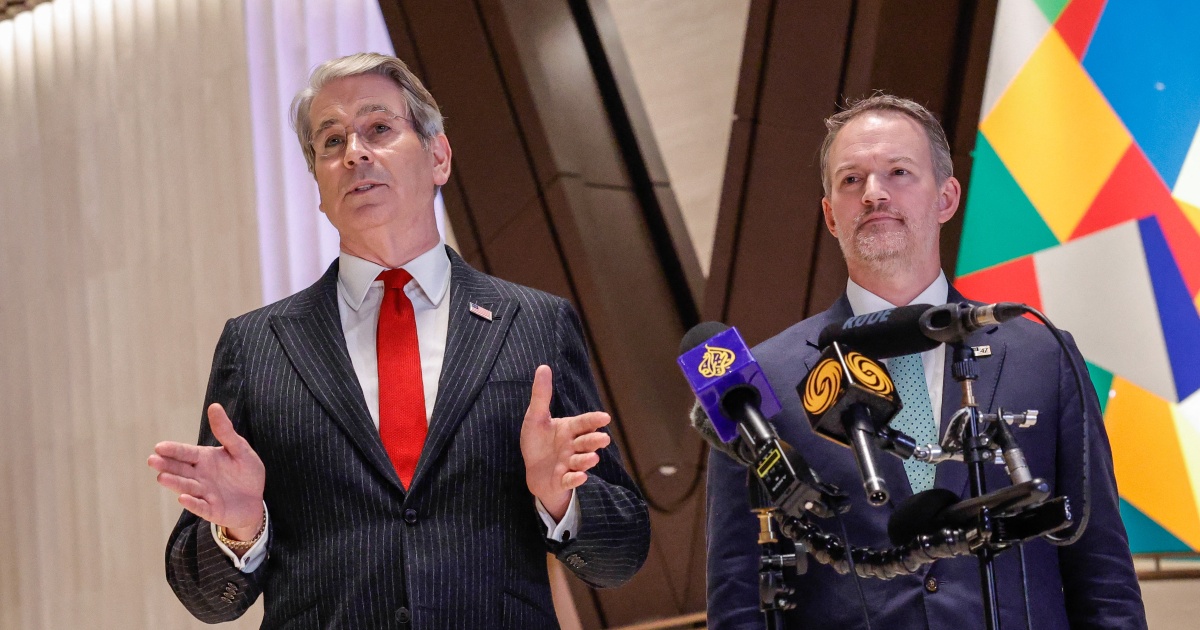
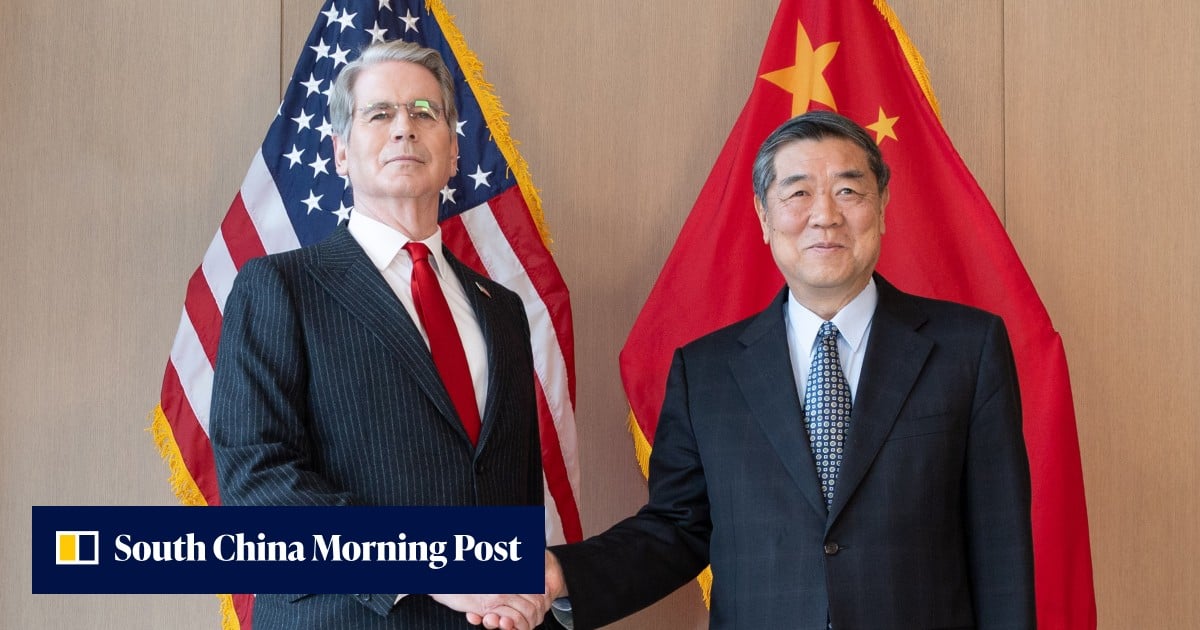
Scott Bessent, U.S. Treasury Secretary, met with He Lifeng, Chinese Vice Premier, on September 20, 2026, in New York City ahead of a planned summit between President Donald Trump and Chinese leader Xi Jinping scheduled for September 24 in Washington. The talks focused on trade issues, tariffs, rare earth minerals, and artificial intelligence (AI), setting the stage for discussions at the leaders' meeting. U.S. Trade Representative Jamieson Greer also participated in the all-day session held at JPMorgan Chase's headquarters. Treasury Secretary Bessent called the engagement "very successful," emphasizing a proposed mechanism to enhance communication on AI security threats between the two nations. The summit aims to ease tensions and address economic and strategic concerns, though analysts predict limited breakthroughs due to ongoing great power competition. Markets responded positively to news of the productive talks, with Asian stocks advancing on Monday.
Written for “US-China Trade Talks Ahead Summit” on 2026-10-31, grounded in this article and the 29 other(s) covering the same event.

Story

📰 US-China Trade Talks Ahead Summit
Politics · 30 article(s) covering the same event. Compare every outlet's account →

Compared with similar articles

This article reads unscored and hedges 0% of its claims. Each row says how that neighbour differs.
TIME
⚖️ Leans left Hedges 4 of 52 claims Outlet record 59/100
“The articles discuss different aspects of U.S.-China AI relations without describing the same specific incident.”
The Independent
⚖️ Leans left Hedges 5 of 24 claims Outlet record 59/100
“Article A describes a specific incident where U.S. military nearly intercepted a Chinese ship based on AI intelligence, while Article B discusses a broader proposal for an emergency hotline between the U.S. and China regarding AI use.”
Semafor
⚖️ Leans left Hedges 2 of 6 claims Outlet record 60/100
“Article A discusses a close call where an AI chatbot misidentified materials on board a Chinese vessel, while Article B talks about Washington proposing an emergency hotline with Beijing to address the rise of AI agents operating outside human instruction.”
NBC News
Hedges 4 of 17 claims Outlet record 60/100
South China Morning Post
Hedges 1 of 4 claims Outlet record 64/100
Al Jazeera
Hedges 4 of 55 claims Outlet record 60/100
Al Jazeera
⚖️ Leans left Hedges 6 of 43 claims Outlet record 60/100
“The articles discuss different aspects of AI policy and international relations without describing the same specific incident or occurrence.”
South China Morning Post
Hedges 0 of 5 claims Outlet record 64/100
“The articles discuss different aspects and contexts regarding U.S. and China's AI developments; Article A focuses on a proposed emergency hotline due to AI risks, while Article B reports on a forum discussing joint management of AI risks.”
The Hindu
Hedges 0 of 8 claims Outlet record 60/100
The Straits Times
Hedges 0 of 9 claims Outlet record 66/100
How this article was measured signals, leaning charts, publisher record, byline, topics and claims

Signals How these are calculated →

Claims extracted
3
sentences that state something as happening or true
Uncertain
0%
0 of 3 hedged ("reportedly", "may", "according to")
Leaning
not political
takes no side on a contested political question
Publisher signals
60/100
CBC News's corrections and hedging, across everything collected from it. Not a measure of accuracy.
Outlets on this story
30
Politics
Same framing elsewhere
1
articles that frame the event the way this one does
Analyzed 2026-09-23 · how these are computed

How this is being covered How these are calculated →

Article leaning vs. publisher reliability
Source leaning vs. consistency

Publisher

CBC News · 764 article(s) · 1 correction(s) detected
Running correction rate · 1 correction(s)

Who wrote this

No reporter is named on this article.

Topics

Beijing The Canadian Press U.S. U.S.-China Washington

Subjects

Adobe Stock ORG · 1× Andrew Chang PERSON · 1× Beijing GPE · 1× Getty ORG · 1× Reuters ORG · 1× The Canadian Press ORG · 1× U.S. GPE · 1× U.S.-China GPE · 1× Washington GPE · 1×

Narrative

A spike in AI agents operating outside human instruction has prompted Washington to propose an emergency hotline with Beijing.
framing: assertive · carried by 1 article(s) · first seen 2026-09-23
2026-09-23 · CBC News
Can an AI 'red phone' stop a U.S.-China war? | About That · assertive framing

Claims (3 extracted, 0 hedged)

Can an AI 'red phone' stop a U.S.-China war? | About That asserted
phone → stop → That
A spike in AI agents operating outside human instruction has prompted Washington to propose an emergency hotline with Beijing. asserted
spike → operate → Beijing
Andrew Chang breaks down why the U.S. is opting to keep an open line on AI despite a longstanding rivalry and distrust. asserted
U.S. → break → rivalry
💬Give feedback
🕘History 🎫Support