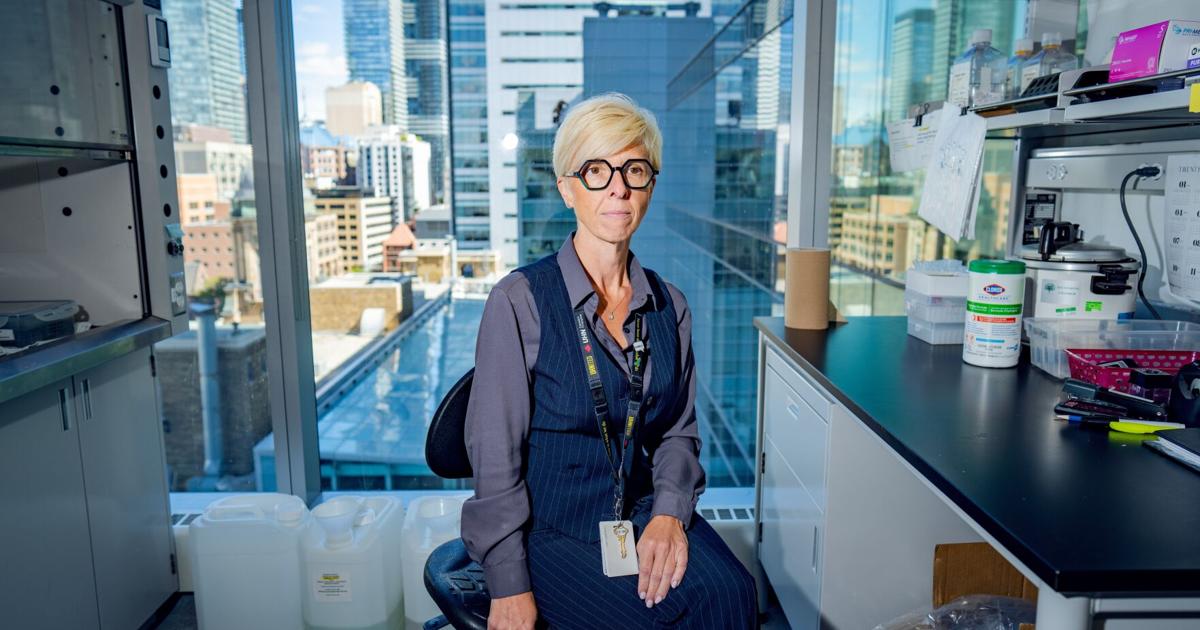
The night before Christine Bruce went under the knife, she lay in bed, checking off boxes in her mind.
asserted
she → go → mind
She had accounted for her ride home from Toronto General Hospital, the various medications she would need as she recovered from a partial liver donation, and any arrangements in case the surgery went awry.
asserted
surgery → account → donation
As she fell asleep in her Burlington home, she felt a sense of assurance much like she had the year before.
asserted
she → fall → assurance
It wasn’t the first time she was donating an organ.
asserted
she → donate → organ
“I believe if you can do something for somebody else, then you should,” she said.
asserted
she → believe → somebody
“I’m a giver and I’m a donator of whatever it is that I have to offer.
asserted
I → ’m → that
I wish I had a few more kidneys to give away,” she laughed.
asserted
she → wish → kidneys
Of the roughly 3,500 living kidney and liver transplants performed at the University Health Network’s Ajmera Transplant Centre since 2000, Bruce is one of only about two dozen people who have donated both organs in separate surgeries since 2015.
asserted
who → live → 2015
She talked about her experience as hundreds of people in Ontario wait for a kidney or liver transplant, while doctors and advocates look for ways to close the gap between the number of people who need organs and the number available.
asserted
who → talk → organs
As ISHLT comes to Toronto, decades of innovation in treating cardiac and pulmonary conditions
A new study from UHN, published in Transplant International, found no complications across the 48 surgeries, suggesting that sequential living donation can produce reassuring short-term outcomes in carefully selected donors.
asserted
donation → come → donors
Like Bruce, half of the donors gave a part of themselves to a stranger they would never meet, while three directed both donations to someone they knew personally.
asserted
they → give → someone
As a health-care professional working in laboratory medicine, Bruce, who’s in her fifties, had spent years thinking about organ donation from the other side of the equation.
asserted
who → work → equation
In 2022, Bruce was working as the senior director of laboratory medicine at UHN when an email landed in her inbox commemorating Living Organ Donor Week.
asserted
email → work → Week
She downloaded the application, printed it out, and let it sit on her desk for six months to ensure she wasn’t making a rash decision.
asserted
she → download → decision
When a reminder alerted her that half a year had gone by, she faxed in her application, her mind unchanged.
asserted
mind → alert → application
By the spring of 2024, she had completed multiple rounds of screening and was preparing to join a donation chain facilitated by Canadian Blood Services, where her kidney would set off a sequence of transplants involving other donors and recipients.
asserted
kidney → complete → donors
The surgery, she said, was not nearly as daunting as she had imagined.
asserted
she → say → ?
“I like the fact that I don’t know who it was.
asserted
it → like → fact
There is something gratifying in helping someone without having a familial or platonic connection,” she said.
asserted
she → be → connection
“I didn’t need to know who they were for it to be valuable.”
asserted
it → need → ?
What motivates anonymous donors
For some donors, that feeling is enough to make them consider doing it again, says Dr. Nazia Selzner, director of UHN’s Centre for Living Organ Donation and a co-author of the study.
asserted
Selzner → motivate → study
Anonymous donors, she said, often describe a desire to help someone in need, particularly when they feel fortunate to be in good health.
asserted
they → say → health
“The motivation for the anonymous donor is always around altruism,” she explained.
asserted
she → explain → altruism
“These people feel they have the opportunity to pay something forward to society.
asserted
they → feel → society
It’s just part of their thinking.”
asserted
It → ’ → thinking
After Bruce donated a kidney, Living Organ Donor Week came around again, and she found herself wondering if she could donate a second time.
uncertain
she → donate → kidney
When Bruce first applied to donate, she had selected both kidney and liver options, but just happened to be selected for the kidney chain.
asserted
she → apply → chain
She contacted the centre, repeated the process, and donated part of her liver to a child.
asserted
She → contact → child
UHN has performed close to 1,500 living liver donor surgeries since starting its program in 2000, Selzner said, and more than 2,000 living kidney donor surgeries.
asserted
Selzner → perform → 2000
But, as of Sept. 18, nearly 1,200 people were waiting for a kidney transplant and another 300 were waiting for a liver in Ontario, according to data from the Trillium Gift of Life Network.
uncertain
300 → wait → Network
For people waiting for a liver, the situation is particularly stark because they cannot be sustained indefinitely by a machine that performs the organ’s essential work.
asserted
that → wait → work
“Dying on the waiting list for transplant is a reality,” Selzner said.
asserted
Selzner → die → transplant
At UHN, she said, about 25 per cent of people on the liver transplant waiting list die before receiving a transplant.
asserted
cent → say → transplant
“The more we are able to close the gap by having donors, living donors that are able to donate, the more we can reduce the mortality,” Selzner said, “We are, of course, hoping to bring it down to zero.
asserted
We → close → zero
A similar gap exists on the kidney side, where thousands of Canadians remain dependent on dialysis while they wait for a transplant.
asserted
they → exist → transplant
Living kidney donors reduce the wait
Craig Lindsay, director of programs with the Ontario branch of the Kidney Foundation of Canada, knows what that wait feels like.
asserted
wait → live → what
Twelve years ago, he received a kidney-pancreas transplant.
asserted
he → receive → transplant
“The waiting is hard,” he said.
asserted
he → say → ?
“The quicker they get that kidney in, the quicker your body can start rebuilding health and you avoid those years on dialysis.”
asserted
you → get → dialysis
In Ontario, Lindsay said, the average wait can be more than four years, while having a living donor can mean receiving a kidney within a year.
asserted
having → say → year
…and 12 more, not listed.
 The Aporia