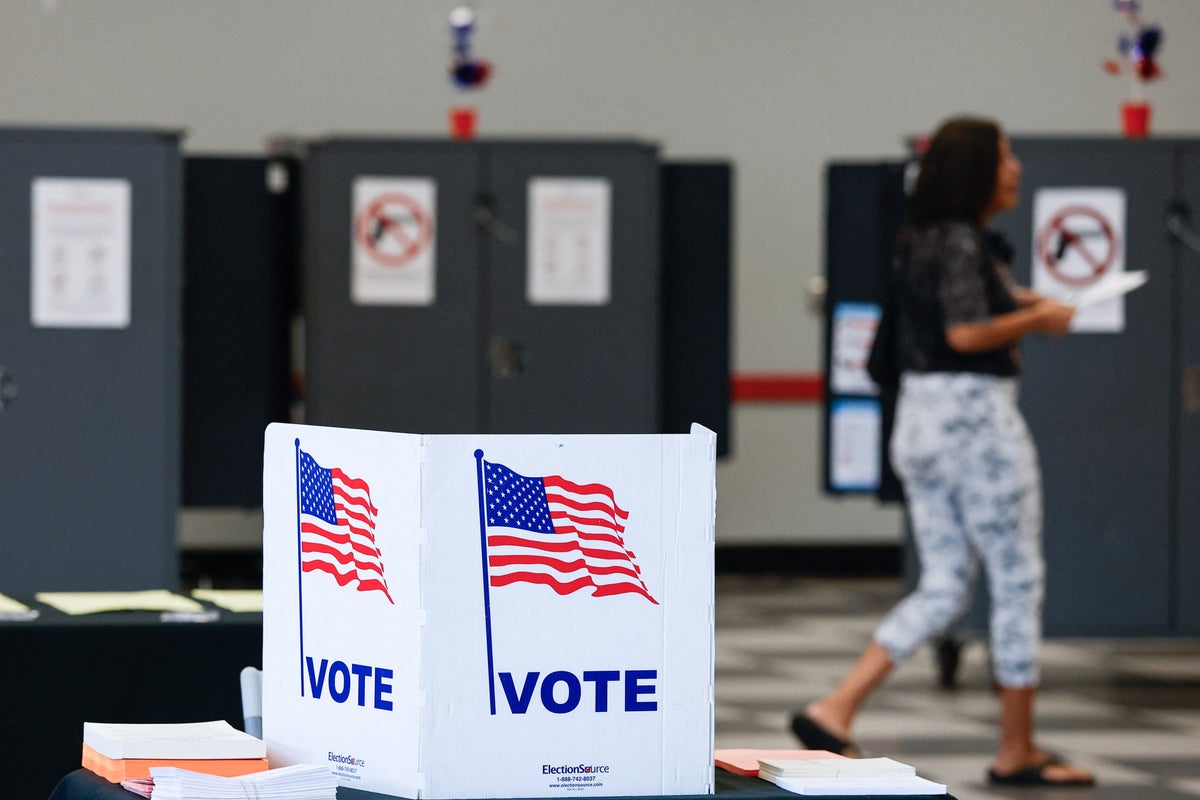
Photo via Toronto Star

Takeaways: What a new AP-KFF survey reveals about rural American voters

Read the original at Toronto Star ↗
Cite

Swenson, A., Tribble, S. J., & Sanders, L. (2026, September 23). Takeaways: What a new AP-KFF survey reveals about rural American voters. Toronto Star. https://www.thestar.com/news/world/united-states/takeaways-what-a-new-ap-kff-survey-reveals-about-rural-american-voters/article_273274e2-7604-5048-909a-b4991b579b12.html

Dated when The Aporia collected the article, usually within hours of publication. Check the original for its exact date and byline.

Toronto Star · collected 2026-09-23 · by Ali Swenson, Sarah Jane Tribble, Linley Sanders

Quick Summary

A new survey by the Associated Press and KFF indicates that half of rural American voters feel the economy is worse since President Trump returned to office, highlighting economic concerns among a traditionally Republican demographic. Key issues for these voters include rising costs of groceries, gas, and healthcare; 60% disapprove of Trump's handling of the economy while only 40% approve. Despite this, most rural Republicans still support Trump, with many believing he has improved the national economy, although fewer think it benefits their local communities.
Written by AI on 2026-09-23, from this article's own text only (the story summary below draws on all the coverage).

AI analysis

Story summary

Economic frustration is growing among rural Americans, with half saying the economy has worsened since President Donald Trump returned to office, according to a new poll by The Associated Press and KFF of over 2,000 rural registered voters. These rural voters are more likely than overall voters to be concerned about affording groceries, gasoline, and healthcare. While about half of rural voters still approve of Trump's performance, only 40 percent approve of his handling of the economy. This dissatisfaction could pose challenges for Republicans in the upcoming midterms, as 37% of rural voters say they do not feel respected by either major party.

Written for “Rural Voter Support Slipping” on 2026-11-03, grounded in this article and the 1 other(s) covering the same event.

Story

📰 Rural Voter Support Slipping
Politics · 2 article(s) covering the same event. See how they differ ↓

Compared with similar articles

This article reads leans left and hedges 14% of its claims. Each row says how that neighbour differs.
The Independent
⚖️ Leans left Hedges 3 of 29 claims Outlet record 59/100
The Guardian
⚖️ Leans left Hedges 4 of 31 claims Outlet record 66/100
“The articles discuss different voter groups and their attitudes towards President Trump's policies, with Article A focusing on Hispanic voters' discontent and Article B on rural American voters' economic concerns.”
How this article was measured signals, leaning charts, publisher record, byline, topics and claims

Signals How these are calculated →

Claims extracted
36
sentences that state something as happening or true
Uncertain
14%
5 of 36 hedged ("reportedly", "may", "according to")
Leaning
Leans left
of the writing, not the subject · beta estimate
Publisher signals
64/100
Toronto Star's corrections and hedging, across everything collected from it. Not a measure of accuracy.
Outlets on this story
2
Politics
Same framing elsewhere
1
articles that frame the event the way this one does
Analyzed 2026-09-23 · how these are computed

How this is being covered How these are calculated →

Article leaning vs. publisher reliability
Source leaning vs. consistency

Publisher

Toronto Star · 11297 article(s) · 28 correction(s) detected
Running correction rate · 28 correction(s)
2026-10-26
Correction
2026-10-24
Correction
2026-10-07
Correction
2026-09-24
Correction

Who wrote this

Ali Swenson
15 article(s) here · 1 carrying a prediction
🔮 Trump has spent months trying to use the power of the presidency to put his thumb on the scale of this year’s elections, which will determine whether his party keeps control of Congress.
🔮 Election monitors deployed by the federal government will be drawn from the Federal Bureau of Prisons, the Bureau of Alcohol, Tobacco, Firearms and Explosives (ATF) and the Drug Enforcement Administration (DEA).
🔮 WASHINGTON (AP) — Daemien Williams used to trust U.S. election results, but not anymore.
🔮 With early voting already underway, a question worrying some voters is what role — if any — immigration enforcement officers might have at polling places through Election Day.
🔮 The actual amount spent could be significantly more, depending on whether networks classified the ads as political.
🔮 “It would not have been something that I would have done.
🔮 The center’s board voted to close the venue indefinitely after the incident, which President Donald Trump said could have claimed “innocent lives” had it been open at the time.
🔮 The actual amount spent could be significantly more, depending on whether networks classified the ad as a political ad.
🔮 He said since the program is voluntary and DHS itself has admitted the data is not perfect, “states may find this to be a useful tool used along with other tools to keep their lists up-to-date.”
🔮 Becker noted that since participation is optional and DHS acknowledges its data is imperfect, "states may find this to be a useful tool used along with other tools to keep their lists up-to-date."
Also by Ali Swenson
Nothing else under this byline is closely related to this article, so these are simply their most recent.
All 15 articles by Ali Swenson →
Sarah Jane Tribble
2 article(s) here · 1 carrying a prediction
🔮 While rural voters seem unlikely to support Democrats on a large scale, Trump and the Republican Party could face challenges with them in November.
🔮 That could become significant if frustrated Republican voters choose to stay home in November rather than switch their support to Democrats.
Also by Sarah Jane Tribble
Nothing else under this byline is closely related to this article, so these are simply their most recent.
Linley Sanders
8 article(s) here · 1 carrying a prediction
🔮 An initial set of results from the survey will be first available at 5 p.m. Eastern time Tuesday, with additional state-level and national findings that will be published throughout election night.
2026-10-28 · assertive framing · What to know about The AP Voter Poll
🔮 WASHINGTON (AP) — Daemien Williams used to trust U.S. election results, but not anymore.
🔮 “I would like policies that look in the best interest of the American public,” said Takahashi, who is Japanese American.
🔮 That undercurrent of cynicism will be a challenge for Democrats and the Republicans, no matter which party controls Congress.
🔮 The dismal numbers come just weeks before midterm elections that will determine whether Republicans maintain control of Congress and while Trump is hitting the campaign trail with an aggressive schedule of rallies.
🔮 Roughly 2 in 10 DMV residents say there were times in the past year when they couldn’t pay for healthcare, according to the survey.
🔮 While rural voters seem unlikely to support Democrats on a large scale, Trump and the Republican Party could face challenges with them in November.
🔮 That could become significant if frustrated Republican voters choose to stay home in November rather than switch their support to Democrats.
Also by Linley Sanders
What to know about The AP Voter Poll
2026-10-28 · Toronto Star
Nothing else under this byline is closely related to this article, so these are simply their most recent.
All 8 articles by Linley Sanders →

Topics

Democrats Republican Republicans U.S. WASHINGTON

Subjects

Trump PERSON · 13× Republican NORP · 5× Democrats NORP · 3× Republicans NORP · 3× U.S. GPE · 3× American NORP · 1× Donald Trump PERSON · 1× KFF ORG · 1× The Associated Press ORG · 1× WASHINGTON GPE · 1×

Narrative

Many rural voters don’t feel respected by Trump or the parties Trump’s approval among rural voters, while higher than among U.S. adults overall, is down slightly, from 56% approval in a similar question asked in a 2017 KFF-Washington Post survey. Many rural voters also don’t think the major parties or the president respect people like them. About half, 48%, of rural voters say the GOP respects people like them “a lot” or “some,” while 45% of rural voters say this about Trump and 37% say this about the Democratic Party.
framing: assertive · carried by 1 article(s) · first seen 2026-09-23
🔮 While rural voters seem unlikely to support Democrats on a large scale, Trump and the Republican Party could face challenges with them in November.
2026-09-23 · Toronto Star
Takeaways: What a new AP-KFF survey reveals about rural American voters · assertive framing

Claims (36 extracted, 5 hedged)

A new poll from The Associated Press in partnership with KFF finds that about half of rural American voters believe the economy is worse off now than when President Donald Trump returned to office, pointing to economic frustration among a key group that has backed Trump and other Republicans in recent elections. asserted
that → find → elections
The poll of more than 2,000 rural registered voters found that costs of groceries, gas and healthcare are among the top pain points for rural voters. asserted
costs → register → voters
They are also more likely than voters overall to say they are worried about being able to afford groceries or gas. asserted
they → say → groceries
Rural Americans skew Republican and historically have been an instrumental voting bloc for Trump. asserted
Americans → skew → Trump
The findings suggest that many rural voters haven’t turned against Trump but that they also largely don’t think he has delivered on his economic promises. asserted
he → suggest → promises
While rural voters seem unlikely to support Democrats on a large scale, Trump and the Republican Party could face challenges with them in November. uncertain
Trump → seem → November
Most rural voters disapprove of Trump on the economy As the election approaches, only about 4 in 10 rural voters surveyed approve of Trump’s performance on the economy. asserted
voters → disapprove → economy
Roughly 6 in 10 disapprove. asserted
10 → disapprove → ?
They rate him similarly on his handling of the Iran war, an entanglement that has proved expensive for the U.S. and increased oil and gas prices. asserted
that → rate → U.S.
And rural voters rank pocketbook concerns and fraud in government programs higher among the things they want to hear about from politicians than other perennial issues, such as gun policy and abortion policy. asserted
they → rank → policy
In the poll, about three-quarters of rural voters rated the cost of living in their communities as “only fair” or “poor.” asserted
quarters → rat → communities
Rural Americans, who have consistently lower wages than those who live in suburban and metro areas, have been hurting economically for decades, according to Tim Slack, a professor of sociology at Louisiana State University and co-author of the book “Rural and Small-Town America.” uncertain
who → have → book
“Many folks are connecting the cost-of-living crisis to many of the Trump administration’s policy choices: the war in Iran, tariffs, trade wars,” he said. asserted
he → connect → Iran
“None of those things are going to bring down prices at the pump or the local Walmart.” asserted
None → go → pump
Rural Republicans have a rosier view of Trump At the same time, about half of rural voters approve of Trump’s job performance, more than among U.S. adults overall in separate AP-NORC polling. asserted
half → have → polling
Rural Republicans do have a brighter economic perspective than rural Democrats or independents, particularly about the U.S. as a whole, according to the survey. uncertain
Republicans → have → survey
About 6 in 10 rural Republican voters say Trump has improved the national economy, compared with roughly 2 in 10 independents and fewer than 1 in 10 Democrats. asserted
Trump → say → independents
But only 45% of rural Republican voters say Trump has made their local economies better off. asserted
economies → say → voters
About 1 in 4 say there are fewer good-paying jobs where they live than five years ago. asserted
they → say → ?
Trump’s healthcare policies go unnoticed asserted
policies → go → ?
The AP-KFF poll found that rural voters overall don’t perceive much positive impact from the Trump administration’s healthcare policies even as they have been a top priority for Republican leaders, who have promoted efforts to lower drug costs and touted a $50 billion rural health program. asserted
who → find → program
Only 17% of the voters said the Trump administration’s healthcare policies have had a “positive impact” on their healthcare costs, while 41% said they’ve had “no impact” and another 41% said they’ve had a “negative impact.” asserted
they → say → impact
A year after the passage of the Rural Health Transformation Program, more than 8 in 10 rural voters said they’d heard either “a little” or “nothing at all” about the health fund. asserted
they → say → fund
About 6 in 10 said they had heard nothing, according to the survey. uncertain
they → say → survey
Rural Republican voters still trust the GOP more When asked which political party they trusted to do a better job of handling issues such as the cost of healthcare or the cost of living, rural voters tended to side with their own party. asserted
voters → trust → party
The finding signals that Democratic candidates are more likely to benefit from rural Republicans staying home this November than from them voting across party lines in large numbers. asserted
them → signal → numbers
Rural Republicans are more ambivalent about their party’s ability to handle key healthcare issues, compared with Democrats. asserted
Republicans → handle → Democrats
About 8 in 10 Democratic voters say they trust the Democrats to address healthcare costs, while closer to 6 in 10 Republican voters say the same of the Republicans. asserted
voters → say → Republicans
Many rural voters don’t feel respected by Trump or the parties Trump’s approval among rural voters, while higher than among U.S. adults overall, is down slightly, from 56% approval in a similar question asked in a 2017 KFF-Washington Post survey. Many rural voters also don’t think the major parties or the president respect people like them. About half, 48%, of rural voters say the GOP respects people like them “a lot” or “some,” while 45% of rural voters say this about Trump and 37% say this about the Democratic Party. asserted
% → feel → Party
This year’s competitive elections feature key Senate races in states including Ohio, Michigan and Maine, all of which have large rural populations. asserted
all → feature → populations
In close races, Democrats may have a chance to “show up and give a message that rural people might find appealing,” said Nicholas Jacobs, a political scientist at Colby College and co-author of the book “The Rural Voter. uncertain
Jacobs → have → book
“But it’s nothing more and it’s nothing less than that — an opportunity,” Jacobs said. asserted
Jacobs → ’ → that
“And time and time again, Democrats have shown a certain proclivity for not seizing that opportunity.” asserted
Democrats → show → opportunity
_ The poll of 2,241 U.S. adults registered to vote in rural areas of the country was conducted Aug. 12-24, 2026, using a sample drawn from the probability-based SSRS Opinion Panel. asserted
poll → register → Panel
In collaboration with the AP, KFF researchers worked to design the survey sample and questionnaire, analyze and report findings. asserted
researchers → work → findings
KFF Health News is a national newsroom that produces in-depth journalism about health issues and is one of the core operating programs at KFF — the independent source for health policy research, polling and journalism. asserted
that → produce → research

💬Give feedback
🕘History 🎫Support