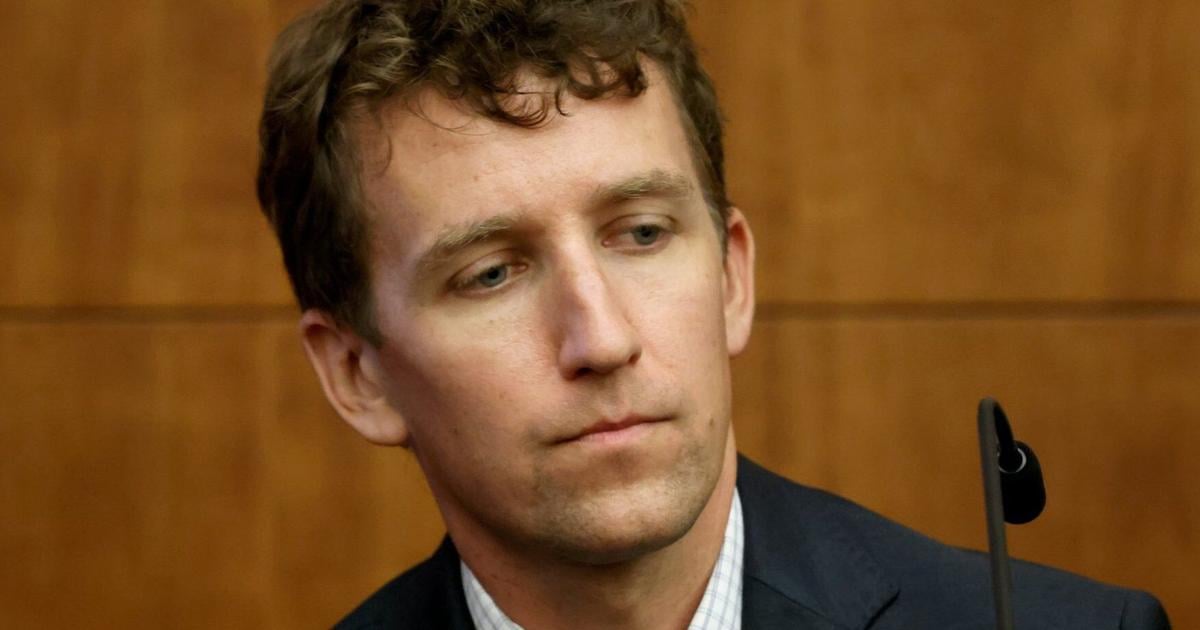
Photo via New York Post

Patrick Clancy describes ‘miracle’ treatment that ‘helped the most’ with trauma of losing kids

Read the original at New York Post ↗
Cite

Stern, C. (2026, September 23). Patrick Clancy describes ‘miracle’ treatment that ‘helped the most’ with trauma of losing kids. New York Post. https://nypost.com/2026/09/23/health/what-is-emdr-patrick-clancy-said-miracle-treatment-helped-him-face-trauma-of-losing-kids/

Dated when The Aporia collected the article, usually within hours of publication. Check the original for its exact date and byline.

New York Post · collected 2026-09-23 · by Carly Stern

Quick Summary

Patrick Clancy, 36, who lost his three children in January 2023 when his ex-wife went on trial for their alleged murder, speaks about the therapy that helped him cope with trauma. In an interview with "60 Minutes," he describes EMDR (Eye Movement Desensitization and Reprocessing) as a "miracle" treatment that reduced nightmares and improved his ability to process painful memories. Clancy explains how EMDR involves bilateral stimulation techniques, such as eye movements guided by a therapist, which help patients confront traumatic events directly.
Written by AI on 2026-09-23, from this article's own text only (the story summary below draws on all the coverage).

AI analysis

Story summary

Patrick Clancy, former delivery nurse from Duxbury, Mass., gave his first interview since his ex-wife, Lindsay Clancy, was declared mistrial for killing their three children – Cora (5), Dawson (3), and Callan (8 months) – in January 2023. In the interview with CBS's Ross Douthat, Patrick revealed he speaks to his deceased kids "all the time," asking them for help. The mistrial resulted from a hung jury after an 11-1 deadlock.

Lindsay Clancy’s defense team argued she was suffering from postpartum psychosis and could not be held criminally responsible. Her ex-husband, who remarried fertility doctor Rachel Danis in April, now lives in New York City and faces ongoing attacks on social media accusing him of involvement in the murders.

Patrick and his new wife will appear together on 60 Minutes Sunday, discussing grief, mental health, and addressing conspiracy theories that have circulated online.

Written for “Patrick Clancy 60 Minutes Interview” on 2026-11-02, grounded in this article and the 42 other(s) covering the same event.

Story

📰 Patrick Clancy 60 Minutes Interview
Entertainment · 43 article(s) covering the same event. Compare every outlet's account →

Compared with similar articles

This article reads unscored and hedges 8% of its claims. Each row says how that neighbour differs.
Toronto Star
Hedges 1 of 3 claims Outlet record 64/100
CBC News
Hedges 1 of 22 claims Outlet record 60/100
Daily Mail
Hedges 9 of 37 claims Outlet record 68/100
“The articles discuss different time periods and aspects of Patrick Clancy's life, with Article A focusing on a recent therapy session to cope with trauma, while Article B refers to past Reddit posts about his wife's mental health issues.”
NBC News
Hedges 7 of 65 claims Outlet record 60/100
“The articles describe different segments of Patrick Clancy's interview on '60 Minutes', but each focuses on a distinct aspect: grief and forgiveness in Article A, and his use of EMDR therapy to cope with trauma in Article B.”
New York Post
Hedges 4 of 7 claims Outlet record 66/100
“The articles discuss different aspects of Patrick Clancy's experience and interviews but describe separate events within his ongoing situation.”
CBS News
Hedges 5 of 62 claims Outlet record 66/100
“The articles describe different parts of Patrick Clancy's interview on 60 Minutes, but they do not focus on the same specific incident or moment.”
The Independent
Hedges 2 of 19 claims Outlet record 59/100
New York Post
Hedges 1 of 13 claims Outlet record 66/100
“The articles describe different aspects of Patrick Clancy's interview on '60 Minutes', one focusing on his son dying and the other on his coping mechanism for trauma.”
Fox News
Hedges 10 of 62 claims Outlet record 69/100
“The articles describe different parts of Patrick Clancy's interview on '60 Minutes', not the same specific moment or occurrence.”
Daily Mail
Hedges 1 of 56 claims Outlet record 68/100
“The articles describe different aspects of Patrick Clancy's life and interviews related to his case, but they do not report on the same specific incident or occurrence.”
How this article was measured signals, leaning charts, publisher record, byline, topics and claims

Signals How these are calculated →

Claims extracted
38
sentences that state something as happening or true
Uncertain
8%
3 of 38 hedged ("reportedly", "may", "according to")
Leaning
not political
takes no side on a contested political question
Publisher signals
66/100
New York Post's corrections and hedging, across everything collected from it. Not a measure of accuracy.
Outlets on this story
43
Entertainment
Same framing elsewhere
1
articles that frame the event the way this one does
Analyzed 2026-09-23 · how these are computed

How this is being covered How these are calculated →

Article leaning vs. publisher reliability
Source leaning vs. consistency

Publisher

New York Post · 16008 article(s) · 35 correction(s) detected
Running correction rate · 35 correction(s)

Who wrote this

Carly Stern
2 article(s) here · 1 carrying a prediction
🔮 This often involves moving one’s eyes to follow a therapist’s fingers or, in teletherapy, might involve watching an icon move back and forth on a screen.
🔮 Bonjil, a new “neurosensory” skincare line, says listening to soothing music while applying serums and balms will help the products do their jobs.
Also by Carly Stern
Nothing else under this byline is closely related to this article, so these are simply their most recent.

Topics

CBS Duxbury Massachusetts the EMDR Institute

Subjects

Clancy PERSON · 2× CBS ORG · 1× Callan PERSON · 1× Cora PERSON · 1× Dawson PERSON · 1× Duxbury GPE · 1× Lindsay Clancy PERSON · 1× Massachusetts GPE · 1× Patrick Clancy PERSON · 1× Ross Douthat PERSON · 1×

Narrative

The phases are: Selecting a memory to process Learning how EMDR works and developing coping and relaxing skills Identifying the images, beliefs, emotions and sensations associated with the memory Easing the distress by following the therapist’s fingers as they move back and forth, listening to alternating tones through headphones or tapping on the body Replacing the negative belief tied to the memory with a positive one Making sure there isn’t lingering physical tension or discomfort related to the memory Closing the session to allow the patient to return to a calm, stable state Evaluating their progress and adjusting if necessary How does EMDR therapy work?
framing: assertive · carried by 1 article(s) · first seen 2026-09-23
🔮 This often involves moving one’s eyes to follow a therapist’s fingers or, in teletherapy, might involve watching an icon move back and forth on a screen.

Claims (38 extracted, 3 hedged)

Patrick Clancy says a therapy treatment he used to cope with the trauma of losing his children worked “like a miracle.” asserted
he → say → miracle
Speaking in extended clips from the latest episode of “60 Minutes,” the 36-year-old said that EMDR, a trauma-focused psychotherapy, helped him face what he was dealing with “head on.” “It’s unpleasant but they get you used to dealing with that,” Clancy said. asserted
Clancy → speak → that
“And, eventually, you’re better at processing it … asserted
you → ’re → it
After I did it — all of those sessions — the waking up screaming, the horrible dreams, they mostly stopped. asserted
they → do → sessions
I mean, it was like a miracle.” asserted
it → mean → miracle
Clancy spoke out for the first time since his ex-wife, Lindsay Clancy, went on trial for allegedly killing their three young children — Cora, 5; Dawson, 3; and 8-month-old Callan — at their Duxbury, Massachusetts, home on Jan. 24, 2023. He said that the “traumatic” memories of the event can be “overwhelming.” uncertain
memories → speak → event
“I think the thing that helped the most was EMDR,” he told CBS correspondent Ross Douthat. asserted
he → think → Douthat
“It’s a little unusual. asserted
It → ’ → ?
They put you right back in that place that you’ve been trying to avoid for years and you face it head-on.” asserted
you → put → it
Here’s everything to know about EMDR. asserted
everything → ’ → EMDR
EMDR stands for eye movement desensitization and reprocessing. asserted
EMDR → stand → desensitization
It is a type of psychotherapy that uses bilateral stimulation — typically eye movements, going back and forth — to help a patient heal from psychological trauma. asserted
patient → use → trauma
According to the EMDR Institute, when EMDR therapy is successful, the distressing events and trauma are “transformed on an emotional level.” uncertain
events → accord → level
“For instance, a rape victim shifts from feeling horror and self-disgust to holding the firm belief that, ‘I survived it and I am strong,'” they explain. asserted
they → shift → it
What happens in EMDR therapy sessions? asserted
What → happen → sessions
It’s usually an eight-phase process. asserted
It → ’ → ?
The phases are: Selecting a memory to process Learning how EMDR works and developing coping and relaxing skills Identifying the images, beliefs, emotions and sensations associated with the memory Easing the distress by following the therapist’s fingers as they move back and forth, listening to alternating tones through headphones or tapping on the body Replacing the negative belief tied to the memory with a positive one Making sure there isn’t lingering physical tension or discomfort related to the memory Closing the session to allow the patient to return to a calm, stable state Evaluating their progress and adjusting if necessary How does EMDR therapy work? asserted
therapy → select → progress
EMDR patients focus on a traumatic or distressing memory while engaging in bilateral stimulation — or something that alternates from side to side. asserted
that → focus → side
This often involves moving one’s eyes to follow a therapist’s fingers or, in teletherapy, might involve watching an icon move back and forth on a screen. uncertain
icon → involve → screen
Bilateral stimulation can also be auditory, meaning listing to sounds that switch between the left and right ears. asserted
that → mean → ears
This can help patients feel less distress in response to those memories. asserted
patients → help → memories
There are a few theories as to why this works, though scientists aren’t completely sure. asserted
scientists → be → ?
One is that those back-and-forth movements help patients focus on traumatic memories without become emotionally overwhelmed by them. asserted
patients → help → them
Their brains are then able to change how the memories are stored, making them feel like less of an immediate threat. asserted
them → change → threat
Another theory is that the bilateral stimulation impacts working memory, making the trauma less vivid or emotionally intense. asserted
trauma → impact → memory
It’s most often used to treat Post-Traumatic Stress Disorder (PTSD). asserted
It → use → Disorder
Mental health practitioners also use it to treat anxiety, depression, panic disorders and addiction. asserted
practitioners → use → anxiety
How long does EMDR take to work? The length of treatment time varies by patient. asserted
length → take → patient
Some can see improvement after just a few sessions, while others need months or years. asserted
others → see → months
Several major organizations recommend EMDR, including the US Department of Veterans Affairs and Department of Defense, the American Psychological Association and the World Health Organization. asserted
organizations → recommend → Defense
There is also scientific research that supports its benefits. asserted
that → be → benefits
A 2025 systematic review of 17 studies found evidence that EMDR can improve PTSD symptoms, while a 2023 meta-analysis found that EMDR significantly reduces PTSD symptoms. asserted
EMDR → find → symptoms
What celebrities have done EMDR? asserted
celebrities → do → EMDR
Prince Harry opened up about using EMDR in the Apple TV+ documentary series “The Me You Can’t See,” even demonstrating on camera. “EMDR and talk therapy has helped me immensely, and now I can walk through certain streets without being retraumatized,” she said. asserted
she → open → streets
“I encourage you to get help if you need it and I want you to know, it gets better.” asserted
it → encourage → it
Miley Cyrus called it “so helpful” in an interview with British Vogue in 2023: “Essentially, you delete the physical sensations associated with these painful memories. asserted
you → call → memories
The EMDR really helped me.” asserted
EMDR → help → me
Other stars who have spoken out about the therapy include Sandra Bullock, Jameela Jamil, Evan Rachel Wood, Whitney Cummings and Paris Jackson. asserted
who → speak → Bullock

💬Give feedback
🕘History 🎫Support