Photo via Semafor

The limitations of Africa's 'value addition' mantra

Read the original at Semafor ↗
Cite

Adegoke, Y. (2026, September 23). The limitations of Africa's 'value addition' mantra. Semafor. https://www.semafor.com/article/09/23/2026/value-additions-limitations

Dated when The Aporia collected the article, usually within hours of publication. Check the original for its exact date and byline.

Semafor · collected 2026-09-23 · by Yinka Adegoke

Quick Summary

At Semafor’s The Next 3 Billion summit in New York, discussions focused on how African economies can build economic ecosystems around their natural resources before exporting them. This includes developing industries such as processing and manufacturing to create local jobs and foster sustainable growth. Nigeria’s trade minister emphasized the need for partnerships that ensure value chain development occurs within the country. However, there are challenges like requiring substantial infrastructure and expertise, and concerns about whether building factories will lead to genuinely competitive industries.
Written by AI on 2026-09-23, from this article's own text only (the story summary below draws on all the coverage).

AI analysis

Story summary

At Semafor's The Next 3 Billion summit in New York, discussions around Africa's natural resources shifted towards building local economic ecosystems. Instead of merely exporting raw materials, African countries are now focusing on processing and manufacturing those resources within their borders. This approach aims at fostering domestic job creation and infrastructure development.

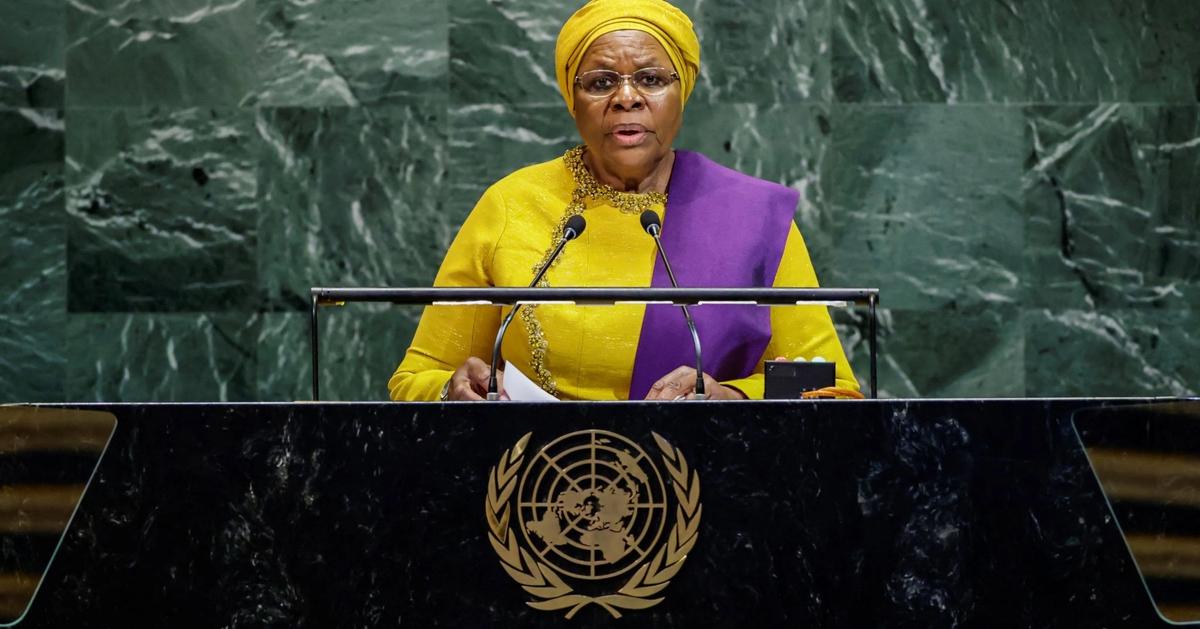
Nigeria’s Trade Minister, Jumoke Oduwole, emphasized the country’s goal during talks with US companies about critical minerals. She stated that Nigeria seeks partners who can ensure value chain development and job creation occur in Nigeria rather than abroad. Similarly, DR Congo's Prime Minister Judith Suminwa highlighted the importance of diversifying both their economy and foreign partnerships to add value locally.

Written for “Africa Value Addition Debate” on 2026-10-31, grounded in this article and the 0 other(s) covering the same event.

Story

📰 Africa Value Addition Debate
Economy/Business · 1 article(s) covering the same event.

Compared with similar articles

This article reads leans left and hedges 11% of its claims. Each row says how that neighbour differs.
Semafor
⚖️ Leans left Hedges 1 of 31 claims Outlet record 60/100
“While both articles mention discussions at Semafor events, they describe different aspects and specific messages from different individuals.”
Semafor
Hedges 1 of 22 claims Outlet record 60/100
“The articles discuss different aspects of Africa's economic strategies and foreign relations regarding natural resources, but they do not describe the same specific incident or meeting.”
How this article was measured signals, leaning charts, publisher record, byline, topics and claims

Signals How these are calculated →

Claims extracted
18
sentences that state something as happening or true
Uncertain
11%
2 of 18 hedged ("reportedly", "may", "according to")
Leaning
Leans left
of the writing, not the subject · beta estimate
Publisher signals
60/100
Semafor's corrections and hedging, across everything collected from it. Not a measure of accuracy.
Outlets on this story
1
Economy/Business
Same framing elsewhere
1
articles that frame the event the way this one does
Analyzed 2026-09-23 · how these are computed

How this is being covered How these are calculated →

Article leaning vs. publisher reliability
Source leaning vs. consistency

Publisher

Semafor · 1393 article(s) · 1 correction(s) detected
Running correction rate · 1 correction(s)

Who wrote this

Yinka Adegoke
9 article(s) here · 1 carrying a prediction
🔮 That might mean developing smaller models adapted to African languages, but also systems that let governments and businesses keep control of sensitive data and apply AI to local problems in energy, agriculture, and commerce.
2026-10-30 · mixed framing · Africa’s AI bet is on building, not catching up
🔮 “It would have been more helpful if we could hear, ‘what is not good enough?’”
🔮 But initiatives like Togo’s suggest the future of AI in Africa may hinge less on who builds the biggest model than on who makes the technology useful to the most people.
2026-10-09 · mixed framing · AI's uncertain opportunity for Africa
🔮 Asked whether local partnership would be mandatory for foreign investors, she told Semafor: “In fact, we are putting it in the law.”
2026-09-25 · assertive framing · Namibia eyes local mineral processing
🔮 Nigeria’s trade minister Jumoke Oduwole put the ambition plainly when discussing the country’s talks with US companies on critical minerals, saying her government is looking for “partners that will make sure that the value chain development [and] the jobs are created on Nigerian soil.”
2026-09-23 · assertive framing · The limitations of Africa's 'value addition' mantra
🔮 The African diaspora is often discussed as a vast reservoir of capital and goodwill waiting to be tapped for the continent’s development.
2026-09-18 · mixed framing · Africa’s diaspora needs a bigger role
🔮 The bigger opportunity may be in pooling African loans, say the report’s authors.
2026-09-12 · speculative framing · Africa's private credit market triples to $5.6B
🔮 The actual number may be higher, since there is no centralized data, but there’s still little evidence these programs have generated significant, sustained investment.
2026-09-04 · assertive framing · View / How to share history
Also by Yinka Adegoke
Nothing else under this byline is closely related to this article, so these are simply their most recent.
All 9 articles by Yinka Adegoke →

Topics

African New York Nigeria Semafor The Next 3 Billion summit

Subjects

African NORP · 3× China GPE · 1× DR Congo’s GPE · 1× Judith Suminwa PERSON · 1× Jumoke Oduwole PERSON · 1× New York GPE · 1× Nigeria GPE · 1× Nigerian NORP · 1× Semafor ORG · 1× Yinka PERSON · 1×

Narrative

Nigeria’s trade minister Jumoke Oduwole put the ambition plainly when discussing the country’s talks with US companies on critical minerals, saying her government is looking for “partners that will make sure that the value chain development [and] the jobs are created on Nigerian soil.”
framing: assertive · carried by 1 article(s) · first seen 2026-09-23
🔮 Nigeria’s trade minister Jumoke Oduwole put the ambition plainly when discussing the country’s talks with US companies on critical minerals, saying her government is looking for “partners that will make sure that the value chain development [and] the jobs are created on Nigerian soil.”
2026-09-23 · Semafor
The limitations of Africa's 'value addition' mantra · assertive framing

Claims (18 extracted, 2 hedged)

For decades, the debate around Africa’s natural resources has largely been over who gets the value from what the continent digs up and ships out. asserted
continent → get → what
But at Semafor’s The Next 3 Billion summit in New York this week, the recurring theme was more nuanced. asserted
theme → recur → York
The question was what economic ecosystems can African economies build around their resources before they leave the continent? asserted
they → build → continent
That means moving beyond extraction toward processing, manufacturing, infrastructure, energy, and the jobs that can come with them. asserted
that → mean → them
It also reflects a changing approach to foreign capital. asserted
It → reflect → capital
African governments increasingly want partnerships that build domestic capacity, rather than simply finance projects or provide an exit route for commodities. asserted
that → want → commodities
Nigeria’s trade minister Jumoke Oduwole put the ambition plainly when discussing the country’s talks with US companies on critical minerals, saying her government is looking for “partners that will make sure that the value chain development [and] the jobs are created on Nigerian soil.” asserted
development → put → soil
DR Congo’s Prime Minister Judith Suminwa described diversification of both the economy and its foreign partners as a priority, saying partnerships should “bring a plus” to the country. asserted
partnerships → describe → country
The implication is that the choice is not necessarily between China, the US, Europe or the Gulf, but whether competition among them can be used to secure more lasting economic capacity. asserted
competition → use → capacity
Countries that remain primarily exporters of raw materials are vulnerable to commodity cycles and capture relatively little of the value created farther down the supply chain. asserted
that → remain → chain
More refining, processing, power generation and transport infrastructure could create wider economic spillovers. uncertain
refining → create → spillovers
But there is also a danger in making “value addition” the answer to every development problem. asserted
addition → be → problem
Processing minerals or refining oil requires enormous amounts of reliable electricity, transport infrastructure, capital, and technical expertise. asserted
Processing → process → electricity
In some cases, importing finished products may still be cheaper than producing them locally. uncertain
importing → import → them
And building a factory does not automatically create a competitive industry. asserted
building → build → industry
The more interesting test, then, is whether Africa can turn its resource advantage into productive capacity without turning industrial policy into an expensive exercise in symbolism. asserted
Africa → turn → symbolism
The harder question is what African economies can build that will remain competitive after the foreign partners and commodity boom move on. asserted
partners → build → what
Notable - Dangote’s Lagos refinery is one of the starkest examples of the economic power of domestic production: It netted $1.8 billion in profit after tax in the first half of this year, more than its total revenue for 2025. asserted
It → net → 2025

💬Give feedback
🕘History 🎫Support