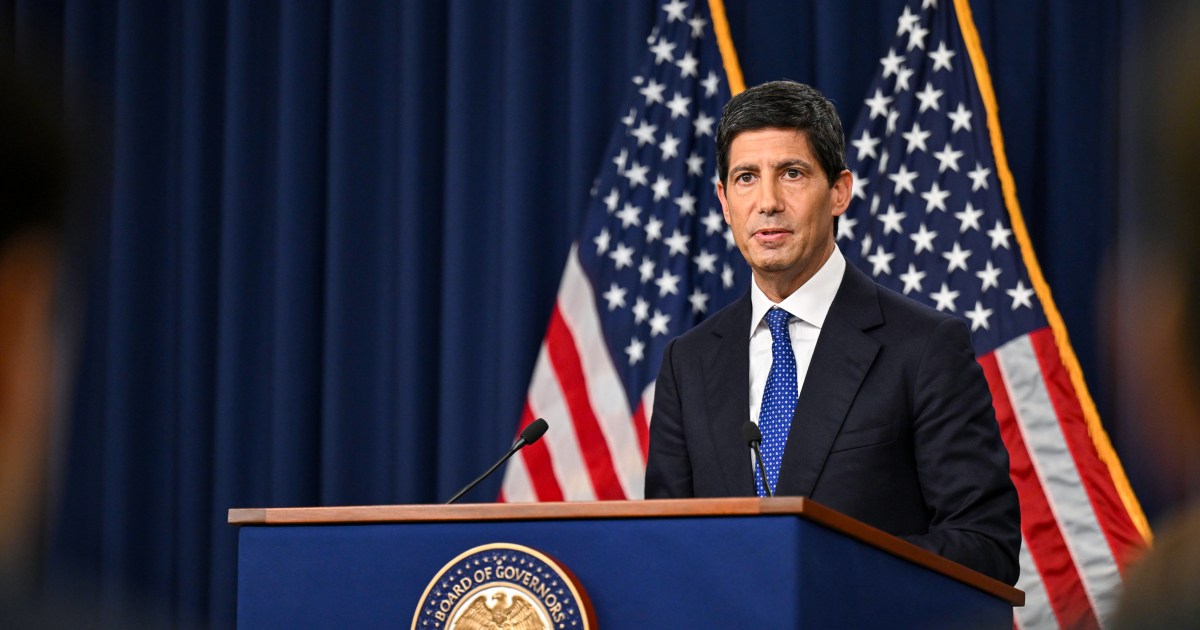
Photo via NBC News

Treasury yields surge to nearly 20-year high as oil jumps back above $100

Read the original at NBC News ↗
Cite

Kopack, S. (2026, September 23). Treasury yields surge to nearly 20-year high as oil jumps back above $100. NBC News. https://www.nbcnews.com/business/energy/treasury-yields-oil-stocks-rcna599398

Dated when The Aporia collected the article, usually within hours of publication. Check the original for its exact date and byline.

NBC News · collected 2026-09-23 · by Steve Kopack

Quick Summary

U.S. Treasury bond yields reached near 20-year highs on Wednesday, with the 10-year yield hitting 5.08% and the 30-year reaching 5.38%. This surge coincided with a rise in oil prices; Brent crude surpassed $101 per barrel while U.S. crude neared $92. The article attributes these financial market fluctuations to ongoing tensions related to Iran’s war involving critical energy supply routes like the Strait of Hormuz, as well as President Trump's comments about potentially banning diesel exports, which raised concerns among energy industry officials about higher fuel costs and economic damage.
Written by AI on 2026-09-23, from this article's own text only (the story summary below draws on all the coverage).

AI analysis

Story summary

On Wednesday, U.S. Treasury bond yields surged to levels not seen since 2007; the 10-year yield rose to as high as 5.08%, while the 30-year yield hit 5.38%. This increase was partly driven by rising oil prices, with European Brent crude reaching over $101 per barrel and U.S. crude jumping to nearly $92 per barrel. The spike in yields also reflects broader economic uncertainties, including worsening tensions between the United States and Iran and growing inflation pressures. Despite initial optimism from President Trump about talks with Iranian representatives at the UN General Assembly aimed at easing geopolitical tensions, a readout by U.S. special envoy Steve Witkoff indicated that significant progress had not been made. As a result of these factors, mortgage rates in the U.S. climbed above 7%, impacting consumer borrowing costs and government finances.

Written for “Treasury Yields Surge” on 2026-10-31, grounded in this article and the 3 other(s) covering the same event.

Story

📰 Treasury Yields Surge
Economy/Business · 4 article(s) covering the same event. Compare every outlet's account →

Compared with similar articles

This article reads unscored and hedges 15% of its claims. Each row says how that neighbour differs.
Global News
Hedges 5 of 38 claims Outlet record 63/100
Semafor
Hedges 1 of 5 claims Outlet record 60/100
Toronto Star
Hedges 4 of 47 claims Outlet record 64/100
“The articles discuss rising bond yields but cover different time periods and provide different levels of detail, indicating they are not reporting on a single identical incident.”
CBS News
Hedges 10 of 45 claims Outlet record 66/100
“While both articles discuss high Treasury yields and oil prices, they describe different days within a short period and provide distinct details about timing and fluctuations.”
Semafor
⚖️ Leans left Hedges 0 of 3 claims Outlet record 60/100
“The articles describe different time periods for Treasury yields surging, with Article A referring to Wednesday and Article B to Friday.”
How this article was measured signals, leaning charts, publisher record, byline, topics and claims

Signals How these are calculated →

Claims extracted
26
sentences that state something as happening or true
Uncertain
15%
4 of 26 hedged ("reportedly", "may", "according to")
Leaning
not political
takes no side on a contested political question
Publisher signals
60/100
NBC News's corrections and hedging, across everything collected from it. Not a measure of accuracy.
Outlets on this story
4
Economy/Business
Same framing elsewhere
1
articles that frame the event the way this one does
Analyzed 2026-09-23 · how these are computed

How this is being covered How these are calculated →

Article leaning vs. publisher reliability
Source leaning vs. consistency

Publisher

NBC News · 1944 article(s) · 1 correction(s) detected
Running correction rate · 1 correction(s)

Who wrote this

Steve Kopack
29 article(s) here · 1 carrying a prediction
🔮 “My plan will cut energy prices in half or more than that within 12 months of taking office,” the then-candidate said in September 2024, while adding that it would mean “gasoline below $2 a gallon.”
🔮 Amazon’s spending had already been set to double from 2025.
🔮 Google is still America’s fourth largest company by market value, and its shares are worth more than $3.4 trillion, all told. But the sharp drop in its stock price Thursday was the latest sign of a broader anxiety creeping through Wall Street over how long it will take big artificial intelligence companies to see consistent returns on their massive investments.
🔮 The Federal Reserve is meeting in Washington this week, when it will consider whether to raise interest rates in an effort to tamp down on inflation.
🔮 President Donald Trump, likewise, seemed to back off some of his angrier rhetoric over the weekend, when he told reporters a potential trade deal with Canada would be “settled pretty soon.”
🔮 It is expected to arrive on Tuesday, November 10.
🔮 When Federal Reserve Chairman Kevin Warsh strides onstage in Bangkok on Friday morning, it will be after 11 p.m. on Thursday in New York.
🔮 Friday’s number is the final inflation report before November’s pivotal midterm elections, where business owners and consumers have said they will be voting with their bottom line in mind.
🔮 And the final government inflation report before November’s pivotal midterm elections will likely reflect how much of a headache it’s become for businesses and consumers.
2026-10-13 · assertive framing · What’s fueling inflation? Fuel.
🔮 A move higher in futures markets typically signals that prices will climb in the coming days.
Also by Steve Kopack
Nothing else under this byline is closely related to this article, so these are simply their most recent.
All 29 articles by Steve Kopack →

Topics

Iran Iranian Treasury U.S. U.S. Treasury

Subjects

U.S. GPE · 6× Treasury ORG · 3× Iran GPE · 2× Trump PERSON · 2× Donald Trump PERSON · 1× Iranian NORP · 1× Steve Witkoff PERSON · 1× U.S. Treasury ORG · 1× U.S.-Iran GPE · 1× the U.N. General Assembly ORG · 1×

Narrative

“US business activity growth accelerated for a fourth successive month in September to reach the fastest rate for over five years,” S&P Global reported in its latest purchasing managers index reading. “Firms’ input costs have meanwhile jumped in September at the steepest rate for four years, with fuel and transport costs spiking higher thanks to the rise in oil prices seen during the month, which will add further to the upward pressure on selling prices and inflation in the coming months,” said Chris Williamson, chief business economist at S&P Global Market Intelligence.
framing: assertive · carried by 1 article(s) · first seen 2026-09-23
🔮 A readout of the U.S.-Iran discussions later Tuesday from U.S. special envoy Steve Witkoff on social media said that the talks were “lengthy,” but that there was still more work to be done, and the “mediators will continue their work.”

Claims (26 extracted, 4 hedged)

The yields on U.S. Treasury bonds surged Wednesday as oil prices also climbed. asserted
prices → surge → bonds
The 10-year Treasury yield, which heavily influences consumer borrowing rates such as mortgages, rose as high as 5.08%, its highest level since June 2007. asserted
which → influence → June
The 30-year Treasury yield hit 5.38%, also a level not seen since before the global financial crisis nearly two decades ago. asserted
yield → hit → crisis
European Brent oil rose to more than $101 per barrel, while U.S. crude oil jumped to nearly $92. asserted
oil → rise → 92
Rising oil prices often translate into rising bond yields due to the effect that higher energy costs can have on inflation. asserted
costs → rise → inflation
On Tuesday, President Donald Trump had said that U.S. officials were communicating with Iranian representatives at the U.N. General Assembly, driving down oil prices and giving some optimism to markets about potentially ending the Iran war, now in its seventh month. asserted
officials → say → month
But that hope quickly faded. asserted
hope → fade → ?
A readout of the U.S.-Iran discussions later Tuesday from U.S. special envoy Steve Witkoff on social media said that the talks were “lengthy,” but that there was still more work to be done, and the “mediators will continue their work.” asserted
mediators → say → work
Then, Wednesday morning, the U.K. maritime trade monitoring agency reported that a cargo vessel had been “stuck by an unknown projectile” in the Strait of Hormuz, a critical chokepoint for global energy supplies, which has remained at a near standstill for months as a result of the Iran war. asserted
which → report → war
Trump also unsettled energy prices when he said Tuesday that he supported a ban on U.S. exports of diesel fuel. asserted
he → unsettle → fuel
“I’ve said ‘Let’s not send out the diesel,’” Trump said to reporters at the U.N. asserted
Trump → say → U.N.
“I’ve called for it within my people. asserted
I → call → people
I’ve been talking about it.” asserted
I → talk → it
The energy industry on Wednesday warned that a ban on exports would spell even higher prices for Americans. asserted
ban → warn → Americans
“Removing U.S. diesel from the market could instead result in reduced refinery runs, global economic damage and even higher U.S. prices,” the American Petroleum Institute said. uncertain
Institute → remove → runs
Energy Secretary Chris Wright also said a ban would not help to bring down prices. asserted
ban → say → prices
“The blunt tool of banning diesel exports definitely doesn’t work,” he said Wednesday morning, according to Reuters. uncertain
he → ban → Reuters
Benchmark diesel futures surged as much 7% in European trade after Trump’s remarks. asserted
futures → surge → remarks
On top of rising energy prices, fresh economic data points also helped propel Treasury yields higher. asserted
points → rise → yields
“US business activity growth accelerated for a fourth successive month in September to reach the fastest rate for over five years,” S&P Global reported in its latest purchasing managers index reading. “Firms’ input costs have meanwhile jumped in September at the steepest rate for four years, with fuel and transport costs spiking higher thanks to the rise in oil prices seen during the month, which will add further to the upward pressure on selling prices and inflation in the coming months,” said Chris Williamson, chief business economist at S&P Global Market Intelligence. asserted
Williamson → accelerate → Intelligence
Stocks fell as a result of the moves in yields and oil prices. asserted
Stocks → fall → yields
As of midday, the Nasdaq Composite index had tumbled 1% and the S&P 500 had fallen 0.6%. asserted
S&P → tumble → midday
The Dow declined 270 points. asserted
Dow → decline → ?
The S&P utilities sector, which contains many companies involved in the widespread buildout of data centers, was the biggest sector loser Wednesday. asserted
which → contain → centers
Higher interest rates could potentially add billions of dollars of costs to building AI infrastructure. uncertain
rates → add → infrastructure
As a result of the rise in the 10-year yield, the average 30-year fixed rate mortgage currently sits at 7.17%, according to Mortgage News Daily. uncertain
mortgage → fix → Daily

💬Give feedback
🕘History 🎫Support