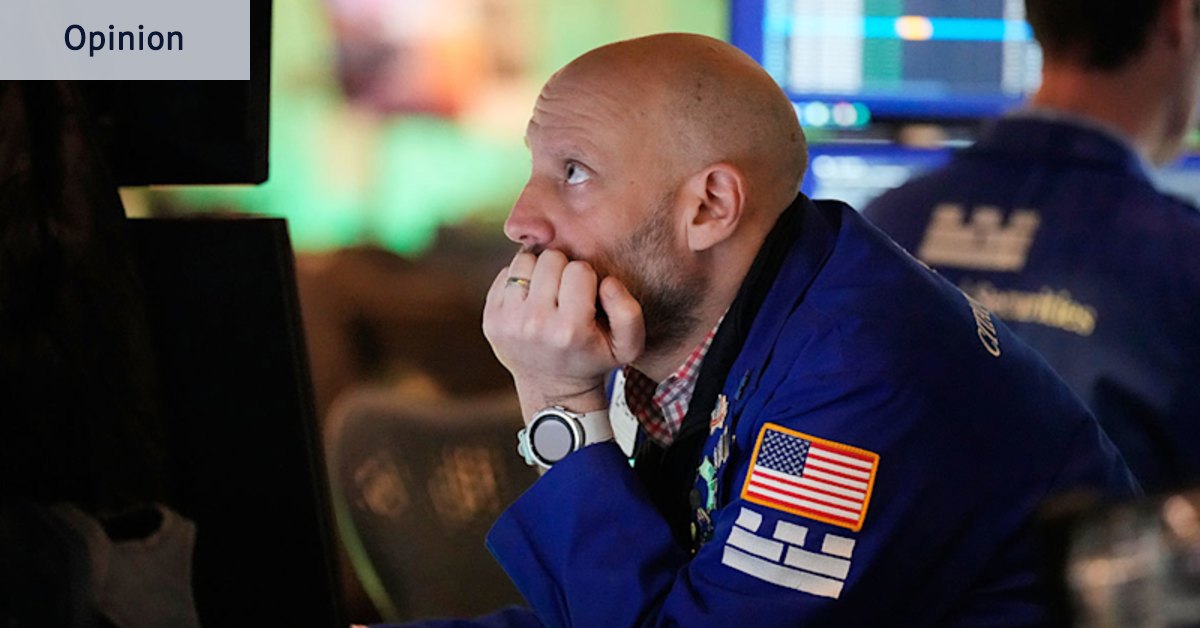
Nearly everyone will feel the impact of what’s going on in the bond market, no matter how far away and abstract it may seem.
uncertain
it → feel → market
Bond yields have jumped to their highest levels in roughly two decades, and that affects anyone who borrows money.
asserted
who → jump → money
That includes discouraged people trying to keep up with high inflation, as well as businesses wanting to build data centers for artificial-intelligence technology.
asserted
That → include → technology
High yields even affect people who don’t borrow money.
asserted
who → affect → money
For savers, it means they can earn more in interest by putting cash into bonds or a high-yield savings account.
asserted
they → mean → bonds
It could also knock down the value of the stocks in their 401(k) accounts
And for all U.S. taxpayers, higher yields could lead to higher interest payments for their federal government, which must continually borrow cash to cover the massive gap between how much it spends and brings in through revenue.
uncertain
it → knock → revenue
That would leave less money for everything else.
asserted
That → leave → everything
Here’s a look at what’s going on and what it means:
asserted
it → ’ → what
The bond market is where big borrowers go for cash
When governments and big companies need money, they don’t ask a bank for a loan.
asserted
they → go → loan
Instead, they sell IOUs to investors and promise to repay the money with a certain interest rate.
asserted
they → sell → rate
IOUs that get paid back years down the line are called bonds.
asserted
that → pay → line
Investors buy and sell these IOUs in the bond market after they’re issued.
asserted
they → buy → market
And if bonds begin to look less attractive, such as when worries rise about inflation, a buyer can get one that was earlier worth $100 for less than that.
asserted
that → begin → that
Even after a bond’s price drops, it continues to pay the same interest rate.
asserted
it → drop → rate
That means the new buyer will get a bigger return on their money, percentagewise, than the interest rate the bond pays on its face value.
asserted
bond → mean → value
Those payments are called the bond’s yield.
asserted
payments → call → ?
In other words, when a bond’s price drops, its yield rises.
asserted
yield → drop → words
Treasury yields help set interest rates that affect regular people
The centerpiece of the bond market is the U.S. Treasury, which is the IOU the U.S. government sells to borrow money.
asserted
government → help → money
And yields on U.S. Treasurys are the baseline off which the interest rate for most other kinds of borrowing is based.
asserted
rate → base → borrowing
For someone looking to buy a home, for example, the interest rate on their 30-year fixed mortgage will likely be what the 10-year Treasury is yielding, plus a little or a lot more depending on how good or bad their credit score is.
asserted
score → look → what
There are different parts of the U.S. Treasury market, ranging from short-term bills maturing in a few days to bonds that will get repaid in three decades.
asserted
that → be → decades
Each part affects different kinds of loans, whether it’s how much a saver can make on a 12-month certificate of deposit or how much interest a company will pay to borrow money to expand its factories.
asserted
company → affect → factories
The different parts of the bond market don’t always move together, but right now, they’re all rising.
asserted
they → move → market
Yields on Treasurys are jumping to their highest levels in years
asserted
Yields → jump → years
The yield on the 10-year Treasury climbed to nearly 5.18% on Thursday and is back to where it was in 2007, before the 2008 financial crisis and Great Recession sent yields toward zero.
asserted
crisis → climb → zero
It’s been climbing since bottoming out below 0.50% in 2020 because of the COVID pandemic.
asserted
It → climb → pandemic
But its rise has accelerated since the end of February, when the war with Iran sent oil prices and worries about inflation much higher.
asserted
war → accelerate → inflation
The 10-year yield was sitting at just 3.97% before the United States and Iran attacked Iran.
asserted
States → sit → Iran
That climb has pulled the average long-term U.S. mortgage rate to 7% for the first time since early 2025, making it even more difficult for would-be homebuyers to afford a house.
It’s also slowed a rally for the U.S. stock market, which had returned to the brink of an all-time high earlier this week.
asserted
which → pull → high
High Treasury yields undercut prices for all kinds of investments, from stocks to gold to cryptocurrencies.
asserted
yields → undercut → cryptocurrencies
The thought is: Why should anyone pay high prices for riskier investments or ones that pay zero dividends when U.S. Treasurys are paying more than before?
asserted
Treasurys → pay → more
Yields are rising for several reasons, not all of them bad
Much of the recent rise in Treasury yields is because of higher oil prices and worries about inflation.
asserted
Much → rise → inflation
When inflation is high, $1 next year will buy less than $1 does today.
asserted
1 → buy → 1
And bonds generally pay a fixed amount of interest for years in the future, making inflation a big risk.
asserted
inflation → pay → future
At the same time, governments worldwide continue to rack up more debt.
asserted
governments → continue → debt
That means they’re issuing more bonds to borrow, and the consistent increase in supply pushes down on their prices.
asserted
increase → mean → prices
All the bonds getting issued by big companies looking to build AI data centers and otherwise expand their businesses are having the same effect.
asserted
bonds → issue → effect
Part of the rise in Treasury yields is also because the U.S. economy looks so solid despite its many challenges.
asserted
economy → look → challenges
Treasury yields got a jolt Wednesday, for example, after a preliminary report suggested growth in U.S. business activity surged to its strongest level in more than five years.
uncertain
growth → get → years
Such data could convince the Federal Reserve that the economy is strong enough to withstand more increases to the very short-term interest rate that it controls directly.
uncertain
it → convince → that
…and 7 more, not listed.
 The Aporia