Carney says Labour Code change will 'protect' right to strike.
asserted
change → say → right
Experts say it still spells legal trouble
Liberals used Section 107 to end strikes in recent years, spurring backlash from unions
The Liberal government is proposing changes that it says will establish a "guardrail" around a controversial portion of the Labour Code — but experts say even if the bill goes through as written, the legal battles will be far from over.
asserted
battles → say → Code
Section 107, which gives the minister responsible broad powers to "maintain or secure industrial peace," has been on the books for decades.
asserted
which → give → decades
But since 2024, the federal government has come under fire for using the section to order striking workers back on the job and begin binding arbitration.
asserted
government → come → arbitration
Most recently, Labour Minister Patty Hajdu used the provision to order Air Canada flight attendants back to work last summer.
asserted
Hajdu → use → work
But the union ultimately defied that order and a tentative agreement was reached days later.
asserted
agreement → defy → order
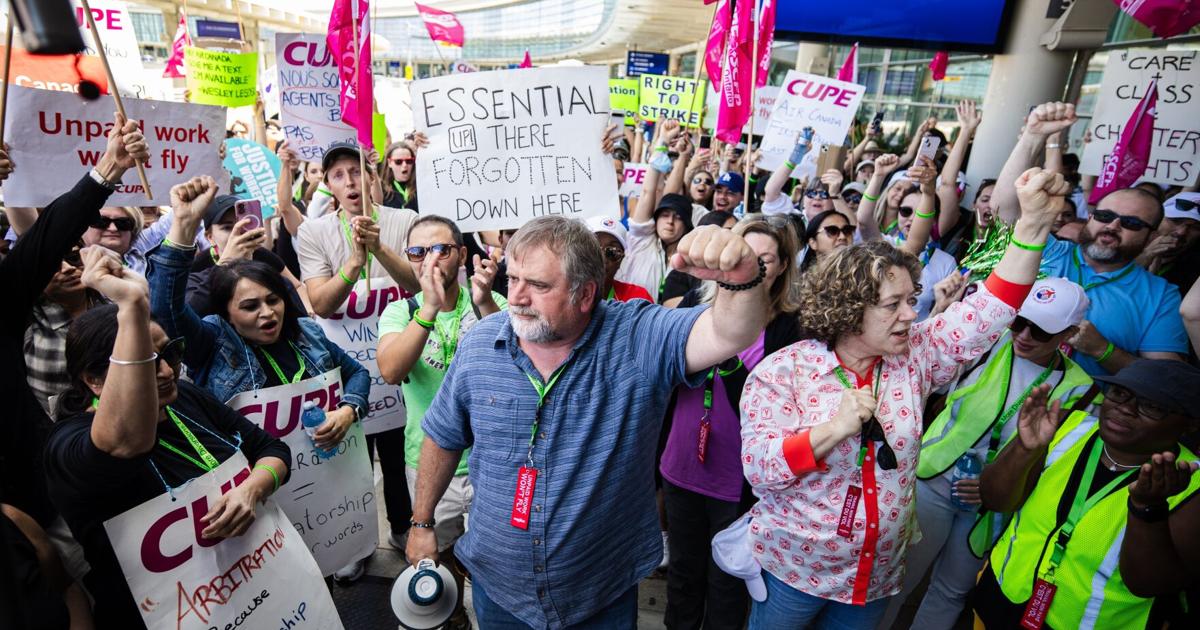
The Canadian Union of Public Employees (CUPE), which represents Air Canada flight attendants, launched a series of court challenges against the government's use of 107, one of which questions the constitutionality of that Labour Code section.
asserted
one → represent → section
Andrea Talarico, a University of Ottawa law professor who specializes in labour law, said even with the government looking to change the parameters of Section 107, the question of whether it can override the right to strike will "absolutely" end up before the Supreme Court.
asserted
it → specialize → Court
"In this context where we have this major controversy, a major controversy that affects Charter rights, in a context of economically turbulent times, this is going to have to go all the way to the Supreme Court because we need clarity," she said.
asserted
she → have → clarity
The government introduced Bill C-39 on Monday, an omnibus piece of legislation that includes changes to how Section 107 is used.
asserted
Section → introduce → changes
If passed, the minister would have to declare that a strike is adversely affecting the "national interest" and would have to consider a report from a new special mediator tasked with setting out the parties' positions.
asserted
strike → pass → positions
Prime Minister Mark Carney said on Tuesday that the bill "absolutely reinforces the right to strike.
asserted
bill → say → right
But the Canadian Labour Congress (CLC) began forcibly denouncing the proposed changes before the bill was even introduced.
asserted
bill → begin → changes
Mark Rowlinson, a lawyer working with the CLC, told reporters on Tuesday that the new bill is "the clearest possible violation" of the Charter and that the bill "circumvents" ongoing court challenges to Section 107.
asserted
bill → work → Section
But CLC president Bea Bruske said the organization is still weighing its options on whether to launch a legal challenge of the new legislation.
asserted
organization → say → legislation
Brian Gottheil, human resource adviser and lawyer, told CBC News that if the new legislation passes, the government might try to argue that the ongoing court challenges are "moot" and no longer relevant.
uncertain
challenges → tell → News
"I expect that the government will try to make the argument that because they have changed Section 107 and the issues that are being challenged in the previous one are no longer there, they will say that this is all moot and those cases should get thrown," he said.
asserted
he → expect → one
Gottheil said the courts may entertain that argument in cases where unions are challenging specific instances where 107 was used to end a strike.
uncertain
107 → say → strike
But he said cases challenging the law on Charter grounds will likely go ahead.
asserted
cases → say → grounds
"Canadians have a constitutional right to freedom of association.
asserted
Canadians → have → association
That has been interpreted by the Supreme Court as including a right to collective bargaining and it's been interpreted to include a right to strike," he said.
asserted
he → interpret → right
"The real key [question] is, does a fairly open-ended right for the minister to direct the federal labour board to end strikes and lockouts — does that violate the Constitution?
asserted
that → direct → Constitution
And I think that this new legislation still keeps that as a live issue."
asserted
legislation → think → issue
The Teamsters union launched its own legal battle after the government used Section 107 to end a rail workers strike in 2024.
asserted
government → launch → 2024
Because the union is seeking damages, Talarico said an argument of mootness from the government might fail.
uncertain
argument → seek → government
"The courts need to examine what happened to the unions and can those damages be given," she said.
asserted
she → need → unions
The Labour Code only covers federally regulated industries, such as airlines, banks, ports and railways.
asserted
Code → cover → airlines
But Talarico argued that provinces are likely watching to see how the battle over 107 plays out.
asserted
battle → argue → 107
 The Aporia