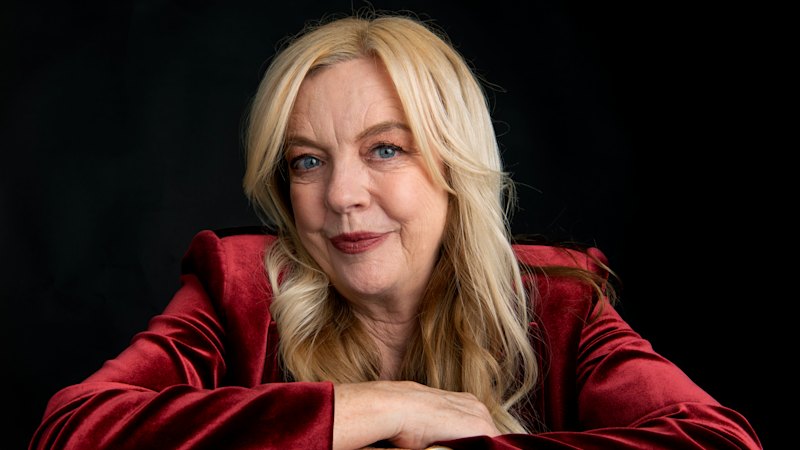
She has written more than 40 plays, including award-winning productions Prima Facie and Inter Alia – the latter adapted into a new novel examining issues with everything from modern masculinity to motherhood, and systemic justice within patriarchal structures.
asserted
She → write → structures
Her latest play, Strong is the New Pretty, premiered in Brisbane this month and tells the story of the birth of the women’s Australian rules football league, and how the AFLW went from a pipe dream to a sensation.
asserted
AFLW → premier → sensation
Suzie, you gave a speech recently about a “relay of women”.
asserted
you → give → women
Can you expand on that?
asserted
you → expand → that
What I was talking about in that relay is that no one really makes change on their own.
asserted
one → talk → own
Basically, we are generations and generations of women who have been running our leg of a relay and we pass the baton on to the next one when we’re exhausted or when we’ve run out of capacity and someone else takes that baton.
asserted
someone → run → baton
We might pick it up later and run again.
uncertain
We → pick → it
But I feel like generational change comes from women being united and seeing the big picture and working together, not as a hero or heroine’s journey where one person gets to the top and everyone’s like, “That’s the person who did it.”
asserted
who → feel → it
My new play, Strong Is the New Pretty, is really me recognising the underground relay that’s going on behind the scenes all the time.
asserted
that → recognise → scenes
It was really extrapolated into this little microcosm of how the AFLW came to be.
asserted
AFLW → extrapolate → microcosm
It’s an analogy for how women really do make change, and I wanted to study how that came about because I think that’s exactly the great skill that women can use to really effect change.
asserted
women → ’ → change
I think what’s really interesting with the AFLW is all these women at grassroots level who’d been trying for generations to get women to [be able to] play football, all of the young girls who really begged to be able to play and their mothers who agitated.
asserted
who → think → girls
Then there are two women on the AFL Commission, and suddenly these men are confronted with their “no” because it was a hard “no” about women’s [Australian rules] football.
asserted
it → be → football
“It won’t sell.
asserted
It → sell → ?
No one wants to see it.
asserted
one → want → it
There’s no merch attached to it, and also this is a boys’ zone.
asserted
this → ’ → it
It’s a hard no.
asserted
It → ’ → ?
Was there a sense that women should be “feminine” and shouldn’t play sport?
asserted
women → play → sport
“Why would women want to do it anyway?
asserted
women → want → it
Won’t they get hurt?”
asserted
they → hurt → ?
I mean, lots of men get hurt.
asserted
lots → mean → men
I got invited to the grand final of the very first AFLW.
asserted
I → invite → AFLW
I grew up in Melbourne where AFL is the landscape.
asserted
AFL → grow → Melbourne
I didn’t really engage with it … because I used to say, “but there are no girls playing.
asserted
I → engage → it
I don’t understand why we just watch boys run around.
asserted
boys → understand → ?
Why can’t we watch girls run around?”
asserted
girls → watch → ?
It never occurred to me to say that women should play.
asserted
women → occur → me
I just thought, “I’m not interested in boy stuff.”
asserted
I → think → stuff
The other reason I wrote this play is I thought this is what a “fair go” means.
asserted
go → write → what
It’s about finding people who are left out and including them.
asserted
who → ’ → them
And I feel like Australia has this incredible mantra, which is the fair go, but we’ve let it die and be a bit kind of co-opted by the far right.
asserted
it → feel → right
We’ve also not modernised it for contemporary society and I think the rest of the world is going in a completely other direction.
asserted
rest → modernise → direction
Let’s bunker down and grab our mantra, which really does define Australia in so many ways, and actually interrogate it for a contemporary society and be proud of it and use it in the way that it’s meant to be used – which is about widening it, not about closing it down; which is about inviting anyone who is “other” into that conversation and recognising and having empathy for their experience so that we actually are the community we could be, which is a very rich, culturally rich and inclusive society.
uncertain
which → bunker → experience
Rather than letting the mantra die, [we should be] re-energising it and actually making it our point of difference in a world that’s becoming very polarised.
asserted
that → let → world
You have a new novel coming out – an adaptation of a play that you wrote called Inter Alia.
asserted
you → have → that
How did you convert a play into a novel?
asserted
you → convert → novel
It was so much fun to convert it into a novel because I could say all the things and write all the things that you can’t fit into a 90-minute play.
uncertain
you → convert → play
I was very adamant about protecting women, and I thought, if you’re a mother of a boy, what happens if you’re a feminist and you’ve raised your son to be a feminist and informed and respectful of women?
asserted
you → protect → women
And what happens when they reach those teen years and they’re a bit beyond the reach of their mothers?
asserted
they → happen → mothers
So I had to dig deep into the manosphere and into what online porn is doing to young men in particular, but also to young women and how it’s basically robbing them of their own sexuality in terms of dictating to them what sex is, what intimacy is, and so on.
asserted
intimacy → have → them
…and 42 more, not listed.
 The Aporia