Poverty rate tests Argentina's Milei ahead of election
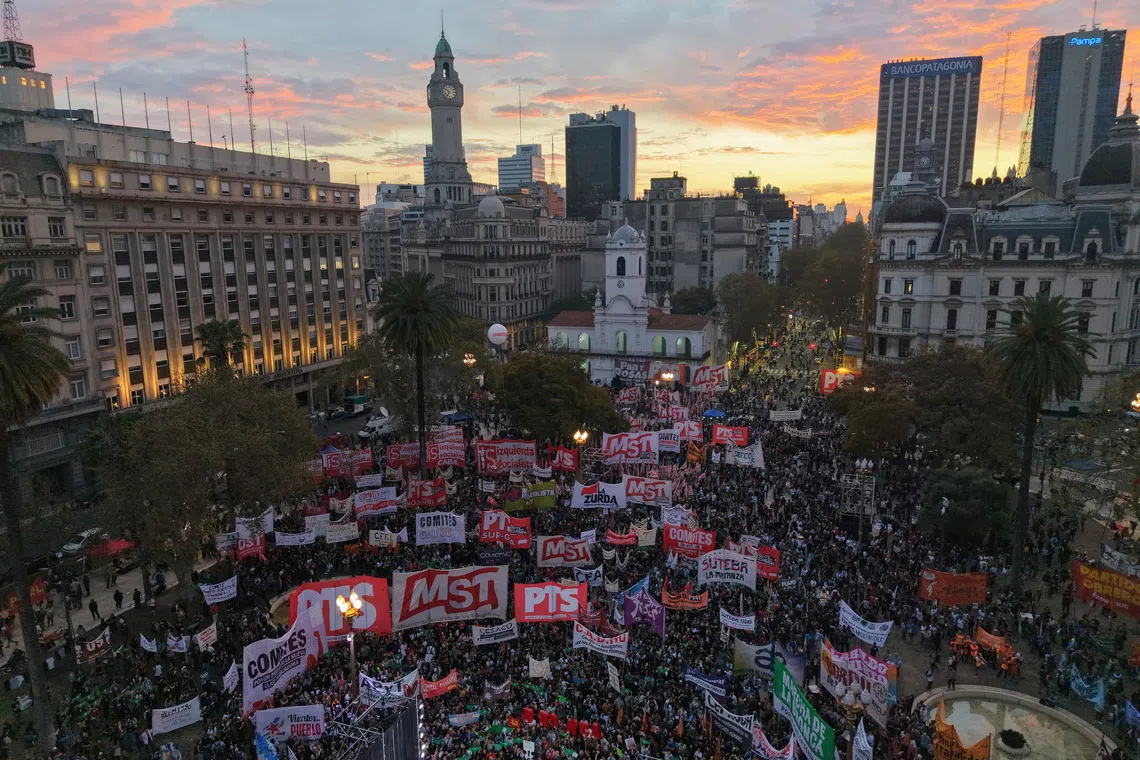
BUENOS AIRES, Sept 24 - Overflowing soup kitchens, a resurgence of cash-free barter clubs and families taking out short-term loans for groceries are highlighting growing social strains in Argentina, as economists expect official data on Thursday to show the first increase in poverty since President Javier Milei brought inflation under control.
asserted
Milei → test → control
Argentina's statistics agency, INDEC, is due to release poverty data for the first half of 2026 on Thursday.
asserted
agency → release → Thursday
Estimates from the Catholic University of Argentina, also known as UCA, are seen as an early indicator of official poverty trends.
asserted
Estimates → know → trends
They suggest the rate could rise to 35% of the population by year-end, reversing part of a sharp decline that brought the rate down to 28% in 2025 and marking a setback for Milei little more than a year before Argentina's next presidential election.
uncertain
that → suggest → election
"Every quarter over the last four quarters, 400,000 to 450,000 people have fallen into poverty," said Agustín Salvia, director of the Argentine Social Debt Observatory at UCA, who forecast that the poverty rate currently stands between 31% and 32%.
asserted
rate → fall → %
If confirmed, the increase would still leave poverty well below the levels seen during Milei's first year in office.
But analysts say it could signal that social gains driven by slowing inflation are losing momentum, with further progress increasingly dependent on stronger job creation and real wage growth.
uncertain
progress → confirm → creation
"A modest increase in poverty would not undo the large decline seen under Milei, but it would suggest that the easier part of the improvement has run its course," said Nicholas Watson, managing director for Latin America at consultancy Teneo.
asserted
Watson → undo → Teneo
Milei swept to power in late 2023 with strong backing from lower- and middle-income voters angered by years of runaway inflation.
asserted
Milei → sweep → inflation
While his libertarian government has dramatically slowed price rises and stabilized public finances, social organizations and aid workers said more Argentines are struggling to make ends meet.
asserted
ends → slow → finances
In a community hall on the outskirts of Buenos Aires, Ana Barreto helps run a barter club, where residents exchange goods instead of using cash.
asserted
residents → run → cash
"Poverty has deepened dramatically," said Barreto, a teacher who launched the club in August in Villa Astolfi, reviving a practice associated with past economic crises.
asserted
who → deepen → crises
Cooking oil, sugar, flour and pasta are among the most sought-after items, she said, often traded for used clothing and household goods.
asserted
she → seek → clothing
Rising hardship appears to be damaging support among lower-income voters as Milei moves toward a likely reelection bid in 2027.
asserted
Milei → rise → 2027
The latest opinion polls show Milei's approval rating has fallen sharply among poorer respondents surveyed, raising questions about whether he can retain a constituency that was central to his previous election victory.
asserted
that → show → victory
A September AtlasIntel survey found disapproval among lower-income respondents, defined as those earning up to around $650 a month, had climbed to nearly 70%, while approval fell below 30%.
asserted
approval → find → %
A year earlier, the figures stood at 57% and 37%, respectively.
asserted
figures → stand → %
Nationally, 58% disapproved of Milei, while 38.1% approved.
asserted
% → disapprove → Milei
LOWER INFLATION NO LONGER ENOUGH
asserted
INFLATION → ENOUGH → ?
Cuts to public-sector pay, the removal of transport and utility subsidies and relaxed import rules have squeezed households and put pressure on some domestically focused industries.
Milei's government says the austerity drive is needed to restore economic stability by eliminating chronic budget deficits that contributed to repeated economic crises and high inflation.
asserted
that → relax → crises
It argues that balancing the budget and delivering a fiscal surplus will bolster public finances, reassure investors and create the conditions for sustainable growth.
asserted
balancing → argue → growth
But Gustavo Raúl Pérez, who owns a hardware store in San Fernando, north of Buenos Aires, said his business had suffered because customers can no longer afford to shop.
asserted
customers → own → Aires
"Four years ago I had lines of customers.
asserted
I → have → customers
I used to sell 10 wheelbarrows, now I sell one," Pérez said.
asserted
Pérez → use → one
"I voted for Milei believing he would bring change for the better, but he really disappointed me,” Pérez added.
asserted
Pérez → vote → me
Unemployment rose to 7.9% in the second quarter of this year, up from 7.6% in the same period of 2025.
asserted
Unemployment → rise → 2025
Private-sector employment has declined for 13 straight months and the recovery in household incomes had largely stalled, Watson said.
The government says it will stay the course.
asserted
it → decline → course
"The president is not going to move one inch from his program.
asserted
president → go → program
He is not going to loosen his (contractionary) monetary policy to win elections," a government spokesperson told Reuters.
asserted
spokesperson → go → Reuters
Milei's administration has refused to increase public spending or renew subsidies, measures often used in election years, arguing it would jeopardize its efforts to tame inflation and maintain fiscal discipline.
asserted
it → refuse → discipline
At another barter club set up two years ago, Melany Malén Borré said many feel frustrated that improvements in their living standards have not materialized.
asserted
improvements → set → standards
“I think the people who voted for Milei were expecting progress that never came,” Borré said.
asserted
Borré → think → progress
 The Aporia