Photo via The Sydney Morning Herald

‘Everyone deserves a name’: How forensic scientists solved the 22-year mystery of ‘Alcove Man’

Read the original at The Sydney Morning Herald ↗
Cite

Silvester, J. (2026, September 25). ‘Everyone deserves a name’: How forensic scientists solved the 22-year mystery of ‘Alcove Man’. The Sydney Morning Herald. https://www.smh.com.au/national/victoria/everyone-deserves-a-name-how-forensic-scientists-solved-the-22-year-mystery-of-alcove-man-20260925-p60zq9.html?ref=rss&utm_medium=rss&utm_source=rss_feed

Dated when The Aporia collected the article, usually within hours of publication. Check the original for its exact date and byline.

The Sydney Morning Herald · collected 2026-09-25 · by John Silvester

Quick Summary

Forensic scientists solved the 22-year mystery of an unnamed homeless man found dead in Melbourne in 2004, nicknamed “Alcove Man” for his habit of living in a small alcove on Nicholson Street. Using advanced DNA technology called Forensic Investigative Genetic Genealogy (FIGG), experts discovered he was of Jewish descent and identified him as Arthur Jack Vetdick from Minnesota, who had moved to Australia decades earlier. This breakthrough showcases the potential of FIGG in solving cold cases, with Victoria Police using it in at least a dozen rape and murder investigations.
Written by AI on 2026-09-25, from this article's own text only (the story summary below draws on all the coverage).

AI analysis

Story summary

In May 2004, a homeless man known as "Alcove Man" was found dead in a small alcove near Nicholson Street in Carlton North, Melbourne. For years, this well-dressed individual with a neat white beard lived unnoticed by the community, maintaining his space with precision and leaving each morning like any regular commuter. Despite local residents' curiosity about his daily routine and silence towards them, they could not identify him.

Professor Trevor Lithgow of the University of Melbourne's microbiology department first noticed the man in 2002 when he moved into a nearby apartment building. Lithgow observed that "Alcove Man" lived methodically, managing his small living space with care and adhering to a strict daily schedule.

After two decades of being unnamed, scientists at the Victorian Institute of Forensic Medicine (VIFM) used DNA testing through FIGG (Familial Implications Genetic Genealogy), connecting "Alcove Man" to a Jewish family. His identity was revealed as Chemia, who had survived the Holocaust and other WWII atrocities in Poland before migrating to Australia, becoming a tailor.

This breakthrough solved a long-standing mystery and highlighted the resilience of survivors of historical tragedies, emphasizing the importance of forensic science in identifying individuals who might otherwise remain anonymous.

Written for “Forensic Scientists Solve Mystery” on 2026-11-03, grounded in this article and the 0 other(s) covering the same event.

Story

📰 Forensic Scientists Solve Mystery
Science · 1 article(s) covering the same event.

Compared with similar articles

Nothing to compare against. No article is close enough to this one for the pipeline to have linked or judged the pair.
How this article was measured signals, leaning charts, publisher record, byline, topics and claims

Signals How these are calculated →

Claims extracted
83
sentences that state something as happening or true
Uncertain
5%
4 of 83 hedged ("reportedly", "may", "according to")
Leaning
not political
takes no side on a contested political question
Publisher signals
61/100
The Sydney Morning Herald's corrections and hedging, across everything collected from it. Not a measure of accuracy.
Outlets on this story
1
Science
Same framing elsewhere
1
articles that frame the event the way this one does
Analyzed 2026-09-25 · how these are computed

How this is being covered How these are calculated →

Article leaning vs. publisher reliability
Source leaning vs. consistency

Publisher

The Sydney Morning Herald · 5874 article(s) · 15 correction(s) detected
Running correction rate · 15 correction(s)

Who wrote this

John Silvester
6 article(s) here · 1 carrying a prediction
🔮 Chief Commissioner Mike Bush will today unveil a fresh attack on organised crime groups that he says are “peddling misery” throughout Victoria.
🔮 Fellow swimmers respected his privacy and wouldn’t intrude with political questions. After former prime minister John Howard delivered the keynote speech at an innovation conference in the Hunter Valley he was happy to jump on the bus, grabbing any seat with his fellow guests to head back to the accommodation.
🔮 Cox tried to book his mate into a local motel, saying the escapee couldn’t stay at his safe house because he was looking after a wounded associate.
🔮 A less convincing response would have led him to be searched and the discovery of the secret body wire that would confirm the truth and seal his fate.
🔮 The man, who for years would sweep the driveway and hang his few possessions on hooks in a small alcove protected from the street, was found dead on May 23, 2004.
🔮 By the time he became a parent, and as a qualified lawyer, he began asking questions his father couldn’t answer.
Also by John Silvester
Nothing else under this byline is closely related to this article, so these are simply their most recent.
All 6 articles by John Silvester →

Topics

FIGG Jewish Melbourne the University of Melbourne the Victorian Institute of Forensic Medicine

Subjects

FIGG ORG · 5× Jewish NORP · 1× Melbourne GPE · 1× Runa Daniel PERSON · 1× The Alcove Man PERSON · 1× Trevor Lithgow PERSON · 1× Victoria GPE · 1× Victorian NORP · 1× the University of Melbourne ORG · 1× the Victorian Institute of Forensic Medicine ORG · 1×

Narrative

Izrael and Yitzhak migrated to Israel, while Chemia, by now a professional tailor, proved himself to be resilient, resourceful and lucky to survive World War II. He was 21 when the Nazis invaded Poland, and lived for three years in a ghetto before being part of a 1942 mass deportation of Polish Jews to Germany for extermination. Somehow he survived the Holocaust, massive aerial bombardments and invasions by the Soviets and the Allies.
framing: assertive · carried by 1 article(s) · first seen 2026-09-25
🔮 The man, who for years would sweep the driveway and hang his few possessions on hooks in a small alcove protected from the street, was found dead on May 23, 2004.

Claims (83 extracted, 4 hedged)

He was polite and well-dressed, the homeless man with a neat, white beard who became a fixture in Nicholson Street, Carlton North. asserted
who → dress → Street
No one remembers when he arrived, but they know when he left. asserted
he → remember → ?
The man, who for years would sweep the driveway and hang his few possessions on hooks in a small alcove protected from the street, was found dead on May 23, 2004. uncertain
who → sweep → May
The locals who knew him always wondered where he went every day. asserted
he → know → him
He would leave the apartment alcove full of purpose at 9am like any other commuter to catch a city-bound tram and return at 6.30pm. asserted
He → leave → 6.30pm
When residents said hello he would not respond. asserted
he → say → ?
They wondered if he was shy or couldn’t talk. asserted
he → wonder → ?
Professor Trevor Lithgow was working at the microbiology department at the University of Melbourne when he moved into the Nicholson Street apartment block in 2002. asserted
he → work → 2002
“The mailboxes were in the alcove, and it became apparent someone was living there. asserted
someone → become → alcove
There were cardboard boxes and everything was neatly stacked. asserted
everything → be → ?
“He had a routine, he would pack up his possessions, sweep the driveway, jump on a tram then return and sweep the driveway again. “He was our neighbour who happened to be homeless.” asserted
who → have → driveway
The man’s fingerprints were not on record which meant he had no criminal convictions, dental records produced nothing, and the computer-generated image distributed in the media drew a blank. asserted
image → mean → blank
Charity meal stations, hospitals and homeless shelters couldn’t identify him. asserted
stations → identify → him
He still wore a gold wedding band, which suggested he was not always a loner. uncertain
he → wear → band
Yet, no one had reported him missing. asserted
one → report → him
The Alcove Man was destined to be one of the many mysteries of a big city, remembered only as a curiosity by a handful of strangers, if not for experts at the Victorian Institute of Forensic Medicine, who used cutting-edge DNA technology to embark on a historic journey through seven countries to find the truth. asserted
who → destine → truth
First the experts used DNA to find the man was of Jewish descent. asserted
man → use → descent
Yet no one in the close Melbourne Jewish community knew him. asserted
one → know → him
To understand this journey, we need to first understand the technology. asserted
we → understand → technology
DNA is not a stationary science but one that constantly evolves. asserted
that → evolve → ?
Which brings us to Forensic Investigative Genetic Genealogy (FIGG). asserted
Which → bring → Genealogy
“There have been advances in DNA, but this one is a leap,” says the Victorian institute’s forensic DNA intelligence expert, Dr Runa Daniel. asserted
expert → say → DNA
That leap is breathing life into cold crime cases. asserted
leap → breathe → cases
Victoria Police don’t want to talk about it, but they are using FIGG in at least a dozen rape and murder mysteries. asserted
they → want → mysteries
In one case, police have gone back to ancestors in the 1880s to build a family tree of 5500 names involving five generations around the world that they hope will identify a suspect just around the corner from a crime scene. asserted
they → go → scene
The most celebrated case was California’s Golden State Killer, former US cop Joseph DeAngelo, who pleaded guilty to 13 murders and about 50 rapes after he was identified using FIGG. asserted
he → plead → FIGG
Law enforcement agencies and forensic teams upload DNA samples into genealogy databases, GEDmatch Pro and FamilyTreeDNA, looking for any matches, then try to build a family tree back to their person of interest. asserted
agencies → upload → interest
Before anyone screams civil liberties, the samples are only checked against people who have opted in to co-operate on the two databases. asserted
who → scream → databases
It was back in 2019 when the forensic medicine institute, the Australia Federal Police and NSW Police conducted a study on the viability of FIGG. asserted
institute → conduct → FIGG
They liked what they saw. asserted
they → like → what
In 2020, with no leads on the Alcove Man’s identity, the institute began using FIGG to manufacture one, slowly building his family tree from the furthest leaf – a first cousin, once removed, living in America. asserted
FIGG → begin → America
This meant they shared one grandparent. asserted
they → mean → grandparent
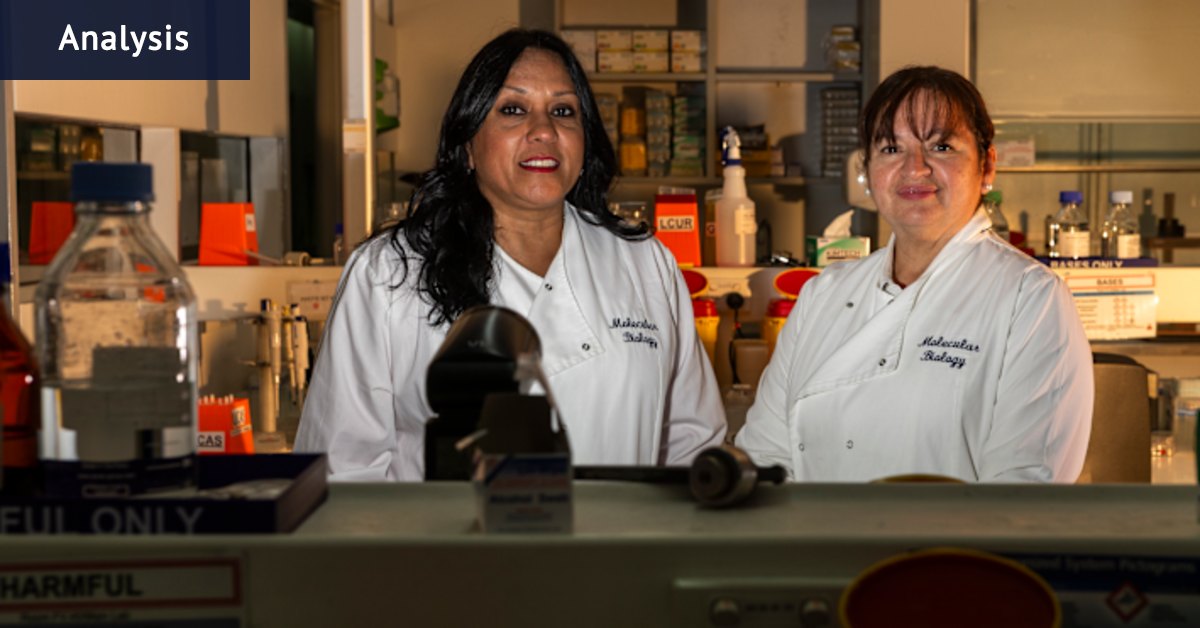
Through emails and international conversations, the forensic institute’s team of Daniel, chief molecular biologist Dr Dadna Hartman and Dr Colleen Fitzpatrick, an expert genealogical researcher, began to piece together the story that began in Warsaw, Poland, months before the end of World War I. “It began a journey of discovery for all of us,” Hartman says. asserted
Hartman → begin → us
The experts found leads, bumped into dead ends and looked for evidence in Poland, the US, Israel, Greece, Germany, Italy and Australia. asserted
experts → find → Poland
Polish couple Yakov Kwiat and Jente Pomerancz had five children. asserted
Kwiat → have → children
Fitzpatrick concluded there was a 69 per cent probability that one of the brothers was the man in the alcove. asserted
one → conclude → alcove
As the institute’s team began to build the family tree, they found the sisters, Esther and Kahna, died in the Holocaust. asserted
sisters → begin → Holocaust
Izrael and Yitzhak migrated to Israel, while Chemia, by now a professional tailor, proved himself to be resilient, resourceful and lucky to survive World War II. He was 21 when the Nazis invaded Poland, and lived for three years in a ghetto before being part of a 1942 mass deportation of Polish Jews to Germany for extermination. Somehow he survived the Holocaust, massive aerial bombardments and invasions by the Soviets and the Allies. asserted
he → migrate → Soviets
The Nazis killed 6 million Jews, of which 3 million were from Poland. asserted
million → kill → Poland
Of the 3.3 million Polish Jews, only 300,000 survived. asserted
300,000 → survive → Jews
…and 43 more, not listed.

💬Give feedback
🕘History 🎫Support