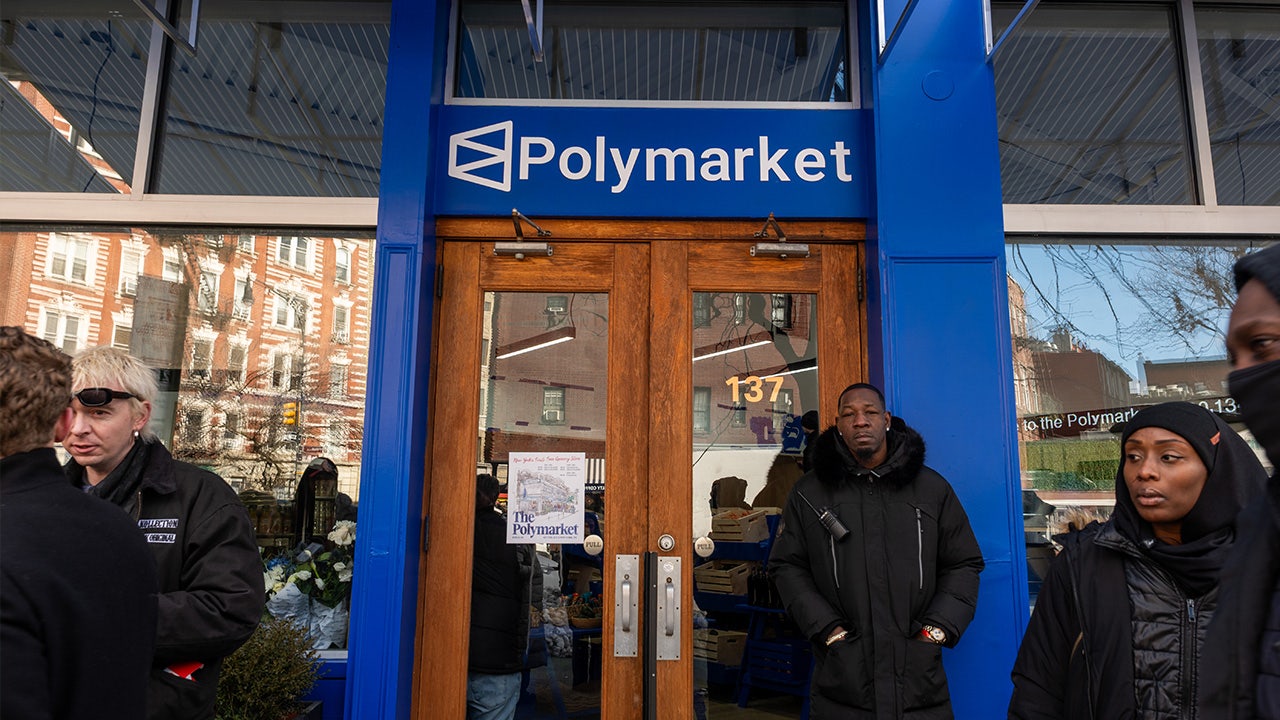
Photo via Fox News

The worst bet in America isn't Kalshi or Polymarket. It's hiding in plain sight

Read the original at Fox News ↗
Cite

Jenkin, T. (2026, September 25). The worst bet in America isn't Kalshi or Polymarket. It's hiding in plain sight. Fox News. https://www.foxnews.com/opinion/worst-bet-america-isnt-kalshi-polymarket-hiding-plain-sight

Dated when The Aporia collected the article, usually within hours of publication. Check the original for its exact date and byline.

Fox News · collected 2026-09-25 · by Ted Jenkin

Quick Summary

America faces a growing gambling issue with the rise of sports betting and prediction markets like Kalshi and Polymarket. However, the article argues that government-run lotteries pose an even greater problem, quietly taking significant amounts of money from citizens, particularly those with lower incomes. In fiscal 2024, Americans spent over $113 billion on lottery products, nearly doubling since 2008 to reach $104.7 billion. The odds of winning major jackpots in games like Powerball and Mega Millions are astronomically low (approximately 1 in 292 million), yet lotteries continue to promote them as a way to achieve instant wealth, often at the expense of those who can least afford it financially.
Written by AI on 2026-09-25, from this article's own text only (the story summary below draws on all the coverage).

AI analysis

Story summary

America has a growing gambling issue with lottery sales reaching $113 billion in fiscal 2024, more than doubling since 2008 despite inflation concerns. This includes popular games like Powerball and Mega Millions, where the odds of winning the jackpot are approximately 1 in 292 million for Powerball and 1 in 290.5 million for Mega Millions. Critics argue that lotteries exploit gamblers with extremely low probabilities of winning, while the government uses lottery revenue to fund various public programs like education and veterans' benefits, totaling nearly $30.6 billion transferred to beneficiaries in fiscal 2024.

Written for “Online Betting Schemes” on 2026-11-01, grounded in this article and the 0 other(s) covering the same event.

Story

📰 Online Betting Schemes
Economy/Business · 1 article(s) covering the same event.

Compared with similar articles

This article reads leans strongly left and hedges 12% of its claims. Each row says how that neighbour differs.
CBS News
⚖️ Leans left further right than this Hedges 0 of 3 claims Outlet record 66/100
“The articles discuss different aspects of gambling but do not describe the same specific incident or occurrence.”
CBS News
⚖️ Leans left further right than this Hedges 0 of 4 claims Outlet record 66/100
“The articles discuss different aspects of gambling and do not describe the same specific incident or occurrence.”
CBS News
Hedges 0 of 3 claims Outlet record 66/100
“The articles discuss different aspects of gambling without focusing on the same specific incident or time.”
The Independent
⚖️ Leans right further right than this Hedges 0 of 10 claims Outlet record 59/100
“Article A describes a lawsuit filed against Polymarket by New York authorities, while Article B discusses broader issues with gambling in America, including prediction markets like Polymarket but not specifically the lawsuit.”
How this article was measured signals, leaning charts, publisher record, byline, topics and claims

Signals How these are calculated →

Claims extracted
41
sentences that state something as happening or true
Uncertain
12%
5 of 41 hedged ("reportedly", "may", "according to")
Leaning
Leans strongly left
of the writing, not the subject · beta estimate
Publisher signals
69/100
Fox News's corrections and hedging, across everything collected from it. Not a measure of accuracy.
Outlets on this story
1
Economy/Business
Same framing elsewhere
1
articles that frame the event the way this one does
Analyzed 2026-09-25 · how these are computed

How this is being covered How these are calculated →

Article leaning vs. publisher reliability
Source leaning vs. consistency

Publisher

Fox News · 6160 article(s) · 11 correction(s) detected
Running correction rate · 11 correction(s)

Who wrote this

Ted Jenkin
7 article(s) here · 1 carrying a prediction
🔮 So yes, your parents may have had a 14% mortgage.
🔮 And it may offer some of the worst bets in America.
🔮 Even if its trust fund reserves are depleted, millions of workers will still be paying Social Security taxes every payday.
🔮 Here are five more ways successful Americans could increasingly find themselves paying even more.
🔮 Cato estimates those proposals could cost somewhere between $71 trillion and $212 trillion over the next decade.
🔮 We have promised ourselves a government we aren't currently willing to pay for.
🔮 At 35 years old, you might have a mortgage, two kids, a six-figure salary and an MBA degree hanging on the wall.
Also by Ted Jenkin
Nothing else under this byline is closely related to this article, so these are simply their most recent.
All 7 articles by Ted Jenkin →

Topics

America Americans Kalshi Polymarket Powerball

Subjects

America GPE · 3× Powerball ORG · 3× Kalshi PERSON · 2× Polymarket ORG · 2× Americans NORP · 1× Census Bureau ORG · 1× Mega Millions ORG · 1× NFL ORG · 1× U.S. GPE · 1× the North American Association of State and Provincial Lotteries ORG · 1×

Narrative

U.S. lotteries transferred nearly $30.6 billion to government beneficiaries in fiscal 2024, supporting education, veterans, senior programs and other public purposes.
framing: assertive · carried by 1 article(s) · first seen 2026-09-25
🔮 And it may offer some of the worst bets in America.

Claims (41 extracted, 5 hedged)

America suddenly has a gambling problem. asserted
America → have → problem
Prediction markets like Kalshi and Polymarket let people wager on everything from football games to elections. asserted
people → let → elections
Politicians and regulators are asking whether we've gone too far. asserted
we → ask → ?
But there's another gambling operation that's been sitting on street corners for decades, quietly pickpocketing people. asserted
that → be → people
And it may offer some of the worst bets in America. uncertain
it → offer → America
Americans bought more than $113 billion in lottery products in fiscal 2024, according to the North American Association of State and Provincial Lotteries. uncertain
Americans → buy → Lotteries
And business is booming. asserted
business → boom → ?
Census Bureau data show state lottery ticket sales nearly doubled from $52.8 billion in 2008 to $104.7 billion in 2024. asserted
sales → show → 2024
Apparently inflation hasn't killed America's appetite for becoming an instant millionaire. asserted
inflation → kill → millionaire
The odds are almost comical Let's start with Powerball. asserted
's → start → Powerball
Your odds of winning the jackpot are approximately: 1 in 292.2 million. asserted
odds → win → million
You could buy one Mega Millions ticket every week for 100 years and purchase only about 5,200 tickets. uncertain
You → buy → tickets
Yet lotteries have gotten increasingly creative at selling the dream. asserted
lotteries → get → dream
Mega Millions increased its ticket price from $2 to $5, promising bigger starting jackpots and built-in prize multipliers. asserted
Millions → increase → jackpots
Now Powerball is getting into football with a $5 NFL-themed game across nearly two dozen states. asserted
Powerball → get → states
Walk into almost any convenience store and you'll see an entire wall of them. asserted
you → walk → them
We're not selling a little $1 fantasy anymore. asserted
We → sell → fantasy
We're selling some expensive dreams. asserted
We → sell → dreams
The people who can least afford it Here's where the lottery bothers me most. asserted
lottery → afford → me
A wealthy person spending $20 on lottery tickets generally doesn't matter financially. asserted
person → spend → tickets
But someone living paycheck to paycheck or making $50,000 a year spending $20 every week is blowing more than $1,000 a year. asserted
someone → live → 1,000
Let's start with Powerball. asserted
's → let → Powerball
Your odds of winning the jackpot are approximately: 1 in 292.2 million. asserted
odds → win → million
Invest $1,000 annually for 30 years earning a hypothetical 8%, and you could accumulate more than $113,000. uncertain
you → invest → 113,000
Instead, that money may be disappearing one scratch-off at a time. uncertain
money → disappear → time
That's why economists have long raised concerns about lotteries being effectively regressive. asserted
lotteries → raise → concerns
The issue isn't necessarily who spends the most dollars. asserted
who → spend → dollars
When somebody trades on Kalshi or Polymarket, suddenly we're worried they're gambling. asserted
they → trade → Kalshi
When somebody repeatedly hands money to a state lottery? asserted
somebody → hand → lottery
We're funding education! asserted
We → fund → education
To be fair, lotteries do fund legitimate government programs. asserted
lotteries → fund → programs
U.S. lotteries transferred nearly $30.6 billion to government beneficiaries in fiscal 2024, supporting education, veterans, senior programs and other public purposes. asserted
lotteries → transfer → education
But let's call the transaction what it is. asserted
it → let → transaction
Government is raising revenue by selling its citizens extremely long odds of becoming rich. asserted
Government → raise → odds
And unlike prediction markets, there's no research that's going to help you pick six random numbers. asserted
you → be → numbers
The house always wins asserted
house → win → ?
Prediction markets deserve scrutiny. asserted
markets → deserve → scrutiny
Sports betting deserves scrutiny. asserted
betting → deserve → scrutiny
And people absolutely need to understand the risks of gambling. asserted
people → need → gambling
But government lotteries shouldn't get some moral exemption simply because the proceeds fund popular programs. asserted
proceeds → get → programs
…and 1 more, not listed.

💬Give feedback
🕘History 🎫Support