Photo via Mother Jones

Tech Bros and the Trump Administration Are Building an AI Empire—In the Philippines

Read the original at Mother Jones ↗
Cite

Butler, K. (2026, September 25). Tech Bros and the Trump Administration Are Building an AI Empire—In the Philippines. Mother Jones. https://www.motherjones.com/politics/2026/09/tech-bros-and-the-trump-administration-are-building-an-ai-empire-in-the-philippines-pax-silica/

Dated when The Aporia collected the article, usually within hours of publication. Check the original for its exact date and byline.

Mother Jones · collected 2026-09-25 · by Kiera Butler

Quick Summary

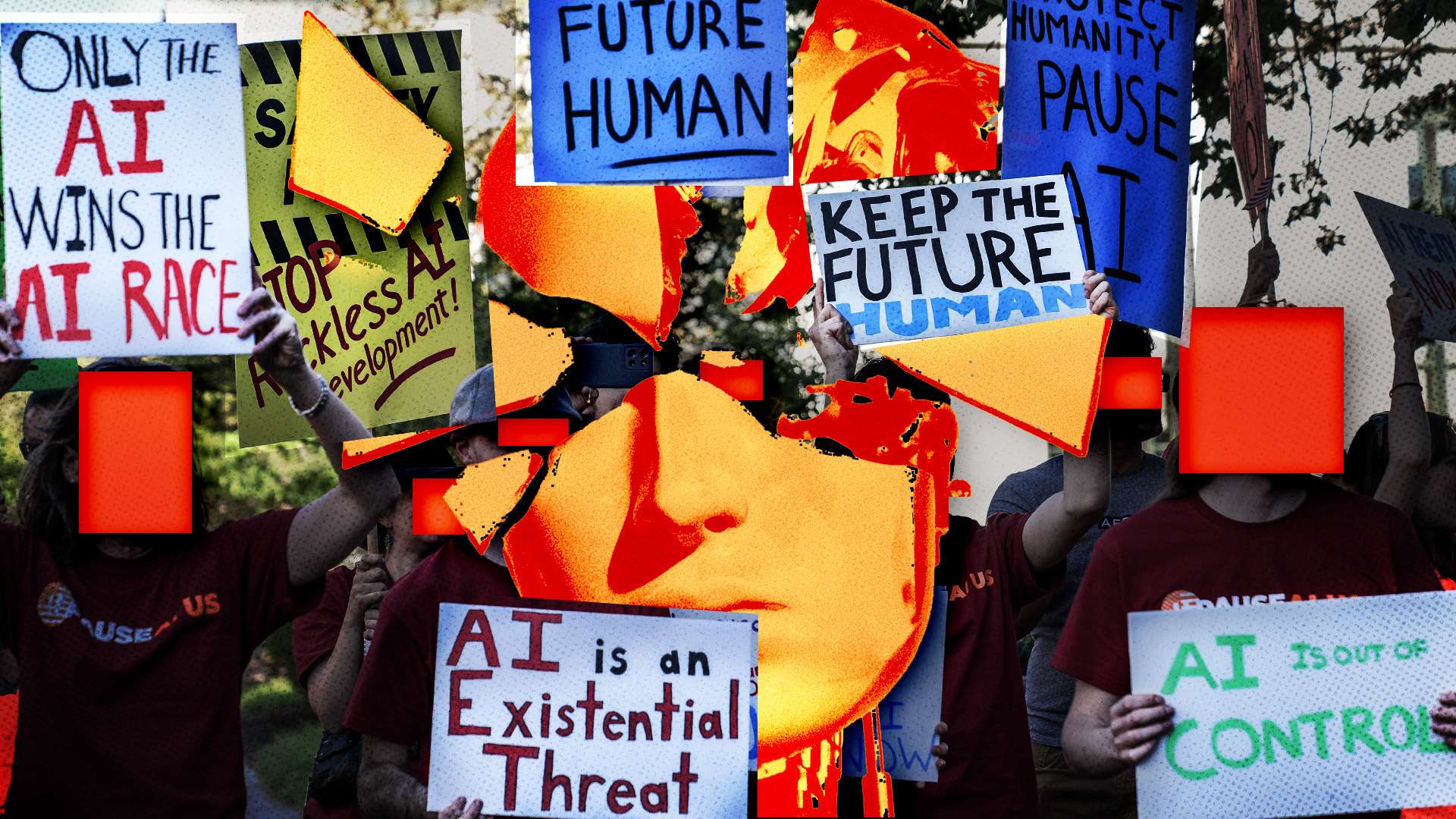
A researcher at Anthropic named Jacob Coxon recently resigned and warned on X about the dangers of rapid AI development. Following this, Anthropic’s CEO Dario Amodei expressed concerns over the pace of advancements in artificial intelligence. Meanwhile, Senator Ted Cruz reported that Elon Musk estimated a 10-20 percent chance that AI could destroy humanity within the decade. In contrast, the Trump administration is aggressively supporting AI initiatives through Pax Silica, an international project aimed at securing control over raw materials crucial for AI technology from competitors like China. The United States and several allied countries have signed a nonbinding declaration to support this initiative, with the State Department planning to invest $250 million in the project.
Written by AI on 2026-09-25, from this article's own text only (the story summary below draws on all the coverage).

AI analysis

Story summary

In a significant development earlier this month, Jacob Coxon, a researcher at Anthropic—a leading AI company—resigned and used X (formerly Twitter) to warn about potential dangers of unchecked AI development. He expressed grave concerns that the technology could pose existential threats by the end of the decade. Soon after, Anthropic's CEO, Dario Amodei, published an essay emphasizing the need for a slower pace in AI advancements to mitigate risks effectively.

This escalation of warnings coincided with remarks made on ABC’s The View by Sen. Ted Cruz (R-TX), who highlighted that Elon Musk, Tesla's CEO, estimated a 10-20% chance that AI could destroy humanity. Meanwhile, the White House under President Donald Trump has remained confident about the technology despite growing concerns.

The article also references Gregory C. Allen’s work on countering Chinese influence in global tech sectors through collaboration between industry and government. In 2021, he published a book titled *The Wires of War*, emphasizing the competition between Western democracies and authoritarian governments for control over technology. Two years later, he founded the Hill and Valley Forum, an annual event aimed at addressing Chinese influence in AI and defense sectors.

These developments underscore growing concerns about AI safety while highlighting efforts to mitigate risks through international collaboration and regulation.

Written for “AI Development Overseas” on 2026-11-01, grounded in this article and the 0 other(s) covering the same event.

Story

📰 AI Development Overseas
Technology · 1 article(s) covering the same event.

Compared with similar articles

This article reads leans strongly right and hedges 8% of its claims. Each row says how that neighbour differs.
Reason
Hedges 6 of 57 claims Outlet record 67/100
“While both articles mention Jacob Coxon's resignation from Anthropic, they describe different aspects and contexts of the broader AI safety debate.”
NBC News
Outlet record 60/100
“The articles discuss different aspects and perspectives on AI concerns, rather than describing the same specific incident.”
Fox News
Hedges 7 of 24 claims Outlet record 69/100
“The articles discuss different aspects of AI developments and concerns from Anthropic, with Article A focusing on potential risks and need for slowing down development, while Article B highlights optimistic medical applications.”
Toronto Star
Hedges 0 of 3 claims Outlet record 64/100
“The articles describe different aspects related to Anthropic but refer to distinct events: a resignation and warning about AI risks versus a court decision regarding supply chain risk labeling.”
Al Jazeera
⚖️ Leans right further left than this Hedges 1 of 14 claims Outlet record 60/100
“Article A discusses a resignation and an essay about AI risks, while Article B reports on a court decision regarding Anthropic's exclusion from the Pentagon supply chain.”
New York Post
⚖️ Leans left further left than this Hedges 7 of 21 claims Outlet record 66/100
“While both articles discuss Jacob Coxon's resignation and his warning about AI risks, they describe different aspects of the incident (one focusing on the resignation announcement itself, the other on subsequent PR activities).”
New York Post
Hedges 0 of 2 claims Outlet record 66/100
“The articles describe different statements made about AI risks, one by Jacob Coxon and Dario Amodei regarding urgent need to slow down AI development, and another warning by Bill Gates about the potential for AI to cause a billion deaths.”
The Straits Times
Hedges 2 of 23 claims Outlet record 66/100
“Article A discusses a resignation and an essay by Anthropic's CEO about AI risks, while Article B reports on a planned dinner meeting between Amodei and Trump regarding AI safety concerns.”
South China Morning Post
Hedges 1 of 5 claims Outlet record 64/100
“The articles discuss different aspects of AI concerns but describe distinct events, one involving a researcher's resignation and warning about AI risks, and another with Pope Leo addressing those concerns.”
Al Jazeera
Hedges 4 of 16 claims Outlet record 60/100
“The articles discuss AI concerns but describe different events: one focuses on a researcher's resignation and an essay by Anthropic’s CEO, while the other reports Pope Leo addressing AI risks during a news conference.”
How this article was measured signals, leaning charts, publisher record, byline, topics and claims

Signals How these are calculated →

Claims extracted
110
sentences that state something as happening or true
Uncertain
8%
9 of 110 hedged ("reportedly", "may", "according to")
Leaning
Leans strongly right
of the writing, not the subject · beta estimate
Publisher signals
95/100
Mother Jones's corrections and hedging, across everything collected from it. Not a measure of accuracy.
Outlets on this story
1
Technology
Same framing elsewhere
1
articles that frame the event the way this one does
Analyzed 2026-09-25 · how these are computed

How this is being covered How these are calculated →

Article leaning vs. publisher reliability
Source leaning vs. consistency

Publisher

Mother Jones · 423 article(s) · 0 correction(s) detected
No corrections detected for this publisher. That may mean careful reporting, or simply that nothing has been checked.

Who wrote this

Kiera Butler
5 article(s) here · 1 carrying a prediction
🔮 Attendees are given the opportunity to sign up for three-day “impact classes,” where, they are told, they will learn more investment tips—so that they can improve their own finances as well as make a Christian “kingdom impact.”
🔮 “The people building AI earnestly believe that it could kill us all by the end of the decade,” he wrote.
🔮 In a cavernous arena in suburban Atlanta one warm day last May, I arrived at 9:00 a.m. with thousands of others to see former NFL quarterback Tim Tebow—not playing football, but as the keynote speaker at a daylong event about faith and business.
🔮 You could feast your eyes on his most-watched video, with 13 million views, wherein he uses a rifle and head and torso ballistics models to recreate the assassination of JFK.
Also by Kiera Butler
Nothing else under this byline is closely related to this article, so these are simply their most recent.

Topics

ABC Anthropic China Pax Silica the United States

Subjects

Philippines GPE · 5× the United States GPE · 3× Anthropic ORG · 2× China GPE · 2× Japan GPE · 2× Pax Silica ORG · 2× ABC ORG · 1× Dario Amodei PERSON · 1× Jacob Coxon PERSON · 1× Ted Cruz PERSON · 1×

Narrative

In 2021, he published a book, The Wires of War, about the competition between Western democracies and authoritarian governments to control the global tech sector, and the overarching importance of collaboration between industry and government; two years later, he founded the Hill and Valley Forum, an annual gathering of legislators and AI and defense company executives dedicated to countering Chinese influence on the sector.
framing: assertive · carried by 1 article(s) · first seen 2026-09-25
🔮 “The people building AI earnestly believe that it could kill us all by the end of the decade,” he wrote.

Claims (110 extracted, 9 hedged)

In a move that upended the international conversation about AI, earlier this month, a researcher at the AI company Anthropic named Jacob Coxon resigned and took to X to sound the alarm about what he saw as a dangerous trajectory. asserted
he → upend → trajectory
“The people building AI earnestly believe that it could kill us all by the end of the decade,” he wrote. uncertain
he → build → decade
A few days later, Dario Amodei, Anthropic’s CEO, published an essay on his personal website about what he sees as the urgent need to slow down the pace of AI development. asserted
he → publish → development
“I have become convinced that fully addressing the risks requires even more prudence,” he wrote. asserted
he → become → prudence
“Not just investing in risk prevention but pacing the rate of capabilities advancement so that risk prevention has time to keep up.” asserted
prevention → invest → time
That same week, Sen. Ted Cruz (R-TX) told ABC’s The View that he had asked Tesla CEO Elon Musk on his podcast, “‘OK, what are the odds that AI destroys humanity?’ asserted
AI → tell → humanity
And he looked at me and said, ‘10-20 percent.’ asserted
he → look → percent
And I’m like, ‘holy crap.’” asserted
I → ’m → ?
As the chorus of warnings about AI from insiders has grown more urgent, the White House appears to have complete confidence in the technology—and not just with President Donald Trump’s insistence when speaking at the United Nations that there was no reason to rein it in. asserted
House → grow → it
In fact, over the last few months, the Trump administration has poured resources into several tech ventures as part of an effort to win the AI arms race against China. asserted
administration → pour → China
The flagship project is an international initiative led by the United States called Pax Silica, whose goal is to control the pipeline for the raw materials, including crucial rare earth minerals required to power the artificial intelligence boom. asserted
goal → lead → boom
Last December, the United States, Australia, Israel, Japan, South Korea, Singapore, and the United Kingdom signed an initial nonbinding declaration. asserted
States → sign → declaration
Others, including the European Union, joined in the following months, bringing the current number of signatories to 24. asserted
Others → include → 24
The declaration affirms the participants’ commitment to “mobilizing the immense creative and financial power of private industry and entrepreneurship to make our citizens more prosperous, our nations stronger, and our supply chains more secure.” asserted
chains → affirm → industry
What the declaration doesn’t explicitly state is its true goal: To wrest control of the AI infrastructure away from US adversaries—primarily China, which currently operates about 80 percent of rare-earth refining and controls 70 percent of lithium-ion battery production—but also Russia and Iran. asserted
which → state → production
As Helberg put it in a December media briefing, “Our strategy is to create a competitive edge so steep, so insurmountable that no adversary or competitor can scale it. asserted
adversary → put → it
That’s why our goal is to make America the arsenal of AI in this century.” asserted
America → ’ → century
In March, the State Department announced it would create a $250 million fund to support the project. asserted
it → announce → project
The centerpiece is Pax Silica’s ambitious new project in the Philippines: a planned 4,000-acre economic security zone in New Clark City, about 70 miles north of Manila. asserted
centerpiece → plan → Manila
The zone is strategically situated within the Luzon Economic Corridor, a development initiative launched in 2024 by the United States, Japan, and the Philippines to transform the island nation into an AI hub. asserted
zone → situate → hub
The project will incorporate many industries, from semiconductor manufacturing to data-center tech to supply-chain logistics. asserted
project → incorporate → logistics
In July, US Ambassador to the Philippines Lee Lipton predicted the project would bring “endless jobs” to the country. asserted
project → predict → country
Crucially, companies that operate there will have massive tax advantages—the Philippines promises up to seven years tax free, followed by up to 20 years of steeply reduced taxes. asserted
Philippines → operate → taxes
In addition to the tax perks, companies can lock in 99-year land leases and fast-track regulatory approvals. asserted
companies → lock → approvals
As much as 90 percent of a company’s workforce is allowed to be remote—an attractive proposition for American companies whose employees may not want to relocate to the Philippines. uncertain
employees → allow → Philippines
On a recent episode of a podcast hosted by venture capitalist Joe Lonsdale, who co-founded the data giant Palantir with Silicon Valley mogul Peter Thiel, Helberg laid out his vision for the State Department to act essentially as a business development agency for American venture capital and defense and AI hardware firms. asserted
Department → host → firms
“Our job at State is to remove the diplomatic, regulatory, and geopolitical friction so that American VC can flow into these strategic nodes,” he said. asserted
he → remove → nodes
“Pax Silica is essentially building the global highway for American tech and VC to scale fast.” asserted
tech → build → highway
The names of the companies that will fill those roles haven’t yet been released, but Helberg has strong connections to a powerful network of firms that could fit the bill. uncertain
that → fill → bill
According to his federal financial disclosure form, he served as a senior adviser to the data giant Palantir’s CEO Alex Karp from 2023 to 2025, bringing in at least $840,000 in consulting fees over the 16-month window covered by the disclosure. uncertain
he → accord → disclosure
But he’s also a savvy investor. asserted
he → ’ → ?
His financial disclosure form also reveals that his estimated net worth is $112 million–$426 million. asserted
worth → reveal → ?
Clients of his public policy consulting firm include Thiel’s Founders Fund, the defense company Hadrian, and another venture capital enterprise, General Catalyst. asserted
Clients → include → Fund
In addition to his own relationships with powerful Silicon Valley companies, Helberg’s husband, Keith Rabois, is also well connected. asserted
husband → connect → companies
The managing director of a $15 billion VC giant, Silicon Valley-based Khosla Ventures, Rabois also has carried-interest stakes in six separate Founders Fund entities. asserted
director → manage → entities
In November 2020, Helberg and Rabois joined the tech-exec exodus from California to income-tax-free, politically conservative Florida, decamping to a $29 million home in Miami. asserted
Helberg → join → Miami
Gil Duran, a tech journalist who has written extensively about autonomous zones, sees the Trump administration’s endorsement of Pax Silica as a strong indication of its enthusiastic commitment to AI development—despite increasingly urgent calls from industry insiders who warn of potentially cataclysmic consequences of the breakneck pace at which the technology is moving. asserted
technology → write → which
Trump’s damn-the-torpedoes approach to AI is particularly troubling considering the Trump family’s own massive stake in the AI industry. asserted
approach → damn → industry
Few people would be as perfectly positioned to be Pax Silica’s leader as Helberg—not only because of his extensive tech industry experience and his current position in Trump’s State Department, but also because of the political connections he made during his own conversion from staunch Democrat to Trump administration darling. asserted
he → position → darling
Helberg, who is 36, has worked in the intersection between Silicon Valley and geopolitics for his entire career, founding a geopolitical-risk forecasting startup, leading Google’s internal global product policy team, and serving on the US-China Economic and Security Review Commission under President Biden. asserted
who → work → Biden
…and 70 more, not listed.

💬Give feedback
🕘History 🎫Support