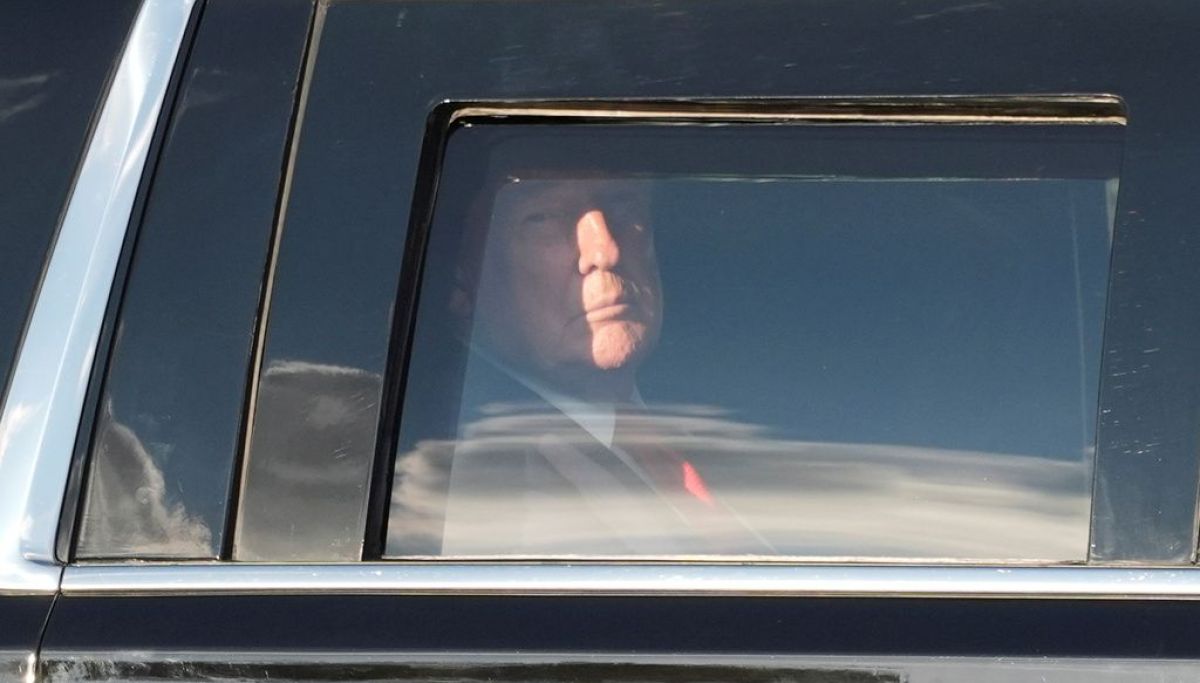
Photo via The Guardian

Trump faces tough choices as Iran dangles deal to reopen Hormuz before US midterms

Read the original at The Guardian ↗
Cite

York, P. W. i. N. (2026, September 25). Trump faces tough choices as Iran dangles deal to reopen Hormuz before US midterms. The Guardian. https://www.theguardian.com/world/2026/sep/25/trump-tough-choices-iran-accelerated-deal-reopen-hormuz-midterm-elections

Dated when The Aporia collected the article, usually within hours of publication. Check the original for its exact date and byline.

The Guardian · collected 2026-09-25 · by Patrick Wintour in New York

Quick Summary

Iran has presented a seven-day plan to reopen the Strait of Hormuz and restart nuclear negotiations, which could ease global energy pressures but requires President Donald Trump to make significant concessions before U.S. midterm elections. Key demands include lifting asset freezes on Iran, allowing oil exports, and ending attacks by Israel on Hezbollah in Lebanon. Iranian officials expressed doubt about the United States' willingness to comply with these terms despite initial productive talks with U.S. envoy Steve Witkoff. The proposal seeks rapid implementation of previous agreements while accelerating timelines for nuclear discussions from 60 days to seven days.
Written by AI on 2026-09-25, from this article's own text only (the story summary below draws on all the coverage).

AI analysis

Story summary

As of October 2, 2026, Donald Trump rejected Iran's offer to reopen the Strait of Hormuz within seven days, deeming it "simply not enough." This proposal was made by Iranian President Masoud Pezeshkian in an effort to ease tensions and open dialogue. However, Trump warned that military action against Tehran could resume after the U.S. midterm elections, suggesting ongoing hostility despite Iran's willingness to negotiate. The offer came amidst international pressure for a resolution to the conflict; Russian President Vladimir Putin expressed hope that the strait would reopen, while also noting Russia’s proposal to receive enriched uranium from Iran remains on the table.

The U.S. has imposed new sanctions on Iranian carmakers and rail operators in response to Tehran's threats and actions. In parallel, Trump dismissed previous claims suggesting his administration was preparing to provide significant concessions to Iran, instead emphasizing a strategy focused on economic pressure through sanctions that have severely impacted Iran’s currency, with the rial trading at an unprecedented 2.5 million to the dollar.

The situation remains tense, with multiple international stakeholders advocating for dialogue and peace but facing resistance from both sides, particularly as the U.S. continues its aggressive stance towards Iran despite diplomatic efforts by other nations like Russia. Ed Miliband, UK Foreign Secretary, also met with his Iranian counterpart in New York during the UN General Assembly to discuss reopening the Strait of Hormuz and address threats posed by Iranian-linked groups on British soil. However, Miliband reiterated that Britain will not tolerate any form of intimidation or hostile activity linked to Iran. This complex diplomatic scenario underscores the challenges in achieving a peaceful resolution without further escalation.

Written for “Trump's Iran Policy And Pardons Talks” on 2026-11-03, grounded in this article and the 132 other(s) covering the same event.

Story

📰 Trump's Iran Policy And Pardons Talks
Politics · 133 article(s) covering the same event. See how they differ ↓

Compared with similar articles

This article reads leans left and hedges 17% of its claims. Each row says how that neighbour differs.
Al Jazeera
Hedges 0 of 3 claims Outlet record 60/100
The Straits Times
Hedges 3 of 26 claims Outlet record 66/100
Dawn
Hedges 1 of 23 claims Outlet record 72/100
“The articles describe different stages of negotiations: Article A discusses Iran's initial proposal to reopen Hormuz, while Article B reports on Trump's rejection of that proposal.”
BBC News
⚖️ Leans left Hedges 1 of 25 claims Outlet record 68/100
Dawn
Hedges 5 of 30 claims Outlet record 72/100
“The articles describe different stages and aspects of the evolving situation between Iran and the US, not a single specific incident.”
Washington Examiner
Hedges 3 of 18 claims Outlet record 70/100
“The articles describe different stages and aspects of the ongoing situation with Iran, rather than a single specific incident.”
New York Post
Hedges 2 of 22 claims Outlet record 66/100
Euronews
⚖️ Leans left Hedges 2 of 9 claims Outlet record 60/100
South China Morning Post
Hedges 0 of 6 claims Outlet record 63/100
Al Jazeera
Hedges 2 of 18 claims Outlet record 60/100
How this article was measured signals, leaning charts, publisher record, byline, topics and claims

Signals How these are calculated →

Claims extracted
24
sentences that state something as happening or true
Uncertain
17%
4 of 24 hedged ("reportedly", "may", "according to")
Leaning
Leans left
of the writing, not the subject · beta estimate
Publisher signals
66/100
The Guardian's corrections and hedging, across everything collected from it. Not a measure of accuracy.
Outlets on this story
133
Politics
Same framing elsewhere
1
articles that frame the event the way this one does
Analyzed 2026-09-25 · how these are computed

How this is being covered How these are calculated →

Article leaning vs. publisher reliability
Source leaning vs. consistency

Publisher

The Guardian · 2856 article(s) · 6 correction(s) detected
Running correction rate · 6 correction(s)

Who wrote this

Patrick Wintour in New York
6 article(s) here · 1 carrying a prediction
🔮 The US threat to impose sanctions on the international criminal court (ICC) as an institution, not just its leading judges, could fundamentally disrupt its operation and needed to be resisted, a coalition of countries to defend international law heard at the United Nations on Friday.
🔮 Iran’s seven-day timetable to reopen the strait of Hormuz and start talks on its nuclear programme has been pitched as a deal that could rapidly extricate Donald Trump from a political crisis but requires the US president to make difficult concessions.
🔮 The previously unknown apparent deadline was specified by Mohsen Rezaei, the secretary of the supreme national security council, in a TV interview on Wednesday evening, and it is unclear what action Tehran will take if the US does not respond to Iran’s preconditions for reopening the vital waterway.
🔮 In a defiant speech to the UN general assembly in New York, his first since the US and Israel launched an all-out war on Iran, Pezeshkian repeatedly vowed that Tehran would never bend the knee to America.
🔮 Iran set seven preconditions before returning to talks, and in a new development over the past 48 hours said the crucial strait of Hormuz could be reopened within seven days if those conditions were met.
🔮 He said there would a further meeting in the very near future.
Also by Patrick Wintour in New York
Nothing else under this byline is closely related to this article, so these are simply their most recent.
All 6 articles by Patrick Wintour in New York →

Topics

Hezbollah Iran Iranian Israel Oman

Subjects

Iran GPE · 19× Iranian NORP · 8× Trump PERSON · 8× Araghchi PERSON · 3× Oman GPE · 3× Lebanon GPE · 2× Pezeshkian PERSON · 2× Witkoff PERSON · 2× Benjamin Netanyahu PERSON · 1× Donald Trump PERSON · 1×

Narrative

The foreign minister, Abbas Araghchi, explained that the idea was to take the elements of the Iran-US memorandum of understanding that Trump signed in June and repackage and accelerate the process since, as they understood it, Trump had come to hate the MoU. “The conditions we have asked the US to meet is nothing new, nothing more than what was already in the Islamabad agreement, which was signed by the US president,” Araghchi said.
framing: assertive · carried by 1 article(s) · first seen 2026-09-25
🔮 Iran’s seven-day timetable to reopen the strait of Hormuz and start talks on its nuclear programme has been pitched as a deal that could rapidly extricate Donald Trump from a political crisis but requires the US president to make difficult concessions.

Claims (24 extracted, 4 hedged)

Iran’s seven-day timetable to reopen the strait of Hormuz and start talks on its nuclear programme has been pitched as a deal that could rapidly extricate Donald Trump from a political crisis but requires the US president to make difficult concessions. uncertain
that → reopen → concessions
In the five days left before the proposed reopening of the strait, which is expected to relieve pressure on global energy markets, Trump would need to lift Iranian asset freezes, permit Iran to export its oil and, probably most difficult of all, order Benjamin Netanyahu to end Israel’s attacks on Hezbollah in Lebanon, thus achieving the “ceasefire on all fronts”. asserted
Trump → leave → fronts
Iranian diplomats in New York said they thought a three-hour meeting earlier this week with the US envoy Steve Witkoff in which they laid out the seven-day plan was productive, but were doubtful the US would deliver. asserted
US → say → plan
Iran nevertheless feels it has done the diplomatic spadework, taking the proposal to China for endorsement and ensuring that Oman, located on the south side of the strait, was also on board. asserted
Oman → feel → board
The foreign minister, Abbas Araghchi, explained that the idea was to take the elements of the Iran-US memorandum of understanding that Trump signed in June and repackage and accelerate the process since, as they understood it, Trump had come to hate the MoU. “The conditions we have asked the US to meet is nothing new, nothing more than what was already in the Islamabad agreement, which was signed by the US president,” Araghchi said. asserted
Araghchi → explain → president
In the first four to five days under this timetable, the US will have to lift the naval blockade on Iran’s oil ports, restore the waiver lifting sanctions on Iran’s oil exports, end the war on all fronts and permit the release of some of Iran’s frozen assets. asserted
US → have → assets
On the sixth day, the strait of Hormuz would be reopened by Iran with ships using a new route designated by Oman and Iran. asserted
ships → reopen → Oman
And on the next day, negotiations will start on the future of Iran’s civil nuclear programme, including a protocol to allow UN nuclear inspectors back in to look at Iran’s damaged sites and the Iranian stockpile of highly enriched uranium. asserted
inspectors → start → uranium
This accelerates the point at which nuclear talks would begin from 60 days in the June agreement to seven. asserted
talks → accelerate → seven
Those talks could, of course, then take a long time, but from Trump’s perspective, the strait of Hormuz would be reopened before the midterm elections, a point in the political calendar that the Iranian president, Masoud Pezeshkian, says has never been a factor in Iranian thinking. uncertain
president → take → thinking
Trump had claimed Iran was waiting until after the vote to offer a deal. asserted
Iran → claim → deal
Iran, Araghchi argued at a largely off-the-record briefing with reporters – at which Pezeshkian was also present – has every reason not to negotiate with the US. asserted
Pezeshkian → argue → US
In particular, he admitted to being sceptical that Witkoff could deliver. uncertain
Witkoff → admit → ?
He recounted how he had twice held talks with Trump’s special envoy, with Witkoff saying the talks had been “productive and good”, only for Iran to be bombed by the US the next day. asserted
Iran → recount → US
Other Iranian diplomats say Trump’s willingness to rein in Netanyahu in Lebanon remains key. asserted
willingness → say → Lebanon
If he were to do that, a deal would be feasible. asserted
deal → do → that
It is a difficult deal for Trump to swallow since the strait would reopen largely on Iran’s terms, with the new route predominantly going through Iranian waters. asserted
route → swallow → waters
Trump says he has a choice to make between the annihilation of Iran and engagement – an engagement that he says, with typical hyperbole, could make Iran one of the great countries of the world. uncertain
Iran → say → world
In reality, the judgement he has to make is more prosaic. asserted
he → have → reality
Is he prepared to go back to war with Iran, after the midterms and, if not, does he believe the US can squeeze the Iranian economy so hard that the leadership will succumb. asserted
leadership → go → economy
Pezeshkian – who handed all questions about the talks to Araghchi, who was sitting to his right – admitted Iranians wanted the war to end and did not deny the economic pressure, but said the public had withstood sanctions for 45 years. asserted
public → hand → years
He also insisted Iran’s decision-making machinery was functioning. asserted
machinery → insist → ?
The reclusive supreme leader Mojtaba Khamenei was completely healthy, he claimed – a testimony based on spending seven hours in his presence. asserted
he → claim → presence
He did not explain what, apart from security, led Khamenei to not even issue a voice recording, photograph, let alone a video, as proof of life. asserted
what → explain → life
💬Give feedback
🕘History 🎫Support