Photo via National Post

Josh Dehaas: A Carney oil blockade would be playing with fire, even if constitutional

Read the original at National Post ↗
Cite

Special to National Post. (2026, September 3). Josh Dehaas: A Carney oil blockade would be playing with fire, even if constitutional. National Post. https://nationalpost.com/opinion/josh-dehaas-a-carney-oil-blockade-would-be-playing-with-fire-even-if-constitutional

Dated when The Aporia collected the article, usually within hours of publication. Check the original for its exact date and byline.

National Post · collected 2026-09-03 · by Special to National Post analysis

Quick Summary

The article discusses Ontario Premier Doug Ford's suggestion that the federal government block oil exports to the United States as leverage in the trade war, and whether such a move would be constitutional. According to the Constitution Act of 1867, Parliament has residual powers to make laws for Canada's peace, order, and good government, which could potentially override provincial control over natural resources. The article cites several Supreme Court decisions that suggest Ottawa may have strong arguments in favor of imposing embargoes or taxes on Alberta oil exports.
Written by AI on 2026-09-03, from this article's own text only (the story summary below draws on all the coverage).

AI analysis

Story summary

As of September 4, 2026, a tentative trade deal between Canada and the U.S., aimed at avoiding damaging tit-for-tat tariffs, collapsed just hours before its deadline. This breakdown triggered President Donald Trump to impose new 50% tariffs on $28 billion worth of Canadian exports. Prime Minister Mark Carney responded by announcing Canada's intention to match these tariffs dollar for dollar to protect domestic workers and businesses. The escalating trade tensions have led to the U.S. Justice Department ordering a freeze on all antitrust work with Canada, exacerbating the economic conflict between the neighboring countries.

The dispute has also spurred a "Buy Canadian" movement among consumers who are actively seeking out locally made products over American alternatives as part of their show of solidarity amid the ongoing trade war. Additionally, retaliatory tariffs have been imposed on various goods including dairy, motorcycles, and alcoholic beverages, further complicating economic relations between the two nations. This conflict comes amidst broader political tensions highlighted by President Trump's repeated rhetoric about annexing Canada. Despite historic close ties, both countries face significant challenges in resolving their trade disputes amicably.

Written for “U.S.-Canada Trade War Escalates” on 2026-10-30, grounded in this article and the 53 other(s) covering the same event.

Story

📰 U.S.-Canada Trade War Escalates
Economy/Business · 54 article(s) covering the same event. See how they differ ↓

Compared with similar articles

This article reads leans left and hedges 27% of its claims. Each row says how that neighbour differs.
National Post
⚖️ Leans right further right than this Hedges 2 of 5 claims Outlet record 60/100
The Globe and Mail
⚖️ Leans strongly right further right than this Hedges 3 of 28 claims Outlet record 52/100
National Post
⚖️ Leans left Hedges 6 of 32 claims Outlet record 60/100
CBC News
⚖️ Leans right further right than this Hedges 14 of 89 claims Outlet record 74/100
National Post
⚖️ Leans left Hedges 3 of 34 claims Outlet record 60/100
“Article A discusses the possibility of Prime Minister Mark Carney blocking oil exports to give Canada leverage in the trade war, while Article B mentions a finance minister announcing that the federal gasoline tax will not be re-imposed”
How this article was measured signals, leaning charts, publisher record, byline, topics and claims

Signals How these are calculated →

Claims extracted
26
sentences that state something as happening or true
Uncertain
27%
7 of 26 hedged ("reportedly", "may", "according to")
Leaning
Leans left
of the writing, not the subject · beta estimate
Publisher signals
60/100
National Post's corrections and hedging, across everything collected from it. Not a measure of accuracy.
Outlets on this story
54
Economy/Business
Same framing elsewhere
1
articles that frame the event the way this one does
Analyzed 2026-09-03 · how these are computed

How this is being covered How these are calculated →

Article leaning vs. publisher reliability
Source leaning vs. consistency

Publisher

National Post · 1238 article(s) · 2 correction(s) detected
Running correction rate · 2 correction(s)

Who wrote this

Special to National Post
103 article(s) here · 1 carrying a prediction
🔮 As the incoming B.C. Conservative government prepares to deliver on its promise to repeal the Declaration on the Rights of Indigenous Peoples Act (DRIPA), Grand Chief Stewart Phillip, president of the Union of B.C. Indian Chiefs, stated this week that doing so would be a “declaration of war.”
🔮 Based on a leaked draft “EU-Canada Joint Summit Statement,” much progress is expected to be made at the summit in areas such as defence and security, critical resources and digital research and communications technologies.
🔮 Last month, the Law Society of Ontario (LSO) did not agree to a formal request from 10 lawyers who wished to add to their Annual General Meeting (AGM) agenda a motion that could have revoked accreditation from Toronto Metropolitan University’s (TMU) Lincoln Alexander School of Law.
🔮 Buying through us may earn us a commission, which supports our work.
2026-10-28 · assertive framing · On the map: A new view of renting in Hamilton
🔮 It’s the story of one student, but it could be any student at any North American university.
🔮 Work, save, take a risk, start a company, buy a home, raise a family; the expectation held that effort might lead somewhere and that children could inherit better prospects than their parents.
🔮 Premier Paul St-Pierre Plamondon has vowed to defund the office of the lieutenant governor, said he will seek legal advice on keeping the Crown’s representative out of the opening of the legislature and has promised to cut Quebec’s ties to the monarchy.
🔮 St-Pierre Plamondon will lead a minority government, five seats short of a majority, and has promised to wait until Donald Trump leaves the White House in January 2029 before holding a sovereignty referendum.
🔮 As we wrap up a month of what has the potential to be one of the biggest missteps in British Columbia, or Canadian, political history, it bears examining whether David Eby’s attempt to position himself as a modern day Joseph McCarthy dedicated to rooting out thought criminals from his opposition will be ultimately effective.
🔮 Buying through us may earn us a commission, which supports our work.
2026-10-23 · assertive framing · Interior design: Curating curves
Also by Special to National Post
Nothing else under this byline is closely related to this article, so these are simply their most recent.
All 103 articles by Special to National Post →

Topics

Alberta Canada Ontario Ottawa the United States

Subjects

Alberta GPE · 8× Canada GPE · 4× The Supreme Court ORG · 3× Carney PERSON · 2× Ottawa GPE · 2× Pierre Trudeau PERSON · 2× the United States GPE · 2× Doug Ford PERSON · 1× Mark Carney PERSON · 1× Ontario GPE · 1×

Narrative

Here Alberta’s argument would be stronger, but one would expect the federal government to push back by arguing the embargo is within its jurisdiction under peace, order and good government, either because it’s an emergency or a national concern.
framing: mixed · carried by 1 article(s) · first seen 2026-09-03
🔮 The Constitution Act of 1867 assigns all matters that governments may regulate exclusively to either the provinces or the feds, and provides a residual power to Parliament to “make laws for the peace, order, and good government of Canada, in relation to all matters not coming within the classes of subjects by this act assigned exclusively to the legislatures of the provinces.” It’s not always easy to assign a matter exclusively to one level of government.

Claims (26 extracted, 7 hedged)

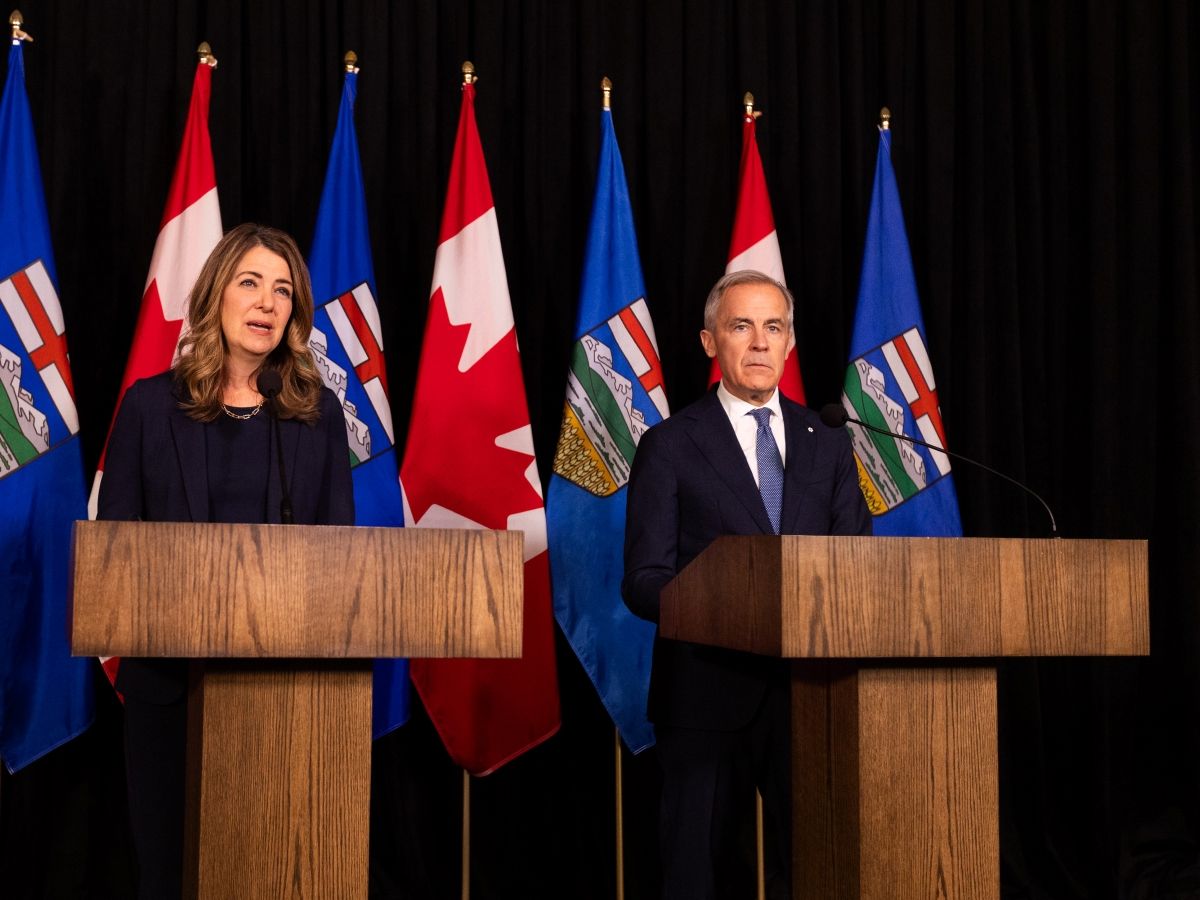
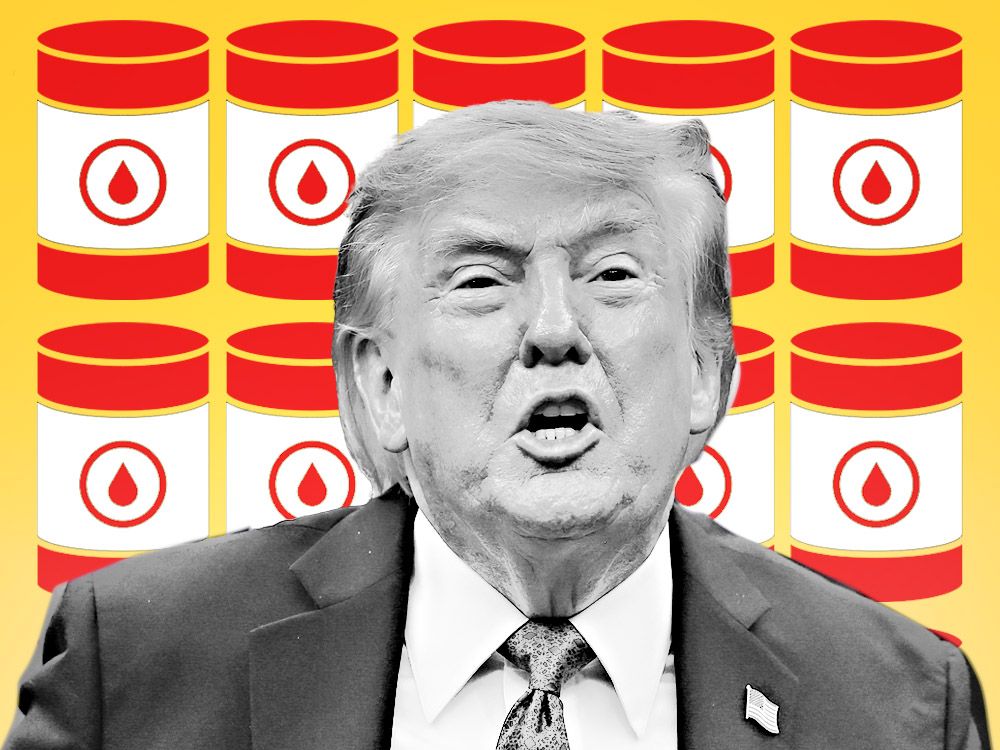
Ontario Premier Doug Ford says the federal government should consider blocking oil exports to the United States to give Canada leverage in the trade war that’s now hitting that province hard. asserted
that → say → province
“Although I understand the need to respond strongly to these tariffs, I cannot think of a more disastrous policy decision than cutting off or taxing Alberta’s oil to the United States,” she said. asserted
she → understand → States
This means the metaphorical taps are now in Prime Minister Mark Carney’s hands. asserted
taps → mean → hands
But can Carney really cut off or put an export tax on Alberta oil without violating the constitutional division of powers? asserted
Carney → cut → powers
The answer is probably yes, but don’t expect Alberta to go down without a fight. asserted
Alberta → expect → fight
The Constitution Act of 1867 assigns all matters that governments may regulate exclusively to either the provinces or the feds, and provides a residual power to Parliament to “make laws for the peace, order, and good government of Canada, in relation to all matters not coming within the classes of subjects by this act assigned exclusively to the legislatures of the provinces.” It’s not always easy to assign a matter exclusively to one level of government. uncertain
It → assign → government
The court has developed certain rules to deal with this reality, but it’s not always clear how they will be applied. asserted
they → develop → reality
For example, if two laws are in conflict and it’s impossible to comply with both laws, the federal law may prevail under the doctrine of paramountcy. uncertain
law → ’ → paramountcy
That said, if a law intrudes on the “core” or the “basic, minimum and unassailable content” of the other order of government’s powers, it may be deemed inapplicable under the doctrine of interjurisdictional immunity. uncertain
it → say → immunity
One thing that’s clear under the Constitution is who owns the oil (and forests … and potash). asserted
who → ’ → oil
Canada transferred ownership of natural resources to the Prairie provinces through the Natural Resources Transfer Agreements and related acts, which became part of the Constitution in 1930. asserted
which → transfer → 1930
It’s also clear that Alberta has exclusive control over the “development, conservation and management of non-renewable natural resources and forestry resources in the province.” asserted
Alberta → ’ → province
That’s from the text of Section 92A, which was added to the Constitution Act of 1982 at Alberta’s insistence. asserted
which → ’ → insistence
If the provinces own their natural resources and have control over their development, how can Ottawa impose embargoes or taxes that would stifle their sale or development? asserted
that → own → sale
It turns out, Ottawa would have a number of strong arguments. asserted
Ottawa → turn → arguments
First, it could point to the 1982 Supreme Court decision in the Exported Natural Gas Tax Reference, where the court examined a federal tax proposed by the Pierre Trudeau government on natural gas, including on exported natural gas, which Alberta opposed. uncertain
Alberta → point → which
Alberta argued that Section 125 of the Constitution Act of 1867, which says, “No lands or property belonging to Canada or any province shall be liable to taxation,” blocked the proposed tax. asserted
lands → argue → tax
The Supreme Court ruled that the proposed tax was a valid exercise of the federal taxation power outlined under Section 91(3) of the act. asserted
tax → rule → act
The court also reasoned that this was not an export tax because it applied also to Canadian consumers, but had it been an export tax, the federal government may have been able to impose that anyway under its “trade and commerce” power, as it had long done with customs duties. So what about a total embargo? uncertain
it → reason → embargo
Here Alberta’s argument would be stronger, but one would expect the federal government to push back by arguing the embargo is within its jurisdiction under peace, order and good government, either because it’s an emergency or a national concern. asserted
it → expect → peace
In 1976, a majority of the Supreme Court held in the Anti-Inflation Act Reference that the Pierre Trudeau government’s price controls aimed at runaway inflation were a valid exercise of that power. asserted
controls → hold → power
More recently, in 2021, the Supreme Court upheld the federal carbon tax as a national concern in the Greenhouse Gas Pollution Pricing Act References. asserted
Court → uphold → References
Of course, legal arguments aside, it seems obvious the Carney government would be playing with fire by blocking oil exports. asserted
government → seem → exports
While such a move might play well in Ontario and Quebec, Albertans are angry enough about the lost years of oil sands production that have already occurred. uncertain
that → play → production
Any move Carney makes now could antagonize Alberta right before it votes on whether to hold a separation referendum. uncertain
it → make → referendum
National Post Josh Dehaas is Interim Litigation Director with the Canadian Constitution Foundation, a charity that fights for Canadians’ rights and freedoms. asserted
that → fight → rights

💬Give feedback
🕘History 🎫Support