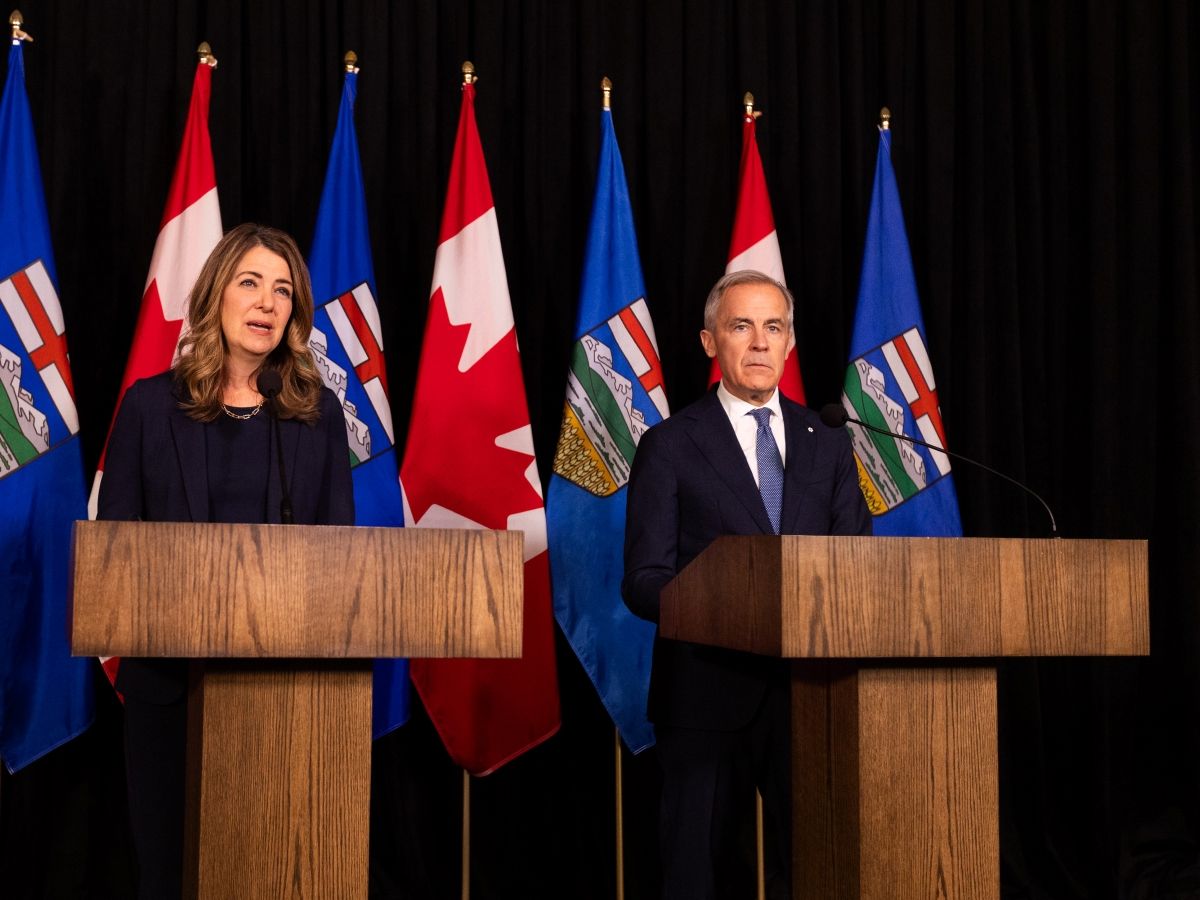
Photo via National Post

Weaponizing oil against U.S. will go ‘badly’: Heather Exner-Pirot

Read the original at National Post ↗
Cite

Jerema, C. (2026, September 3). Weaponizing oil against U.S. will go ‘badly’: Heather Exner-Pirot. National Post. https://nationalpost.com/opinion/weaponizing-oil-against-u-s-will-go-badly-heather-exner-pirot

Dated when The Aporia collected the article, usually within hours of publication. Check the original for its exact date and byline.

National Post · collected 2026-09-03 · by Carson Jerema

Quick Summary

Heather Exner-Pirot from the Macdonald-Laurier Institute is interviewed about the risks of using Canada's energy exports as leverage against the United States in their trade dispute. According to Exner-Pirot, any attempt to inflict economic pain on the US could backfire and hurt Canadian oil producers, disrupt supply chains, and lead to further American retaliation. No specific numbers or estimates are mentioned in the article. The focus is on warning that using energy exports as a weapon against the US would be counterproductive and damage Canada's global reputation as a reliable energy supplier.
Written by AI on 2026-09-03, from this article's own text only (the story summary below draws on all the coverage).

AI analysis

Story summary

As of September 4, 2026, a tentative trade deal between Canada and the U.S., aimed at avoiding damaging tit-for-tat tariffs, collapsed just hours before its deadline. This breakdown triggered President Donald Trump to impose new 50% tariffs on $28 billion worth of Canadian exports. Prime Minister Mark Carney responded by announcing Canada's intention to match these tariffs dollar for dollar to protect domestic workers and businesses. The escalating trade tensions have led to the U.S. Justice Department ordering a freeze on all antitrust work with Canada, exacerbating the economic conflict between the neighboring countries.

The dispute has also spurred a "Buy Canadian" movement among consumers who are actively seeking out locally made products over American alternatives as part of their show of solidarity amid the ongoing trade war. Additionally, retaliatory tariffs have been imposed on various goods including dairy, motorcycles, and alcoholic beverages, further complicating economic relations between the two nations. This conflict comes amidst broader political tensions highlighted by President Trump's repeated rhetoric about annexing Canada. Despite historic close ties, both countries face significant challenges in resolving their trade disputes amicably.
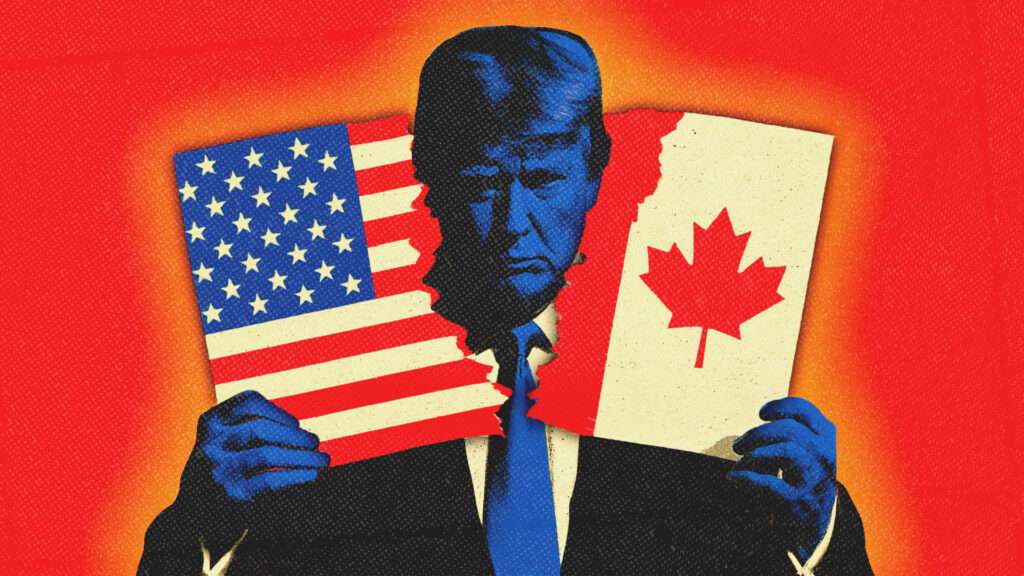
Written for “U.S.-Canada Trade War Escalates” on 2026-10-30, grounded in this article and the 53 other(s) covering the same event.

Story

📰 U.S.-Canada Trade War Escalates
Economy/Business · 54 article(s) covering the same event. See how they differ ↓

Compared with similar articles

This article reads leans right and hedges 40% of its claims. Each row says how that neighbour differs.
National Post
⚖️ Leans left further left than this Hedges 7 of 26 claims Outlet record 60/100
Reason
⚖️ Leans strongly right further right than this Hedges 3 of 43 claims Outlet record 67/100
“The articles discuss different topics related to Canada-US trade disputes, but do not report on the same specific incident”
National Post
Hedges 4 of 42 claims Outlet record 60/100
“Article A discusses a general debate over using energy exports as leverage, while Article B reports on a specific tweet by Trump threatening to block Bombardier sales in the US”
Semafor
⚖️ Leans right Hedges 4 of 44 claims Outlet record 60/100
“The articles cover different topics: OPEC's internal divisions vs. Canadian leaders' debate on using energy exports as leverage”
TIME
⚖️ Leans left further left than this Hedges 5 of 45 claims Outlet record 59/100
“Article A discusses a hypothetical scenario of weaponizing Canada's energy exports, while Article B reports on the breakdown in trade talks between Canada and the US.”
The Bulwark
⚖️ Leans left further left than this Hedges 0 of 8 claims
“Article A discusses a potential Canadian trade dispute with the US, while Article B refers to an actual deal between Trump and Venezuela”
Semafor
⚖️ Leans right Hedges 0 of 3 claims Outlet record 60/100
“Article A discusses Canada's energy exports as leverage in trade disputes, while Article B refers to Iran's oil export sanctions and their impact on oil prices”
National Post
Hedges 10 of 58 claims Outlet record 60/100
“Article A discusses a debate over using energy exports as leverage in Canada's trade dispute with the US, while Article B reports on a poll showing Canadians viewing the US as an enemy due to Trump's actions”
CBC News
Hedges 0 of 27 claims Outlet record 74/100
“Article A discusses a general idea of 'weaponizing oil' in trade disputes, while Article B refers to Alberta's diplomatic approach and specific events mentioned are not directly related to Article A”
CBC News
⚖️ Leans left further left than this Hedges 6 of 32 claims Outlet record 74/100
“Article A discusses using energy exports as leverage in the trade dispute with the US, while Article B talks about counter-tariffs on semi-trailers built in the US”
How this article was measured signals, leaning charts, publisher record, byline, topics and claims

Signals How these are calculated →

Claims extracted
5
sentences that state something as happening or true
Uncertain
40%
2 of 5 hedged ("reportedly", "may", "according to")
Leaning
Leans right
of the writing, not the subject · beta estimate
Publisher signals
60/100
National Post's corrections and hedging, across everything collected from it. Not a measure of accuracy.
Outlets on this story
54
Economy/Business
Same framing elsewhere
1
articles that frame the event the way this one does
Analyzed 2026-09-03 · how these are computed

How this is being covered How these are calculated →

Article leaning vs. publisher reliability
Source leaning vs. consistency

Publisher

National Post · 1233 article(s) · 2 correction(s) detected
Running correction rate · 2 correction(s)

Who wrote this

Carson Jerema
59 article(s) here · 1 carrying a prediction
🔮 If California’s proposed wealth tax is defeated next week — polling now finds Prop. 40 underwater with voters — it will represent less a failure of economic arguments than of political activism given academic gloss.
🔮 One can see what they wish in the results, which will not be final until Friday afternoon, when all votes will be tallied.
🔮 She told the court she went off social media in the wake of the allegations so that she could focus on her publishing requirements, but that it was “difficult to miss what was going on.”
🔮 Indeed, the scale and magnitude of Eby’s misreading of the B.C. electorate in calling his early snap election cannot be understated and it may well be the greatest political blunder in Canadian history.
🔮 The Conservatives are projected to win 62 seats to the NDP’s 29 as of 9 p.m. local time.
🔮 The destruction we are now seeing in Europe will inevitably become more pervasive until it, too, manifests into violence by way of terrorism, if not armed insurrection.
2026-10-23 · assertive framing · Avi Benlolo: Why Toronto’s mayoralty race matters
🔮 The empty chair said more than any speech could.
🔮 Sharma refused to issue a ban, which she said would violate the open courtroom principle and was an “extreme measure,” but noted that media present in the courtroom could observe the woman’s request.
🔮 Given the riots’ aesthetic and demographic makeup, politicians on the right may feel increasingly emboldened to issue statements of this kind — which reflect the existential tenor with which the unrest has been received among right-wing populists the world over; as well as the enormous stakes voters of all hues will feel going into the presidential elections in April.
🔮 Saturday night, the city elected Green Party of Vancouver’s Pete Fry as mayor.
Also by Carson Jerema
Nothing else under this byline is closely related to this article, so these are simply their most recent.
All 59 articles by Carson Jerema →

Topics

Alberta Canada Canadian Saskatchewan the United States

Subjects

Canada GPE · 4× Canadian NORP · 2× Alberta GPE · 1× Exner-Pirot PERSON · 1× Heather Exner-Pirot PERSON · 1× Macdonald-Laurier Institute ORG · 1× Rob Breakenridge PERSON · 1× Saskatchewan GPE · 1× U.S. GPE · 1× the United States GPE · 1×

Narrative

The premiers of both Alberta and Saskatchewan have warned against the idea of an oil export tax or restrictions on Canadian oil exports, and have faced accusations of being out of step with a so-called “Team Canada” approach.
framing: mixed · carried by 1 article(s) · first seen 2026-09-03
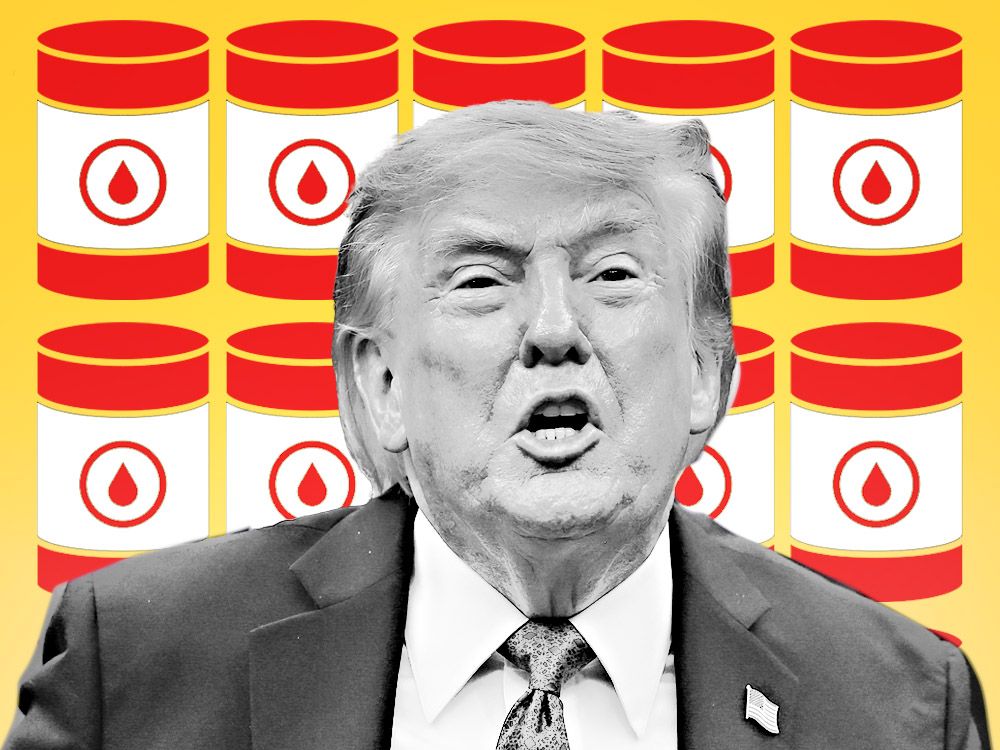
🔮 Exner-Pirot argues that any attempt to inflict economic pain on the U.S. could backfire on Canada, hurting domestic oil producers, disrupting supply chains, and inviting further American retaliation.
2026-09-03 · National Post
Weaponizing oil against U.S. will go ‘badly’: Heather Exner-Pirot · mixed framing

Claims (5 extracted, 2 hedged)

Amid the debate over how or whether Canada should escalate its trade dispute with the United States, there’s been a push from some Canadian leaders to consider using energy exports as leverage. asserted
Canada → escalate → leverage
The premiers of both Alberta and Saskatchewan have warned against the idea of an oil export tax or restrictions on Canadian oil exports, and have faced accusations of being out of step with a so-called “Team Canada” approach. asserted
premiers → warn → approach
In this interview, Rob Breakenridge is joined by Heather Exner-Pirot of the Macdonald-Laurier Institute, who lays out the risks and downside of weaponizing Canada’s energy exports. asserted
who → join → exports
Exner-Pirot argues that any attempt to inflict economic pain on the U.S. could backfire on Canada, hurting domestic oil producers, disrupting supply chains, and inviting further American retaliation. uncertain
attempt → argue → retaliation
Such a move could also undermine Canada’s aspirations to be seen globally as a stable and reliable supplier of energy. uncertain
move → undermine → energy
💬Give feedback
🕘History 🎫Support