Photo via Toronto Star

Canada's literary awards say publishers are in best position to sniff out AI

Read the original at Toronto Star ↗
Cite

Thompson, N. (2026, September 25). Canada's literary awards say publishers are in best position to sniff out AI. Toronto Star. https://www.thestar.com/entertainment/books/canada-s-literary-awards-say-publishers-are-in-best-position-to-sniff-out-ai/article_3f00c93d-86b1-54b1-8a40-84a520981ed9.html

Dated when The Aporia collected the article, usually within hours of publication. Check the original for its exact date and byline.

Toronto Star · collected 2026-09-25 · by Nicole Thompson

Quick Summary

Canadian literary awards like the Writers’ Trust and the Giller Prize depend on publishers to confirm that nominated books are not written by AI. Both organizations prohibit AI-generated works from their prizes, relying on publisher assurances rather than specific detection tools. This policy comes after a French literature prize removed a Canadian author’s book from its long list amid allegations of AI involvement, which the author denies. The Canada Council for the Arts is also developing guidelines to address AI use in literary submissions for its Governor General’s Literary Awards.
Written by AI on 2026-09-25, from this article's own text only (the story summary below draws on all the coverage).

AI analysis

Story summary

TORONTO - Canada's top literary prizes, including those from Writers’ Trust of Canada and the Giller Foundation, have established policies that exclude AI-generated works from their awards. The executive directors of these organizations rely on publishers to ensure that submitted books are human-authored. This stance comes after a French literary award pulled Canadian author Thélyson Orélien’s debut novel from its long list amid allegations that the book was written using artificial intelligence; Orélien denies the claims. Writers’ Trust, celebrating its 50th anniversary this year and distributing hundreds of thousands of dollars in annual awards, states it continuously reviews ways to evaluate literary submissions for AI involvement but does not disclose specific tools used for detection.

Written for “AI In Publishing Awards” on 2026-10-31, grounded in this article and the 0 other(s) covering the same event.

Story

📰 AI In Publishing Awards
Technology · 1 article(s) covering the same event.

Compared with similar articles

This article reads unscored and hedges 5% of its claims. Each row says how that neighbour differs.
Daily Mail
Hedges 4 of 10 claims Outlet record 68/100
“Article A reports on the initial accusation and author's denial, while Article B discusses Canada’s literary awards' stance on AI in light of a similar incident involving a French prize.”
The Guardian
⚖️ Leans left Hedges 0 of 23 claims Outlet record 66/100
“Article A reports on the removal of a novel from France’s Goncourt prize list, while Article B discusses Canada's literary awards' policies regarding AI-written works in response to an incident involving a French prize.”
CBC News
Hedges 4 of 59 claims Outlet record 74/100
“While both articles discuss a scandal involving an author accused of using AI to write a book, they describe different aspects and parties involved. Article A focuses on the initial allegations against Thélyson Orélien, while Article B reports on Canada's literary awards' response and policies regarding AI-generated works.”
The Globe and Mail
Hedges 1 of 19 claims Outlet record 52/100
“Article A focuses on publishers defending a Haitian-Canadian author accused of using AI to write an award-winning novel, while Article B discusses Canada's literary awards relying on publishers to ensure books were not written by AI. Although related, they describe different aspects and developments in the broader context.”
How this article was measured signals, leaning charts, publisher record, byline, topics and claims

Signals How these are calculated →

Claims extracted
19
sentences that state something as happening or true
Uncertain
5%
1 of 19 hedged ("reportedly", "may", "according to")
Leaning
not political
takes no side on a contested political question
Publisher signals
64/100
Toronto Star's corrections and hedging, across everything collected from it. Not a measure of accuracy.
Outlets on this story
1
Technology
Same framing elsewhere
1
articles that frame the event the way this one does
Analyzed 2026-09-25 · how these are computed

How this is being covered How these are calculated →

Article leaning vs. publisher reliability
Source leaning vs. consistency

Publisher

Toronto Star · 10757 article(s) · 28 correction(s) detected
Running correction rate · 28 correction(s)
2026-10-26
Correction
2026-10-24
Correction
2026-10-07
Correction
2026-09-24
Correction

Who wrote this

Nicole Thompson
10 article(s) here · 1 carrying a prediction
🔮 It premiered at the Cannes Film Festival in May, where it won the top prize, the Palme d’Or.
🔮 Leonard said the organization doesn’t share which tools it uses to evaluate whether contenders use AI, as that would make it easier to evade detection.
🔮 A press release from the company says Hope & Hard Work will create both scripted and unscripted content, and several projects are already in development.
🔮 I don’t think in any other festival, I would have the chance to watch so many movies.”
🔮 The Toronto International Film Festival may be shifting more of its focus to the business side of things with the launch of TIFF: The Market, but at its heart, it’s still a place for people to see great cinema.
Also by Nicole Thompson
Vancouver artist Steven Shearer wins Audain Prize
2026-09-23 · The Globe and Mail
Nothing else under this byline is closely related to this article, so these are simply their most recent.
All 10 articles by Nicole Thompson →

Topics

Canada Canadian TORONTO Writers’ Trust of Canada the Giller Foundation

Subjects

Canadian NORP · 2× The Canadian Press ORG · 2× Writers’ Trust of Canada ORG · 2× the Giller Foundation ORG · 2× Canada GPE · 1× David Leonard PERSON · 1× France GPE · 1× Leonard PERSON · 1× TORONTO GPE · 1× Writers’ Trust ORG · 1×

Narrative

Lussier said the council was already working on its policy before the controversy involving the French award, and noted the organization has already published guidance on the use of AI in the projects it funds and in reviewing grant applications. The Académie Goncourt announced Friday that it had removed Thélyson Orélien’s novel, “C’était ça ou mourir,” which translates to “It was either that or dying,” from the running for the Prix Goncourt amid allegations that the book was written using artificial intelligence, and separate plagiarism allegations involving his earlier work.
framing: assertive · carried by 1 article(s) · first seen 2026-09-25
🔮 Leonard said the organization doesn’t share which tools it uses to evaluate whether contenders use AI, as that would make it easier to evade detection.

Claims (19 extracted, 1 hedged)

Canada’s top literary prizes say they largely rely on publishers to ensure the books they award were authored by humans, not artificial intelligence. asserted
they → say → humans
The executive directors of Writers’ Trust of Canada and the Giller Foundation both said Friday that they have policies barring AI-written works from their awards. Their responses come as one of France’s top literature prizes pulled a Canadian author’s debut novel from its long list over allegations he wrote the book with generative AI, which he has denied. asserted
he → say → which
“Writers’ Trust is clear in its guidelines for every prize: Works containing AI-generated text, in whole or in part, are not eligible,” David Leonard said in an email. asserted
Leonard → contain → email
“For our major book prizes we rely on attestation from the publishers that the works are human-authored, and we are continuously reviewing and exploring new ways of evaluating literary submissions for all of our prizes and programs.” asserted
we → rely → prizes
Writers’ Trust of Canada, which is celebrating its 50th anniversary, hands out hundreds of thousands of dollars in awards annually, including for fiction, nonfiction and emerging LGBTQ+ authors. asserted
which → celebrate → fiction
This year’s ceremony is set for Nov. 10. asserted
ceremony → set → Nov.
Leonard said the organization doesn’t share which tools it uses to evaluate whether contenders use AI, as that would make it easier to evade detection. asserted
it → say → detection
“What we can share is that any concerns are reviewed carefully by people, not decided by tools alone,” he wrote. asserted
he → share → tools
Elana Rabinovitch, executive director of the Giller Foundation, said her organization also prohibits AI-generated works — but publishers are better positioned to ensure their books are written by people and not machines. asserted
books → say → people
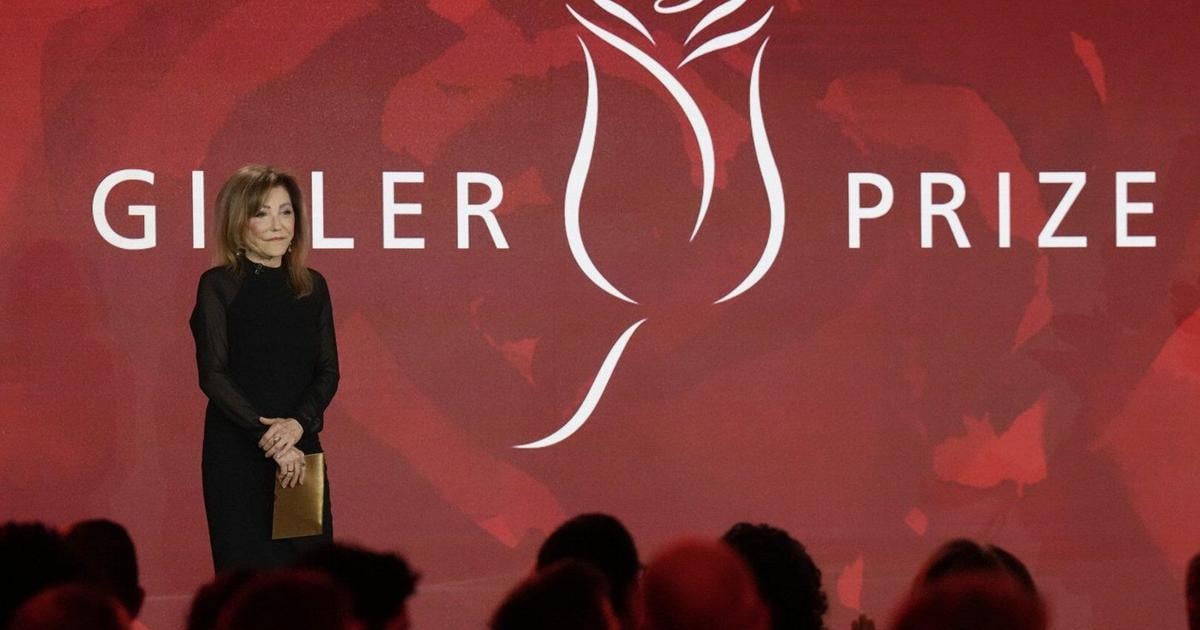
The Giller Prize, worth $100,000, is awarded to a novel, graphic novel or short story collection deemed the best work of fiction published in English by a Canadian writer. asserted
Prize → award → writer
It’s due to be handed out Nov. 16. asserted
It → ’ → ?
“I think, for better or worse, the gatekeepers of literary AI are the publishers and editors,” Rabinovitch said in an email. asserted
Rabinovitch → think → email
“The publishing houses work closely with authors and their work, and would be, I think, the first to ascertain whether any AI tools were used in the writing of a book. asserted
tools → work → book
That said, these tools are highly sophisticated and could well evade detection.” uncertain
tools → say → detection
Meanwhile, the Canada Council for the Arts, which administers the Governor General’s Literary Awards, said it’s in the process of establishing a policy setting out “clear expectations” when it comes to AI in books it considers for the prizes. asserted
it → administer → prizes
Caroline Lussier, director of arts promotion for the council, said the organization hopes the policy will be in place for the next competition cycle. asserted
policy → say → cycle
Lussier said the council was already working on its policy before the controversy involving the French award, and noted the organization has already published guidance on the use of AI in the projects it funds and in reviewing grant applications. The Académie Goncourt announced Friday that it had removed Thélyson Orélien’s novel, “C’était ça ou mourir,” which translates to “It was either that or dying,” from the running for the Prix Goncourt amid allegations that the book was written using artificial intelligence, and separate plagiarism allegations involving his earlier work. asserted
book → say → work
Orélien declined to provide comment to The Canadian Press on Friday, saying he was focusing on his health, but earlier this week vehemently denied using AI to write the novel. asserted
he → decline → novel
This report by The Canadian Press was first published Sept. 25, 2026. -with files by Charlotte Glorieux in Montreal. asserted
report → publish → Montreal

💬Give feedback
🕘History 🎫Support