Photo via The Globe and Mail

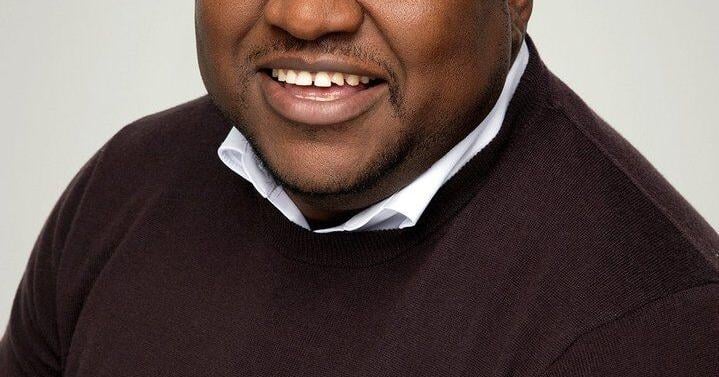
Publishers stand by Haitian-Canadian author accused of using AI to write award-winning novel

Read the original at The Globe and Mail ↗
Cite

Cheng, M., & Stargardter, G. (2026, September 23). Publishers stand by Haitian-Canadian author accused of using AI to write award-winning novel. The Globe and Mail. https://www.theglobeandmail.com/canada/article-haitian-canadian-author-thelyson-orelien-accused-of-using-ai/

Dated when The Aporia collected the article, usually within hours of publication. Check the original for its exact date and byline.

The Globe and Mail · collected 2026-09-23 · by Maria Cheng, Gabriel Stargardter

Quick Summary

Haitian-Canadian author Thelyson Orelien faces accusations on social media that he used artificial intelligence to write his award-nominated novel "C’était ça ou mourir," but both Canadian and French publishers have defended him. Orelien denies the claims, stating they are hurtful and surprising, especially given past racist attacks. The controversy has sparked debate about race and literary merit in France, with some critics questioning the reliability of AI detection tools like Pangram, which claims 99.7 percent accuracy.
Written by AI on 2026-09-23, from this article's own text only (the story summary below draws on all the coverage).

AI analysis

Story summary

Thélyson Orélien, a Haitian-Canadian author based in Montreal, faces controversy over accusations that he used artificial intelligence (AI) to write his debut novel C’était ça ou mourir (“It Was Either That or Die”). The allegations emerged on September 21 when an anonymous X account called “Balance ton Claude” claimed AI detection tool Pangram showed the book was written almost entirely by machines. Despite these claims, Orélien denied using AI and suggested the accusations were racially motivated. His publishers have defended him, stating they are not taking the allegations lightly but cannot confirm or deny them definitively. The novel has sold about 35,000 copies and won the Prix du Roman Fnac; however, it was removed from the shortlist for the prestigious Goncourt prize due to these accusations. This scandal has sparked debates about AI's role in literature and its impact on literary integrity and recognition.

Written for “AI In Literature Controversy” on 2026-11-03, grounded in this article and the 5 other(s) covering the same event.

Story

📰 AI In Literature Controversy
Technology · 6 article(s) covering the same event. Compare every outlet's account →

Compared with similar articles

This article reads unscored and hedges 5% of its claims. Each row says how that neighbour differs.
Daily Mail
Hedges 4 of 10 claims Outlet record 69/100
Toronto Star
Hedges 0 of 2 claims Outlet record 64/100
“Article A discusses publishers defending the author against AI allegations, while Article B reports on the Académie Goncourt removing the novel from a list of finalists for the French literary prize. These are related but distinct events.”
The Guardian
⚖️ Leans left Hedges 0 of 23 claims Outlet record 66/100
“While both articles discuss the removal of a book from a literary prize due to accusations of AI authorship, they describe different actions happening at distinct times: one involves publishers standing by the author (on September 23), and the other describes an academy removing the book from its list (on September 25).”
CBC News
Hedges 4 of 59 claims Outlet record 74/100
“While both articles discuss similar accusations against the same author and novel, Article A focuses on the publishers standing by the author after initial allegations, while Article B discusses the broader impact of the scandal on the literary world.”
Global News
Hedges 0 of 7 claims Outlet record 63/100
“Article A describes publishers defending an author against accusations of using AI, while Article B reports that the Académie Goncourt has removed a novel from finalist status amid similar allegations. These are related events but not the same specific incident.”
Toronto Star
Hedges 1 of 19 claims Outlet record 64/100
“Article A focuses on publishers defending a Haitian-Canadian author accused of using AI to write an award-winning novel, while Article B discusses Canada's literary awards relying on publishers to ensure books were not written by AI. Although related, they describe different aspects and developments in the broader context.”
How this article was measured signals, leaning charts, publisher record, byline, topics and claims

Signals How these are calculated →

Claims extracted
19
sentences that state something as happening or true
Uncertain
5%
1 of 19 hedged ("reportedly", "may", "according to")
Leaning
withheld
no quote in the article backed the model's score
Publisher signals
52/100
The Globe and Mail's corrections and hedging, across everything collected from it. Not a measure of accuracy.
Outlets on this story
6
Technology
Same framing elsewhere
1
articles that frame the event the way this one does
Analyzed 2026-09-23 · how these are computed

How this is being covered How these are calculated →

Article leaning vs. publisher reliability
Source leaning vs. consistency

Publisher

The Globe and Mail · 1056 article(s) · 36 correction(s) detected
Running correction rate · 36 correction(s)

Who wrote this

Maria Cheng
3 article(s) here · 1 carrying a prediction
🔮 The draft declaration said work to define the relationship would continue until next year’s EU-Canada summit.
🔮 “If, by the time of our next meeting on October 6, when we establish the second shortlist, we have information that is indisputable, then of course we will have to consider the matter carefully,” he said.
🔮 The tariffs were set to go into effect overnight Tuesday.
Also by Maria Cheng
Nothing else under this byline is closely related to this article, so these are simply their most recent.
Gabriel Stargardter
1 article(s) here · 1 carrying a prediction
🔮 “If, by the time of our next meeting on October 6, when we establish the second shortlist, we have information that is indisputable, then of course we will have to consider the matter carefully,” he said.
The only article under this byline in the corpus.

Topics

France French Grasset Haitian Orelien

Subjects

Orelien PERSON · 6× French NORP · 4× France GPE · 2× Grasset ORG · 2× Haitian NORP · 2× Thelyson Orelien PERSON · 2× Canada GPE · 1× Haiti GPE · 1× Liberation ORG · 1× the United States GPE · 1×

Narrative

Orelien denied using AI tools to write C’était ça ou mourir (“It Was Either That or Die”) on Tuesday, a day after a little-known X account called “Balance ton Claude” said that running passages through AI detection tool Pangram showed the novel “was written almost entirely by artificial intelligence.”
framing: assertive · carried by 1 article(s) · first seen 2026-09-23
🔮 “If, by the time of our next meeting on October 6, when we establish the second shortlist, we have information that is indisputable, then of course we will have to consider the matter carefully,” he said.

Claims (19 extracted, 1 hedged)

The publishers of an award-winning novel by Haitian-Canadian author Thelyson Orelien have defended the writer against accusations he used artificial intelligence to write it, and said they stand behind him. asserted
they → win → him
Orelien denied using AI tools to write C’était ça ou mourir (“It Was Either That or Die”) on Tuesday, a day after a little-known X account called “Balance ton Claude” said that running passages through AI detection tool Pangram showed the novel “was written almost entirely by artificial intelligence.” asserted
novel → deny → intelligence
The controversy has ignited a debate about race, literary merit and originality that has roiled the French literary establishment. asserted
that → ignite → establishment
The novel, Haiti-born Orelien’s first, has been longlisted for the prestigious Goncourt prize and won several others. asserted
novel → bear → others
It tells the story of a Haitian migrant who travels north through Latin America and the United States to Canada. asserted
who → tell → Canada
Denying the accusations against him, Orelien told French daily Liberation that they had come as a surprise, even if he had faced racist attacks ever since arriving in France. asserted
he → deny → France
“I did not expect attacks of this kind. asserted
I → expect → kind
I am not sad, but angry,” he said. asserted
he → say → ?
“I am in the process of putting together a dossier with my publishers in France and Quebec to prove that what I am saying is true.” asserted
saying → put → what
“We stand alongside Thelyson Orelien and thank the readers who continue to place their trust in him,” Canadian publisher Editions du Boreal said in a statement. asserted
Boreal → stand → statement
French publisher expresses confidence in Orelien Orelien’s French publisher, Grasset, said it condemned any malicious claims over AI usage, describing them as “deeply hurtful to a writer with an exceptional career.” uncertain
it → express → career
“The Grasset teams stand alongside this man ... they reaffirm their absolute confidence in him,” it said. asserted
it → stand → him
Reuters was unable to determine who is behind the Balance ton Claude account, which said in a chat on X that its anonymity helped maintain its independence and freedom to speak out. asserted
anonymity → determine → independence
“We don’t see the connection between AI and skin color. asserted
We → see → AI
Should we have stayed silent and allowed artificial intelligence to receive major literary prizes on the grounds that the official author is not white?” it said. asserted
it → stay → grounds
Pangram says it is 99.7 per cent accurate in detecting AI writing, although some experts have questioned the reliability of AI detection software. asserted
experts → say → software
Philippe Claudel, the president of the Academie Goncourt which hands out the top French-language literary prize, said no decision had been taken on whether to remove Orelien’s novel from the longlist. asserted
decision → hand → longlist
“If, by the time of our next meeting on October 6, when we establish the second shortlist, we have information that is indisputable, then of course we will have to consider the matter carefully,” he said. asserted
he → establish → matter
Claudel said it was “almost inevitable” that questions over AI authorship were here to stay and that a charter was needed that “makes it possible to distinguish what has been produced by AI from what has been produced by a human.” asserted
what → say → human

💬Give feedback
🕘History 🎫Support