The Aporia
The Straits Times. (2026, September 25). Chile seizes more than 200 fossils of extinct mollusks. The Straits Times. https://www.straitstimes.com/world/chile-seizes-more-than-200-fossils-of-extinct-mollusks
The Straits Times. “Chile seizes more than 200 fossils of extinct mollusks.” The Straits Times, 25 Sept. 2026, https://www.straitstimes.com/world/chile-seizes-more-than-200-fossils-of-extinct-mollusks.
The Straits Times. “Chile seizes more than 200 fossils of extinct mollusks.” The Straits Times, September 25, 2026. https://www.straitstimes.com/world/chile-seizes-more-than-200-fossils-of-extinct-mollusks.
Dated when The Aporia collected the article, usually within hours of publication. Check the original for its exact date and byline.
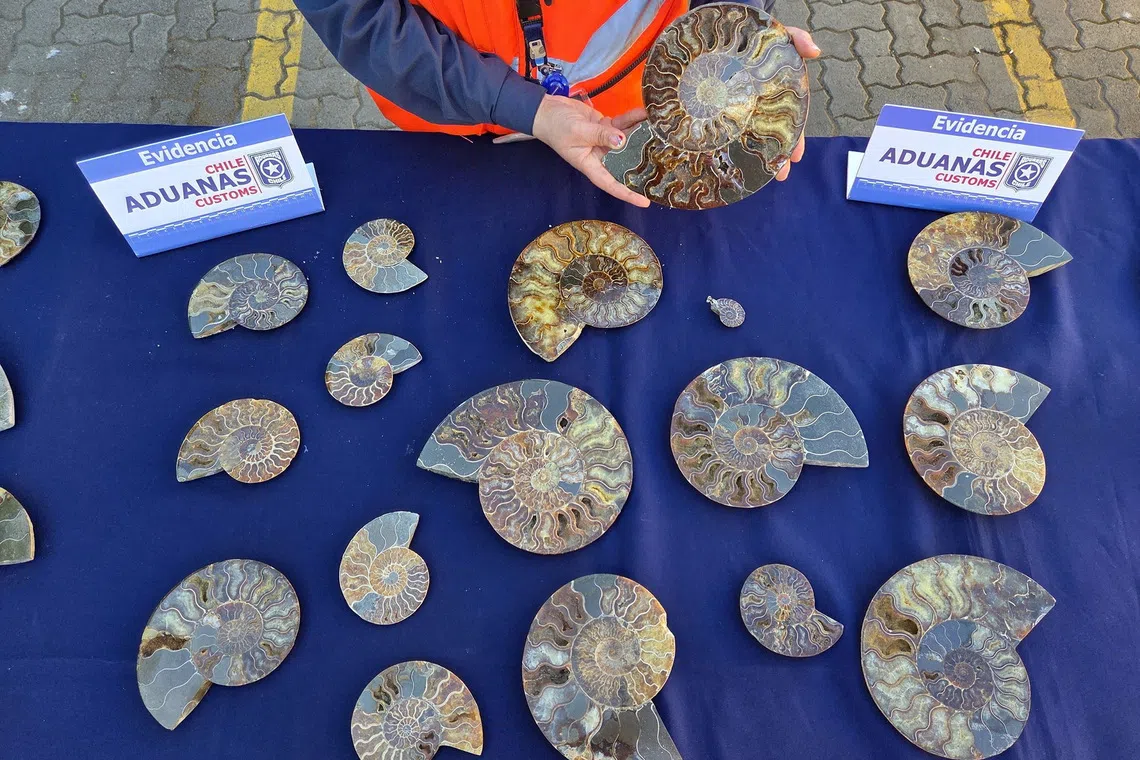
Customs officials in Santiago, Chile, discovered and seized more than 200 fossils of ammonites on September 25 from a shipping container declared as containing household ornaments. The container originated from Madagascar but was shipped through China, which had been listed as the country of origin. Ammonites, extinct mollusks related to octopuses and squids, date back approximately 110 million years, surviving until the Cretaceous–Paleogene extinction event about 66 million years ago.
The fossils were smuggled in cardboard boxes wrapped in newspapers and magazines from Madagascar among other cargo items declared as chains, pendants, and glass household ornaments. Specialists at the San Antonio Museum of Natural History confirmed the authenticity of these 110-million-year-old ammonite fossils.
Chile's National Customs Directorate is now awaiting a response from the government of Madagascar to confirm the fossils' origin and determine if Madagascar will request their repatriation formally.