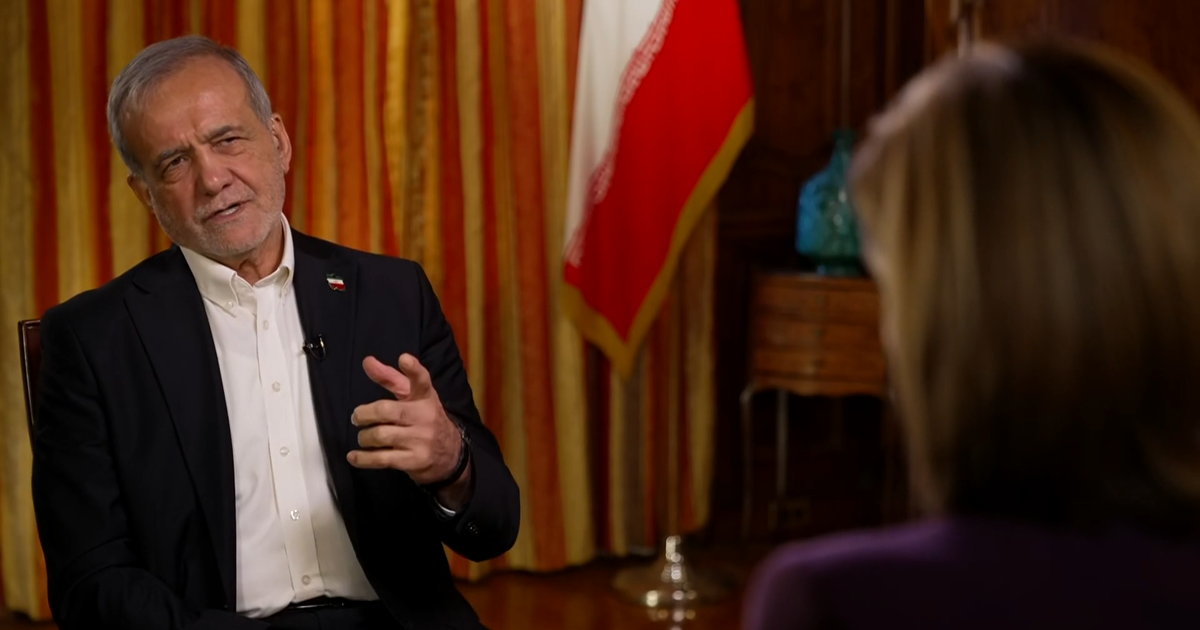
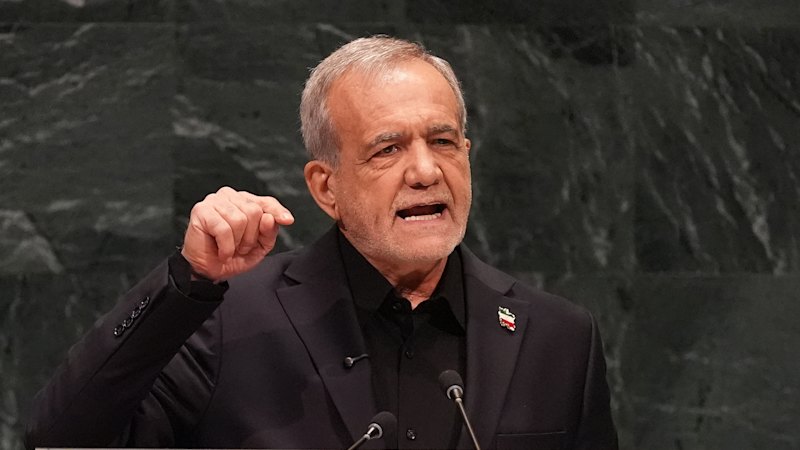
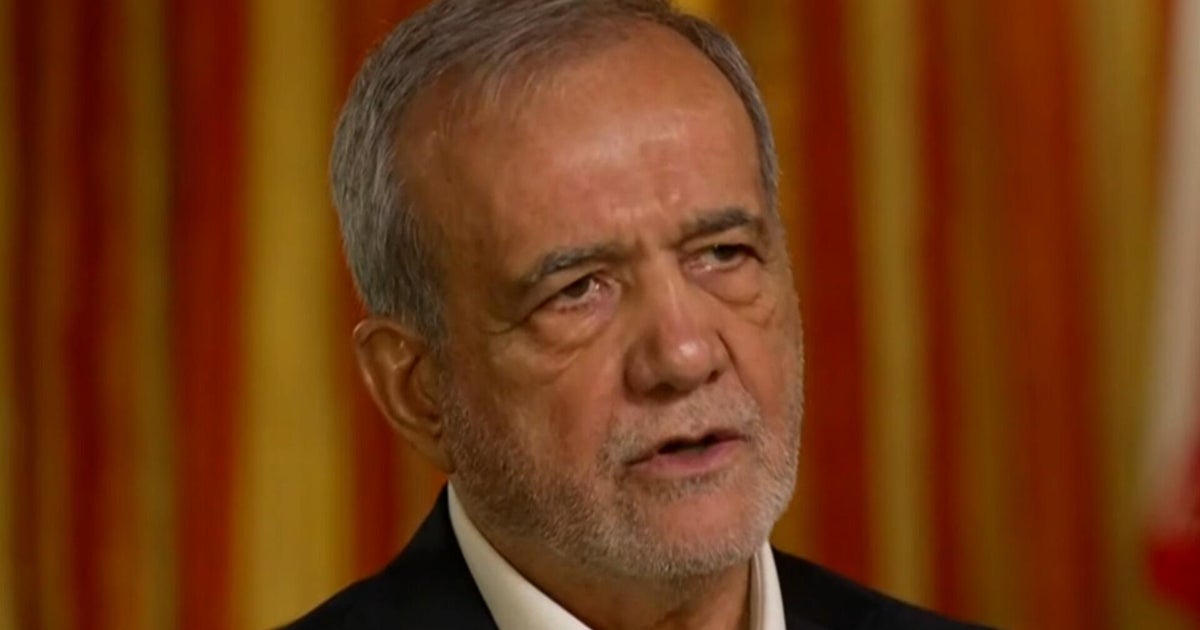
Photo via CBS News

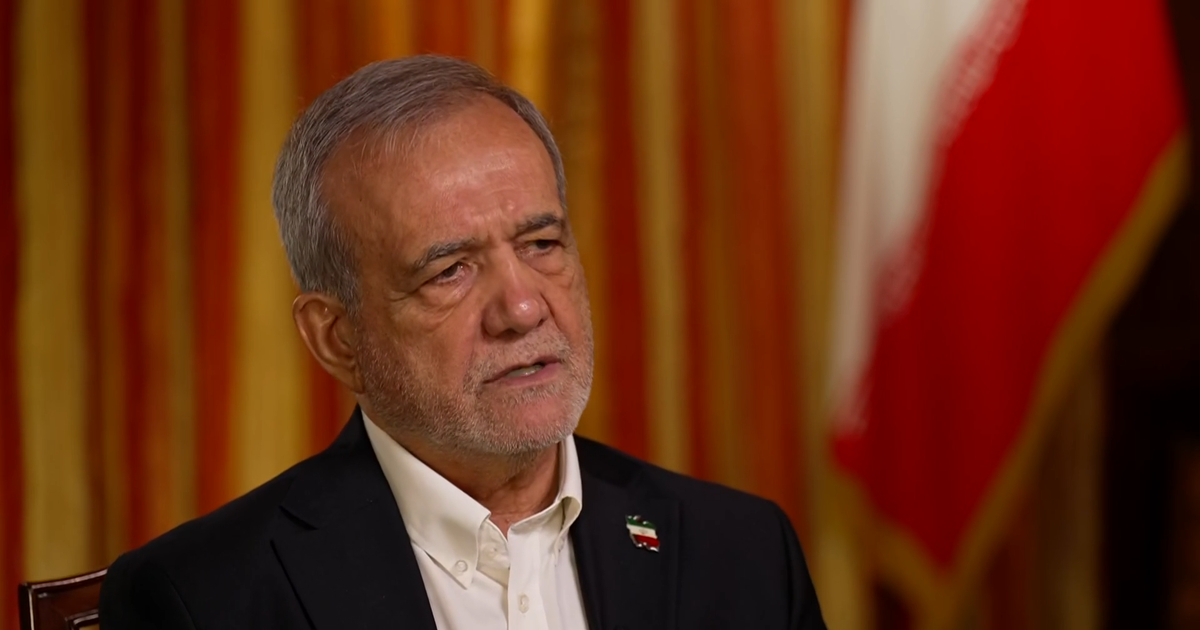
Transcript: Iranian President Masoud Pezeshkian on "Face the Nation with Margaret Brennan"

Read the original at CBS News ↗
Cite

Transcript: Iranian President Masoud Pezeshkian on "Face the Nation with Margaret Brennan". (2026, September 26). CBS News. https://www.cbsnews.com/news/transcript-iranian-president-masoud-pezeshkian-face-the-nation-transcript-09-27-2026/

Dated when The Aporia collected the article, usually within hours of publication. Check the original for its exact date and byline.

CBS News · collected 2026-09-26

Quick Summary

Iranian President Masoud Pezeshkian spoke on "Face the Nation with Margaret Brennan" about Iran's proposal to reopen the Strait of Hormuz after seven days if certain conditions are met, which could lead to negotiations on ending a war and possibly addressing the nuclear program. When asked about the specific conditions, Pezeshkian referred to an earlier Memorandum of Understanding (MOU) that broke down into stages due to lack of coordination. He emphasized that both Iran and the United States need to take steps to open up communication before further negotiations can proceed.
Written by AI on 2026-09-26, from this article's own text only (the story summary below draws on all the coverage).

AI analysis

Story summary

As of October 2, 2026, Donald Trump rejected Iran's offer to reopen the Strait of Hormuz within seven days, deeming it "simply not enough." This proposal was made by Iranian President Masoud Pezeshkian in an effort to ease tensions and open dialogue. However, Trump warned that military action against Tehran could resume after the U.S. midterm elections, suggesting ongoing hostility despite Iran's willingness to negotiate. The offer came amidst international pressure for a resolution to the conflict; Russian President Vladimir Putin expressed hope that the strait would reopen, while also noting Russia’s proposal to receive enriched uranium from Iran remains on the table.

The U.S. has imposed new sanctions on Iranian carmakers and rail operators in response to Tehran's threats and actions. In parallel, Trump dismissed previous claims suggesting his administration was preparing to provide significant concessions to Iran, instead emphasizing a strategy focused on economic pressure through sanctions that have severely impacted Iran’s currency, with the rial trading at an unprecedented 2.5 million to the dollar.

The situation remains tense, with multiple international stakeholders advocating for dialogue and peace but facing resistance from both sides, particularly as the U.S. continues its aggressive stance towards Iran despite diplomatic efforts by other nations like Russia. Ed Miliband, UK Foreign Secretary, also met with his Iranian counterpart in New York during the UN General Assembly to discuss reopening the Strait of Hormuz and address threats posed by Iranian-linked groups on British soil. However, Miliband reiterated that Britain will not tolerate any form of intimidation or hostile activity linked to Iran. This complex diplomatic scenario underscores the challenges in achieving a peaceful resolution without further escalation.
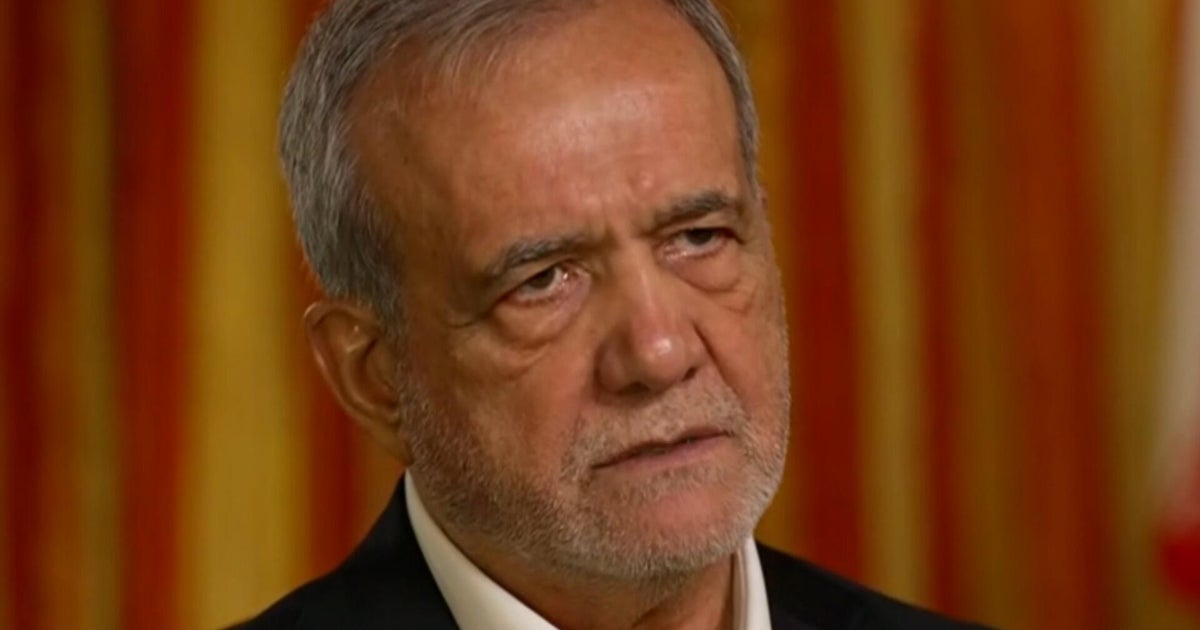
Written for “Trump's Iran Policy And Pardons Talks” on 2026-11-03, grounded in this article and the 132 other(s) covering the same event.

Story

📰 Trump's Iran Policy And Pardons Talks
Politics · 133 article(s) covering the same event. See how they differ ↓

Compared with similar articles

This article reads unscored and hedges 6% of its claims. Each row says how that neighbour differs.
CBS News
Hedges 0 of 1 claims Outlet record 66/100
CBS News
Hedges 0 of 1 claims Outlet record 66/100
CBS News
Outlet record 66/100
CBS News
Hedges 0 of 2 claims Outlet record 66/100
CBS News
Hedges 4 of 42 claims Outlet record 66/100
CBS News
Hedges 19 of 420 claims Outlet record 66/100
CBS News
Hedges 0 of 1 claims Outlet record 66/100
“The articles describe different broadcasts of 'Face the Nation with Margaret Brennan' occurring on different dates.”
The Sydney Morning Herald
⚖️ Leans strongly left Hedges 3 of 36 claims Outlet record 61/100
“The articles describe different occurrences: Article A covers President Pezeshkian's speech at the UN on September 23rd, while Article B describes a separate interview on 'Face the Nation with Margaret Brennan' recorded on September 25th.”
Al Jazeera
⚖️ Leans left Hedges 0 of 3 claims Outlet record 60/100
“Article A describes the arrival and expected address at UNGA, while Article B reports on a transcript of an interview that occurred after the initial arrival.”
How this article was measured signals, leaning charts, publisher record, byline, topics and claims

Signals How these are calculated →

Claims extracted
262
sentences that state something as happening or true
Uncertain
6%
16 of 262 hedged ("reportedly", "may", "according to")
Leaning
not political
takes no side on a contested political question
Publisher signals
66/100
CBS News's corrections and hedging, across everything collected from it. Not a measure of accuracy.
Outlets on this story
133
Politics
Same framing elsewhere
1
articles that frame the event the way this one does
Analyzed 2026-09-26 · how these are computed

How this is being covered How these are calculated →

Article leaning vs. publisher reliability
Source leaning vs. consistency

Publisher

CBS News · 4487 article(s) · 6 correction(s) detected
Running correction rate · 6 correction(s)

Who wrote this

No reporter is named on this article.

Topics

Iran Iranian New York Tehran the United States

Subjects

the United States GPE · 6× Iran GPE · 4× PEZESHKIAN PERSON · 4× MARGARET BRENNAN PERSON · 3× MARGARET BRENNAN: PERSON · 2× Masoud Pezeshkian PERSON · 2× Trump PERSON · 2× Iranian NORP · 1× New York GPE · 1× Tehran GPE · 1×

Narrative

I want to—You've talked about the civilian impact, and I'd like to ask you about that because the U.N. Human Rights Council says there are grounds to believe that U.S. airstrikes were responsible for hitting that girls' school in Minab that killed some of the children that you have referred to here.
framing: assertive · carried by 1 article(s) · first seen 2026-09-26
🔮 Here in New York, Iran's foreign minister presented a proposal to the United States through mediators that would reopen the Strait of Hormuz after seven days if Tehran's conditions were met.

Claims (262 extracted, 16 hedged)

The following is the transcript of the interview with Iranian President Masoud Pezeshkian airing on "Face the Nation with Margaret Brennan" on Sept. 27, 2026. asserted
following → follow → Sept.
It was recorded on Sept. 25. asserted
It → record → Sept.
In the name of God, the most gracious and the most merciful, I greet you. asserted
I → greet → you
Here in New York, Iran's foreign minister presented a proposal to the United States through mediators that would reopen the Strait of Hormuz after seven days if Tehran's conditions were met. asserted
conditions → present → days
At that point, talks about ending the war would begin, and possibly talks about the nuclear program. uncertain
talks → end → program
When do you expect to get a response from the United States? asserted
you → expect → States
If this message reaches the President of the United States, or the interviewers and those involved in the discussions, naturally the process will begin from the very day they accept it. asserted
they → reach → it
What would be the conditions to reopen the Strait of Hormuz? asserted
What → reopen → Hormuz
We had previously reached an agreement based on the MOU that was signed in Pakistan. asserted
that → reach → Pakistan
I signed it, and the President of the United States signed it, and we were proceeding based on that agreement. asserted
we → sign → agreement
We could have continued it, but unfortunately, because of the lack of coordination, the process was interrupted. uncertain
process → continue → coordination
Now, in fact, there is a framework along the same path, with the same objectives that were established. asserted
that → be → objectives
Ultimately, the requests that were included in that memorandum and MOU have now been broken down into stages so that we can proceed according to those stages. uncertain
we → include → stages
If the United States agrees to proceed in that way, everything will return to the way it was before. asserted
it → agree → way
Because right now, it's the United States that has blocked our way, and naturally, Iran has also blocked the way from its side. asserted
Iran → block → side
These are things that both sides need to open up first; then we can sit down at the negotiating table and discuss other issues at hand. asserted
we → need → hand
Well, you and President Trump signed this deal back in June, but it fell apart because of the disagreement on the shipping lanes, and then the military, the IRGC, began firing on ships, taking what they called an unauthorized route. asserted
they → sign → what
Has all that been ironed out? asserted
that → iron → ?
And will Iran charge money for passing through that strait? asserted
Iran → charge → strait
The issue that we had reached an understanding on should, in principle, have been handled according to that understanding. uncertain
we → reach → understanding
And we are still committed to this MOU and willing to implement it. asserted
we → commit → it
Naturally, problems may arise along the way. uncertain
problems → arise → way
Any process of conflict resolution needs to proceed through dialogue, with some patience and tolerance. asserted
process → need → patience
But unfortunately, this understanding did not materialize. asserted
understanding → materialize → ?
The deviation from the agreement could have been resolved through dialogue, but ultimately it turned into the breakdown of the understanding. uncertain
it → resolve → understanding
We could have reached this point by talking and resolving the issues. uncertain
We → reach → issues
Waiting for a month would not have been difficult. asserted
Waiting → wait → month
If they had waited for a month, the path would have been reopened automatically in accordance with that understanding, and the remaining stages of the MOU could have continued. uncertain
stages → wait → MOU
But the urgency that developed in the process created a problem. asserted
that → develop → problem
If President Trump accepts this proposal, can you guarantee your military will abide by it? asserted
military → accept → it
Obviously, we will abide by whatever we commit to. asserted
we → abide → whatever
What caused the disagreement in this process, and what led to the dispute along this path, was the failure to reach an agreement that they were supposed to honor, but they did not. asserted
they → cause → that
The routes that we had agreed upon were supposed to be determined between Iran and Oman, with their coordination, for passage and transit. asserted
we → agree → passage
Basically, if a ship was going to pass outside of those routes, it was supposed to coordinate with them. asserted
it → go → them
They didn't, and unfortunately, it led to a confrontation. asserted
it → do → confrontation
If they operate according to that framework, I think all of us will abide by it. uncertain
all → operate → it
Well, President Trump said he was open to meeting with you when you were here. asserted
you → say → you
That didn't happen. asserted
That → happen → ?
Would you be willing—if you want direct communication—would you be willing to speak directly with him? asserted
you → want → him
You see what the issue is…now, the atmosphere of distrust that has developed between Iran and the United States is because we have had several rounds of talks with the United States. asserted
we → see → States
…and 222 more, not listed.
💬Give feedback
🕘History 🎫Support